









On the morning of 7 January 2026, a routine Irish Sea crossing turned into a critical maritime emergency when the roll-on/roll-off passenger (RoPax) ferry Stena Estrid collided with port infrastructure during berthing operations at Holyhead, Wales. Operating its regular scheduled route from Dublin, Ireland, the 214-meter-long vessel made heavy contact with an unprotected turning fender situated at the northern extent of Terminal 3. The impact breached the ship’s steel hull both below the waterline—causing a severe ingress of seawater into the starboard engine room—and above the waterline on the cargo deck.
The incident transformed a standard commuter and freight transit into a serious marine casualty, testing the crisis response capabilities of both the shipboard crew and shore-based management. Thanks to swift, disciplined intervention by the onboard engineering and deck teams, catastrophic flooding was averted. Crew members successfully shored up internal bulkheads, pumped out thousands of gallons of water, and intentionally shifted the vessel’s ballast to induce a port list, effectively elevating the starboard hull breach above the waterline.
Despite the alarming nature of the collision and the subsequent flooding of approximately 500 tonnes of water into critical engineering spaces, no injuries or fatalities were reported among the 157 people on board. The vessel safely completed its berthing maneuver, allowing passengers and vehicle drivers to disembark without significant delay.
Following a preliminary assessment (PA Summary 3/2026) conducted by the Marine Accident Investigation Branch (MAIB), investigators have opted to close the formal inquiry. This decision was reached in light of proactive safety actions, operational reviews, and planned port infrastructure enhancements undertaken by Stena Line Limited and Stena Line Ports Limited. This comprehensive report explores the chronology of the incident, evaluates the vessel and voyage metrics, details the damage control efforts, and examines the broader implications for ferry operations across the Irish Sea.
Detailed Chronology
Approach and Maneuvering at Holyhead Port
At approximately 0750 UTC on 7 January 2026, the Stena Estrid approached the final stages of its international voyage from Dublin to Holyhead. Weather conditions in the area were testing, with a strong westerly wind blowing at Force 6 to 7, presenting significant crosswind pressures as the large vessel prepared to maneuver within the constrained confines of the Welsh port.
Prior to executing the stern-first backing maneuver required to secure the vessel at Terminal 3, the bridge team initiated a port turn just north of the facility’s jetty. To assist with heading control and positioning against the strong westerly gusts, a harbour tug had been made fast to the ferry’s port aft quarter.
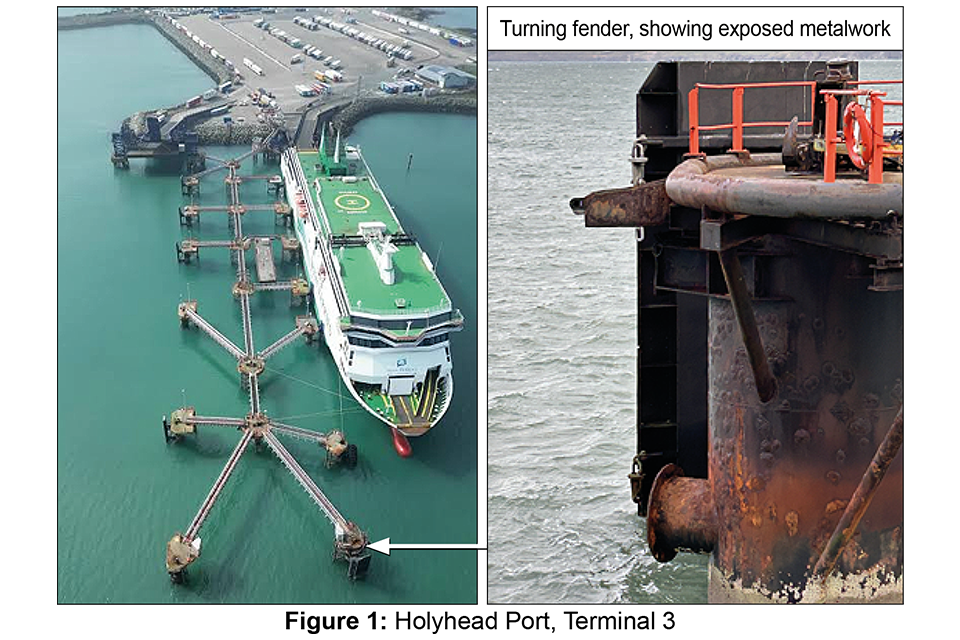
As the maneuver progressed, the combined hydrodynamic forces, environmental pressures, and turning dynamics brought the starboard side of the vessel into forceful contact with the northern extent of Terminal 3. Specifically, the ship struck an unprotected turning fender, a structural point that proved unforgiving to the incoming hull.

The Impact and Immediate Structural Failure
The kinetic energy of the collision resulted in immediate structural damage. The point of impact punched a hole through the heavy steel hullplates in two distinct locations:

- Below the waterline: A breach directly opened into the starboard engine room, allowing an unchecked torrent of seawater to rush into the compartment.
- Above the waterline: A secondary structural puncture occurred higher up on the vessel’s cargo deck, though this area remained free from direct water ingress.
Within minutes, approximately 500 tonnes of seawater flooded the starboard engine room. Simultaneously, an undetermined quantity of water found its way into an adjacent internal void space, compromising the vessel’s trim and stability reserves.
Crisis Management and Damage Control
Onboard emergencies of this magnitude demand absolute precision and instant execution from the ship’s complement. With 91 passengers, 66 crew members, and 95 vehicles on board, the stakes could not have been higher.
The engineering and deck departments immediately mobilized under the ship’s emergency response protocols. Recognizing the gravity of the starboard flooding, the crew executed a multi-pronged damage control strategy:
- Shoring Up the Hull: Engineering teams deployed rapid-response shoring materials to reinforce the weakened and breached hull plating below the waterline, successfully mitigating the rate of further water ingress.
- Dewatering Operations: High-capacity emergency bilge pumps were brought online to expel water from the flooded starboard engine room, stabilizing internal fluid levels.
- Ballast Manipulation: In a critical display of seamanship, the master and chief officer ordered the deliberate transfer of internal ballast water. By shifting weight across the vessel’s beam, they induced a deliberate port list. This intentional tilt raised the damaged starboard section of the hull above the waterline, effectively halting any further hydrostatic pressure and water entry.
Berthing, Disembarkation, and Port Closure
With the ship stabilized and the internal flooding brought completely under control, the master assessed that it was safe to resume the berthing operation. The Stena Estrid successfully docked at Terminal 3, and the ramp was lowered.
Passengers and vehicle drivers were safely unloaded without significant delay, blissfully unaware of the profound mechanical crisis unfolding just bulkheads away. Following the completion of disembarkation, Holyhead Port authorities implemented a temporary closure to all incoming and outgoing ferry traffic.
Later that evening, once the Stena Estrid was safely shifted to an alternate berth, marine surveyors conducted an exhaustive damage assessment of the Terminal 3 jetty. Finding no structural deficiencies or significant damage to the port infrastructure, authorities cleared the terminal for a return to service.
Following temporary steel patches and structural reinforcements applied at Holyhead, the Stena Estrid cast off and traveled under its own power across the Irish Sea to a specialized dry dock facility in Liverpool, England, for permanent repairs.
Supporting Context & Metrics
Understanding the scale of the incident requires a detailed look at the vessel’s specifications, the nature of the voyage, and the specific parameters of the marine casualty.
Ship Particulars
| Parameter | Specification |
|---|---|
| Vessel’s Name | Stena Estrid |
| Flag | Cyprus |
| Classification Society | DNV GL |
| IMO Number | 9807293 |
| Vessel Type | RoPax (Roll-on/Roll-off Passenger) Ferry |
| Registered Owner | LS-CYP1 Co Ltd |
| Manager | Stena Line Limited |
| Operator | Stena Line Irish Sea Ferries Limited |
| Builder | China Merchants Jinling Shipbuilding Co. Ltd. |
| Year of Build | 2019 |
| Length Overall (LOA) | 214.5 meters |
| Gross Tonnage | 41,671 GT |
| Minimum Safe Manning | 19 personnel |
| Authorised Cargo | Passengers and commercial/private vehicles |
Voyage Particulars
| Parameter | Details |
|---|---|
| Port of Departure | Dublin, Ireland |
| Port of Arrival | Holyhead, Wales |
| Type of Voyage | International Short-Sea Transit |
| Cargo on Board | 95 vehicles (private and commercial freight) |
| Passengers on Board | 91 passengers |
| Crew Complement | 66 crew members |
| Total Persons on Board | 157 individuals |
Marine Casualty Information
| Parameter | Incident Data |
|---|---|
| Date and Time | 7 January 2026 at 0750 UTC |
| Type of Incident | Serious Marine Casualty |
| Location | Terminal 3, Holyhead Port, Wales |
| Specific Location on Board | Starboard Engine Room & Cargo Deck |
| Human Impact | Zero injuries, zero fatalities |
| Environmental/Material Impact | Hull puncture with major flooding (approx. 500 tonnes) |
| Vessel Operation | Berthing maneuver |
| External Environment | Westerly winds, Force 6 to 7 |
Official Statements and Regulatory Closure
Following the preliminary assessment conducted under MAIB reference PA Summary 3/2026, regulatory authorities evaluated the institutional responses of both the vessel operators and port management.
Actions Taken by Operators and Port Authorities
In the wake of the collision, internal audits and safety reviews were immediately launched by the corporate stakeholders.
- Stena Line Limited instituted targeted operational adjustments regarding tug-assisted berthing protocols during high-wind events, alongside enhanced briefing requirements for bridge teams navigating terminal approaches in adverse weather.
- Stena Line Ports Limited reviewed the structural integrity of Holyhead Port’s fendering systems. Plans were expedited to upgrade and modify protection measures around Terminal 3—specifically addressing the unprotected turning fender involved in the collision—to prevent similar localized impacts in the future.
MAIB Conclusion
Because of the swift, effective remedial measures implemented by Stena Line Limited and Stena Line Ports Limited, coupled with their commitments to port infrastructure improvements, the Marine Accident Investigation Branch determined that a prolonged, full-scale independent investigation was unnecessary. The safety case has been successfully addressed through industry self-correction and engineering interventions, leading to the formal closure of the MAIB file.
Future Outlook
The incident involving the Stena Estrid serves as a stark reminder of the unpredictable nature of short-sea ferry operations, where massive vessels must frequently negotiate tight harbor basins under challenging meteorological conditions. With strong westerly gales becoming an increasingly common operational hurdle along the Irish Sea corridor, the margin for error during docking maneuvers remains razor-thin.
Modern RoPax ferries like the 2019-built Stena Estrid are constructed to rigorous modern safety standards, incorporating compartmentalization and redundancy that proved vital in preventing a catastrophic outcome on 7 January 2026. The ability of the crew to absorb 500 tonnes of water, manage list and trim through ballast control, and safely disembark passengers highlights the indispensable value of rigorous crew resource management and emergency drills.
Moving forward, the planned infrastructure upgrades at Holyhead Port’s Terminal 3 will provide a safer operational envelope for the heavy ferry traffic linking Wales and Ireland. As trade volumes and passenger numbers continue to rebound across the Irish Sea, the lessons learned from this serious marine casualty will undoubtedly inform best practices across European ferry networks, ensuring that safety remains the ultimate anchor of modern maritime transport.