











By the Maritime Investigations Desk
Published: November 2025
Executive Overview
The United Kingdom’s Marine Accident Investigation Branch (MAIB) has officially published its comprehensive investigation report detailing a tragic fatal accident involving a crew member aboard the Bermuda-registered passenger cruise vessel Arvia. The incident occurred on October 26, 2025, while the mega-cruise ship was underway on an open-ocean passage from Southampton, England, to Santa Cruz de Tenerife in the Canary Islands, Spain.
The investigation, conducted by the MAIB on behalf of the Bermuda Ship Registry under international maritime cooperation frameworks, sheds critical light on the operational hazards, safety management systems, and human factors involved in modern cruise ship operations. Because Bermuda is a valued member of the Red Ensign Group (REG)—which represents the United Kingdom’s shipping registers—the formal inquiry was executed in strict accordance with the Memorandum of Understanding (MoU) established between the MAIB and various REG member administrations.
This comprehensive report not only reconstructs the final moments leading up to the tragedy but also serves as an urgent wake-up call for the global maritime industry regarding the rigorous enforcement of onboard safety protocols, risk assessments, and the protection of seafarers. As the cruise industry continues to scale up in vessel size and passenger capacity, the safety and well-being of the workforce operating behind the scenes remain an absolute paramount priority for flag states, shipowners, and international regulatory bodies.
Detailed Chronology of Events
The Voyage Departure: Southampton to the Atlantic
On the morning of October 26, 2025, the Arvia—one of the largest modern cruise liners afloat—cast off its moorings in Southampton, England. The departure marked the beginning of a scheduled southward trans-Atlantic voyage bound for the popular sun-drenched destination of Santa Cruz de Tenerife in the Canary Islands. Aboard the vessel were thousands of vacationing passengers and a vast complement of international crew members responsible for the day-to-day hospitality, technical operation, and nautical navigation of the massive floating resort.
As the vessel cleared the Solent and entered the open waters of the English Channel, standard operational routines commenced. Crew members across various departments—ranging from hotel services to technical engineering and deck operations—transitioned into their respective underway schedules. Weather conditions at the outset of the passage were typical for late October in the region, featuring moderate sea states and standard navigational visibility.
The Critical Incident
During the course of the passage southward through the Bay of Biscay region, routine operational tasks were being carried out by members of the ship’s complement. According to preliminary findings outlined in the MAIB report, a sequence of events unfolded during one such routine task that quickly escalated into a life-threatening emergency.

While specific operational activities were underway in a designated working area of the ship, a crew member became critically injured. The exact nature of the task involved complex machinery or equipment handling, which demands stringent adherence to safety barriers and Permit to Work (PTW) systems. Regrettably, a failure in the protective chain of safety barriers allowed the hazard to manifest fatally.
Immediate Emergency Response and Medical Intervention
Upon the realization that a crew member was in severe distress, the ship’s internal emergency response protocols were activated instantaneously. The bridge team was alerted, and the vessel’s medical response team—comprising qualified shipboard doctors and nurses—was dispatched to the scene without delay.
First responders and medical personnel administered advanced trauma life support in an effort to stabilize the injured crew member. Despite the rapid response and the exhaustive medical interventions performed by the onboard healthcare team, the severity of the sustained injuries proved insurmountable. Tragically, the crew member succumbed to their injuries while the vessel was still days away from its scheduled port of call in Tenerife.
Following the confirmation of the fatality, the ship’s master immediately notified the relevant maritime authorities, including the Bermuda Ship Registry (as the vessel’s flag state) and the MAIB, initiating the formal reporting mechanisms required under international maritime law, specifically the International Maritime Organization’s (IMO) Casualty Investigation Code.
Supporting Context & Metrics
The Arvia: Engineering Scale and Operational Profile
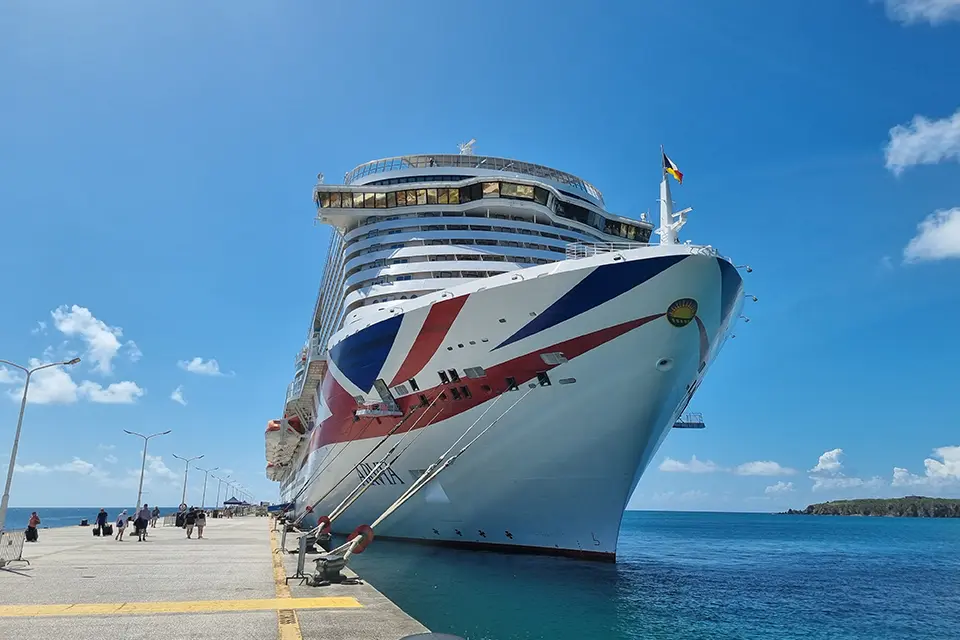
To fully understand the environment in which this tragic event occurred, one must examine the sheer scale and complexity of the vessel itself. Delivered to its operators as a marvel of modern naval architecture, the Arvia is an Excel-class LNG-powered cruise ship boasting a gross tonnage exceeding 180,000 GT. Spanning over 340 meters in length, the vessel is capable of accommodating upwards of 5,200 passengers serviced by a multinational crew of approximately 1,800 personnel.
Operating a vessel of this magnitude is akin to managing a floating, self-sustaining small city. The operational tempo aboard is relentless, requiring continuous coordination across multiple departments operating 24 hours a day. From high-pressure hotel engineering systems and waste management plants to heavy-duty deck maintenance and tender boat operations, the working environment aboard a modern mega-cruise ship presents a myriad of occupational hazards that far exceed those found in standard land-based industries.

The Regulatory Framework: MAIB and the Red Ensign Group
The investigation into the Arvia incident highlights the intricate web of international maritime jurisdiction and accountability. Under the international law of the sea, the flag state—in this case, Bermuda—bears the ultimate responsibility for ensuring that vessels flying its flag comply with international safety standards, including the International Safety Management (ISM) Code and Maritime Labour Convention (MLC).
However, due to specialized expertise and resource sharing within the British shipping network, the UK’s Marine Accident Investigation Branch (MAIB) frequently conducts investigations on behalf of Red Ensign Group member registries. The MAIB is globally recognized for its independent, thorough, and objective approach to marine safety investigations. Its primary objective is not to apportion blame or liability, but rather to determine the causal and contributory factors of an accident and to issue safety recommendations designed to prevent recurrence.
The collaboration between the MAIB and the Bermuda Ship Registry operates under a formal Memorandum of Understanding. This framework ensures that high-level investigative capabilities are brought to bear on incidents occurring anywhere in the world, provided the vessel is registered within the UK’s Red Ensign network.
Comparative Safety Metrics in the Cruise Sector
While the cruise industry maintains statistically high standards of passenger safety, occupational safety for crew members has historically faced distinct challenges. According to global maritime labor statistics:
- High-Tempo Environments: Crew members frequently work extended contracts involving physically demanding tasks under tight turnaround schedules.
- Multilingual Dynamics: Communication barriers between multinational crew members can occasionally complicate safety briefings and dynamic risk assessments during critical operations.
- Mechanical Hazards: The concentration of heavy machinery, high-voltage electrical systems, and complex hydraulic appliances aboard modern ships requires unyielding adherence to safety procedures.
The MAIB report on the Arvia adds critical empirical data to these ongoing industry-wide safety metrics, offering valuable lessons that will inevitably inform future safety amendments across the global fleet.
Official Statements and Stakeholder Responses
Marine Accident Investigation Branch (MAIB)
In the wake of the report’s publication, senior officials at the MAIB emphasized the importance of transparency and continuous learning within the maritime sector. A spokesperson for the branch noted:
"The publication of our report into the fatal accident aboard the Arvia underscores our unwavering commitment to uncovering the systemic and operational root causes of maritime tragedies. Our findings are designed to provide actionable insights for ship operators, flag states, and seafarers alike. Every seafarer has the fundamental right to return home safely at the end of their contract. We urge the maritime community to carefully review the safety lessons highlighted in this document and to implement the necessary procedural adjustments without delay."
Ship Management and Operator Response
Representatives from the vessel’s operating company and management structure expressed profound sorrow over the loss of their crew member. In an official corporate statement released following the incident and the subsequent report publication, management stated:
- "The entire family of our organization is deeply saddened by the tragic loss of our colleague aboard the Arvia. Our immediate and ongoing priority remains the support of the grieving family, friends, and colleagues affected by this devastating event."
- "We have fully cooperated with the MAIB and the Bermuda Ship Registry throughout the investigative process. We are meticulously reviewing all findings and recommendations contained within the report to ensure that our safety management systems, training programs, and operational oversight are robustly reinforced across our entire global fleet."
Labor and Seafarer Welfare Organizations
International seafarer advocacy groups and maritime labor unions also weighed in on the report’s release. Representatives highlighted the report as a vital reminder of the physical and mental demands placed on maritime workers. They reiterated calls across the international community to empower crew members to exercise their right to stop work if they perceive unsafe conditions, free from any fear of professional reprisal or commercial pressure.
Future Outlook and Industry Implications
Actionable Safety Recommendations
The MAIB report concludes with a series of targeted safety recommendations directed at the vessel’s operators, the Bermuda Ship Registry, and the wider cruise industry. These recommendations typically focus on:
- Enhancement of Permit to Work (PTW) Systems: Ensuring that authorization processes for high-risk maintenance and operational tasks are rigorously supervised and verified at multiple levels.
- Refinement of Dynamic Risk Assessments: Equipping frontline supervisors and crew members with the analytical tools to evaluate changing operational hazards effectively in real-time.
- Safety Culture Reinforcement: Moving beyond mere regulatory compliance to foster an entrenched, proactive safety culture where reporting near-misses is encouraged and acted upon swiftly.
Long-Term Impact on Cruise Ship Operations
As the Arvia and her sister ships continue to traverse global trade and tourism routes, the lessons drawn from this tragic event will leave an indelible mark on maritime safety protocols. Flag states within the Red Ensign Group are expected to review their oversight mechanisms, while cruise lines worldwide will undoubtedly subject their internal Standard Operating Procedures (SOPs) to intense scrutiny.
Ultimately, the goal shared by investigators, regulators, and operators is to ensure that tragedies of this nature are never repeated. By honoring the memory of the fallen crew member through relentless vigilance, systemic reform, and an unyielding commitment to seafarer safety, the global maritime community strives toward the ultimate objective: a zero-accident working environment on the world’s oceans.


