






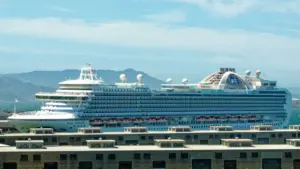



LONDON — In an official statement released today, the Marine Accident Investigation Branch (MAIB) has announced the conclusion of its preliminary assessment into the tragic death of a crew member aboard the high-end luxury cruise vessel Hebridean Princess. Following a comprehensive, multi-week review of the initial findings, maritime authorities have determined that there is insufficient evidence linking the fatality to the operational mechanics, navigation, or safety systems of the ship. Consequently, the Chief Inspector of Marine Accidents has ruled out the launch of a full-scale safety investigation.
The decision, made in strict accordance with the provisions outlined in the Merchant Shipping (Accident Reporting and Investigation) Regulations 2026, brings an administrative close to the state’s preliminary inquiries, even as questions linger regarding the broader welfare and safety protocols governing workers within the specialized UK coastal cruise sector.
Executive Overview
The incident, which took place in June 2026, involved a crew member serving aboard the Hebridean Princess—a vessel renowned for operating exclusive, luxury itineraries around the Scottish Highlands and islands. While the exact identity of the deceased individual has been withheld pending the completion of family notifications and local coroner protocols, the event immediately triggered standard mandatory reporting frameworks required under British maritime law.

Under the Merchant Shipping (Accident Reporting and Investigation) Regulations, any death or serious injury occurring on, or in connection with, a United Kingdom-flagged vessel must be promptly reported to the MAIB. The branch is legally mandated to evaluate whether the incident constitutes a "marine casualty" or "marine incident" directly tied to vessel operations, such as structural failure, equipment malfunction, navigational hazards, or procedural safety breaches.
In this instance, the MAIB’s specialist inspectors evaluated the preliminary evidence, including shipboard logs, witness accounts provided by fellow crew members, initial medical examiner notes, and environmental conditions at the time of the event. The analytical threshold required to transition from a preliminary assessment to a statutory safety investigation is the establishment of a plausible nexus between the vessel’s operations and the cause of death. Because the investigative team found no operational failure, systemic workplace hazard, or mechanical deficiency contributing to the fatality, the statutory criteria for a formal safety probe were not met.
Despite the absence of a formal MAIB investigation, the case underscores the complex regulatory environment governing maritime labor, the rigorous reporting standards enforced within the UK shipping registry, and the ongoing scrutiny facing operators of boutique passenger vessels navigating remote and demanding coastal environments.
Detailed Chronology: From Initial Report to Administrative Closure
The sequence of events leading to today’s administrative determination spans several weeks of careful evidence-gathering and inter-agency coordination between maritime regulators, law enforcement, and medical authorities.
The Incident and Immediate Response (June 2026)
The event unfolded during a scheduled operational deployment of the Hebridean Princess in June 2026. While the vessel was navigating regional waters on one of its regular high-end itineraries, an onboard medical emergency involving a crew member was declared.
Immediate emergency protocols were initiated by the ship’s master and medical staff. Standard maritime emergency procedures require the vessel to coordinate swiftly with HM Coastguard and local emergency medical services to arrange urgent shore-side medical evacuation or appropriate intervention. Despite the rapid response of the shipboard personnel and external emergency responders, the crew member could not be revived and was subsequently pronounced dead.
In accordance with statutory mandates, the vessel’s operators immediately notified the MAIB and relevant police authorities of the fatality. The notification initiated the automatic dispatch of preliminary reporting protocols, setting off a chain of administrative and investigative requirements designed to preserve evidence and establish the foundational facts of the case.
Preliminary Assessment Phase (June – August 2026)
Upon receiving the mandatory notification, the MAIB initiated a preliminary assessment. Unlike a full safety investigation—which typically results in a detailed, publicly available report complete with systemic safety recommendations—a preliminary assessment acts as a diagnostic filter.
During this phase, MAIB inspectors:
- Reviewed Shipboard Documentation: Analyzed deck and engine room logs, hours of rest records for the crew, safety management system (SMS) manuals, and maintenance schedules.
- Evaluated Environmental Factors: Assessed sea states, weather conditions, vessel positioning, and operational tempo at the time the emergency occurred.
- Corroborated Witness Statements: Examined initial debriefs and statements gathered from shipboard officers, crewmates, and medical personnel who interacted with the deceased prior to or during the medical emergency.
- Consulted Medical Authorities: Liaised with forensic pathologists and local coroners handling the post-mortem examinations to understand the primary and contributing medical causes of death.
The Chief Inspector’s Determination (August 12, 2026)
Following the culmination of the preliminary review, the findings were escalated to the Chief Inspector of Marine Accidents. The analysis concluded that the physiological event leading to the crew member’s death operated independently of the vessel’s machinery, navigational safety systems, cargo operations, or onboard safety management practices.
Because the statutory mandate of the MAIB is explicitly focused on preventing future marine accidents by improving the safety of ships and those who work on them, the branch determined that an investigation would yield no actionable safety lessons or recommendations related to vessel operations. Consequently, the formal decision not to proceed with a full safety investigation was finalized and published on August 12, 2026.
Supporting Context and Metrics: The MAIB and Maritime Safety Frameworks
To fully comprehend the significance of the MAIB’s decision regarding the Hebridean Princess, it is essential to examine the regulatory architecture governing maritime safety in the United Kingdom and the statistical realities of marine accident investigations.
The Role and Mandate of the MAIB
Established in 1989 following the tragic capsize of the ferry Herald of Free Enterprise, the Marine Accident Investigation Branch operates as an independent operating division of the Department for Transport. Its core statutory purpose is to determine the circumstances and causes of marine accidents with the sole objective of preventing future occurrences. It is deliberately separated from the Maritime and Coastguard Agency (MCA), which handles regulatory enforcement and vessel certification, ensuring that the MAIB’s findings remain entirely independent, objective, and non-punitive.
Under the Merchant Shipping (Accident Reporting and Investigation) Regulations, the MAIB classifies reportable events into distinct categories:
- Very Serious Marine Casualties: Involving total loss of a ship, loss of life, or severe pollution.
- Serious Marine Casualties: Involving fires, explosions, collisions, groundings, heavy weather damage, or structural failures that do not qualify as very serious.
- Marine Incidents: Events or sequences of events other than casualties which occurred directly in connection with the operation of a ship that endangered, or, if not corrected, would endanger the safety of a ship, its occupants, or any other person.
When a fatality occurs on a vessel, it invariably triggers a preliminary assessment. However, statistical data from historical MAIB annual reports indicate that a significant percentage of onboard deaths—particularly those stemming from natural causes, pre-existing medical conditions, or isolated incidents unrelated to ship operations—do not progress to full investigations because they offer no technical or operational lessons for the wider maritime industry.
The Hebridean Princess: Vessel Profile and Operational Environment
The Hebridean Princess occupies a unique and prestigious niche within the British cruise industry. Originally built in 1964 as the David MacBrayne mailboat Columba, the vessel was extensively converted into a luxury cruise ship and has long served an elite clientele, including members of the British royal family.
Operating primarily in the sheltered waters of the Western Isles of Scotland, the vessel is subject to rigorous domestic and international maritime standards. UK-flagged passenger ships must comply with stringent Maritime and Coastguard Agency regulations governing structural integrity, fire safety, life-saving appliances, and crew welfare standards under the Maritime Labour Convention (MLC).
The MLC, often referred to as the "Seafarers’ Bill of Rights," establishes comprehensive minimum standards for all seafarers working on commercial vessels, including:
- Maximum hours of work and minimum hours of rest to combat fatigue.
- Health, safety, and accident prevention programs.
- Onboard medical care facilities and medical fitness certifications.
- Repatriation rights and social security protection.
While the MAIB’s assessment found no operational link to the crew member’s death, the broader regulatory framework ensures that ship operators maintain continuous compliance with crew welfare standards, regular health assessments, and robust emergency medical response protocols.
Official Statements and Institutional Responses
The release of the MAIB’s preliminary assessment has prompted statements from industry stakeholders, regulatory observers, and labor advocacy groups, reflecting the delicate balance between administrative closure and the emotional weight of a workplace fatality.
In its official notice, the MAIB stated:
"We have undertaken a preliminary assessment into the circumstances of the death of a crew member from Hebridean Princess in June 2026. Following the assessment the MAIB was unable to determine that the crew member’s death was connected to the operation of the vessel. Consequently, in accordance with the Merchant Shipping (Accident Reporting and Investigation) Regulations 2026, the Chief Inspector of Marine Accidents has decided not to conduct a safety investigation."
Representatives for the vessel’s operating company expressed profound sorrow over the loss of their colleague. In a private statement shared with maritime trade publications, management emphasized that the welfare, health, and safety of all onboard personnel remain their highest priority. They noted that the shipboard management team cooperated fully with the MAIB, the police, and medical authorities throughout the preliminary review process, and they extended their deepest condolences to the family, friends, and colleagues of the deceased crew member.
Maritime labor representatives have similarly offered support to the crew affected by the sudden loss. While acknowledging the statutory limitations that prevent the MAIB from opening a full safety investigation in the absence of an operational link, labor advocates have reiterated the vital importance of maintaining uncompromising standards for onboard health support, stress management, and preventative healthcare across the coastal cruise sector.
Future Outlook: Implications for Maritime Reporting and Onboard Welfare
While the administrative closure of the MAIB’s file brings immediate legal finality to the state’s inquiry into the Hebridean Princess incident, the broader implications for the UK maritime sector extend across several critical areas.
Evolution of the 2026 Regulations
The citation of the Merchant Shipping (Accident Reporting and Investigation) Regulations 2026 highlights the updated legal framework governing modern maritime investigations in the United Kingdom. These modernized regulations reinforce the statutory obligations placed upon vessel masters, owners, and operators to report accidents swiftly while clarifying the evidentiary thresholds required for the MAIB to commit resources to full safety investigations. As shipping technologies evolve and regulatory oversight deepens, the clarity provided by these updated regulations ensures that state investigative resources are strategically deployed toward systemic safety hazards.
Heightened Focus on Seafarer Health and Wellbeing
The incident serves as a poignant reminder of the unique challenges associated with maritime employment. Working aboard cruise vessels, even those operating within scenic and relatively sheltered coastal waters, involves demanding shift patterns, extended periods away from home, and the intrinsic pressures of the hospitality and maritime sectors.
In the wake of this event, industry analysts anticipate renewed emphasis on proactive seafarer welfare initiatives, including:
- Enhanced pre-sea and periodic medical examinations designed to catch underlying physiological risks early.
- Improved access to mental health support networks and telemedicine services for vessels operating in remote coastal regions.
- Continuous training for shipboard officers in recognizing signs of acute medical distress and managing emergency responses before shore-side assistance can be rendered.
Conclusion
The decision by the Marine Accident Investigation Branch to close its preliminary assessment without initiating a full safety investigation confirms that the tragic death aboard the Hebridean Princess in June 2026 was independent of vessel operations. While the formal investigative machinery of the state steps back, the legacy of the incident remains a somber reminder of the human element at the heart of the maritime industry—underscoring the continuous need for vigilance, robust medical support, and unwavering commitment to the health and safety of every seafarer navigating the world’s waters.