











Executive Overview
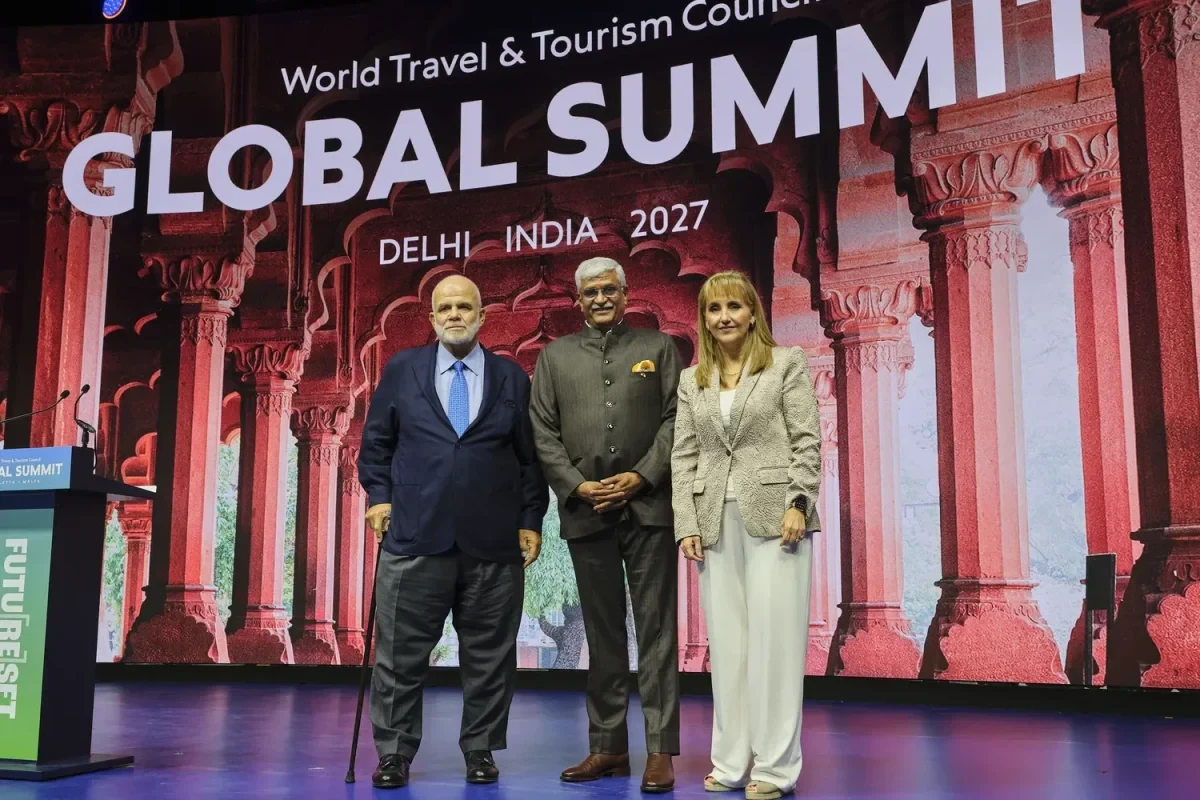
At the prestigious World Travel and Tourism Council (WTTC) Global Summit in Malta, Indian Tourism Minister Gajendra Singh Shekhawat laid out a remarkably audacious vision for the nation’s economic and cultural footprint. Addressing an international gathering of industry leaders, policymakers, and visionaries, Shekhawat announced that India aims to scale its international tourist arrivals from a modest 9.2 million to an astonishing 100 million by the year 2047—coinciding with the centenary of the country’s independence.
To achieve this monumental nearly eleven-fold increase over the next two decades, the minister introduced a strategic framework anchored on four foundational pillars: political will, public spending, strategic partnerships, and Jan Bhagidari (people’s participation).
However, this soaring long-term vision stands in stark contrast to the grueling operational realities currently gripping India’s travel and hospitality sector. Behind the optimistic rhetoric delivered on the global stage lies a profound industry slump. In 2025, India welcomed a mere 9.2 million foreign tourists—a concerning 9.4 percent decline compared to 2024, and sitting roughly 17 percent below the pre-pandemic peak of 10.9 million recorded in 2019.
Worse still, this marks the second consecutive year of contracting international arrivals. The near-term horizon for 2026 appears increasingly precarious. According to a recent assessment by the PHD Chamber of Commerce and Industry (PHDCCI), inbound tourism could plummet by an additional 15 to 20 percent this year alone. The primary catalyst for this ongoing crisis is not a lack of allure, but a severe geopolitical shock: the ongoing conflict involving Iran, which has systematically severed critical air corridors relied upon by long-haul travelers from Europe, North America, and parts of the Middle East.
For India to pivot from its current downward trajectory to achieving 100 million visitors by 2047, the nation must sustain an unprecedented average annual growth rate of 12 percent or higher—a performance standard that has historically eluded the subcontinent. This report offers an exhaustive analysis of India’s strategic roadmap, dissects the immediate economic headwinds stalling its recovery, evaluates the structural reforms required to bridge the gap, and maps out the future outlook for the world’s most populous nation as it strives to become a global tourism superpower.
Detailed Chronology: From Pandemic Recovery to Geopolitical Turmoil
To understand the sheer magnitude of Minister Shekhawat’s 2047 projection, one must trace the timeline of India’s inbound tourism sector over the past decade, highlighting the series of unprecedented disruptions that have battered the industry.
2019: The Pre-Pandemic Zenith
Before the onset of the global health crisis, Indian tourism was riding a wave of steady, albeit conservative, growth. In 2019, the country registered an all-time high of 10.9 million foreign tourist arrivals (FTAs). Foreign exchange earnings from tourism reached record levels, and the government was actively implementing visa-on-arrival expansions and targeted global marketing campaigns under the "Incredible India" banner. The ecosystem was poised for a breakthrough into the double-digit million mark.

2020–2022: The COVID-19 Paralysis
The arrival of the COVID-19 pandemic brought international travel to a complete standstill. Border closures, stringent quarantine mandates, and the global grounding of commercial aviation decimated India’s tourism economy. Millions of livelihoods in hospitality, tour operations, heritage management, and transport were severely impacted. While domestic tourism eventually rebounded strongly as domestic restrictions eased, international arrivals remained a fraction of their pre-pandemic baseline due to delayed visa processing, lingering health apprehensions, and a slow restoration of international flight routes.
2023–2024: A Fragile and Uneven Resurgence
As global mobility resumed, India experienced a sluggish recovery. While neighboring Asian markets and Southeast Asian hotspots rapidly surpassed their 2019 benchmarks, India’s inbound numbers lagged. By 2024, arrivals hovered below the 10-million threshold, failing to regain the momentum lost during the pandemic years. Structural bottlenecks—ranging from infrastructure constraints at major international gateways to inconsistent service standards in tier-2 and tier-3 destinations—prevented a full-scale acceleration.
2025: The Second Consecutive Year of Decline
The fragility of the recovery was brutally exposed in 2025. India recorded only 9.2 million foreign visitors, representing a steep 9.4 percent drop from the previous year. This placed arrivals roughly 17 percent below the 2019 high-water mark. Analysts noted that while domestic tourism continued to thrive, international source markets were increasingly shifting their travel preferences toward competing destinations in Southeast Asia, the Middle East, and Southern Europe, where promotional spending and air connectivity were far more aggressive.
2026 and Beyond: The Geopolitical Shock of the Iran Conflict
The current year has introduced an entirely new category of crisis. According to projections by the PHD Chamber of Commerce, inbound tourism is projected to contract by another 15 to 20 percent through 2026. This downward spiral is primarily driven by regional conflict. The ongoing war involving Iran has severely disrupted traditional aviation pathways. Long-haul flights originating from Western markets have been forced to reroute, circumnavigate closed airspaces, or cancel direct routes altogether. The resulting surge in jet fuel costs, elongated flight durations, and escalating airfares have priced out budget-conscious travelers and deterred corporate delegations, plunging India’s inbound sector into a state of emergency.
Supporting Context & Metrics: Analyzing the 2047 Growth Imperative
The chasm between India’s current tourism realities and its 2047 vision requires a rigorous examination of quantitative metrics, economic modeling, and structural realities.
The Mathematics of the 100 Million Target
Reaching 100 million international arrivals by 2047 requires an extraordinary mathematical pivot. Moving from a depressed baseline of 9.2 million (2025 figures) to a centenary target of 100 million over a 22-year span demands a compounded annual growth rate (CAGR) exceeding 12 percent.
For historical context, very few major economies have sustained a 12 percent inbound tourism CAGR over two decades. Doing so in a world increasingly susceptible to climate shocks, macroeconomic volatility, and geopolitical instability requires far more than passive optimism; it necessitates a radical overhaul of national infrastructure, marketing strategies, and ease-of-travel protocols.
+-----------------------------------------------------------------+
|               INDIA'S TOURISM TRAJECTORY (10M to 100M)          |
+-----------------------------------------------------------------+
|  Year 2019 (Peak):        10.9 Million                          |
|  Year 2025 (Current):      9.2 Million (-17% vs 2019)           |
|  Year 2026 (Projected):    -15% to -20% further contraction     |
|  Year 2047 (Goal):       100.0 Million (Requires >12% CAGR)     |
+-----------------------------------------------------------------+
The Four "P’s" Framework
To overcome these daunting mathematical hurdles, Minister Shekhawat outlined the strategic blueprint centered around four core pillars:
- Political Will: High-level policy alignment between central and state governments to prioritize tourism as a primary engine of economic growth, job creation, and foreign exchange earnings. This involves streamlining bureaucratic hurdles, rationalizing tax structures for hospitality assets, and designating tourism as an infrastructure sector to secure lower-cost financing.
- Public Spending: Substantial capital allocation toward upgrading national connectivity—including the expansion of regional airports under the UDAN scheme, modernizing railway networks with Vistadome and Vande Bharat trains, and constructing world-class visitor amenities around UNESCO World Heritage sites.
- Partnerships: Forging robust public-private partnerships (PPPs) to leverage private sector capital, managerial expertise, and technological innovation. This includes collaborative destination marketing campaigns with global hospitality chains, airlines, and online travel agencies (OTAs).
- People’s Participation (Jan Bhagidari): Mobilizing local communities to take ownership of their regional tourism assets. By fostering a culture of hospitality (Atithi Devo Bhava—"The Guest is God"), ensuring community-led conservation, and promoting homestays and rural tourism, India aims to distribute the economic benefits of tourism far beyond major metropolitan hubs.
Economic Contribution and Employment Potential
Tourism is one of the most powerful employment multipliers in the global economy. According to data from the WTTC, the travel and tourism sector in India accounts for a significant share of total employment, supporting tens of millions of jobs across formal and informal segments—ranging from hotel management and tour guiding to handloom weaving, culinary arts, and transport.
Scaling arrivals to 100 million by 2047 is projected to create over 40 million new jobs, particularly empowering women and youth in semi-urban and rural areas. Furthermore, international tourists spend significantly more per capita than domestic travelers, making inbound tourism a critical tool for boosting foreign exchange reserves and stimulating local supply chains.
Official Statements and Global Perspectives
The discourse at the World Travel and Tourism Council summit in Malta underscored the dual nature of India’s tourism standing: an undisputed powerhouse of future potential hobbled by immediate structural and geopolitical vulnerabilities.
During his address, Tourism Minister Gajendra Singh Shekhawat emphasized that India’s civilizational depth, spiritual heritage, and geographic diversity provide an unmatched value proposition for the global traveler.
"India is not merely a destination; it is an enduring journey of the soul," Minister Shekhawat told the international assembly. "Our path to 100 million international arrivals by 2047 is anchored in unshakeable political will and a holistic national vision. By combining massive public investments in infrastructure with the warmth and participation of our 1.4 billion citizens, we are building a tourism ecosystem that is resilient, inclusive, and future-ready."
Industry heavyweights at the summit offered constructive critiques of India’s current strategy, acknowledging the boldness of the 2047 vision while underscoring the urgent need to address short-term bottlenecks.
Manfredi Lefebvre d’Ovidio, Chairman of the WTTC, commended India’s leadership for engaging directly with the global tourism community during a challenging transitional period. However, he noted that long-term projections must be backed by immediate risk-mitigation strategies. "A vision without a crisis-management playbook is vulnerable to external shocks," d’Ovidio remarked during a panel discussion. "When air corridors are closed and regional conflicts disrupt travel flows, nations must possess the agility to rapidly open alternative routes, incentivize carriers, and reassure international consumers through targeted diplomacy."
Echoing these sentiments, Gloria Guevara, President and CEO of the WTTC and former Minister of Tourism for Mexico, emphasized the critical role of visa harmonization and seamless digital borders. "India possesses some of the most extraordinary cultural and natural assets on the planet. Yet, the friction points—such as complex visa application processes, fragmented promotional messaging across states, and vulnerability to regional airspace closures—frequently deter prospective visitors," Guevara stated. "To reach 100 million arrivals, India must treat travel facilitation with the same urgency as highway and airport construction."
Future Outlook: Bridging the Gap Between Vision and Reality
As India looks toward the horizon of 2047, the journey from 9.2 million to 100 million international arrivals will be defined by its ability to execute structural reforms while navigating volatile geopolitical landscapes.
1. Mitigating Immediate Geopolitical and Aviation Vulnerabilities
The immediate priority for the Ministry of Tourism, in coordination with the Ministry of Civil Aviation and the Ministry of External Affairs, must be the mitigation of the 2026 crisis precipitated by the Iran conflict. Restoring stable air corridors, negotiating bilateral flying rights with key source markets, and offering temporary subsidies or landing-fee waivers to international airlines operating long-haul routes can help stabilize the downward spiral of arrivals. Diversifying source markets—reducing reliance on Western Europe by aggressively targeting Central Asia, Latin America, Southeast Asia, and Australasia—will also build long-term resilience against regional shocks.
2. Revolutionizing Digital Infrastructure and Visa Regimes
Frictionless entry remains a cornerstone of modern tourism competitiveness. While India has made commendable strides with its e-Visa program, processing times, technical glitches, and bureaucratic inconsistencies continue to frustrate travelers. Expanding visa-free travel or visa-on-arrival facilities for targeted G20 and high-spending source nations will be essential. Furthermore, integrating artificial intelligence and multilingual digital guides across all major archaeological sites and transit hubs will enhance the visitor experience from the moment they land.
3. Sustainable Destination Management and Over-Tourism Prevention
As visitor numbers scale toward the 100-million mark over the next two decades, India must avoid the traps of over-tourism and environmental degradation that have plagued destinations like Venice, Amsterdam, and parts of Southeast Asia. Implementing carrying-capacity limits at fragile eco-tourism zones (such as the Western Ghats and Himalayan regions) and protected monuments (such as the Taj Mahal) is vital. Promoting lesser-known cultural circuits—such as the Buddhist Trail, the Temple Architecture of the South, Northeast India’s biodiversity sanctuaries, and rural homestay networks—will distribute economic benefits evenly while preserving the integrity of India’s heritage.
4. Skill Development and Service Quality Standards
Infrastructure alone cannot sustain a thriving tourism economy; human capital is the ultimate differentiator. The hospitality and tourism workforce must be systematically upskilled to meet international standards of service, safety, and hygiene. Partnering with global hotel chains and academic institutions to establish world-class vocational training centers across tier-2 and tier-3 cities will ensure that every traveler encounters professionalism and warmth.
Conclusion
Minister Gajendra Singh Shekhawat’s declaration in Malta that India will welcome 100 million international tourists by 2047 is an inspiring testament to the nation’s boundless ambitions. It paints a picture of a modernized, prosperous India where heritage meets contemporary luxury, and where tourism serves as a premier catalyst for inclusive economic development.
Yet, as the hard data demonstrates, the road ahead is fraught with formidable obstacles. Plummeting arrivals in 2025 and projected contractions through 2026—exacerbated by regional conflict and fractured air corridors—serve as a sobering reminder that long-term visions cannot succeed without immediate, decisive crisis management.
To turn the 2047 aspiration into reality, India must marry its grand political will with relentless operational execution. By securing its aviation networks, streamlining visa protocols, championing sustainable destination management, and empowering local communities through Jan Bhagidari, India can overcome its current slump and ultimately claim its rightful place as one of the preeminent tourism superpowers of the twenty-first century.


