








Executive Overview
The transition to a clean energy economy is not merely a question of deploying solar panels and wind turbines; it is an industrial overhaul that touches every layer of the material sciences. Securing supply chains for critical minerals, generating scalable and low-cost baseload energy, and engineering the next generation of energy storage devices require paradigm shifts in how technology moves from an academic laboratory to a commercial enterprise.
To bridge this treacherous chasm—frequently referred to by venture capitalists as the "valley of death"—the U.S. Department of Energy’s Office of Technology Commercialization operates the Lab-Embedded Entrepreneurship Program (LEEP). Among its flagship nodes is the National Laboratory of the Rockies (NLR) West Gate program.
The 2026 West Gate cohort has officially arrived, bringing with them seven transformative technologies designed to address the most stubborn bottlenecks in modern engineering. In this first installment of a two-part series, we profile four visionary startup founders whose innovations target domestic magnesium manufacturing, subsurface hydrogen generation, ultralight battery architecture, and artificial intelligence-driven materials discovery. With two years of deep access to NLR’s world-class facilities, equipment, and top-tier scientific expertise, these entrepreneurs are positioning themselves to fundamentally reshape America’s industrial landscape.
Detailed Chronology and Startup Profiles
The pathway to commercialization is rarely linear. For the four startup founders featured in this cohort, years of academic research, iterative redesigns, and stubborn resilience have culminated in technologies ready for rigorous validation at the National Laboratory of the Rockies.
1. Big Blue Technologies Inc.: Resurrecting American Magnesium Production
- Fellow: Boris Chubukov, Chief Technology Officer
- The Technology: An automated, electrified smelting process designed to produce affordable domestic magnesium.
Magnesium is an unsung hero of modern manufacturing. As the lightest structural metal available, it is essential for lightweighting electric vehicles, consumer electronics, robotics, and virtually any aluminum-based application, including standard beverage cans. However, the United States has not produced primary magnesium metal domestically since 2021, leaving the nation highly vulnerable to supply chain shocks, geopolitical disruptions, and volatile import pricing.
The historical challenge lies in the production method. The conventional Pidgeon process is notoriously slow, labor-intensive, and energy-hungry. Over the past two decades, approximately 12 magnesium production initiatives have launched in North America; some even constructed full-scale plants, yet none remain operational today.
Boris Chubukov and the team at Big Blue Technologies Inc. are altering this trajectory. Originating from research reactor experiments affectionately named "Big Blue 1" during their Ph.D. days, the company has evolved through iterative R&D. Their initial smelting methodology—likened by Chubukov to "Gandalf the Grey," a concept brilliant on paper but a nightmare to operate in practice—was eventually abandoned for an innovative aluminothermic chemistry. This pivot, the "Gandalf the White" of their corporate journey, unlocked a viable pathway to full-scale, affordable production.

Big Blue’s automated, electrified smelting process slashes material, energy, and labor costs. During their two-year tenure at NLR, Chubukov and his team will work alongside national lab experts to test their technology at full scale. Crucially, the process yields a cement byproduct, which NLR researchers will help refine into a marketable commodity for hardware stores. The ultimate objective is a U.S.-based commercial plant capable of fulfilling up to 10% of the nation’s magnesium demand, neutralizing a critical national security vulnerability.
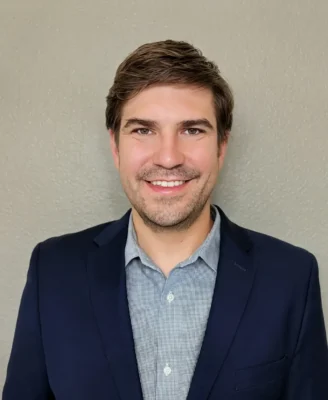
2. GeoKiln: Engineering the Earth for Clean Hydrogen
- Fellow: Alexei Tcherniak, Founder and CEO
- The Technology: Subsurface manufactured hydrogen via repurposed oil and gas infrastructure.
Global energy demand is skyrocketing, driven heavily by the massive power requirements of advanced manufacturing and artificial intelligence data centers. While green hydrogen holds immense promise as a clean fuel and chemical feedstock, traditional production methods—such as water electrolysis—remain expensive, energy-intensive, and geographically constrained.
Alexei Tcherniak and GeoKiln are upending conventional wisdom by shifting hydrogen production directly into the Earth’s geology. The company repurposes existing oil and gas industry hardware to heat naturally occurring, iron-rich rock formations deep underground. By converting these geological formations into natural kilns, GeoKiln generates hydrogen with minimal energy inputs and zero water injection.
Known as manufactured subsurface hydrogen, this technique bypasses the staggering capital expenditures and resource constraints of surface-level facilities. Tcherniak envisions a future where nations can produce affordable hydrogen from their native geological assets without federal subsidies. At NLR, the GeoKiln team will utilize West Gate resources to validate their methodology, stress-test the process against unforeseen engineering hurdles, and shift industry perceptions regarding what underground geology can achieve.
3. Last Wave Energy: Stripping Away the "Couch-Potato" Battery Materials
- Fellow: Ryan Brow, Founder
- The Technology: Ultralight, chemistry-agnostic batteries that eliminate up to 95% of inactive cell components.
In a standard lithium-ion battery, a significant percentage of the internal volume is dedicated to "inactive" materials—the structural matrices, binders, and current collectors required to hold the cell together and shepherd electrons. While these components facilitate manufacturing, they add dead weight without storing a single watt-hour of energy.

Ryan Brow and Last Wave Energy stumbled upon a radical solution while using lasers to study lithium movement within battery cells. After stripping away the cumbersome inactive components to get a clearer view, they made a startling discovery: the battery continued to operate effectively.
"We kind of just thought, Why don’t we just always do this when we’re making batteries?" Brow recalls.
Last Wave Energy’s patented approach eliminates up to 95% of inactive materials, yielding an ultralight battery cell that drastically extends the operational range of drones, slashes electric vehicle manufacturing costs, and unlocks the technological holy grail of commercial electric aviation. Crucially, the design is chemistry-agnostic; it can seamlessly integrate novel anode and cathode chemistries as they are developed. Through the West Gate program, Brow gains access to NLR’s advanced testing equipment to evaluate mass-production viability—a milestone exceedingly difficult to achieve independently.
4. Orva Energy: AI-Driven Materials Discovery for Sodium-Ion Batteries
- Fellow: Evan Flitz, Founder and Principal Materials Engineer
- The Technology: Machine learning-guided identification and deployment of advanced, non-lithium battery materials.
Lithium-ion technology has revolutionized portable electronics and grid storage, but it faces systemic bottlenecks. Global reliance on critical minerals that cannot be efficiently sourced domestically, combined with strict safety and thermal performance requirements, creates friction for large-scale grid applications.

Sodium-ion batteries present an attractive alternative. Sodium is roughly 500 times more abundant than lithium, inexpensive to source, and easily harvested from seawater. However, navigating the materials science to match lithium’s performance has historically been slow and complex.
Evan Flitz and Orva Energy bridge this gap. Named after the guiding stars Orion and Vega, Orva Energy deploys artificial intelligence and machine learning algorithms to rapidly discover, troubleshoot, and optimize advanced battery materials. By positioning manufacturing nodes adjacent to both mineral suppliers and battery cell producers, Orva minimizes logistics overhead. At NLR—hailed as a premier thermal modeling and safety evaluation facility—Flitz will subject Orva’s materials to rigorous real-world stress testing, moving the technology rapidly from laboratory validation to commercial deployment.
Supporting Context & Metrics
The launch of the 2026 West Gate cohort arrives at a critical juncture for American industrial policy. The clean tech sector faces multifaceted headwinds, including macroeconomic inflationary pressures, aggressive international competition, and the logistical challenges of scaling hardware startups.
- The Critical Mineral Deficit: The United States remains 100% import-dependent for multiple critical minerals, including magnesium, posing recognized vulnerabilities to national defense and high-tech manufacturing supply chains.
- The LEEP Impact: Since its inception, the Lab-Embedded Entrepreneurship Program—encompassing the West Gate node at NLR—has supported dozens of clean tech startups. Alumni of the program have collectively raised hundreds of millions of dollars in follow-on venture capital, created sustainable green-collar jobs, and successfully commercialized Department of Energy-backed research.
- Energy Density Realities: Traditional lithium-ion cells carry significant dead weight in inactive structural components. Innovations like Last Wave Energy’s 95% reduction in inactive mass represent the kind of step-change improvement required to clear the weight thresholds necessary for commercial electric flight.
Official Statements
The intersection of national laboratory resources and private-sector entrepreneurial drive forms the cornerstone of the LEEP initiative. Leaders across the Department of Energy and participating institutions emphasize that commercializing deep-tech innovations requires collaborative ecosystems that private venture capital alone cannot replicate.

"We are developing and building a process that the world will hopefully run for the next 100 years. I need to ensure the process is not only safe today but inherently safe for any operators in the future."
— Boris Chubukov, Chief Technology Officer, Big Blue Technologies Inc."Great engineering can change the future. Success would mean that manufactured subsurface hydrogen is recognized as a proven, scalable technology, and that GeoKiln helped change the way the world thinks about the subsurface—not simply as something to explore, but as something that can be engineered to create new energy solutions."
— Alexei Tcherniak, Founder and CEO, GeoKiln"NLR is maybe the nation’s leading thermal modeling and safety evaluation national lab. With their support, we can grow our technology from a lab-scale success into something we feel really confident about putting into the marketplace."
— Evan Flitz, Founder and Principal Materials Engineer, Orva Energy
Future Outlook
Over the next 24 months, the seven entrepreneurs of the 2026 West Gate cohort will immerse themselves in the laboratories, testing facilities, and intellectual ecosystem of the National Laboratory of the Rockies. For Boris Chubukov, Alexei Tcherniak, Ryan Brow, and Evan Flitz, the fellowship represents more than just funding or workspace; it is the definitive crucible where theoretical chemistry and geological engineering meet operational reality.

As these startups navigate the complexities of pilot-scale manufacturing, safety certifications, and commercial integration, their success will serve as a barometer for America’s broader clean energy industrial strategy. If these technologies successfully transition from the benchtop to the open market, they will not only secure domestic supply chains and generate affordable baseload energy, but they will also prove that American engineering ingenuity remains fully equipped to solve the most difficult challenges of the 21st century.