The global automotive landscape is undergoing a profound paradigm shift, marked by the gradual obsolescence of internal combustion engine (ICE) vehicles and the accelerating adoption of battery-electric vehicles (BEVs). For many households, however, this transition is not merely a theoretical preference discussed in policy papers; it is catalyzed by sudden mechanical failure.
This is the narrative of Karryn Warren and her family, whose automotive journey shifted dramatically on a Thursday afternoon when their loyal, two-decade-old Suzuki Swift—affectionately dubbed "Swifty"—suffered a catastrophic engine failure on an Australian highway. Faced with the choice of investing in costly engine repairs, acquiring another unreliable secondhand fossil-fuel vehicle, or leaping into the electric vehicle (EV) market, the family chose the latter.
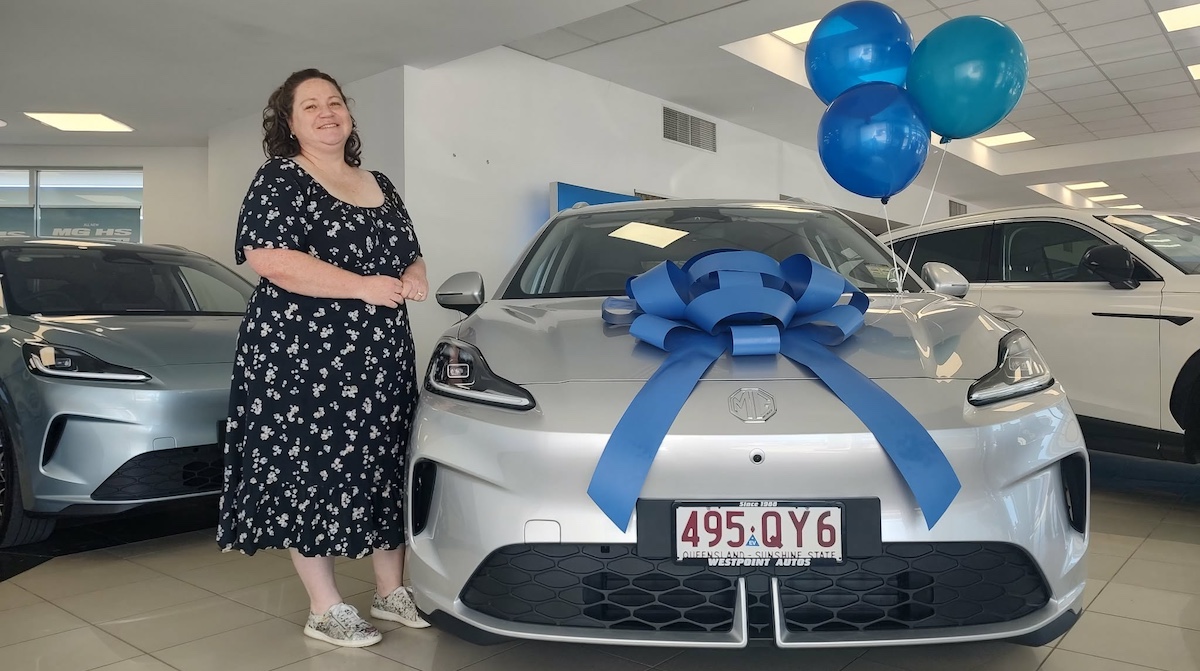
Purchasing an ex-demo MG4 Urban for $29,990 AUD, the Warren family’s transition offers a practical case study in the modern EV consumer experience. From navigating legacy dealership tactics to integrating home solar-charging infrastructure, this account highlights the financial, mechanical, and lifestyle realities of transitioning from a decades-old combustion hatchback to a modern, zero-emission electric vehicle.
Detailed Chronology: The Demise of "Swifty" and the Search for a Successor
The Final Drive
The sequence of events leading to the demise of the Warren family’s 2004 Suzuki Swift began long before that fateful Thursday. For quite some time, the vehicle had emitted a faint, intermittent rattling noise from the engine bay—a sound the household mechanically inclined husband described as "pinging." Believing the noise to be a minor issue linked to dirty fuel injectors or combustion inefficiencies, the family paid it little mind, attributing an intensification of the metallic rattle to driving near the bottom of the petrol tank.
The tipping point arrived on a busy Thursday. With multiple errands to run and the fuel gauge sitting low, Karryn picked up her 17-year-old son, Oscar, who was on his learner’s permit, planning to have him help refuel and drive them home.
Approximately a quarter of the way into the journey, the Suzuki began to lose acceleration response. As they navigated an uphill stretch of the highway, the vehicle struggled to maintain 100 km/h. Convinced they could limp home just 15 minutes away, they pressed on, unaware that the temperature gauge had climbed into the red zone.
Suddenly, pressing the accelerator yielded zero response. Coasting into the slow lane on an incline, the car ground to a halt roughly 30 meters short of a safe stopping bay. Smoke poured through the vehicle’s cabin vents, prompting immediate fears of a fire.
Working quickly during a brief lull in highway traffic, Karryn and Oscar popped the bonnet. While no external flames were visible, thick black smoke billowed from behind the engine block. Subsequent attempts to crank the engine yielded complete mechanical resistance; once the motor cooled, it turned over freely but exhibited absolute zero compression.
A passing motorist in a Suzuki Jimny assisted Oscar in pushing the stricken hatchback to a safer location while awaiting the arrival of Karryn’s husband. A seasoned hobbyist who had rebuilt multiple engines and restored classic cars—including a 1965 HD GM Holden and a 1966 GM HR Holden—he quickly diagnosed the situation. The engine had run dry of coolant, overheated severely, warped the cylinder head, blown the head gasket, and shattered the piston rings.
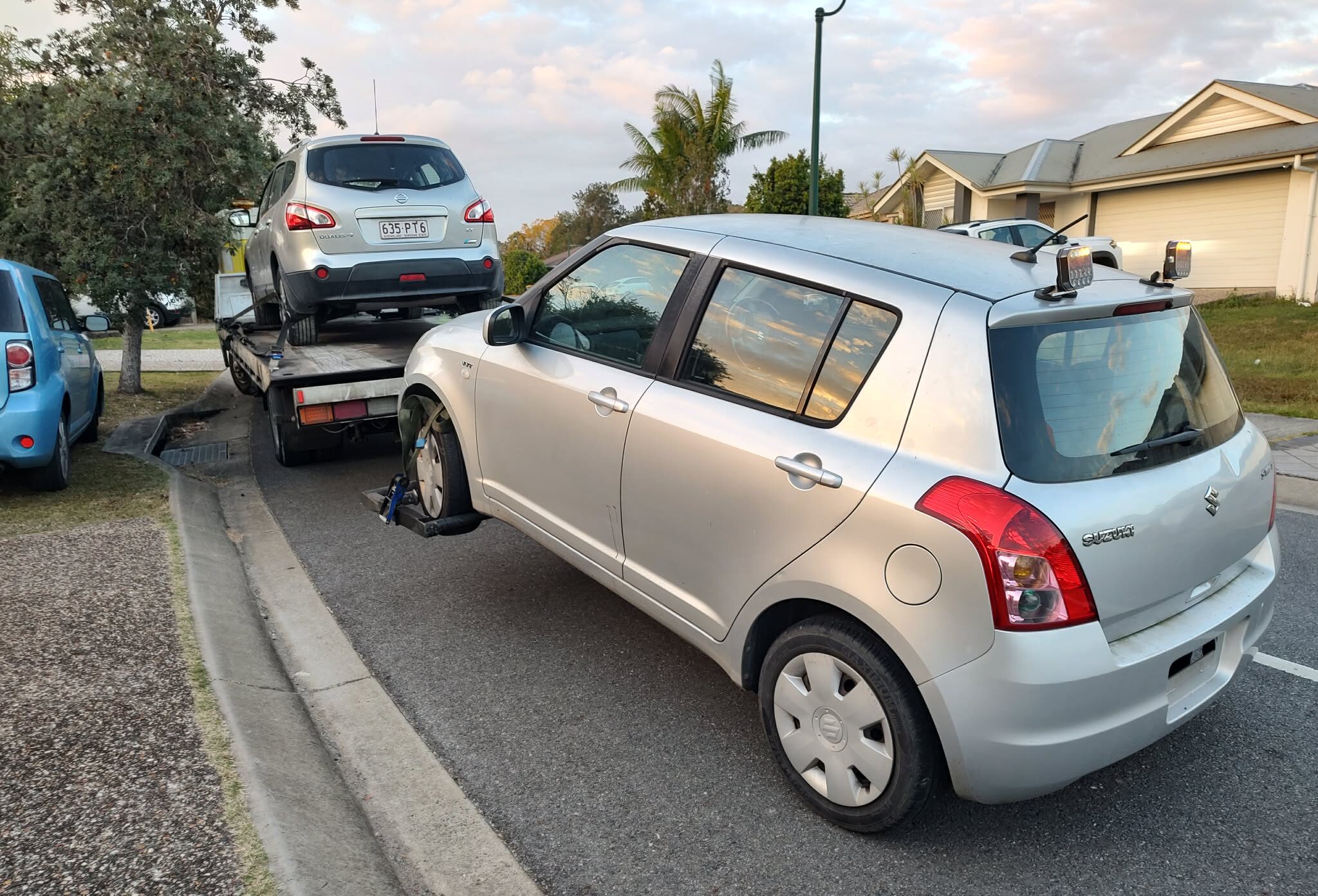
The damage was well beyond the scope of a home garage fix. Via Shannon’s insurance roadside assistance, the Swift was loaded onto a tow truck and sent to the wreckers.
The Petrol Surplus Dilemma
Before bidding farewell to Swifty, Karryn realized she had just topped off the fuel tank with $77 AUD worth of petrol. After siphoning the tank using jerry cans, the family discovered that their remaining vehicles—including a Chinese-built Tunza utility vehicle powered by a Cummins engine and BMW running gear—ran exclusively on diesel. Consequently, the family’s lawnmower inherited a generous and long-lasting supply of premium lawn fuel.
The EV Shopping Experience: Navigating Dealerships and Dimensions
With Swifty retired, the search for a replacement vehicle commenced. Karryn’s primary objective was clear: she wanted a secondhand electric vehicle comparable in size to the Suzuki Swift, aligning with her opposition to consumerist, throwaway economic models. Unfortunately, the local used EV market proved severely constrained.
Sizing Up the Market
Because the family members are notably tall and broad-shouldered, cabin ergonomics immediately narrowed their choices:
BYD Atto 1: Karryn experienced shoulder interference against the B-pillar, rendering the cabin too cramped.
BYD Dolphin: While Karryn found a tolerable fit, the driver’s side B-pillar crowded her husband, making side-by-side shoulder alignment impossible.
BYD Atto 2: Front-row shoulder fit improved, but rear-seat legroom was virtually nonexistent, forcing them to look at a higher price bracket.
Chery & MG ZS EV: Dealership staff for Chery were notably helpful, but the seat designs induced discomfort. The MG ZS EV presented similar ergonomic hurdles, with uncomfortable seats and an intrusive B-pillar.
Overcoming Legacy Sales Tactics
The dealership experience during the search underscored a significant disconnect between traditional automotive sales staff and the realities of modern electric vehicles. When inspecting a used MG ZS EV, the salesperson displayed a complete lack of familiarity with critical BEV metrics, expressing confusion when asked for a State-of-Health (SoH) battery report.
Later, when introduced to an ex-demo MG4 Urban, the salesperson proved cagey regarding pricing transparency, odometer readings, and battery longevity data. The encounter highlighted a broader industry truth: legacy high-pressure sales techniques do not resonate with educated EV buyers purchasing sophisticated battery-electric technology.
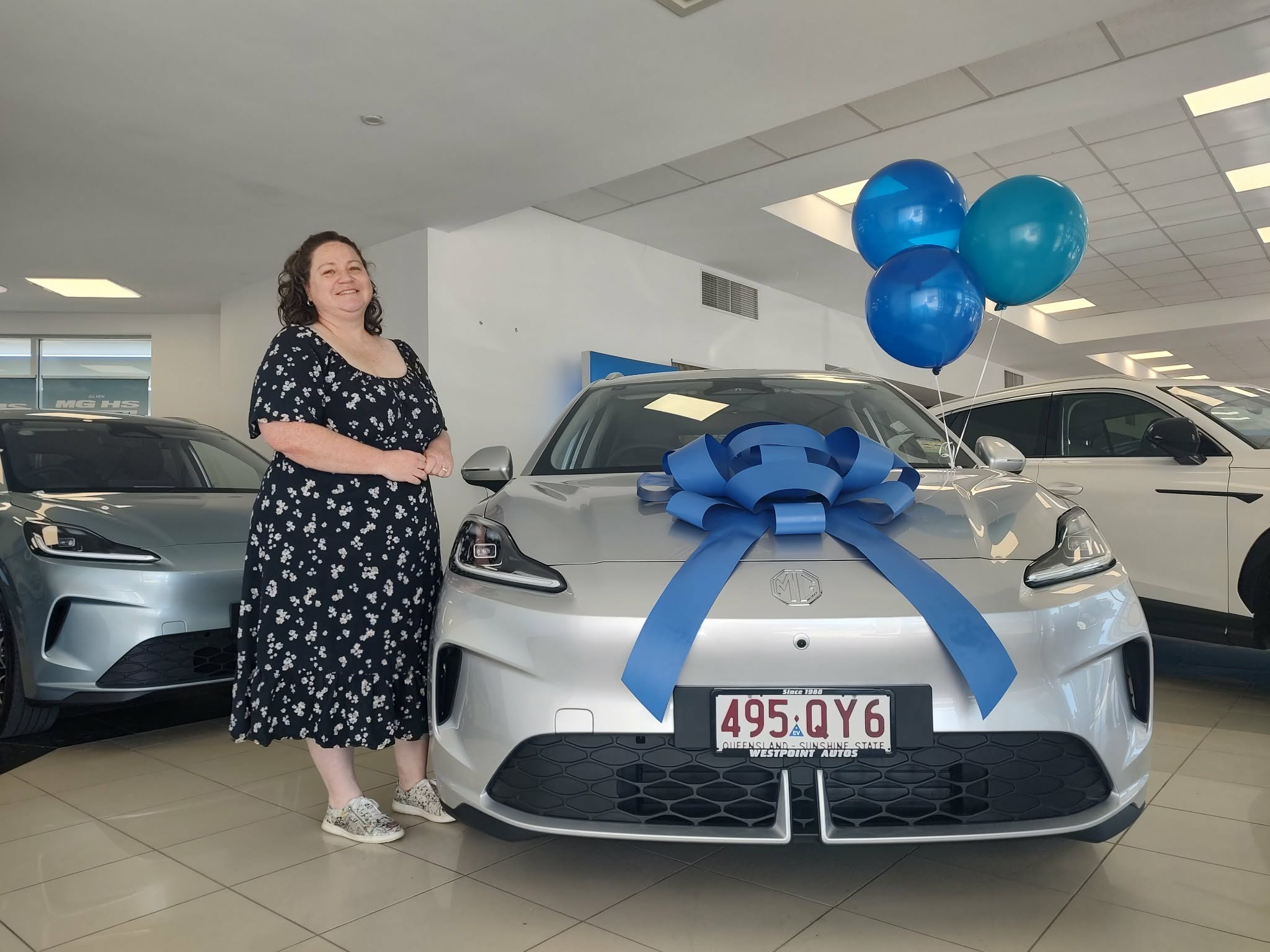
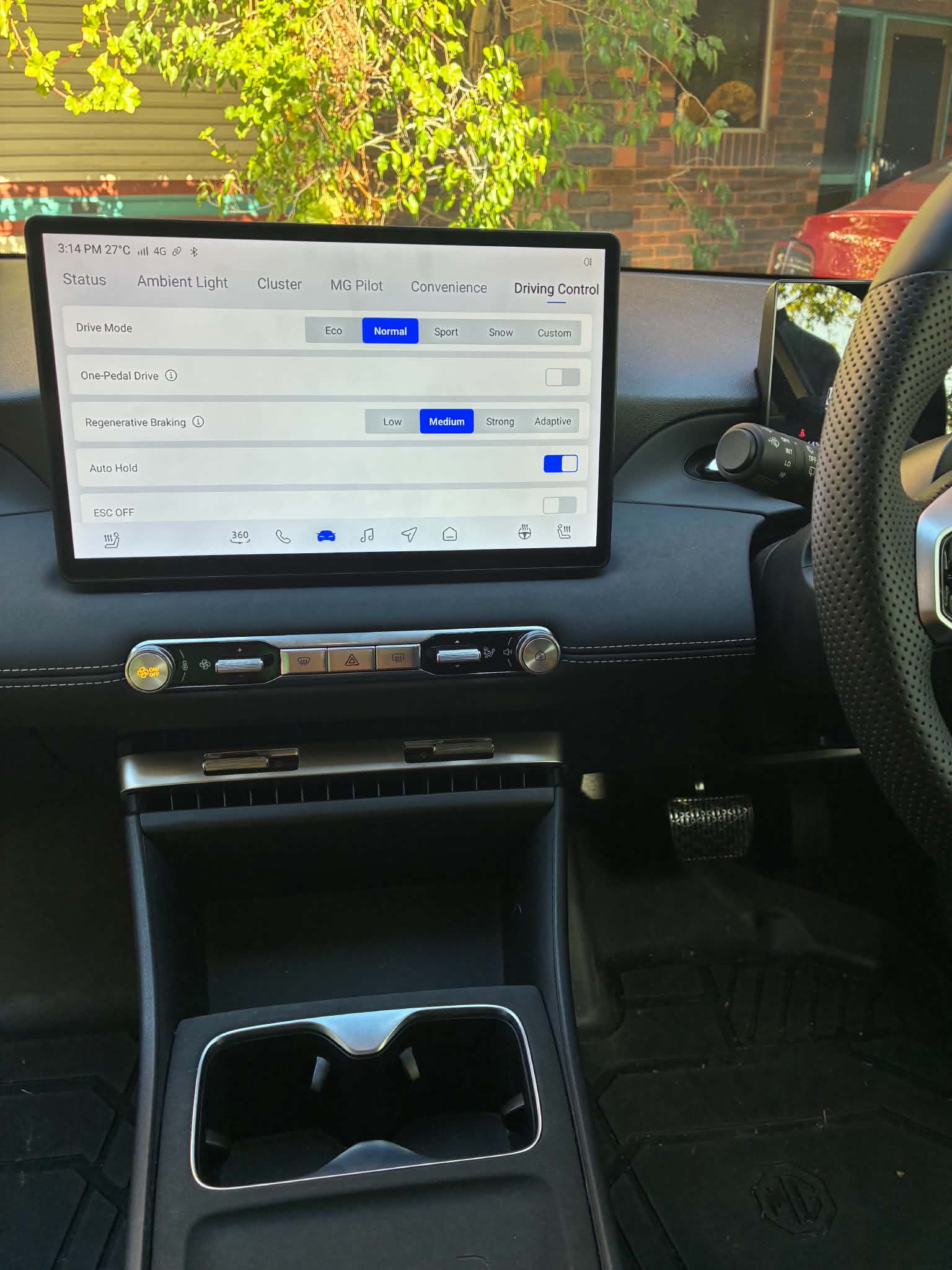
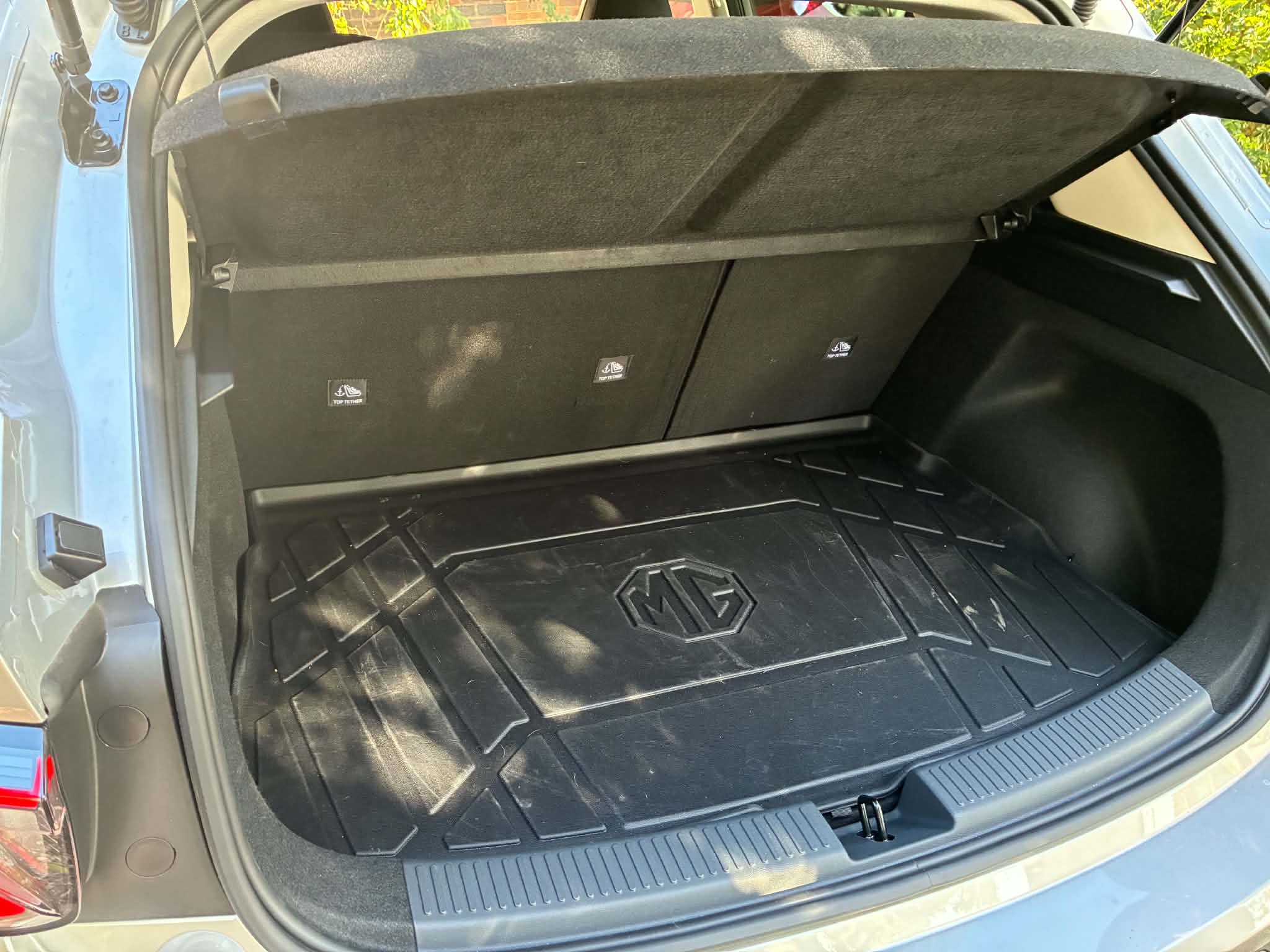
Seeking a more professional environment, the family visited Hillcrest MG, where sales representative Jeremy provided a comprehensive, practical breakdown of the vehicle’s systems before anyone even sat inside. Rather than leaping straight into the driver’s seat, Karryn wisely opted for the salesperson to drive the first leg of the test drive. This allowed her to evaluate the vehicle’s interface, digital displays, and handling dynamics without the cognitive overload of managing a completely unfamiliar powertrain. The experience sealed the deal: she fell in love with the MG4 Urban and committed to purchasing the ex-demo model for $29,990 AUD.
Supporting Context & Metrics: The Australian EV Landscape
Karryn’s purchase is reflective of a broader structural transformation underway in the Australian automotive market. According to recent sales data, the MG4 Urban accounted for 514 sales in Australia during August alone, securing the #12 spot on the national sales hit parade.
Dealership insiders report a fundamental shift in buyer demographics and showroom volume: over 50% of total sales at progressive dealerships are now electric, with an undeniable upward trajectory. Furthermore, manufacturers are aggressively expanding their zero-emission portfolios. MG, for instance, has announced the upcoming Australian market introduction of the MG U9 electric utility vehicle, signaling that electrification is rapidly moving beyond passenger hatchbacks into commercial and recreational segments.
Official Statements and Driving Impressions
The Adult Perspective: Comfort, Refinement, and Charging
Living with the MG4 Urban has radically altered the family’s daily commute and logistical routines. Karryn highlights several standout features:
Sensory Reduction: "There’s also less sensory input. Besides the car having amazing sound deadening… because the steering wheel isn’t directly connected to the wheels, I’m not getting constant feedback from the tyres/road, so it’s easier to hold onto."
Powertrain Simplicity: "There are only two gears—forwards and backwards—so it is much easier to use and more responsive than even an auto transmission. I don’t have to wait for it to find a gear, or shift down to get power to overtake."
Maneuverability: "Parking with the top-down camera is a breeze, big win there."
Software Integration: Utilizing the MG smartphone app allows cabin pre-cooling during extreme weather. Furthermore, digital key sharing eliminates the financial burden of replacing physical keys—a luxury that can cost upwards of $700 for modern ICE equivalents.
The Learner Driver’s Take
For 17-year-old Oscar, transitioning from a 20-year-old manual-feeling hatchback to a modern EV brought an entirely different driving dynamic:
"The Urban is a car made to drive. It’s so much fun because it’s so responsive and easy to drive, an even better ‘go-kart feel’ than the Swift, and that’s even in normal mode… Unless we’re on the highway—then it’s boring because the car does just about everything for you."
Home Solar Integration
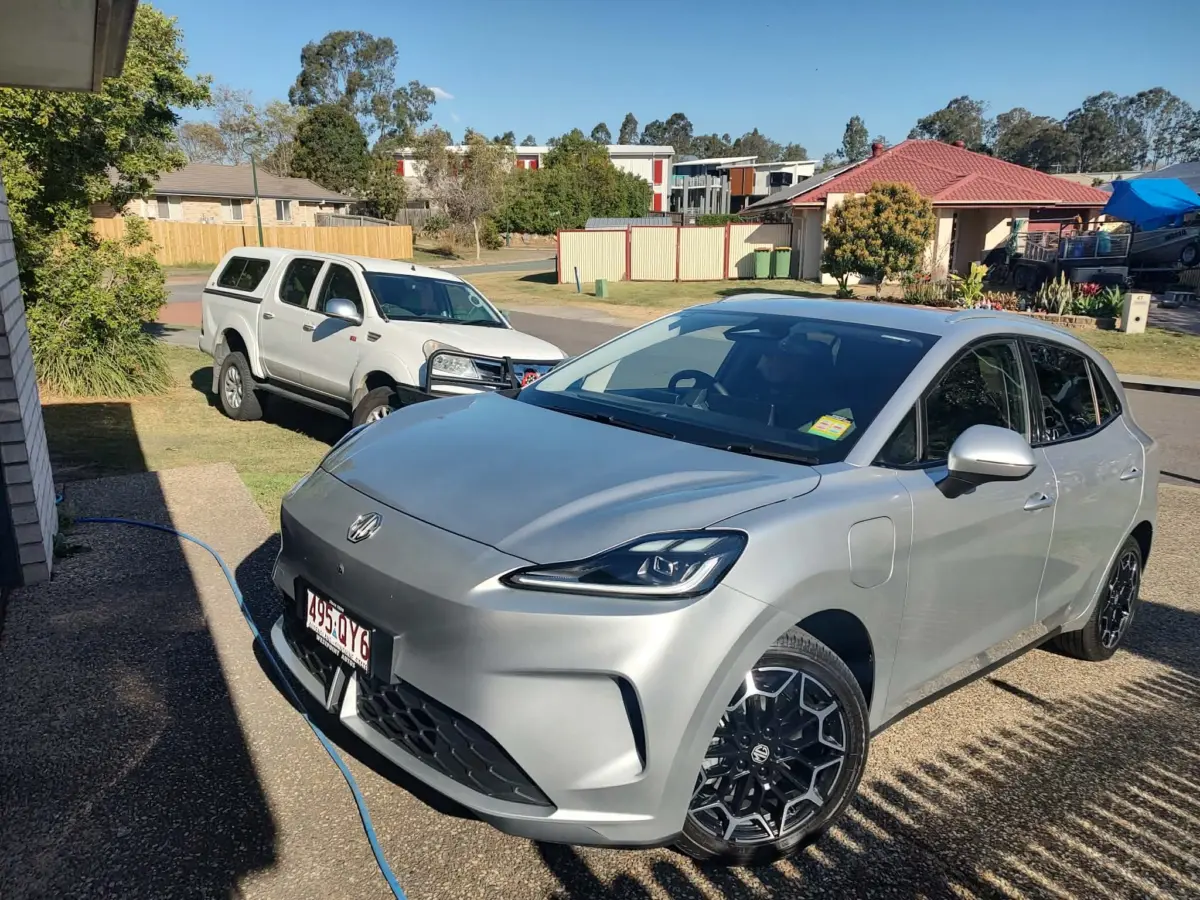
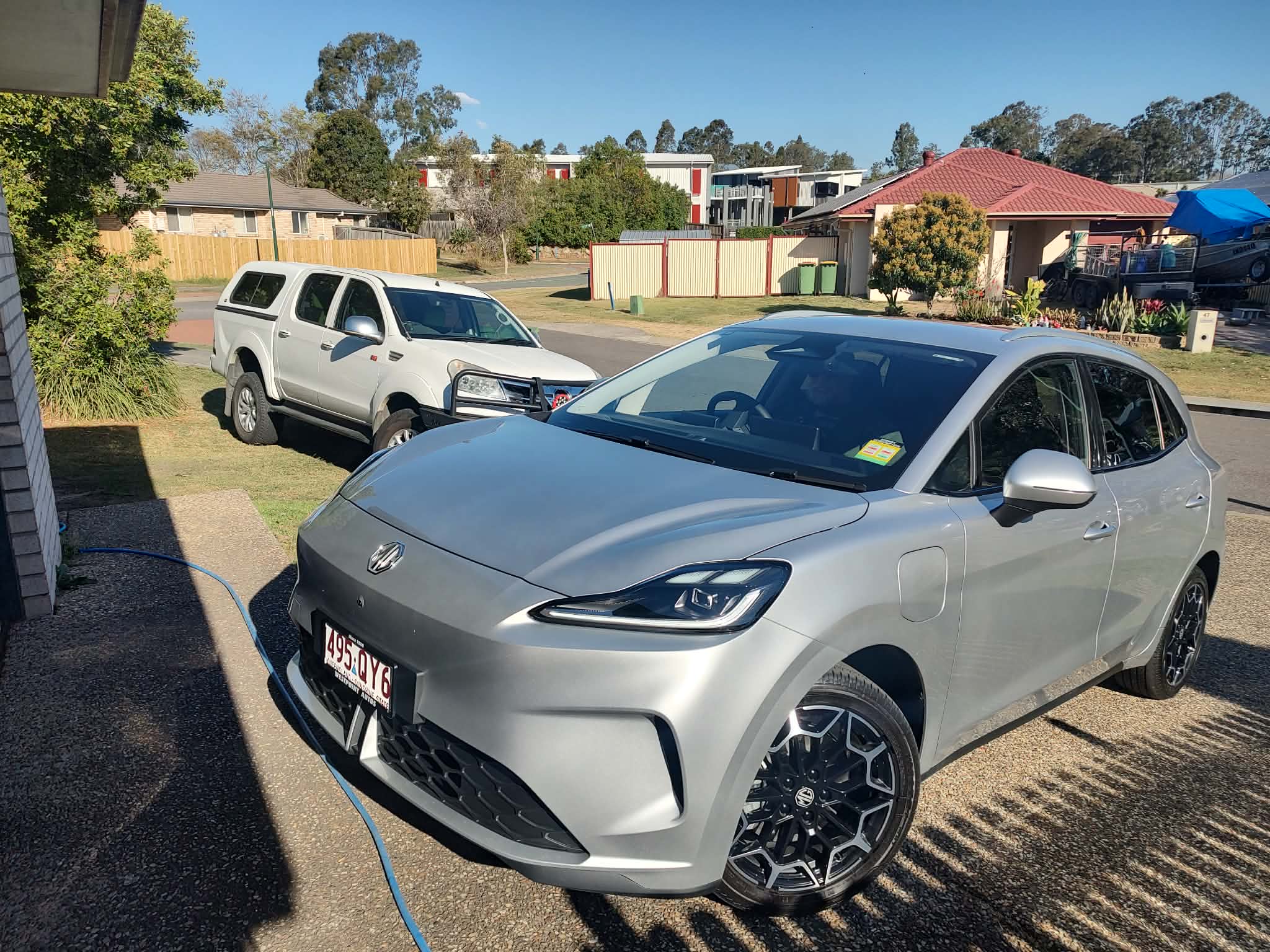
One of the most compelling aspects of the Warren family’s adoption of the MG4 Urban is its integration into their residential energy ecosystem. Rather than relying on commercial public charging networks for daily commuting, Karryn utilizes a standard domestic wall socket paired with rooftop solar panels.
By programming the vehicle’s charging schedule via the app to run between 8:00 AM and 3:00 PM, the car absorbs excess solar generation from the household’s rooftop array (or home battery storage during cloudy intervals). This routine effortlessly replenishes the battery from 70% to 90% purely through self-generated renewable energy, turning the vehicle into a mobile extension of their home energy system.
Future Outlook
The Warren family’s journey—from the smoky demise of a Suzuki Swift on a regional highway to the silent, solar-powered efficiency of an MG4 Urban—mirrors the trajectory of the broader clean energy transition.
As mechanical reliability issues and escalating maintenance costs push aging internal combustion vehicles off the road, consumers are increasingly discovering that modern electric vehicles offer superior mechanical simplicity, lower operational costs, and unprecedented integration with home renewable energy systems. With automakers expanding EV offerings into utility vehicles and commercial segments, and with dealership networks steadily adapting to educated, tech-savvy buyers, stories like Karryn’s are poised to shift from notable anecdotes to the everyday norm of global mobility.