








Executive Overview
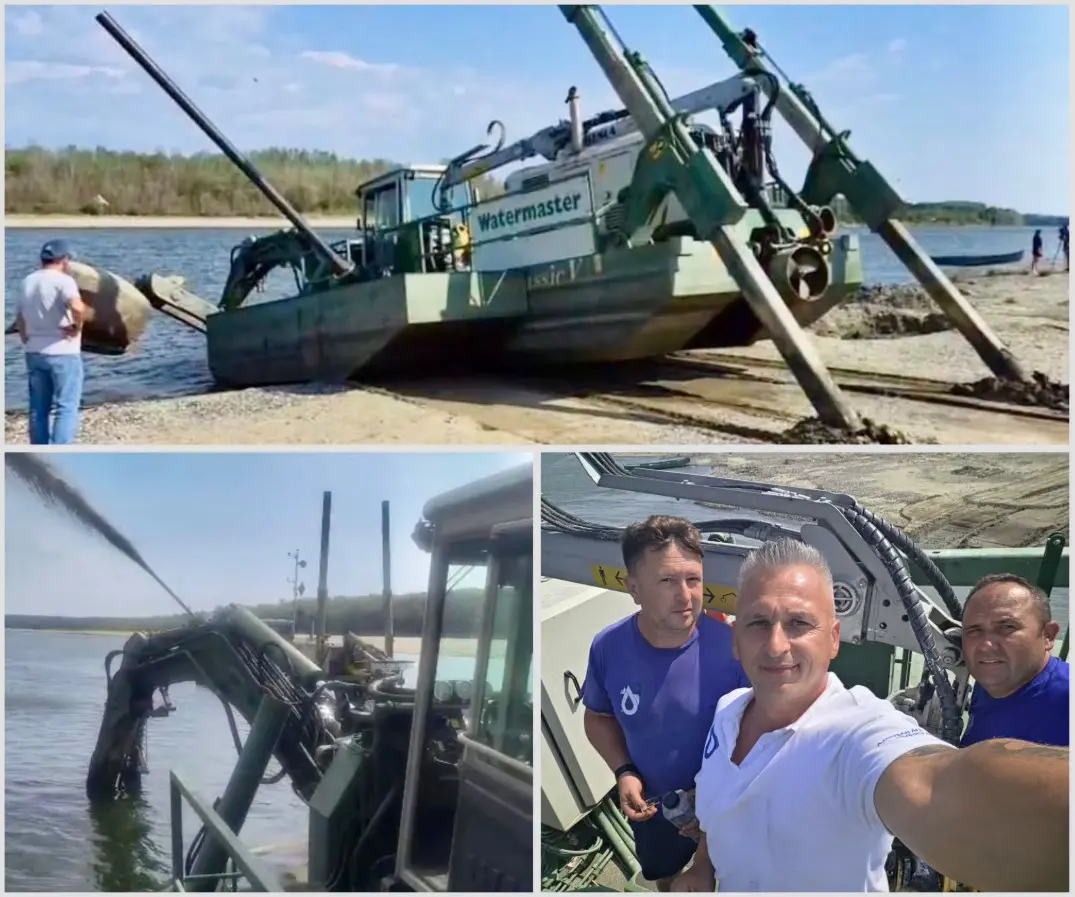
In an urgent response to an unprecedented hydrological crisis, authorities in Romania have mobilized heavy machinery to execute emergency dredging operations on the Danube River. The Apele Române Crișuri (Crișuri Water Basin Administration) has deployed an advanced Watermaster amphibious multipurpose machine to the strategic stretch of the river at Cernavodă. This critical intervention is designed to combat severely depressed water levels that have directly threatened the operational continuity of the Cernavodă Nuclear Power Plant—Romania’s sole nuclear facility and a cornerstone of its national power grid.
The deployment follows a rapid allocation of funds by the Romanian Government, which approved €1.02 million for urgent dredging works. Prolonged meteorological and hydrological droughts have caused water flows in the Danube to plummet, restricting the intake channels required to draw essential cooling water for the plant’s nuclear reactors. By clearing accumulated silt, sand, and sediment bottlenecks from the riverbed, the ongoing dredging aims to restore adequate volumetric flow to the facility’s intake structures, mitigate power generation shortfalls, and ensure national energy security.
This report provides an in-depth look at the unfolding crisis, detailing the operational mechanics of the intervention, the broader environmental and economic implications of the Danube’s low water levels, the financial and governmental response, and the long-term outlook for energy and water management in the region.
Detailed Chronology of the Cernavodă Crisis
The Escalation of Hydrological Strains
The current crisis on the Danube did not materialize overnight; rather, it represents the culmination of months of below-average precipitation, unusually high summer temperatures, and upstream retention patterns that have heavily impacted the lower Danube basin. Throughout the spring and summer of 2026, hydrologists noted a steep decline in water volume entering Romanian territory from Central Europe, setting off early warning alarms across industrial, agricultural, and energy sectors.
By mid-August 2026, the situation reached a critical threshold. The discharge rates of the Danube dropped to fractions of their historical multi-year averages for the late-summer season. The dropping water levels created severe shoals and sediment banks near critical infrastructure points, most notably around the Cernavodă nuclear complex, which relies on a constant, high-volume flow of river water for its secondary cooling systems.
Emergency Measures and Government Intervention
As water levels fell past safe operational thresholds, plant operators and national regulators faced a worst-case scenario: the forced shutdown of the facility’s reactors to prevent catastrophic overheating. To avert this national security and economic risk, the Romanian Government fast-tracked emergency legislation and funding.
- August 2026: The Romanian Government formally approves an emergency budget allocation of €1.02 million specifically targeted at urgent dredging operations on the Danube River.
- Mid-to-Late August 2026: Apele Române Crișuri mobilizes its specialized fleet, dispatching a versatile Watermaster amphibious machine to the Cernavodă sector.
- Operational Commencement: Dredging teams begin round-the-clock clearance of the riverbed, focusing on localized sediment deposits that obstruct water from entering the Cernavodă-Black Sea Canal and the power plant’s dedicated cooling water intake channels.
The Operational Mechanics: Deploying the Watermaster
Why the Watermaster?
In shallow, environmentally sensitive, and logistically challenging environments like the lower Danube during a drought, traditional bucket-ladder or hopper dredgers are often impractical. They require deep draft channels to navigate and can struggle in confined intake basins. To overcome these constraints, Apele Române selected a Watermaster amphibious dredging machine.
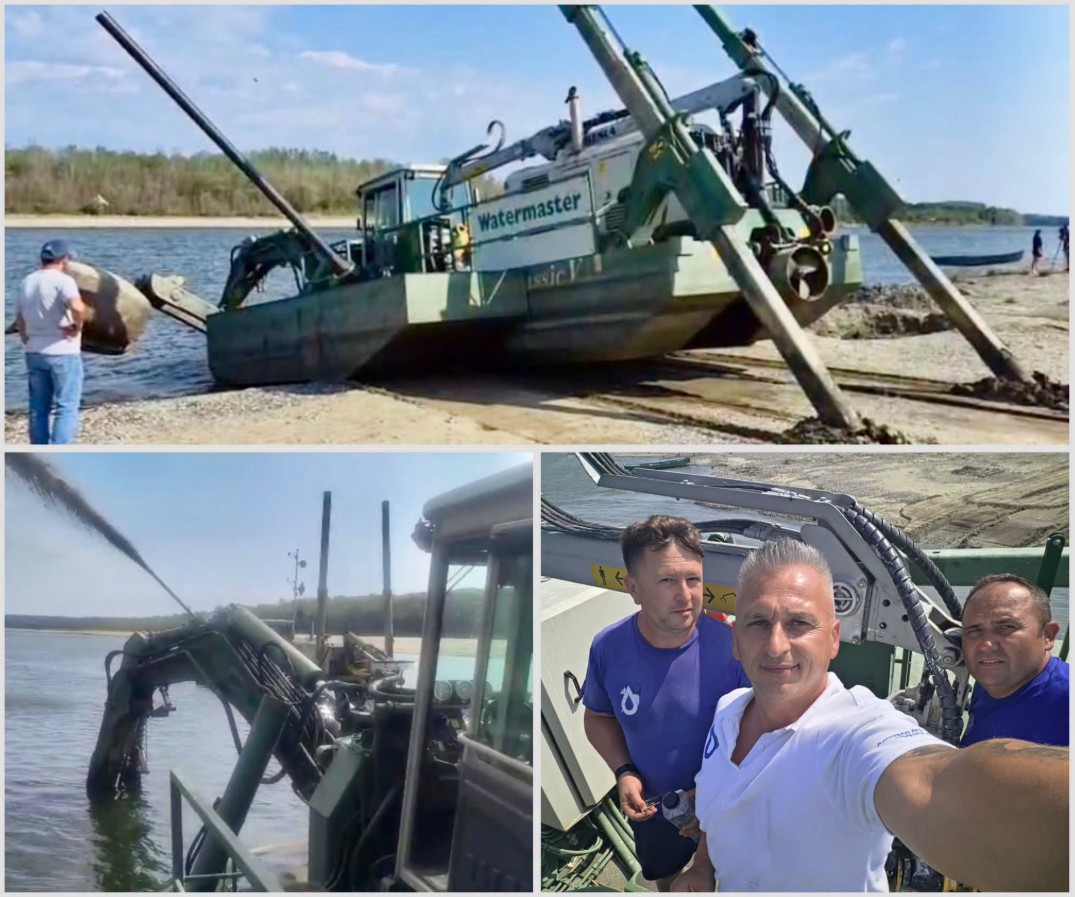
The Watermaster is a uniquely engineered, self-propelled multipurpose vessel that can operate on land, in shallow water, and in deep water. Key operational characteristics include:
- Amphibious Mobility: Equipped with crawler tracks and stabilizing spuds (anchoring legs), the machine can crawl into position from the riverbank, eliminating the need for extensive port infrastructure or heavy cranes during deployment.
- Multi-Functionality: The unit functions simultaneously as a cutter suction dredger, an excavator, a pile driver, and a rake. This versatility allows operators to not only pump sediment away via pipelines but also to physically lift and clear heavy debris, submerged logs, and dense aquatic vegetation.
- Environmental Precision: During emergency operations where ecological monitoring is mandatory, the Watermaster’s precise positioning minimizes unnecessary bottom disturbance, reducing turbidity spikes compared to larger, less maneuverable trailing suction hopper dredgers.
Engineering the Clearance at Cernavodă
At Cernavodă, the primary objective is straightforward yet high-stakes: re-establish a deep, unobstructed conduit from the main navigational channel of the Danube into the industrial intake basins.
As the river level dropped, sedimentation accelerated in the slower-moving water near the banks. The accumulated silt formed underwater sandbars that effectively choked off the natural flow vectors toward the plant’s pumps. The Watermaster is systematically excavating these deposits, pumping the slurry to designated onshore containment areas where the water can decant and return to the river system cleanly, while the dry solids are managed in accordance with environmental regulations.
Supporting Context & Metrics: The Anatomy of a Drought
The Strategic Importance of Cernavodă
The Cernavodă Nuclear Power Plant is indispensable to Romania’s energy independence and transition away from fossil fuels. Utilizing Canadian-developed CANDU pressurized heavy-water reactor technology, the plant houses two operational units (Unit 1 and Unit 2) that collectively generate approximately 20% of Romania’s total electricity supply.
Because nuclear reactors generate immense amounts of thermal energy, they require massive, uninterrupted volumes of cooling water. Unlike closed-loop systems that utilize cooling towers, Cernavodă employs a once-through cooling system that draws water directly from the Danube River (via the Danube-Black Sea Canal system) and returns it at a regulated, slightly elevated temperature. When the river level drops below design specifications, the physical capacity of the intake pumps is compromised, forcing operators to curtail power output or initiate preventive shutdowns to protect the reactor cores.
Hydrological Data and Climate Pressures
The 2026 drought highlights a broader, worrisome trend across the European continent. The Danube River basin—spanning ten countries and serving as a lifeline for over 80 million people—has experienced recurring hydrological stress over the past decade.
Key factors contributing to the current crisis include:
- Diminished Snowpack: Reduced winter snowfall in the Alps and the Carpathians has led to chronically low spring meltwater pulses.
- Extended Heatwaves: Unprecedented summer temperatures across Southeast Europe have accelerated evaporation rates along the Danube’s 2,850-kilometer journey.
- Altered Flow Regimes: Upstream hydropower dams and flood-control infrastructure have altered natural sediment transport and water retention, exacerbating low-flow conditions in downstream nations like Romania.
Official Statements and Stakeholder Perspectives
The emergency response has elicited commentary from various government bodies, environmental watchdogs, and energy sector analysts.
Government and Regulatory Resolve
In its official communique announcing the €1.02 million funding package, the Romanian Government emphasized that the primary goals of the emergency works are twofold: safeguarding critical infrastructure and maintaining environmental equilibrium.
"These urgent interventions are designed to decisively mitigate the risks of unavailability across our core electricity production capacities," a government spokesperson stated. "Ensuring the continuous, stable supply of energy to Romanian households and industries is paramount. At the same time, all dredging activities are being closely monitored in real-time to track and minimize any short-term effects on the fragile local hydrological regime and aquatic ecosystem."
Apele Române on Operational Readiness
Representatives from Apele Române Crișuri highlighted the efficiency of the deployed machinery and the dedication of the field crews working around the clock.
"The deployment of the Watermaster unit at Cernavodă demonstrates our capacity to react swiftly to extreme weather anomalies," noted a basin administration official. "By clearing these critical bottlenecks right at the intake zone, we are restoring hydraulic connectivity between the main river channel and the plant facilities. We anticipate that these measures will secure the necessary water abstraction rates required for stable plant operations through the remainder of the dry season."
Future Outlook: Building Resilience in a Changing Climate
While the emergency dredging at Cernavodă provides an immediate, tactical solution to an acute crisis, industry experts and environmental engineers agree that short-term dredging is not a sustainable long-term strategy for managing climate-induced water scarcity.
Adapting Infrastructure for Extreme Weather
As climate projections indicate that severe droughts and extreme hydrological fluctuations will become increasingly common in the Danubian basin, systemic adaptation is required. Future-proofing Romania’s energy sector will likely require:
- Intake Redesign and Deepening: Permanent structural modifications to industrial and energy water intakes to allow reliable operation under significantly lower baseline river stages.
- Advanced Hydro-Monitoring Networks: Implementation of AI-driven hydrological forecasting models that can predict localized drying trends weeks in advance, allowing for proactive rather than reactive dredging schedules.
- Upstream Water Management Cooperation: Strengthening cross-border diplomatic and technical cooperation among Danube riparian states to optimize water retention and release schedules during drought years.
Conclusion
The emergency dredging operations currently underway at Cernavodă underscore the vulnerability of critical energy infrastructure to the accelerating impacts of climate change. Through the rapid deployment of versatile amphibious machinery like the Watermaster and the prompt release of emergency state funds, Romanian authorities have demonstrated a resolute commitment to averting a major energy shortfall. However, as the Danube continues to face extreme hydrological pressures, this crisis serves as a stark reminder that long-term resilience will demand comprehensive structural adaptation, sophisticated water resource planning, and sustained regional cooperation across Europe.