








Executive Overview
The global transportation sector is undergoing a profound and accelerated transformation, driven by the convergence of aging infrastructure replacement, aggressive climate mandates, and the rapid maturation of artificial intelligence. Across North America, transit agencies, motorcoach operators, and heavy-duty manufacturers are forging strategic alliances, deploying next-generation zero-emission fleets, and integrating sophisticated cloud-based traffic management systems.
In this comprehensive edition of Biz Briefs, we examine the pivotal developments defining the modern mobility landscape. From massive multi-billion-dollar federal and provincial rail investments to groundbreaking autonomous vehicle funding rounds, the industry is not merely recovering from past disruptions—it is actively redesigning itself. Key players such as Alstom, New Flyer, Complete Coach Works, Beep, Transdev, FlixBus, and LAVTA are leading the charge, proving that the future of public transit relies on resilience, digital connectivity, and unwavering commitments to passenger safety and accessibility.
Detailed Chronology of Industry Developments
1. Alstom Secures $3.4 Billion Agreement for VIA Rail Canada’s New Intercity Fleet
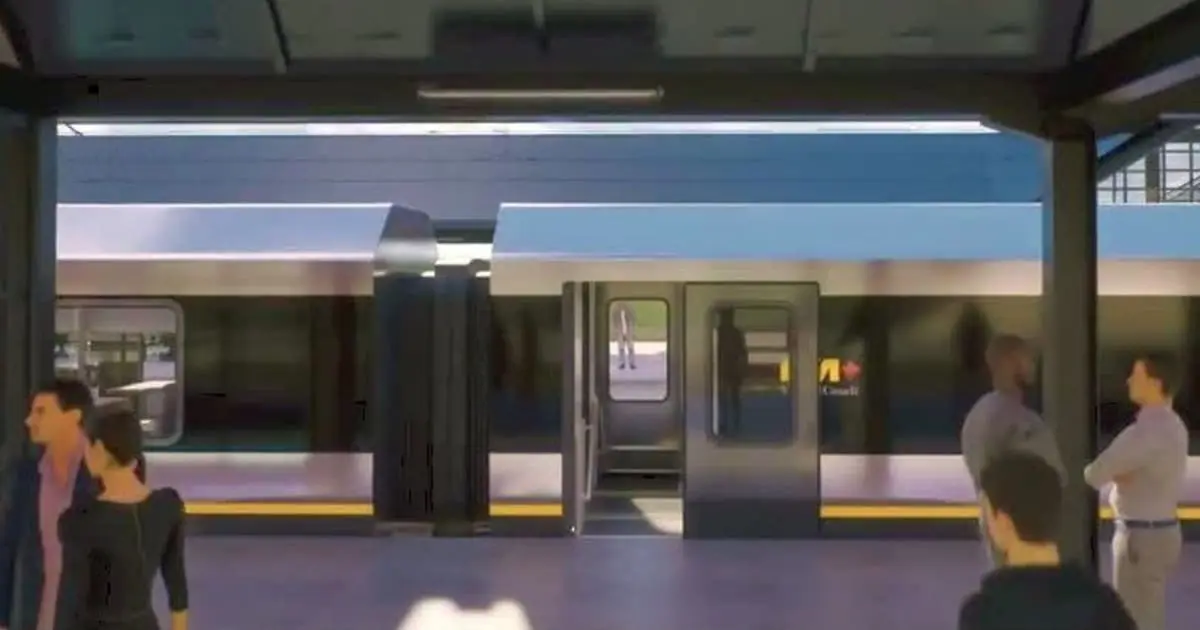
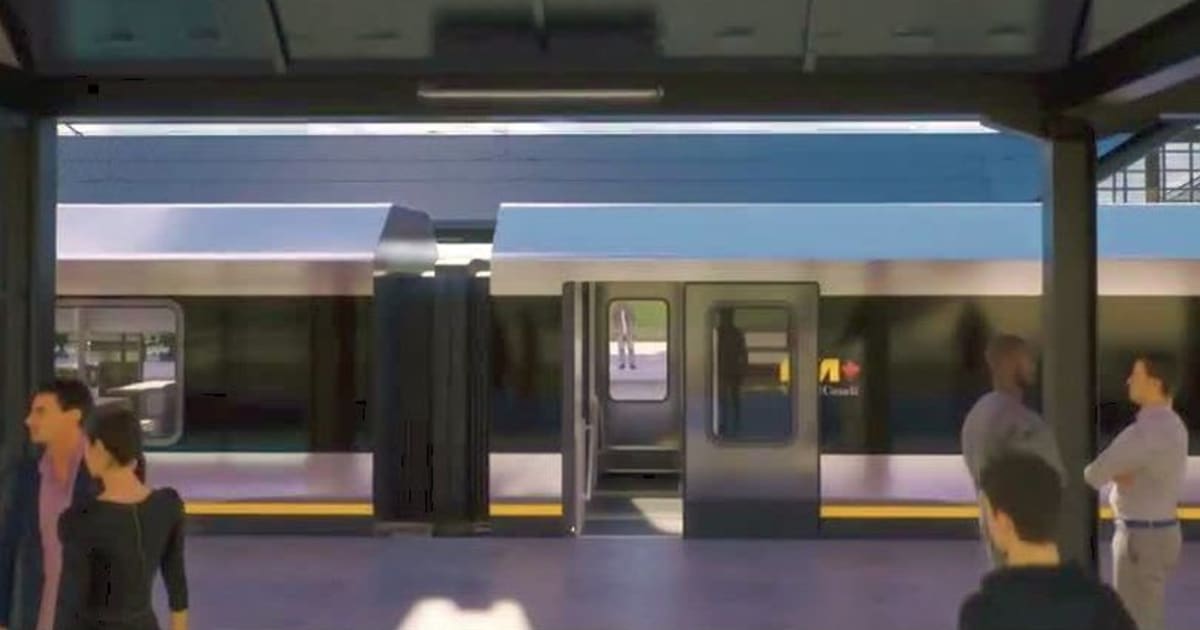
In a monumental step forward for North American passenger rail, Alstom has officially signed a sweeping agreement with VIA Rail Canada to design, engineer, manufacture, and support a comprehensive new Long Distance, Regional, and Remote (LDRR) fleet. Valued at approximately $3.4 billion CAD total, the contract comprises two core components: the delivery of 313 state-of-the-art Adessia railway cars valued at $2.9 billion, paired with a 15-year Technical Support and Spare Parts Supply Agreement (TSSSA) valued at nearly $506 million.
Engineered specifically to endure Canada’s notoriously extreme climate fluctuations, these new railcars will be manufactured domestically. The project aims to dramatically expand travel accessibility for regional and remote communities—including numerous First Nations populations that depend heavily on reliable rail links. By replacing antiquated rolling stock that has been in service for up to 77 years, VIA Rail will introduce modern standards for passenger comfort, universal accessibility, and digital connectivity without sacrificing the classic look and feel cherished by generations of Canadian travelers.
2. Denver RTD Commits to Clean-Diesel Articulated Fleet with New Flyer
The Regional Transportation District (RTD) of Denver has expanded its operational capacity through a major procurement order with New Flyer of America Inc., a subsidiary of NFI Group. Officially added to New Flyer’s second-quarter backlog, the contract covers the acquisition of 47 Xcelsior 60-foot clean-diesel heavy-duty transit buses. Furthermore, the agreement includes flexible options for up to 80 additional 60-foot articulated buses (equivalent to 160 standard units) to accommodate future network growth.
The primary catalyst for this acquisition is the upcoming East Colfax Bus Rapid Transit (BRT) project—a collaborative initiative between RTD, the City of Denver, and the City of Aurora. Slated to launch passenger service in early 2028, the East Colfax BRT stands as one of the region’s most significant transit capital investments. The newly ordered Xcelsior buses are purposefully designed for high-capacity corridors, featuring a three-door configuration for accelerated passenger boarding, level-flooring architecture to minimize dwell times, and interior bicycle storage designed to foster seamless multimodal travel.
3. Complete Coach Works Finalizes Fleetwide Driver Protection for C-TRAN
Enhancing operator safety has taken center stage across North American transit agencies, and Complete Coach Works (CCW) has delivered a major milestone on this front for Washington State’s C-TRAN. CCW recently completed a comprehensive, fleetwide installation project implementing Wabtec Vapor vShield Operator Protection Barriers across 113 vehicles.
Executing the project directly out of C-TRAN’s maintenance facility in Vancouver, Washington, CCW technicians retrofitted a diverse mix of Gillig and New Flyer bus models. Because public transit fleets rarely feature uniform interior layouts, each individual barrier was custom-engineered and fitted to meet exact vehicle specifications, complying with rigorous national transit safety standards. This project underscores CCW’s broader mission to help transit agencies extend asset lifecycles, elevate vehicle resale values, and protect frontline personnel from physical assaults.
4. Beep Closes Series B Funding Led by Mobileye to Scale Autonomous Operations
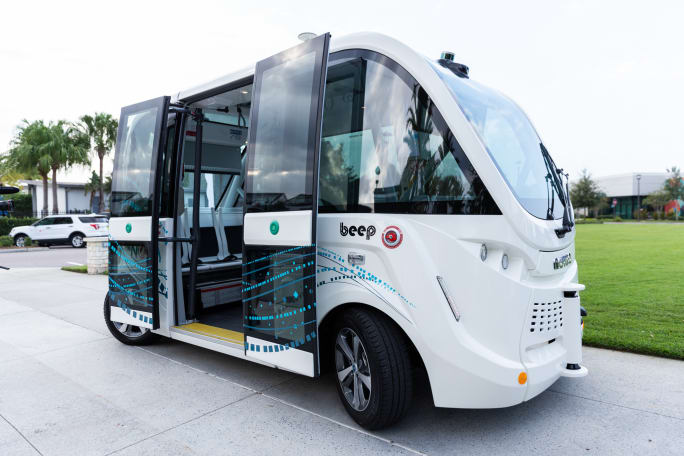
Autonomous vehicle (AV) deployment took a significant financial and strategic leap forward as Beep Inc. announced the successful close of its Series B funding round. This latest capital infusion brings Beep’s total historical fundraising footprint to approximately $130 million. The round was spearheaded by Mobileye—a global leader in autonomous driving technology and advanced driver-assistance systems (ADAS)—with continued participation from existing institutional investors.
The newly secured capital will enable Beep to aggressively scale its Mobility-as-a-Service (MaaS) portfolio, strengthen public-private partnerships, and expand deployment of its proprietary, AI-driven AutonomOS platform. AutonomOS leverages Beep’s years of operational experience as a primary AV network manager to reduce the operational friction associated with physical AI orchestration. According to company leadership, the collaboration with Mobileye validates market readiness for commercial-scale deployment of both fixed-route autonomous shuttles and on-demand microtransit across the United States.
5. Transdev and Greater Hartford Transit Renew Long-Standing Paratransit Partnership
Continuity and reliability remain the backbone of specialized transit services. Transdev has officially secured a contract renewal with Greater Hartford Transit (GHT) to continue operating paratransit services throughout the Greater Hartford, Connecticut region. The renewed agreement, which commenced on July 1, establishes a three-year base term supplemented by two additional one-year extension options.
Under the terms of the agreement, Transdev will continue to deliver turnkey paratransit management—encompassing centralized reservations, dynamic scheduling, advanced dispatching, and comprehensive call center operations. Averaging approximately 40,000 passenger trips each month across Hartford and adjacent communities, this contract extension builds upon a continuous operating history that began in 2005 under Laidlaw Transit, positioning the partnership to reach a remarkable 26-year milestone by the conclusion of this term.
6. FlixBus and Autobus Maheux Bridge Domestic Intercity Travel in Quebec
Intercity bus networks are expanding their digital footprints through innovative distribution partnerships. FlixBus has established a strategic collaboration with Quebec-based motorcoach operator Autobus Maheux, marking the first time the FlixBus digital platform has supported domestic intercity travel within the province of Quebec.
Through this digital integration, travelers can now seamlessly book Autobus Maheux’s established Montréal–Laval–Gatineau–Ottawa route directly via the FlixBus website and mobile application. Operating four daily round trips seven days a week, the route serves six primary transit hubs, including the Montréal central bus terminal and Ottawa’s Waller Street station. By combining Autobus Maheux’s nearly seven decades of regional operating expertise with FlixBus’ global travel technology platform, passengers gain unprecedented visibility and booking convenience, bridging travel corridors between Quebec, Ontario, and the wider North American network.
7. LAVTA Selects LYT to Modernize Tri-Valley Transit Signal Priority
California’s Livermore Amador Valley Transit Authority (LAVTA), operator of the Wheels bus system, has chosen LYT to implement an advanced, cloud-based Transit Signal Priority (TSP) network across the Tri-Valley region. Following a rigorous evaluation conducted alongside municipal staff from Livermore, Dublin, and Pleasanton, LAVTA’s board authorized a five-year deployment contract.
The initiative targets 67 strategic intersections—33 in Livermore, 26 in Dublin, and eight in Pleasanton—prioritizing LAVTA’s heavily traveled Rapid routes 10R and 30R. These corridors connect local commuters directly to BART, the Livermore Transit Center, and ACE commuter rail stations. Utilizing LYT’s cloud-based platform, approaching buses dynamically request extended green lights or shortened red phases, allowing delayed vehicles to recover schedule time while minimizing disruptions to cross-street vehicular traffic. LAVTA plans to scale this technology from its initial pilot group of 20 equipped buses to its entire 68-bus fleet.
Supporting Context & Industry Metrics
The cumulative financial commitments and strategic deployments highlighted in this edition reflect broader structural shifts in the transportation ecosystem:
- Decarbonization and Asset Renewal: Federal investments, such as those seen in Canada’s $3.4 billion rail overhaul and Denver RTD’s clean-diesel and BRT initiatives, underscore a dual approach: upgrading mass transit corridors to pull commuters out of personal automobiles while systematically cleaning up tailpipe emissions.
- The Safety-First Paradigm: Projects like C-TRAN’s fleetwide installation of Wabtec Vapor vShield barriers demonstrate that transit agencies are prioritizing the psychological and physical well-being of operators, directly addressing industry-wide labor retention challenges.
- The Rise of Physical AI: Beep’s $130 million cumulative capital raise, anchored by Mobileye, proves that venture capital and technology conglomerates view autonomous transit not as a distant futuristic concept, but as a commercially viable solution to modern urban congestion and labor shortages.
- Digitization of Intercity Networks: Traditional regional operators are increasingly turning to software-driven aggregation models—such as the FlixBus and Autobus Maheux partnership—to capture digital-native consumers and simplify cross-provincial ticketing.
Official Statements and Industry Insights
Industry leaders emphasize that these varied initiatives are interconnected threads of a larger modernization movement:
"The acquisition of these 60-foot articulated buses is a foundational element of our East Colfax BRT strategy. By enhancing passenger flow, utilizing level boarding, and streamlining fare collection, we are building a transit system designed for the next generation of urban growth."
— Denver RTD Spokesperson"Our Series B funding milestone validates Beep’s position as an essential transit partner. By integrating our AutonomOS platform with Mobileye’s cutting-edge sensor technology, we are removing the operational complexity from real-world autonomous deployments."
— Beep Executive Leadership"This collaboration with Autobus Maheux represents a major milestone for domestic travel in Quebec. By fusing nearly 70 years of local operating experience with our global distribution network, we are making regional travel simpler and more accessible than ever before."
— FlixBus Representative
Future Outlook: What Lies Ahead for Mobility
As the transportation sector looks toward the latter half of the decade, several key trajectories are expected to shape the market:
- Accelerated AV Commercialization: With major financial backing now secured by firms like Beep and technological validation from autonomous pioneers like Mobileye, expect to see an exponential increase in pilot programs transitioning into permanent, fixed-route and on-demand microtransit deployments across suburban and urban American landscapes.
- Cloud-Driven Traffic Optimization: Traditional, hardwired traffic signal systems are rapidly giving way to cloud-native platforms like LAVTA’s implementation of LYT. The ability to dynamically prioritize transit fleets without costly roadside infrastructure overhauls will become the gold standard for mid-sized and large transit agencies alike.
- Omnichannel Intercity Travel: The blurring lines between independent regional motorcoach operators and global mobility aggregators will continue. Consumers will increasingly demand single-platform booking capabilities that seamlessly knit together municipal buses, regional rail, intercity coaches, and first-mile/last-mile autonomous shuttles.
Ultimately, whether through multi-billion-dollar infrastructure overhauls, the retrofitting of driver protection barriers, or the deployment of cloud-engineered traffic management algorithms, the modern transit industry is proving its adaptability, setting a high benchmark for safety, efficiency, and sustainability in the years to come.