






Executive Overview
The motorcoach and group transportation industry—long defined by paper ledgers, fragmented local operators, decentralized phone bookings, and operational opacity—is undergoing a massive structural transformation. For decades, the sector operated much as it did in the mid-twentieth century: a patchwork of independent regional operators navigating a high-friction landscape to connect travelers with available coaches. Today, however, advanced logistics software, artificial intelligence (AI), electric vehicle (EV) integration, and autonomous vehicle (AV) deployment are rapidly rewriting the industry’s rulebook.
At the center of this paradigm shift is CharterUP, a technology-driven mobility platform that has expanded far beyond its original roots as an online charter bus marketplace. Managing a vast network encompassing more than 10,000 buses and over 700 verified operators across the United States, CharterUP is positioning itself as the foundational software layer for modern group transportation.
In a recent, wide-ranging interview on the METROspectives podcast with METRO Executive Editor Alex Roman, CharterUP Founder and Chief Executive Officer Armir Harris detailed the company’s evolution. Discussing the challenges of scaling a tech platform in a legacy industry, Harris explored how CharterUP bridges the divide between private corporate shuttles and public mass transit, the impending integration of autonomous passenger shuttles through a strategic partnership with HOLON, and the ways AI-driven tools are reshaping fleet management, route optimization, and operational visibility.
This report examines CharterUP’s strategic trajectory, evaluating the technological breakthroughs, operational adaptations, and industry-wide implications shaping the next generation of public and private mobility.
Detailed Chronology: From Offline Fragmentation to a Unified Mobility Ecosystem
To understand CharterUP’s current market standing, one must look at the historical trajectory of the motorcoach industry and the strategic milestones that defined the company’s growth.
The Legacy Landscape: An Industry Built on Analog Processes
When Armir Harris first entered the motorcoach and group transportation industry more than twenty years ago, the sector was severely restricted by technological bottlenecks. Booking a charter bus often meant a cumbersome sequence of cold calls, faxed itineraries, manual price quotes, and checks sent via mail. Operators struggled with vehicle utilization rates, frequently watching their fleets sit idle during off-peak windows because they lacked the broad marketing reach or data analytics needed to source new demand. Conversely, corporate event planners, athletic departments, and military coordinators faced intense friction when trying to secure reliable, transparently priced group transportation at scale.
This environment created deep operational silos. While passenger aviation, ride-hailing, and traditional freight logistics aggressively adopted software-driven optimization, the charter bus industry remained largely insulated from digital disruption.
Disrupting the Status Quo: Speed, Transparency, and Reliability
Recognizing this systemic inefficiency, Harris founded CharterUP with a clear mission: inject speed, transparency, and reliability into a broken market. By digitizing the procurement process, the company created a two-sided marketplace that simultaneously solved major pain points for both consumers and fleet operators.
For the consumer, CharterUP introduced instant quoting, verified operator reviews, and digital tracking, transforming what was once a stressful negotiation into a seamless e-commerce experience. For bus operators, the platform acted as a powerful customer acquisition engine, driving incremental demand that filled empty seats, smoothed out seasonal revenue slumps, and maximized overall asset utilization.
Moving Beyond the Marketplace: Modernizing Mobility Infrastructure
As CharterUP scaled, its leadership team recognized that facilitating individual transactional bookings was only the beginning. The true opportunity lay deeper: modernizing the underlying software infrastructure of the entire group transit sector.
Transitioning from a transactional marketplace to an enterprise-grade mobility platform, CharterUP began managing large-scale, recurring shuttle programs for major corporate campuses, universities, municipalities, and emergency response teams. This evolutionary leap required building robust back-end software capable of handling complex route parameters, dynamic scheduling, multi-vehicle dispatching, and real-time compliance tracking—transforming CharterUP from a simple booking agent into an indispensable operational partner for modern fleets.
Supporting Context & Metrics: The Technology Fueling Modern Fleets
Modern consumers and enterprise clients no longer view basic GPS tracking and estimated arrival times as differentiators; in the words of Armir Harris, those features are now merely "table stakes." Today’s transportation clients demand deep visibility, predictive analytics, and proactive management tools.
The Rise of Transit Intelligence and AI Integration
To meet these soaring expectations, CharterUP developed proprietary software solutions, including its advanced suite of Transit Intelligence tools. Designed to automate complex operational workflows that historically required tedious manual intervention, these AI-driven systems analyze massive volumes of transit data to optimize routes, balance loads, and dynamically adjust dispatch schedules in real time.
Skepticism surrounding artificial intelligence is common when it is first introduced to legacy industries. However, Harris noted that operators and clients quickly shed their doubts once they experience the tangible efficiency gains. By predicting mechanical maintenance needs before failures occur, forecasting rider demand surges, and optimizing fuel or battery consumption, AI is fundamentally rewiring how both public and private mobility networks function.
Navigating the Public-Private Divide
CharterUP’s technological architecture uniquely positions the company at the intersection of private enterprise and public mass transit. While both sectors share a fundamental desire for reliable transportation and a superior rider experience, their operational priorities diverge significantly:
- Public Sector: Municipalities and transit agencies typically prioritize strict regulatory compliance, long-term cost efficiency, and structured, multi-year contracts. They require high accountability and adherence to rigid public service mandates.
- Private Sector: Corporate clients, universities, and private event organizers demand dynamic agility. Their transportation needs fluctuate rapidly based on hybrid work schedules, campus semesters, and seasonal events, requiring scalable, flexible programs.
By serving both markets through a unified software layer, CharterUP enables transit agencies to deploy supplemental fleet capacity rapidly. Whether filling first- and last-mile gaps, providing temporary coverage during rail maintenance, or scaling up to meet sudden spikes in demand, CharterUP’s network of over 10,000 vehicles allows public agencies to bypass the lengthy lead times traditionally associated with government procurement cycles.
Official Statements & Industry Insights
During his discussion on METROspectives, Armir Harris offered direct insights into the structural shifts occurring across the mobility landscape, emphasizing collaboration over competition.
Redefining the Relationship with Operators
A core tenet of CharterUP’s corporate philosophy is that its platform exists to empower motorcoach operators, not compete with them. By providing cutting-edge logistics software and a steady stream of enterprise-grade demand, CharterUP helps independent operators grow their businesses safely and sustainably.
"We initially won by bringing the speed, the transparency, and reliability to… a very fragmented and outdated market," Harris stated during the podcast.
He further emphasized the company’s broader systemic vision: "As we scale over time, it became clear to us that the larger opportunity was not just in being a transactional marketplace, but in really modernizing the underlying infrastructure for the entire mobility space."
Bridging the Supply-Demand Gap
Highlighting the platform’s current market momentum, Harris pointed out an encouraging economic reality: the platform’s incoming demand currently outstrips its available supply. This imbalance underscores the immense market appetite for digitized group transit solutions and validates the company’s aggressive expansion strategies.
"We sit at a very unique position as the operational technology layer between the operators and the supply side," Harris explained. "Our goal here is to expand market share and expand TAM [Total Addressable Market] as we provide better tools across the demand and supply side. We’ve got some great announcements just around the corner… We’ve significantly more demand on our platform than supply."
Future Outlook: Autonomy, Electrification, and the Next Phase of Growth
Looking ahead, CharterUP is actively engineering the next frontier of mass transit by aggressively laying the groundwork for autonomous operations and fleet electrification.
The HOLON Partnership and Autonomous Shuttles
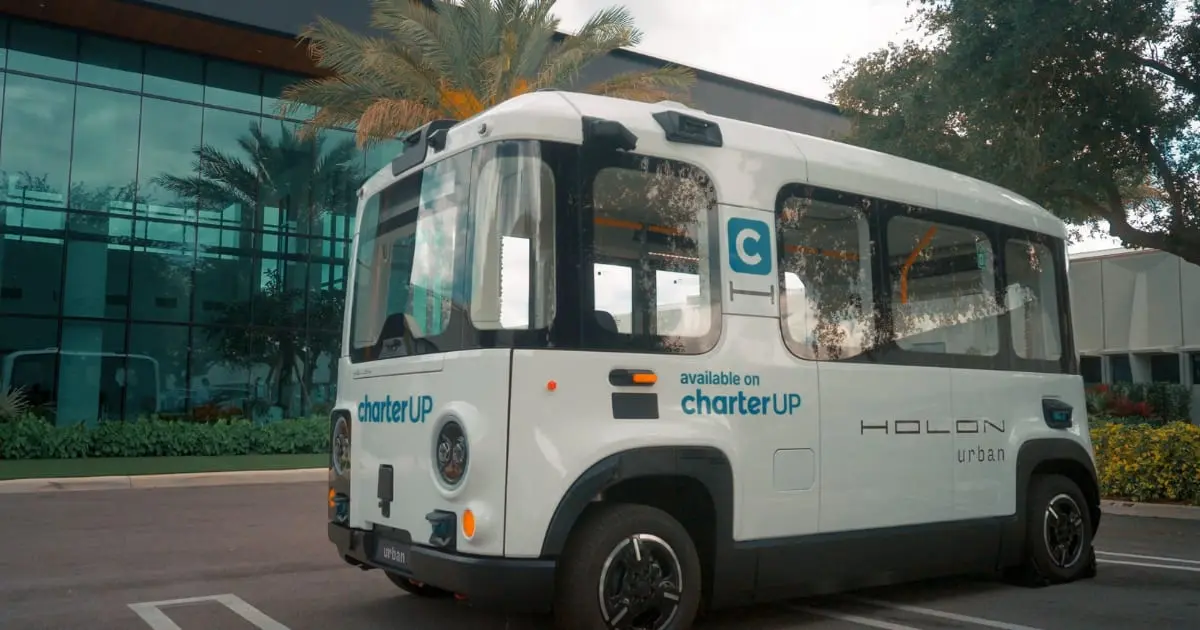
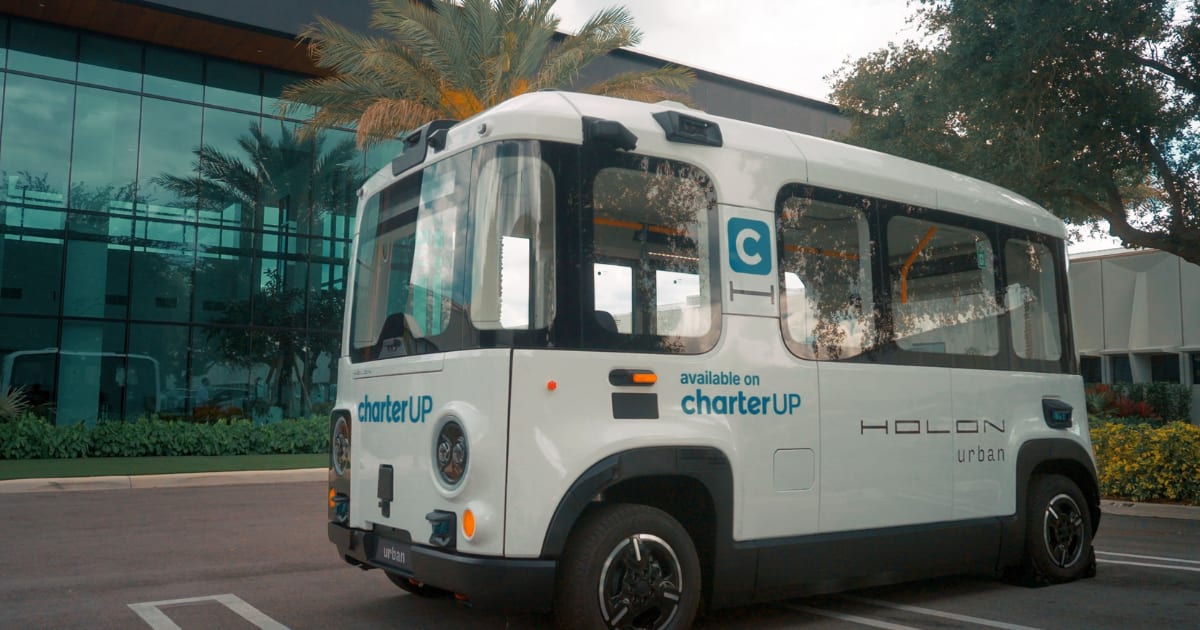
One of CharterUP’s most transformative strategic initiatives is its collaboration with autonomous vehicle (AV) manufacturer HOLON. As high-capacity autonomous passenger shuttles move closer to commercial reality, the partnership leverages the core competencies of both organizations: CharterUP supplies the robust consumer-facing software platform and massive transportation demand network, while HOLON provides the cutting-edge autonomous vehicle hardware.
Rather than predicting that autonomous vehicles will instantly or completely replace conventional human-driven coaches, Harris envisions a pragmatic hybrid future. In complex urban environments or long-distance highway routes, human drivers and traditional vehicles will remain indispensable. However, in controlled environments such as corporate campuses, university quads, sprawling airports, and dedicated bus rapid transit (BRT) lanes, autonomous shuttles are uniquely positioned to excel today.
"We’re very excited about this, and we see that in the long run, this is where significant segments of shuttles are headed," Harris noted. "We do see significant areas where there could be hybrid programs of autonomous vehicles as well as manual vehicles that could run in parallel under one unified operating system."
Accelerating Fleet Electrification
Autonomy is paired directly with sustainability. CharterUP has actively integrated numerous electric vehicles (EVs) into its nationwide network. To accelerate this green transition, the platform intentionally directs higher volumes of commercial business toward operators that invest in and deploy zero-emission electric coaches. By aligning financial incentives with environmental sustainability, CharterUP is helping the motorcoach industry meet aggressive corporate and municipal climate goals without sacrificing operational efficiency.
Conclusion: A Unified Operating System for Global Mobility
As CharterUP continues to scale its technological infrastructure, integrate AI-driven Transit Intelligence, deploy zero-emission electric fleets, and pilot autonomous shuttle networks, the company is doing much more than modernizing charter bus bookings. It is building the unified operating system for the future of group mobility. By seamlessly connecting supply and demand across both the public and private sectors, Armir Harris and his team are transforming group transportation into an agile, transparent, and highly efficient pillar of modern infrastructure.