








Executive Overview
The global transportation landscape is undergoing a profound structural evolution, propelled by aggressive decarbonization targets, rising passenger expectations, and rapid technological integration. Across North America, transit agencies, private operators, and manufacturing pioneers are redefining what mobility looks like for the 21st century. From multi-million-dollar zero-emission fleet transformations to sophisticated digital paratransit expansions and federally mandated safety integrations, the industry is balancing immediate operational needs with long-term strategic modernization.
This edition of industry developments highlights a diverse array of projects, partnerships, and business moves shaping the future of public and private transit. Key developments span several major sectors:
- Zero-Emission Infrastructure: Santa Monica’s accelerated path toward a 100% electric bus fleet powered by advanced charge-management systems.
- Campus Accessibility & Software Innovation: Virginia Commonwealth University’s expansion of its on-demand paratransit ecosystem via The Routing Company.
- Rail Safety & Regulatory Compliance: The Port Authority of New York and New Jersey’s major technology contract with Wi-Tronix to modernize the PATH commuter rail network.
- Cooperative Bus Procurement: ENC’s selection for a multi-year manufacturing consortium contract serving North Carolina transit authorities.
- Fleet Refurbishment & Sustainable Lifecycles: Complete Coach Works’ delivery of modernized Gillig diesel buses to Roberts Hawaii.
- Regional Fare Collection Integration: NEORide’s partnership with Scheidt & Bachmann USA to standardize cash farebox infrastructure across multiple states.
These initiatives collectively illustrate an industry that is simultaneously upgrading physical assets, adopting software-driven efficiencies, and ensuring regulatory compliance without compromising service quality or fiscal responsibility.
Detailed Chronology of Industry Movements
1. Electrifying Santa Monica: ChargePoint and Eaton Partner on Big Blue Bus Transition
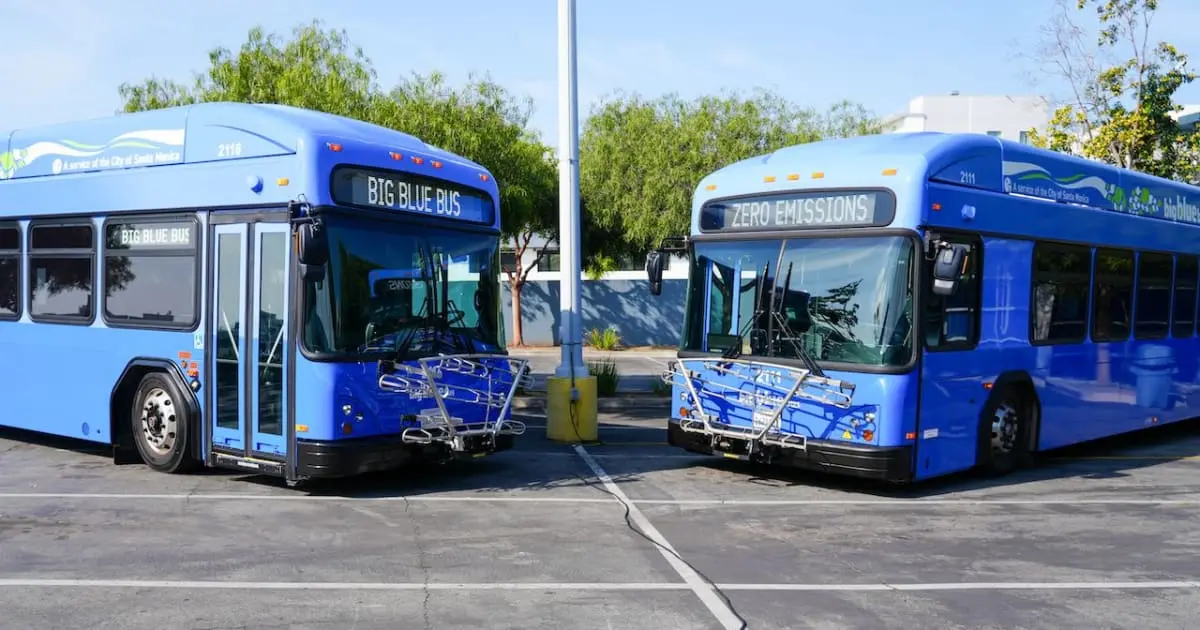
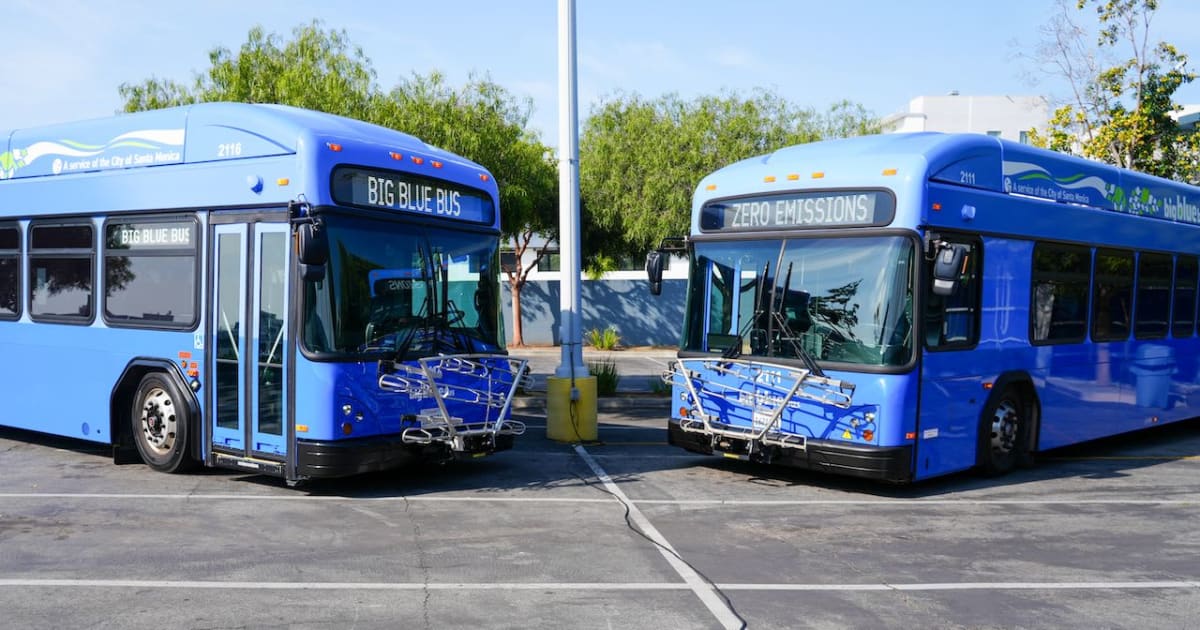
As municipalities across the United States race to meet stringent environmental mandates, the Santa Monica Department of Transportation is taking a decisive step toward total sustainability. The agency has officially collaborated with industry leaders ChargePoint and Eaton to support the large-scale transition of its iconic Big Blue Bus fleet to a 100% zero-emission operational model by 2032.
This deployment forms a core component of Santa Monica’s broader $56 million investment in advanced electric transit infrastructure. Rather than relying on a single vendor for hardware and software, the project leverages a powerful technical synergy: combining ChargePoint’s high-capacity DC fast-charging equipment and proprietary fleet management software with Eaton’s robust electrical infrastructure and specialized energy management systems.
Under the terms of the project, Big Blue Bus will deploy 130 DC fast-charging ports utilizing ChargePoint’s heavy-duty Express Plus charging architecture. To safely and efficiently handle the immense electrical load required to power a rapidly growing electric fleet, Eaton will supply critical electrical infrastructure. This includes medium-voltage switchgear, advanced switchboards, and specialized panelboards, alongside comprehensive engineering services designed to future-proof depot operations. Furthermore, ChargePoint’s cloud-based fleet software will allow depot managers and dispatchers to monitor electric buses in real-time along active routes, seamlessly manage charging schedules to optimize utility pricing, and generate detailed performance reporting.
2. Expanding Campus Accessibility: The Routing Company and VCU Launch "RamsLink"
In the realm of microtransit and on-demand mobility, Virginia Commonwealth University (VCU) is further solidifying its reputation as a forward-thinking institution. VCU has officially launched RamsLink, a dedicated paratransit service designed to enhance campus accessibility across its Monroe Park and MCV campuses.
Powered by The Routing Company’s (TRC) dynamic Pingo platform, RamsLink provides registered students, faculty, and staff with reliable, point-to-point transportation tailored to both temporary injuries and long-term mobility needs. Users can effortlessly schedule, track, and manage their trips directly through the user-friendly Ride Pingo mobile application.
RamsLink is not VCU’s first venture into algorithmic routing technology. The service joins a robust suite of Pingo-powered transit options on campus, including late-night RamSafe transportation and daytime RamRide shuttles. Together, these TRC-powered services have delivered nearly 2.5 million passenger trips since 2024, proving that algorithmic demand-responsive transit can scale successfully within dense urban and campus environments.
3. Modernizing Commuter Rail: PANYNJ Awards $10M Contract to Wi-Tronix
Safety, operational reliability, and federal regulatory compliance remain top priorities for heavy rail and commuter transit networks. To this end, the Port Authority of New York and New Jersey (PANYNJ) has awarded a substantial $10-million contract to Wi-Tronix to deploy advanced onboard technology across the PATH (Port Authority Trans-Hudson) commuter rail fleet.
This major technology investment is designed to provide PATH with real-time visibility into the onboard mechanical health of every railcar, drastically improving service reliability for the millions of annual riders who depend on the network. Crucially, the Wi-Tronix deployment directly assists PATH in meeting stringent Federal Railroad Administration (FRA) compliance standards—most notably the FAST Act mandates regarding onboard image and audio data recording.
By modernizing how this critical data is captured, stored, and accessed, PATH engineering teams can retrieve diagnostic information remotely, diagnose mechanical anomalies before they result in service failures, and respond much more efficiently to line-side breakdowns. This capability minimizes equipment downtime, ensures maximum car availability during peak hours, and drastically curtails cascading delays across the system.
The scope of the project requires Wi-Tronix technology to be installed across more than half of PATH’s 422-car active fleet, with full fleet-wide installation and implementation scheduled for completion by the federal deadline in October 2027. This contract represents the culmination of a multi-year partnership that originated in 2023 through the Transit Tech Lab program—run by the Partnership Fund for New York City. This incubator ecosystem allowed PATH to rigorously evaluate Wi-Tronix’s hardware and software in a live transit setting, ultimately expanding from an initial 30-month pilot to a full enterprise deployment that includes ongoing maintenance and technical support.
4. Cooperative Manufacturing Agreements: ENC Joins North Carolina’s PART Consortium
Procurement efficiency is essential for modern transit agencies seeking to stretch capital budgets without sacrificing vehicle quality. ElDorado National – California (ENC) has been officially named an approved manufacturer on a major five-year cooperative transit bus contract spearheaded by the Piedmont Authority for Regional Transportation (PART) in North Carolina.
The cooperative contract establishes a guaranteed base quantity of 49 buses, with flexible options for up to 50 additional vehicles, bringing the total potential procurement ceiling to 99 buses over the five-year agreement. Participating agencies under this collaborative umbrella include PART, the City of Winston-Salem’s Winston-Salem Transit Authority (WSTA), and the City of Burlington’s Link Transit. Under the framework of the agreement, participating agencies are authorized to procure high-quality transit vehicles directly from approved builders, including ENC and New Flyer.
This collaborative procurement vehicle offers profound operational advantages. By piggybacking on an established cooperative contract, local transit authorities bypass the costly and time-consuming process of conducting independent competitive solicitations. This administrative relief drastically shortens procurement timelines—a vital benefit for smaller and mid-sized municipal agencies that can redirect scarce administrative resources toward core service delivery and rider experience enhancements.
Moreover, the contract provides participating agencies with extreme configuration flexibility to match their specific operating profiles:
- PART retains the option to acquire 30-foot E-Z Rider II and 40-foot AXESS diesel buses, alongside various length configurations.
- WSTA can order 33-foot AXESS and E-Z Rider II diesel buses, as well as 35-foot AXESS diesel-electric hybrid models.
- Link Transit is positioned to purchase 33-foot AXESS diesel-electric hybrid buses.
This award reinforces a manufacturing relationship established in 2022 when PART initially selected ENC to supply E-Z Rider II diesel buses for its regional fleet.
5. Sustainable Fleet Lifecycle Management: CCW Delivers Refurbished Gillig Buses to Roberts Hawaii
While new zero-emission procurements capture headlines, sustainable fleet management often involves heavy rehabilitation and life-extension programs for existing assets. Complete Coach Works (CCW) successfully completed and delivered two fully refurbished 2007 35-foot Gillig Low Floor diesel buses to Roberts Hawaii, the islands’ largest employee-owned tour and transportation provider. The intricate mechanical overhaul and cosmetic restoration work was executed at CCW’s primary headquarters in Riverside, California.
This delivery underscores a multi-decade relationship between CCW and Roberts Hawaii, built on a shared commitment to maintaining resilient, high-quality fleets capable of withstanding the unique operational demands of the Hawaiian Islands.
The comprehensive refurbishment program encompassed deep mechanical and structural overhauls, including:
- A complete interior and exterior repaint utilizing high-durability, marine-grade protective coatings.
- Systematic replacement of critical preventive maintenance components, including fluids, filters, belts, and auxiliary battery banks.
- Rigorous testing and recertification of HVAC systems, electrical architectures, and ADA-compliant wheelchair accessibility lifts.
- Exhaustive mechanical inspections and safety checks spanning engine blocks, automatic transmissions, braking systems, and hydraulic steering components.
These revitalized buses enable Roberts Hawaii to maintain a highly reliable, flexible reserve fleet, ensuring uninterrupted, safe transportation services for both local residents and international visitors across the archipelago.
6. Regional Fare Collection Standards: Scheidt & Bachmann Selected by NEORide
As public transit networks grow increasingly interconnected across county and state lines, the need for standardized, dependable fare collection infrastructure becomes paramount. Scheidt & Bachmann USA Inc. was selected through a rigorous, competitive procurement process by NEORide to supply advanced cash farebox systems to its diverse roster of member transit agencies.
NEORide operates as an innovative regional council of governments representing 45 public transit agencies spread across 13 states. By leveraging collective bargaining and cooperative purchasing power, NEORide enables smaller and mid-sized transit systems to access enterprise-grade technology that would otherwise be cost-prohibitive.
Supporting Context & Metrics
To contextualize these industry updates, the broader transportation sector is navigating several critical economic and operational vectors:
- Capital Investment Acceleration: Federal funding mechanisms, such as those administered by the Federal Transit Administration (FTA) and Federal Railroad Administration (FRA), are actively deploying billions of dollars toward fleet electrification and technological modernization. Projects like Santa Monica’s $56 million transition reflect a national trend where local capital commitments are bolstered by state and federal grants.
- The Rise of Cooperative Procurement: Cooperative purchasing models—exemplified by the PART consortium and NEORide’s administrative framework—are experiencing explosive growth. By reducing administrative procurement cycles by months or even years, these models allow municipal transit providers to respond rapidly to shifting supply chain realities and rider demands.
- Technology-Driven Reliability: The integration of IoT (Internet of Things) diagnostic tools, such as the Wi-Tronix platform deployed by PATH, highlights an industry-wide pivot from reactive maintenance to predictive, data-driven asset management. Real-time telemetry is rapidly becoming the gold standard for passenger rail and bus rapid transit (BRT) networks alike.
Official Industry Statements
Industry leaders emphasized the transformative potential of these strategic initiatives through formal statements:
-
On Regional Farebox Standardization:
“We are pleased to offer Scheidt & Bachmann’s Farebox System to our members,” stated Katherine Conrad, executive director of NEORide. “Selecting S&B through a competitive procurement ensures our agencies receive proven, dependable solutions that meet both current and future operational needs.” Representatives from Scheidt & Bachmann echoed this sentiment, expressing honor in combining their robust farebox architecture with NEORide’s collaborative municipal model to deliver measurable financial and operational value. -
On Cooperative Bus Procurement Efficiencies:
Officials from ENC noted that cooperative frameworks drastically reduce administrative burdens, allowing regional transit authorities to redirect constrained municipal resources straight back into frontline service delivery and elevated passenger experiences. -
On Fleet Maintenance and Island Mobility:
Company officials at Complete Coach Works emphasized that their long-standing partnership with Roberts Hawaii demonstrates how tailored vehicle life-extension programs provide dependable, cost-effective solutions for challenging island operating environments.
Future Outlook: What Lies Ahead for Mobility
As the transportation sector looks toward the remainder of the decade, several clear trajectories are emerging:
- Hyper-Electrification and Grid Integration: As agencies like Santa Monica’s Big Blue Bus approach intermediate zero-emission milestones, the conversation will increasingly shift toward microgrid resilience, heavy-duty battery management, and smart-charging integration to prevent localized power grid strain.
- Software-Centric Public Transit: The rapid expansion of platforms like The Routing Company’s Pingo across university campuses and regional transit authorities indicates that fixed-route services will increasingly be augmented by flexible, demand-responsive microtransit algorithms that optimize vehicle utilization in real time.
- Mandatory Tech Compliance: With federal rail deadlines looming in late 2027, commuter rail networks nationwide will accelerate the adoption of onboard automated monitoring, audio-visual recording, and cloud-diagnostic systems to ensure absolute regulatory compliance and maximized fleet availability.
Ultimately, the projects highlighted in this review prove that the modern mobility ecosystem is driven by proactive collaboration, technological innovation, and an unwavering commitment to safe, sustainable, and reliable public transportation.