








Executive Overview
In the upper echelons of global real estate and high-end hospitality, scaling operations without diluting brand prestige is a formidable challenge. For the UK-based luxury hospitality operator Cheval Collection, the response to this challenge is an aggressive, calculated expansion strategy aimed at doubling the size of its global portfolio over the next few years.
According to Daniel Johansson, the company’s Director of Development and Acquisitions, this growth is not merely about increasing headcounts or entering arbitrary markets. Instead, it is anchored in a targeted geographic blueprint where the Middle East—specifically the United Arab Emirates—is emerging as the primary growth engine.
Best known for its high-end serviced apartments and upscale urban retreats, Cheval Collection currently manages 16 properties spanning the United Kingdom and the Middle East. However, the brand’s trajectory indicates a significant pivot. By leveraging its established operational excellence in serviced living and translating it into the fiercely competitive branded residences sector, Cheval is positioning itself to capture an increasingly lucrative segment of travelers and real estate investors.
This report provides an in-depth analysis of Cheval Collection’s expansion roadmap. It examines the operational mechanics of its dual-model strategy—balancing traditional serviced apartments with residential sales—and contextualizes the firm’s rise within the booming Middle Eastern luxury property market.
Detailed Chronology: From London Roots to Gulf Ambitions
To understand Cheval Collection’s present expansion drive, one must trace its evolution from a prominent UK-centric operator into an international hospitality brand.
The Foundation: Establishing British Excellence
For decades, Cheval Collection cultivated its reputation in prime London postcodes. Offering high-end, luxury apartments with full hotel-style amenities—such as 24-hour concierge, daily housekeeping, and bespoke guest services—the company catered to corporate travelers, affluent families, and extended-stay tourists who desired the comforts of a private home combined with the pampering of a five-star hotel.
As the brand saturated its core domestic market, leadership recognized that its operational philosophy—blending residential privacy with hospitality service—had immense international export potential. This realization set the stage for a deliberate move beyond British shores, with the Middle East identified as the ideal frontier for scaling operations.

Entering the Desert Metropolis: Dubai
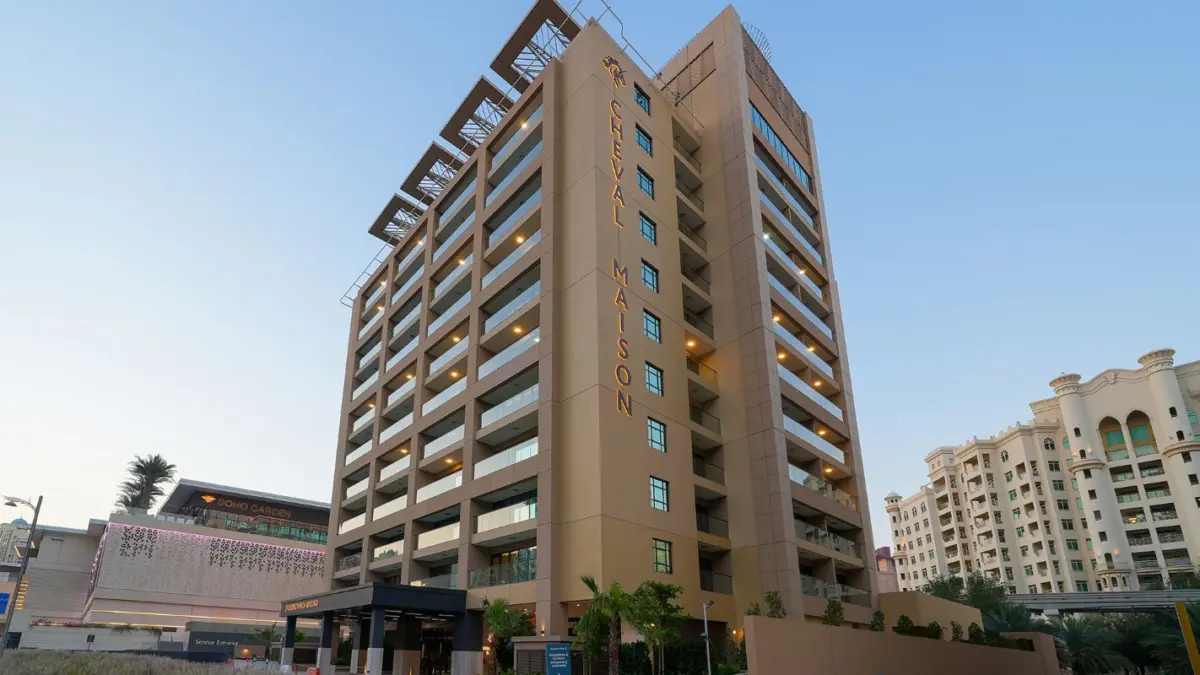
Cheval Collection’s maiden voyage into the Middle East market took shape with the launch of Cheval Maison – The Palm Dubai. Situated on one of the world’s most famous man-made islands, this property served as the litmus test for the brand’s ability to translate its British luxury standards into the hyper-competitive, ultra-luxurious landscape of the Gulf.
The strategy yielded immediate dividends. The property resonated with travelers seeking spacious, self-contained living accommodations without sacrificing high-end hotel amenities. Buoyed by the success on the Palm, Cheval quickly secured its second regional footprint: Cheval Maison – Expo City Dubai. Positioned in one of the city’s most forward-thinking, sustainable innovation hubs, this property further cemented the brand’s versatility, proving that its serviced apartment model could thrive in both leisure-centric and business-forward environments.
The Evolution: Transitioning into Branded Residences
Having established operational credibility in the Middle East through its serviced apartment flag, Cheval Collection executed a strategic pivot in April, entering the highly lucrative branded residences sector.
The crown jewel of this new phase is Cheval Residences Dubai Islands, an ambitious project slated for completion in 2029. Unlike the leased, short-to-medium-stay serviced apartment model, this development represents a fundamental shift in business architecture. Individual private buyers purchase the units, gaining access to luxury real estate assets backed by Cheval’s management expertise. Furthermore, owners can opt into a professionally managed rental pool, bridging the gap between private property ownership and hospitality-grade yields.
Supporting Context & Metrics: The Mechanics of Modern Hospitality
To fully appreciate the weight of Daniel Johansson’s growth mandate, one must examine the broader economic and structural shifts occurring within the global hospitality and real estate sectors.
The Rise of the Extended-Stay and Serviced Apartment Sector
For decades, the hospitality industry was dominated by the binary choice of standard hotel rooms or long-term residential leases. However, post-pandemic travel trends have permanently altered consumer preferences. Today’s affluent travelers—whether digital nomads, corporate executives on multi-month assignments, or multi-generational families—increasingly demand space.
Traditional Hotel Room           -> Limited space, no kitchen, daily rate fatigue
Long-Term Residential Lease      -> Rigid contracts, no services, furnishing required
Cheval Serviced Apartment Model  -> Self-contained kitchens, living areas + 5-star hotel services
Cheval Collection’s serviced apartments directly address this market gap. By offering furnished units equipped with self-contained kitchens, spacious living areas, and integrated lifestyle amenities (such as housekeeping and front-desk support), the brand captures a demographic that finds traditional hotel rooms restrictive yet balks at the rigidity of conventional residential leasing.
The Middle East Real Estate Boom
The decision to anchor its expansion strategy in the Middle East is backed by robust macroeconomic indicators. Cities like Dubai have transformed into global hubs for wealth migration, tourism, and foreign direct investment.
- Inflow of Ultra-High-Net-Worth Individuals (UHNWIs): The UAE continues to attract global billionaires, entrepreneurs, and high-earning professionals, creating an insatiable demand for ultra-luxury real estate.
- Tourism Resilience: Government-backed initiatives, such as the Dubai 2040 Urban Master Plan, have ensured sustained growth in both short-term visitor numbers and long-term expatriate populations.
- The Branded Residences Phenomenon: According to global real estate analyses, branded residences command significant price premiums over non-branded properties—often ranging between 20% to 30%. By entering this space with Cheval Residences Dubai Islands, the company is capitalizing on a high-margin asset class that appeals heavily to international investors looking for safe-haven assets with strong rental yields.
Official Statements and Strategic Vision
At the core of Cheval Collection’s aggressive scaling blueprint is a clear leadership philosophy centered on controlled growth, market adaptability, and brand integrity.
Daniel Johansson, Director of Development and Acquisitions, has been instrumental in articulating this vision to the global market. In recent insights shared regarding the company’s trajectory, Johansson emphasized that doubling the portfolio size is not a speculative dash for numbers, but a disciplined response to market demand.
"Our goal is clear: we want to double the size of our global portfolio within the next few years. The Middle East has firmly established itself as a key growth driver for us, presenting unprecedented opportunities to scale both our serviced apartment concepts and our newly introduced branded residences."
— Daniel Johansson, Director of Development and Acquisitions, Cheval Collection
Johansson’s commentary highlights a crucial distinction in how modern hospitality groups must operate. Growth cannot come at the expense of guest experience. Whether a guest is checking into a historic property in central London or a newly constructed residence on the Dubai Islands, the baseline expectation of "Cheval standards" remains absolute.
Furthermore, leadership has noted that the integration of the branded residences model opens up new pathways for institutional partnerships, real estate developers, and private investors. By aligning with regional developers who possess prime land banks, Cheval can leverage its operational brand equity without needing to shoulder the entirety of real estate capital expenditures—a textbook asset-light or hybrid growth strategy that minimizes financial risk while maximizing brand visibility.
Future Outlook: Navigating the Road to 2029 and Beyond
As Cheval Collection looks toward the horizon, the path forward is defined by a mix of immense opportunity and distinct operational challenges.
Expanding the Footprint Beyond the UAE
While the United Arab Emirates has served as the launchpad for Cheval’s Middle Eastern ambitions, the broader Gulf Cooperation Council (GCC) region offers fertile ground for future development. Markets such as Saudi Arabia—driven by ambitious Vision 2030 giga-projects like NEOM, the Red Sea Project, and Riyadh’s urban expansion—represent natural next steps for a luxury operator specializing in extended-stay and branded residential assets.
Managing the 2029 Horizon for Dubai Islands
The completion timeline for Cheval Residences Dubai Islands is set for 2029. Over the next half-decade, the company must successfully navigate the complex phases of construction oversight, architectural refinement, and pre-launch marketing. Because the branded residences model involves individual private owners, managing expectations, communicating ROI through the rental pool program, and maintaining pristine property management standards will be paramount to preserving the brand’s reputation.
Sustainability and Modern Traveler Demands
Modern luxury travelers and real estate investors are increasingly scrutinizing the environmental credentials of the properties they patronize. To maintain its competitive edge, Cheval Collection will need to ensure that its upcoming developments incorporate cutting-edge sustainable architecture, energy-efficient operations, and smart-home technologies. Integrating these elements will not only satisfy regulatory requirements in forward-thinking markets like Dubai but will also appeal to an eco-conscious demographic of high-net-worth buyers.
Conclusion
Cheval Collection is at a pivotal juncture in its corporate history. By bridging the gap between high-end hospitality and elite real estate through its dual-pronged approach of serviced apartments and branded residences, the company has engineered a resilient business model.
Led by strategic insights from executives like Daniel Johansson and powered by the booming economic engine of the Middle East, Cheval Collection is well-positioned to achieve its objective of doubling its global portfolio. As the company marches toward 2029 and beyond, it serves as a prime example of how traditional hospitality excellence can successfully adapt to the modern demands of global wealth, travel, and real estate ownership.