




Executive Overview
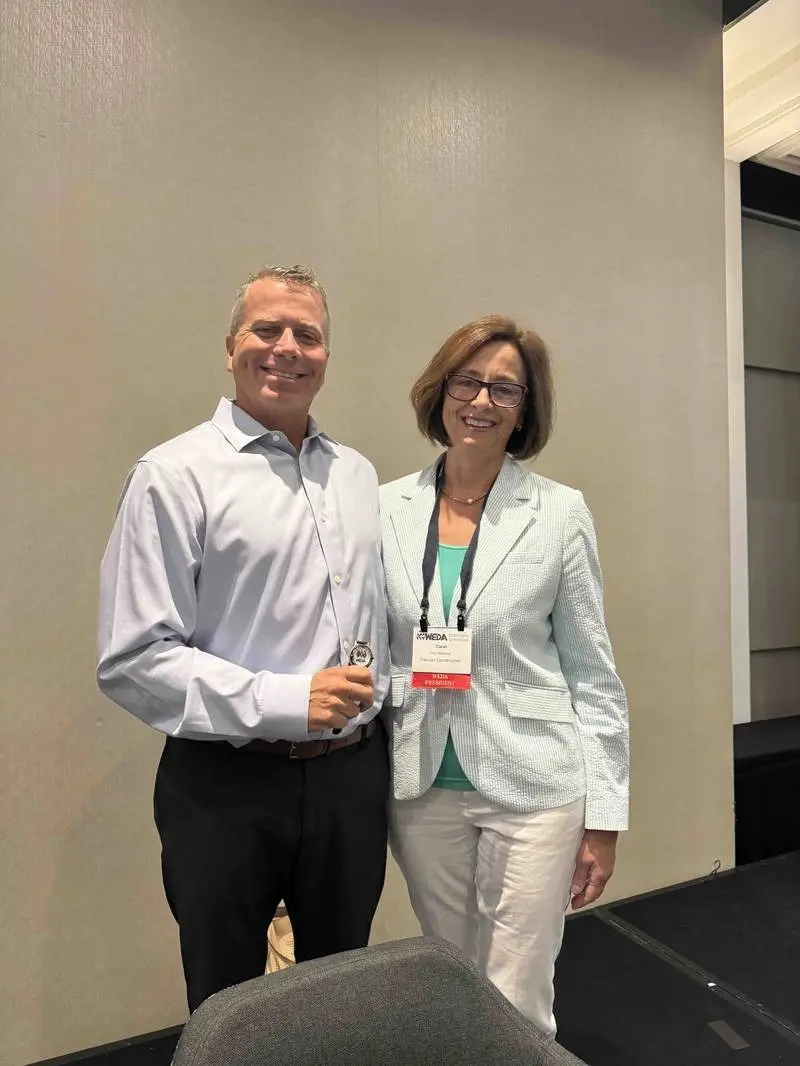
At the 2026 Dredging Summit & Expo in Montreal, the Western Dredging Association (WEDA) officially inaugurated Walter Dinicola, PE, F.ASCE, as its new President. Dinicola, a Principal at environmental and engineering consulting firm Anchor QEA and its national leader for Ports and Waterfront, steps into this prestigious leadership role at a critical juncture for global maritime infrastructure.
With more than three decades of specialized experience spanning dredging, harbor development, waterfront infrastructure, and sediment remediation, Dinicola’s appointment represents a seamless transition of leadership for WEDA. His ascension comes after a decade of service on the association’s executive board, most recently as its Vice President.
The backdrop of this transition—the 2026 Montreal summit—highlighted the intensifying challenges facing the dredging and marine construction sectors. As global trade volumes rise, vessel drafts deepen, and climate-induced sea-level rise threatens coastal zones, the strategic importance of dredging has elevated from routine maintenance to a critical component of national security, economic resilience, and ecological restoration. In his new role, Dinicola is poised to steer the Western Hemisphere’s premier dredging organization through an era defined by technological disruption, stringent environmental mandates, and a pressing need for sustainable "beneficial use" of dredged materials.
Detailed Chronology of a Distinguished Career
Walter Dinicola’s trajectory to the presidency of WEDA is a testament to long-term dedication, technical expertise, and active stewardship within the civil engineering and maritime communities.
[Late 1990s] Joins WEDA; begins active participation in regional technical committees.
      │
[2010s]      Serves as President of WEDA's Eastern Chapter; drives regional membership.
      │
[2016]       Elected to WEDA's National Executive Board.
      │
[2024]       Named WEDA "Dredger of the Year" for technological & mentorship contributions.
      │
[2025]       Elevated to Fellow of the American Society of Civil Engineers (F.ASCE).
      │
[2026]       Inaugurated as WEDA President at the Dredging Summit & Expo in Montreal.
Foundations and Early Leadership (1990s–2010s)
Dinicola’s involvement with WEDA spans more than 25 years, beginning in the late 1990s when regional chapters were expanding their technical programs to meet evolving environmental regulations. He established himself as a key technical voice within the Eastern Chapter of WEDA, eventually serving as its President. During his tenure at the regional level, Dinicola championed the integration of environmental science with traditional mechanical dredging practices—a advocacy that would define his professional legacy.
National Board Elevation and Recognition (2016–2024)
Recognizing his strategic vision, WEDA members elected Dinicola to the national Executive Board in 2016. Over the next decade, he helped guide the association’s educational initiatives, safety standards, and technical publications.
In 2024, WEDA bestowed upon him its highest individual honor: Dredger of the Year. This award recognized his pioneering work in dredged material management and his commitment to mentoring the next generation of maritime engineers.
Peer Acclaim and Executive Ascent (2025–2026)
In 2025, the American Society of Civil Engineers (ASCE) elevated Dinicola to the rank of Fellow (F.ASCE). Representing fewer than 3% of ASCE’s global membership, the Fellow grade is reserved for civil engineers who have demonstrated celebrated achievements and made significant contributions to the profession.
This peer recognition set the stage for his transition to WEDA President at the 2026 Montreal summit, succeeding a line of industry leaders and assuming responsibility for the strategic direction of the association.
Supporting Context & Industry Metrics
To understand the significance of Dinicola’s presidency, one must examine the scale of the dredging industry and the complex regulatory and operational landscape WEDA governs.
The Scale and Mission of WEDA
WEDA is a member of the World Organization of Dredging Associations (WODA), which also includes the Eastern Dredging Association (EADA) serving Asia and the Pacific, and the Central Dredging Association (CEDA) serving Europe, Africa, and the Middle East. WEDA’s jurisdiction encompasses the entirety of North, Central, and South America.
                          ┌───────────────────────────┐
                          │ World Org. of Dredging    │
                          │ Associations (WODA)       │
                          └─────────────┬─────────────┘
                                        │
         ┌──────────────────────────────┼──────────────────────────────┐
         ▼                              ▼                              ▼
┌──────────────────┐           ┌──────────────────┐           ┌──────────────────┐
│  WEDA (Americas) │           │  CEDA (Europe/   │           │  EADA (Asia/     │
│                  │           │  Africa/M-East)  │           │  Pacific)        │
└──────────────────┘           └──────────────────┘           └──────────────────┘
The association represents a diverse ecosystem of stakeholders:
- Federal and State Agencies: Including the U.S. Army Corps of Engineers (USACE) and port authorities.
- Private Dredging Contractors: Operating some of the world’s most advanced cutterhead and hopper dredge vessels.
- Environmental Consultants & Academics: Developing sediment remediation technologies and ecological monitoring protocols.
The Economic and Environmental Imperative of Modern Dredging
Modern dredging is no longer viewed merely as the excavation of sediment to keep shipping channels open. Today, it is deeply intertwined with global logistics and climate adaptation:
- The Post-Panamax Effect: The expansion of the Panama Canal has prompted ports along the U.S. East Coast, Gulf Coast, and South America to deepen their harbors to drafts of 50 feet or more to accommodate ultra-large container vessels (ULCVs).
- Beneficial Use of Dredged Material: Historically, dredged material was treated as waste and dumped in open waters or upland containment facilities. Under modern sustainability frameworks, "beneficial use" is the standard. Sediments are strategically redirected to restore eroding wetlands, rebuild barrier islands, and nourish public beaches.
- Sediment Remediation: Decades of industrial activity have left legacy contaminants (such as PCBs, heavy metals, and PAHs) in urban waterways. Dredging professionals must execute high-precision environmental dredging to remove these hazards without dispersing them into the water column.
| Metric / Trend | Industry Significance | Dinicola’s Focus Area |
|---|---|---|
| Beneficial Use Target | USACE aims for 70% beneficial use of dredged material by 2030. | Advancing engineering methodologies for habitat creation and wetland restoration. |
| Port Deepening Projects | Billions in capital expenditure across the Americas to accommodate 14,000+ TEU vessels. | Port and waterfront infrastructure design and regulatory compliance. |
| Resilience Infrastructure | Rising sea levels require adaptive coastal protection and storm surge barriers. | Integrating dredging with coastal engineering and sediment management. |
Case Study: The Virgin Islands Port Authority Marine Capital Improvement Program
Dinicola’s practical application of his expertise is currently on display in his role as Program Manager for the Virgin Islands Port Authority’s (VIPA) marine capital improvement program. Executed as part of a specialized team led by CMTS, LLC, this massive program spans 31 distinct sites across the U.S. Virgin Islands (including St. Thomas, St. Croix, and St. John).
The VIPA program highlights the multifaceted nature of modern marine engineering:
- Hurricane Resilience: Rebuilding and hardening waterfront infrastructure damaged by severe weather events.
- Economic Vitality: Dredging harbors to accommodate the newest generation of cruise ships and cargo vessels, which are vital to the territory’s tourism-driven economy.
- Environmental Stewardship: Navigating sensitive Caribbean marine ecosystems, including coral reef mitigation, seagrass preservation, and water quality monitoring.
Official Statements and Leadership Philosophy
Upon assuming the presidency in Montreal, Dinicola outlined a forward-looking agenda focused on technical excellence, workforce development, and cross-industry partnerships.
"I am honored to serve as president of the Western Dredging Association and grateful for the trust our members have placed in me. I look forward to building on WEDA’s strong foundation by advancing technical excellence, fostering the next generation of professionals and strengthening collaboration across our industry to address the opportunities and challenges ahead."
— Walter Dinicola, PE, F.ASCE
Analyzing the Three Pillars of Dinicola’s Mandate
                  ┌─────────────────────────────────────────┐
                  │      Dinicola's Presidential Agenda     │
                  └────────────────────┬────────────────────┘
                                       │
         ┌─────────────────────────────┼─────────────────────────────┐
         ▼                             ▼                             ▼
┌──────────────────┐          ┌──────────────────┐          ┌──────────────────┐
│    Technical     │          │    Workforce     │          │  Collaborative   │
│    Excellence    │          │   Development    │          │    Alliances     │
├──────────────────┤          ├──────────────────┤          ├──────────────────┤
│ Advancing AI,    │          │ Mentoring young  │          │ Bridging gaps    │
│ eco-dredging, &  │          │ engineers to     │          │ between private, │
│ beneficial use.  │          │ combat the       │          │ public, and      │
│                  │          │ "brain drain."   │          │ regulatory sects.│
└──────────────────┘          └──────────────────┘          └──────────────────┘
1. Advancing Technical Excellence
Under Dinicola’s leadership, WEDA is expected to accelerate its focus on emerging technologies. This includes the adoption of real-time turbidity monitoring, GPS-guided precision dredging heads, and automated sediment processing. Additionally, WEDA will continue to refine its peer-reviewed publications and technical conferences to ensure that the latest scientific findings are integrated into field operations.
2. Fostering the Next Generation of Professionals
The maritime engineering sector faces a talent shortage as a generation of senior engineers approaches retirement. Dinicola’s previous recognition as "Dredger of the Year" highlighted his dedication to mentorship. As President, he intends to expand WEDA’s student chapters, scholarship funds, and young professional programs, ensuring a robust pipeline of talent capable of tackling increasingly complex marine projects.
3. Strengthening Collaboration Across the Industry
Dredging projects often involve competing interests, ranging from commercial port operators seeking rapid completion to environmental groups advocating for habitat protection. Dinicola’s experience at Anchor QEA—a firm that operates at the intersection of science and engineering—equips him to serve as a bridge builder, fostering constructive dialogue between regulators, contractors, and coastal communities.
Future Outlook: Navigating the Next Era of Maritime Infrastructure
As Walter Dinicola begins his term as WEDA President, the dredging industry faces a landscape of rapid change. Over the next several years, several key trends are poised to reshape the sector:
Decarbonization of the Dredging Fleet
Like the broader maritime sector, dredging is under pressure to reduce its carbon footprint. Contractors are beginning to invest in LNG-powered dredges, hybrid-electric propulsion systems, and bio-fuels. WEDA under Dinicola will likely play a key role in sharing technical data and operational best practices for these low-emission vessels.
Adaptive Management and Climate Change
With extreme weather events becoming more frequent and severe, the dredging industry must shift from reactive maintenance to proactive, adaptive management of waterways. This involves predictive modeling of sediment transport using artificial intelligence and machine learning, allowing port authorities to anticipate shoaling before it impacts shipping lanes.
Navigating Regulatory Complexity
As environmental standards tighten throughout the Americas, securing permits for dredging and material disposal is becoming more challenging. WEDA’s role as an educational and scientific forum will be vital in helping the industry understand and meet these standards, ensuring that vital infrastructure projects can proceed without compromising ecological integrity.
Summary of Leadership Transition
Walter Dinicola’s assumption of the WEDA presidency represents the alignment of professional achievement, technical expertise, and industry need. His work at Anchor QEA, coupled with his high-profile assignment in the U.S. Virgin Islands and his recognition by the ASCE, positions him as a highly capable leader for the association. As WEDA embarks on this next chapter under his guidance, the organization is well-positioned to advance the science, engineering, and environmental stewardship of dredging across the Western Hemisphere.