






Executive Overview
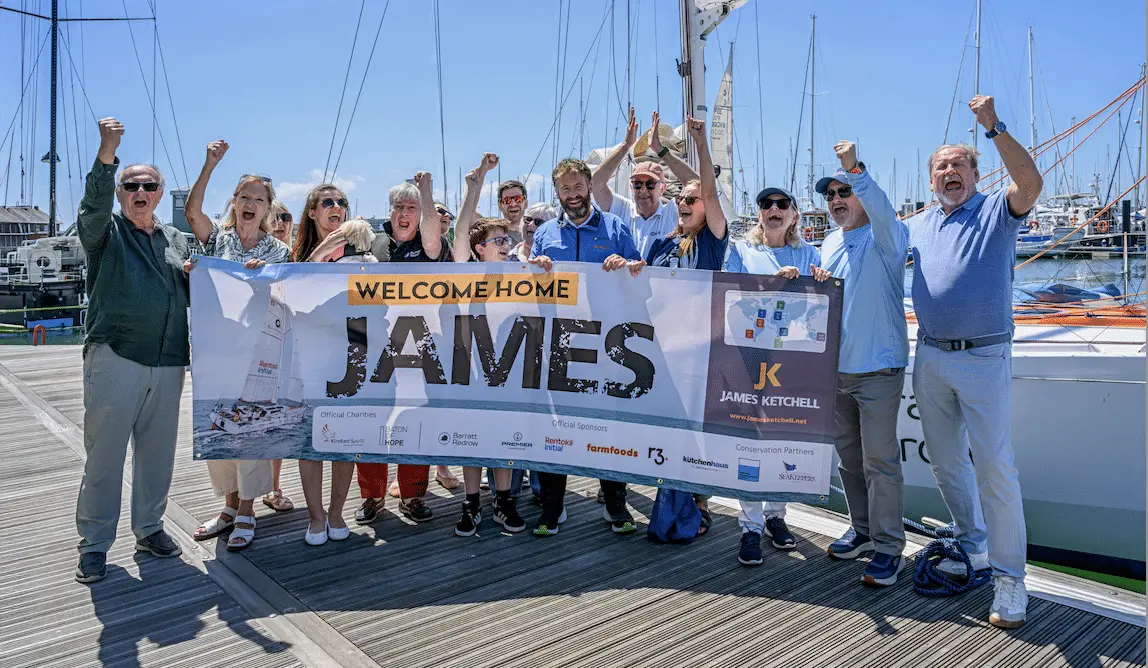
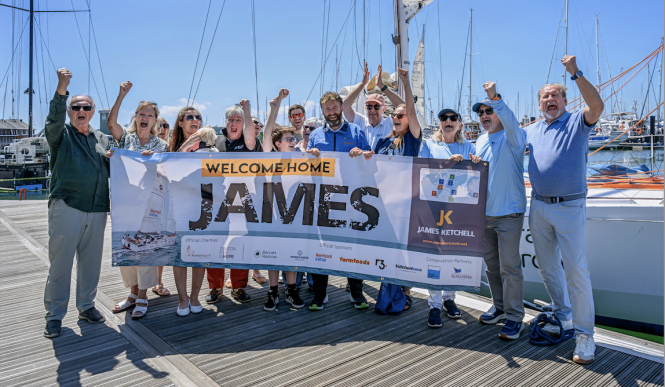
On June 13, 2026, British explorer and adventurer James Ketchell guided his sailing vessel, Mindset, back into the harbor of Gosport, United Kingdom, bringing a triumphant end to an unprecedented global odyssey. With this final maritime leg, Ketchell officially etched his name into the history books, becoming the first human being to circumnavigate the globe by land, air, and sea.
Yet, this achievement transcends the realm of extreme endurance and personal milestones. Unlike traditional circumnavigations driven purely by speed or solo bravado, Ketchell’s monumental journey was fundamentally intertwined with global environmental stewardship and scientific discovery. Operating as an Ambassador for the UK’s prestigious National Oceanography Centre (NOC) and partnering directly with The International SeaKeepers Society’s DISCOVERY Programme, Ketchell transformed his vessel into a mobile marine laboratory.
Spanning nearly a decade of calculated risk, physical endurance, and relentless planning, Ketchell’s ultimate global trifecta includes cycling around the world in 2013, piloting a gyrocopter globally in 2019, and capping it off with an arduous 30,000-nautical-mile solo sailing voyage that commenced in July 2025. Along the way, he braved some of the planet’s most treacherous waters—including Cape Horn and the Southern Ocean—while simultaneously deploying vital ocean-monitoring hardware, collecting microplastic samples, and mapping uncharted seabeds.
This comprehensive report examines the anatomy of Ketchell’s historic expedition, breaking down the chronology of his maritime voyage, the critical scientific data collected under the banner of the SeaKeepers DISCOVERY Programme, the educational and charitable impact of his mission, and what this landmark feat means for the future of private vessel-led ocean conservation.
Detailed Chronology: The Making of a Global Trifecta
To understand the magnitude of what James Ketchell accomplished in June 2026, one must look at the macro-timeline of his exploratory career. Ketchell is no stranger to the world’s most punishing environments; his resume includes rowing solo across the Atlantic Ocean, scaling the summit of Mount Everest, and enduring grueling physical recovery periods from severe injuries sustained earlier in life.
The Foundation: Land and Air (2013 & 2019)
The first two pillars of Ketchell’s global circumnavigation were established years prior, each requiring immense logistical coordination and psychological resilience:
- The Global Cycling Expedition (2013): Ketchell spent over five months cycling tens of thousands of miles across multiple continents, navigating vastly different political landscapes, weather extremes, and physical strains to complete the terrestrial leg of his ultimate dream.
- The Global Gyrocopter Flight (2019): Elevating his ambitions to the skies, Ketchell successfully circumnavigated the globe in a fragile, open-cockpit Magni Gyrocopter. The expedition tested his aviation skills, mechanical ingenuity, and endurance against unforgiving jet streams and remote refueling logistics.
The Final Frontier: The 30,000-Nautical-Mile Sea Voyage (2025–2026)
With land and air conquered, the final puzzle piece remained: the oceans. In July 2025, Ketchell cast off aboard his sailing vessel, Mindset, initiating a punishing 30,000-nautical-mile maritime route designed to bridge the physical gaps of his previous journeys and bring him back to British soil.
- Departure and the Atlantic Crossing (July – August 2025): Leaving the UK behind, Ketchell charted a course south toward the Canary Islands, stopping in Lanzarote before pressing onward to Cape Verde. This initial stretch served as a critical testing phase for both skipper and vessel, shaking down shipboard systems and testing communication links with scientific shore teams.
- The South Atlantic and the Cape of Good Hope (Late 2025): Traversing the vast expanse of the South Atlantic, Ketchell made landfall in Brazil before taking on the legendary Southern Ocean crossing toward Cape Town, South Africa. This leg introduced grueling sea states, unpredictable gale-force winds, and icy temperatures that pushed both mental and physical limits.
- The Roaring Forties and Cape Horn (Early 2026): Leaving Cape Town, Ketchell navigated the Indian Ocean toward Hobart, Tasmania. From Australia, he faced the ultimate maritime crucible: the transit past Cape Horn at the southernmost tip of South America. Known as the "Everest of Sailing," the waters surrounding Cape Horn feature mountainous swells, ferocious westerly gales, and floating ice hazards. Ketchell successfully negotiated these perilous waters, proving his mettle as an elite ocean sailor.
- The Homeward Stretch and Arrival (Spring – June 13, 2026): With the Southern Hemisphere behind him, Ketchell turned Mindset northward for the final Atlantic transit back to the UK, culminating in his historic homecoming in Gosport on June 13, 2026.
Supporting Context & Metrics: Science at Sea
What separates James Ketchell from historical explorers of centuries past is his active integration into modern marine science. Modern oceans face unprecedented pressures—from warming temperatures and acidification to rampant plastic pollution and incomplete bathymetric mapping. Recognizing that traditional research vessels cannot be everywhere at once, initiatives like The International SeaKeepers Society’s DISCOVERY Programme leverage private yachts and adventurous travellers to bridge critical data gaps.
Operating as an official Ambassador for the National Oceanography Centre (NOC), Ketchell utilized his 30,000-nautical-mile voyage to execute three distinct, high-impact scientific missions:
1. Deploying Argo Floats in the Indian Ocean
One of the most significant contributions of Ketchell’s voyage was the deployment of an autonomous Argo float in the remote stretches of the Indian Ocean. Argo floats are elite technological marvels that drift with ocean currents, profiling the upper 2,000 meters of the ocean by measuring temperature and salinity.
- The Global Network: Currently, a global array of more than 4,000 active Argo floats provides real-time data essential for climate research, weather forecasting, and tracking ocean heat uptake.
- Ketchell’s Impact: By manually deploying a float in an under-sampled region of the Indian Ocean, Ketchell directly contributed to filling blind spots in global climate models relied upon by researchers worldwide.
2. Microplastic Sampling for NOC
The pervasive spread of microplastics throughout the marine food web represents one of the most alarming ecological crises of the modern era.
- The Collaboration: Collaborating directly with researchers from the National Oceanography Centre and SeaKeepers, Ketchell executed standardized water sampling protocols at strategic intervals along his global route.
- The Research Value: These samples enable scientists to quantify microplastic concentrations in remote offshore environments, helping to map pollution pathways, identify accumulation zones, and understand the degradation rates of synthetic polymers in varying marine climates.
3. Seabed Mapping for Seabed 2030
Astonishingly, less of our planet’s ocean floor is mapped to high resolution than the surface of Mars or the Moon. Accurate bathymetric data is critical for understanding ocean circulation, tsunami forecasting, marine habitat protection, and navigation safety.
- The Initiative: Ketchell contributed valuable bathymetric data to the Nippon Foundation-GEBCO Seabed 2030 Project—an ambitious international collaborative effort aiming to compile all bathymetric data into the definitive map of the world ocean floor by 2030.
- The Contribution: By utilizing onboard sonar and logging equipment during transit across remote oceanic trenches and shelves, Ketchell’s vessel helped add vital sounding lines to the global grid.
Official Statements and Industry Reflections
The convergence of elite endurance athletics and rigorous environmental science drew widespread praise from international scientific bodies, maritime organizations, and conservation advocates.
Gill Rodrigues, Director of International Relations at The International SeaKeepers Society, commended Ketchell’s seamless integration of exploration and research:
"James has shown how adventure and science can sail side by side. We couldn’t be prouder to welcome him home."
Reflecting upon the completion of his monumental journey—which now includes rowing across oceans, climbing Mount Everest, cycling around the globe, flying a gyrocopter, and sailing solo across the planet—Ketchell expressed a sense of profound accomplishment combined with a touch of existential humor:
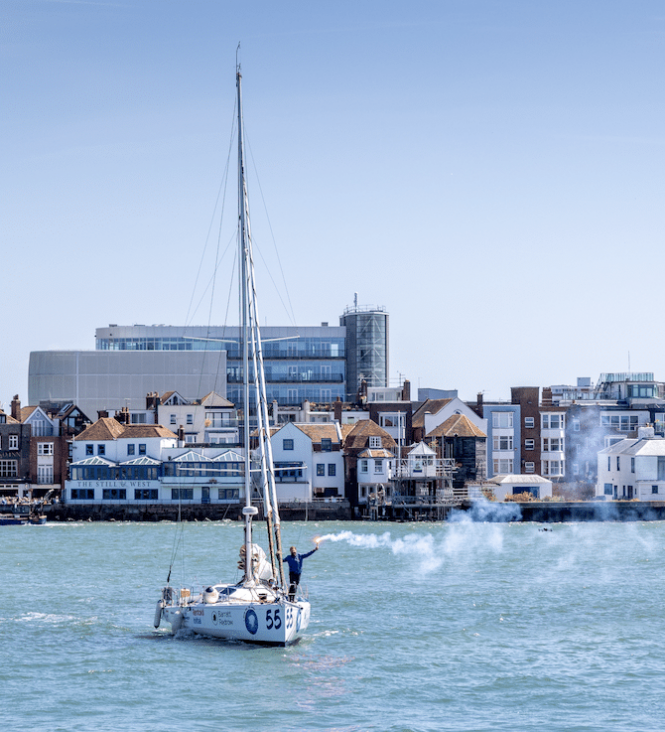
"I am extremely grateful to all my partners that have supported me over so many years and continue to do so for this challenge. After rowing oceans, climbing Everest, cycling, flying and sailing around the world, I’m not sure what challenge is left on this planet."
Beyond the scientific instruments and navigational charts, Ketchell’s journey maintained a deeply human and philanthropic focus. Throughout the expedition, he engaged directly with the next generation, delivering virtual educational sessions, interactive classroom worksheets, and live port-of-call talks designed to spark children’s interest in STEM fields, geography, and ocean conservation.
Furthermore, the expedition served as a high-visibility platform for two vital charitable causes:
- Baton of Hope: A prominent UK-based suicide awareness and prevention campaign dedicated to shifting cultural perceptions and eradicating suicide stigma.
- Kindled Spirit: An international charity focused on rehabilitating and empowering victims of human trafficking and extreme exploitation.
Future Outlook: The Expanding Role of Private Vessels in Marine Science
James Ketchell’s historic circumnavigation is far more than an isolated feat of human perseverance; it represents a growing paradigm shift in how modern exploration and environmental science intersect.
For decades, oceanographic research was constrained by the limited availability and immense operational costs of dedicated state-owned research ships. Today, organizations like The International SeaKeepers Society are proving that the global private yachting and sailing community can serve as an invaluable force multiplier for the scientific community. By outfitting private vessels with standardized sampling kits, deployment mechanisms, and data-logging sensors, ocean advocates can collect data at a scale and frequency previously thought impossible.
As SeaKeepers continues to expand its international network of vessel owners, captains, researchers, and global ambassadors, expeditions like Ketchell’s set a powerful precedent. They demonstrate that the modern adventurer can—and should—act as an active custodian of the natural world.
The successful conclusion of Ketchell’s journey closes an extraordinary chapter in modern exploration. Yet, the data points he dropped into the Indian Ocean, the microplastic filters he brought back to the laboratories, and the thousands of school children inspired by his broadcasts ensure that his voyage will ripple outward for generations to come, securing a healthier, better-understood future for our global ocean.