






Executive Overview
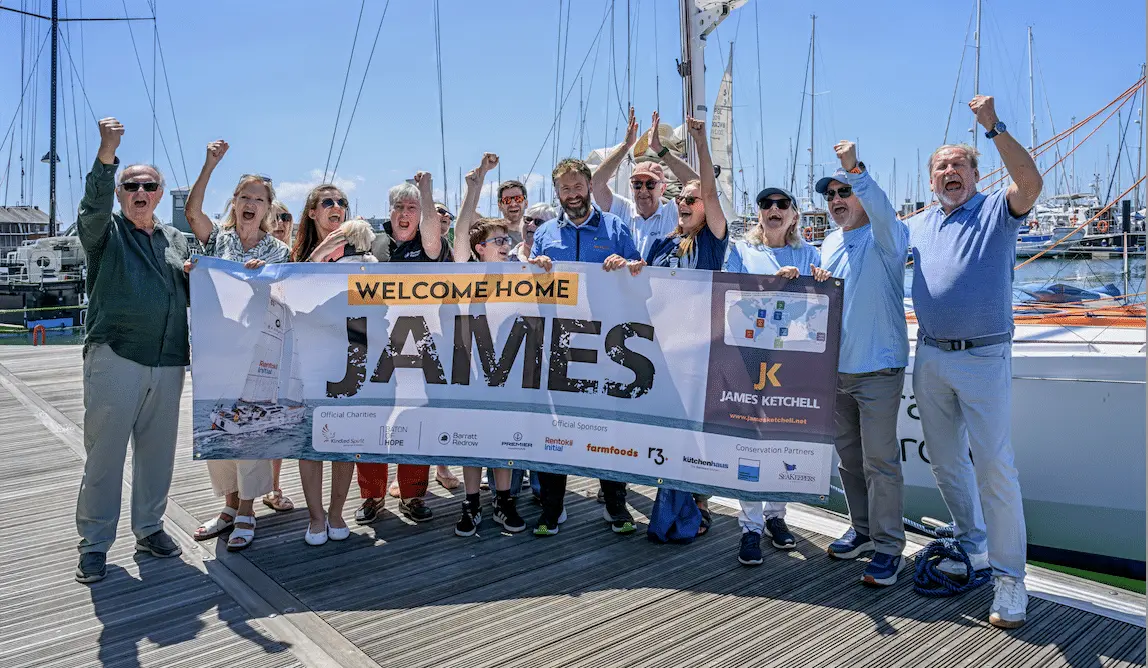
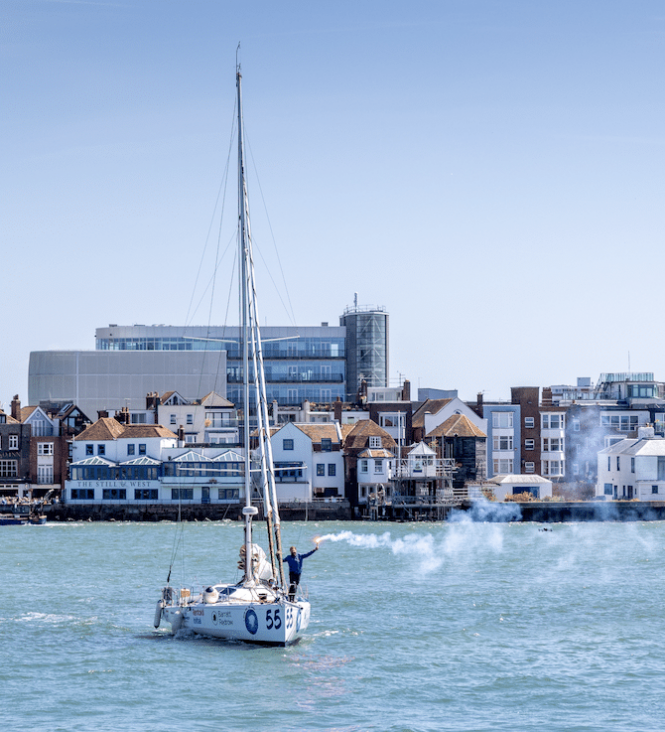
On June 13, 2026, British adventurer and endurance icon James Ketchell steered his sailing vessel, Mindset, back into the harbor at Gosport, United Kingdom. With that final nautical mile, Ketchell officially crossed an unprecedented global finish line, securing his place in history as the first person ever to circumnavigate the globe by land, air, and sea.
This monumental homecoming marked the conclusion of a grueling 30,000-nautical-mile maritime voyage that began in July 2025. Yet, Ketchell’s achievement transcends traditional records of human endurance. Operating in his capacity as an Ambassador for the UK’s National Oceanography Centre (NOC) and partnering with The International SeaKeepers Society’s DISCOVERY Programme, Ketchell transformed his vessel into a mobile marine laboratory. Throughout his journey, he collected vital oceanographic data, mapped previously uncharted stretches of the seafloor, and gathered microplastic samples to aid researchers fighting global marine pollution.
Ketchell’s latest triumph is the capstone of a lifelong dedication to pushing human limits. Having previously cycled around the world in 2013 and flown a gyrocopter globally in 2019—alongside scaling Mount Everest and rowing solo across the Atlantic—Ketchell has redefined what is physically possible. Furthermore, his expedition served as an active educational platform for thousands of school children worldwide and raised vital funds and awareness for suicide prevention and human trafficking survivors.
This report provides a comprehensive examination of Ketchell’s historic expedition, breaking down its chronological milestones, the scientific initiatives he supported, the humanitarian causes he championed, and the broader implications of combining extreme exploration with ocean conservation.
Detailed Chronology: The Journey of the Mindset
To fully appreciate the scope of James Ketchell’s historic feat, one must look at the timeline of his multi-modal global journey. His quest to circumnavigate the globe via land, air, and sea spans more than a decade of strategic planning, relentless physical conditioning, and unwavering mental fortitude.
The Foundation: Land and Air (2013–2019)
- 2013 (The Cycling Circumnavigation): Ketchell’s global ambitions took physical shape when he embarked on a self-supported bicycle journey around the world. Pedaling tens of thousands of kilometers through varying climates, terrain, and geopolitical landscapes, he proved his capacity for extreme multi-month endurance.
- 2019 (The Gyrocopter Circumnavigation): Elevating his ambitions from the terrestrial to the atmospheric, Ketchell became the first person to circumnavigate the globe in a lightweight gyrocopter. Navigating unpredictable weather patterns, remote airspace, and technical vulnerabilities, he conquered the skies to complete the aerial leg of his grand trilogy.
The Final Frontier: The Maritime Voyage (July 2025 – June 2026)
With land and air conquered, the final piece of the puzzle remained the sea. Oncoming preparations culminated in July 2025, when Ketchell cast off aboard the Mindset, initiating a punishing 30,000-nautical-mile oceanic odyssey designed to test both man and machine.
- July 2025 (Departure & Atlantic Crossing): Departing from the UK, Ketchell’s initial route took him southward across the Atlantic. Making strategic stops in Lanzarote and Cape Verde, he acclimatized to the rhythmic solitude of long-haul ocean sailing while familiarizing himself with the specialized scientific monitoring equipment onboard.
- Late 2025 (South America and the Southern Atlantic): Sailing onward to the shores of Brazil, Ketchell faced relentless tropical squalls before swinging southeast toward the African continent. His arrival in Cape Town served as a crucial logistical window for vessel maintenance and scientific data offloading before embarking on one of the most dangerous sectors of the voyage.
- Early 2026 (The Roaring Forties & Cape Horn): Navigating the treacherous Southern Ocean, Ketchell steered the Mindset toward Hobart, Australia, before taking on the legendary and unforgiving waters of Cape Horn. Battling towering swells, freezing temperatures, and hurricane-force winds, he successfully rounded the notorious cape—a rite of passage feared and respected by mariners for centuries.
- Spring to June 2026 (The Homeward Stretch): Following the harrowing Southern Ocean passage, Ketchell began his final push northward through the Atlantic, culminating in his triumphant arrival in Gosport on June 13, 2026.
Supporting Context & Metrics: Science at Sea
While the physical challenge of sailing solo across the globe is a staggering achievement on its own, Ketchell’s expedition stands out for its integration of high-level scientific research. Modern explorers increasingly recognize that remote expeditions offer a rare opportunity to gather data from areas of the planet that are otherwise too costly or difficult for traditional research vessels to reach.

Through his partnership with The International SeaKeepers Society’s DISCOVERY Programme and his role as a National Oceanography Centre (NOC) Ambassador, Ketchell directly contributed to three critical global scientific initiatives:
1. Deploying Argo Floats in the Indian Ocean
During his passage through the Indian Ocean, Ketchell deployed an autonomous Argo float. Argo is an international array of more than 4,000 free-drifting profiling floats that measure temperature and salinity in the upper 2,000 meters of the ocean.
- The Impact: These devices transmit real-time data via satellite, providing climatologists and oceanographers with the empirical evidence needed to track global sea-level rise, ocean heat uptake, and climate variability. By placing a float in a remote sector, Ketchell directly bolstered the accuracy of global climate models.
2. Microplastic Sampling for NOC
Plastic pollution has permeated every layer of the marine ecosystem, yet mapping its exact concentration across vast oceanic expanses remains an ongoing challenge.
- The Impact: Equipped with specialized sampling gear, Ketchell collected microplastic samples throughout his voyage. These samples were preserved and cataloged for collaborative analysis between the NOC and SeaKeepers. The data helps scientists chart the density of synthetic particulate pollution, identify oceanic gyre accumulation zones, and lobby for evidence-based regulatory policies regarding single-use plastics.
3. Seabed Mapping for the Nippon Foundation-GEBCO Seabed 2030 Project
Astonishingly, more of the lunar surface has been mapped in high resolution than the floor of Earth’s own oceans. Recognizing this critical knowledge gap, the Nippon Foundation-GEBCO Seabed 2030 Project aims to compile all available bathymetric data to produce the definitive map of the world ocean floor by 2030.
- The Impact: Operating sonar and bathymetric data-logging equipment along his route, Ketchell fed depth and topography measurements directly into the Seabed 2030 database. This information is vital for understanding ocean circulation patterns, tsunami forecasting, marine habitat protection, and geological research.
Official Statements and Industry Impact
The convergence of elite endurance sport and rigorous scientific research has drawn widespread acclaim from environmental organizations, educational institutions, and the global maritime community.
Reflecting on the synergy between adventure and conservation, Gill Rodrigues, Director of International Relations at SeaKeepers, stated:
“James has shown how adventure and science can sail side by side. We couldn’t be prouder to welcome him home.”
The sentiment underscores a growing ethos within the modern adventuring community: that expeditions into the wild must also serve to protect it. By opening his cabin to oceanographic instruments, Ketchell demonstrated that modern voyagers can act as frontline defenders of the biosphere.
Speaking on the exhaustion and fulfillment of his historic quest, James Ketchell reflected:
“I am extremely grateful to all my partners that have supported me over so many years and continue to do so for this challenge. After rowing oceans, climbing Everest, cycling, flying, and sailing around the world, I’m not sure what challenge is left on this planet.”
Beyond his contributions to marine science, Ketchell utilized his global platform to advocate for vulnerable human populations. His expedition raised essential funds and public awareness for two prominent charities:
- Baton of Hope: A leading UK initiative focused on suicide awareness, prevention, and breaking the stigma surrounding mental health struggles.
- Kindled Spirit: An international charity dedicated to supporting, rehabilitating, and empowering survivors of human trafficking.
Furthermore, Ketchell maintained an active schedule of educational outreach throughout the voyage. Through live virtual classrooms, interactive Q&A sessions from ports of call, and downloadable educational worksheets, he inspired thousands of students worldwide to pursue STEM (Science, Technology, Engineering, and Mathematics) fields and outdoor exploration.
Future Outlook: The Evolving Role of the Yachting Community in Marine Science
James Ketchell’s record-breaking circumnavigation serves as a powerful proof-of-concept for citizen science within the maritime sector. Historically, marine research has been restricted to state-funded research vessels with limited operating budgets and geographic reach. However, as environmental crises multiply, the private yachting and global cruising community is stepping up to bridge the data gap.
Organizations like The International SeaKeepers Society are leading this transformation through initiatives like the DISCOVERY Programme. By connecting vessel owners, captains, and solo adventurers with accredited scientific institutions, SeaKeepers turns private and exploratory voyages into engines of environmental discovery.
As noted by industry supporters such as CharterWorld—proud partners of SeaKeepers—voyages like Ketchell’s highlight the unique position that ocean travelers hold. Yachts and sailing vessels traverse pristine, remote, and often vulnerable waters daily. Equipping these vessels with standardized sampling kits, bathymetric scanners, and deployment hardware turns the global fleet into an expansive, decentralized research armada.
Looking forward, the success of the Mindset expedition is expected to inspire a new generation of explorers and mariners. As SeaKeepers continues to expand its international network of vessel owners, scientists, and environmental advocates, the blueprint laid by James Ketchell proves that human curiosity and planetary stewardship are not mutually exclusive. Instead, when combined, they offer our best hope for understanding, protecting, and preserving the world’s oceans for generations to come.