








Executive Overview
In the modern media ecosystem, outrage is a reliable currency, and corporate news outlets have struck gold with a terrifying new narrative: the runaway e-bike. Day after day, headlines and social media feeds are flooded with hand-wringing stories of teenagers tearing down sidewalks and delivery workers weaving recklessly through crowded crosswalks on machines that seemingly blast through urban corridors like terrestrial rockets. Neighborhood busybodies and online safety warriors are in a tizzy, demanding swift political interventions, aggressive crackdowns, and heavy-handed municipal regulations.
Yet, beneath this surging wave of moral panic lies a fundamental mischaracterization of urban mobility, an alarming conflation of distinct vehicle classes, and a profound misallocation of public safety resources.
To understand the current discourse, one must first separate reality from clickbait. In the United States, standard electric bicycles are pedal-assist devices capped at a top speed of roughly 20 miles per hour. These vehicles have exploded in popularity because they offer a pragmatic, eco-friendly solution to everyday hurdles—flattening steep city hills, easing the burden of hauling heavy cargo or groceries, and enabling parents to transport children across town without breaking a sweat or turning to a gas-powered automobile.
The vast majority of the real-world alarm stems from a critical labeling problem. The high-speed machines operating aggressively on sidewalks and darting through intersections are not standard e-bikes; they are unlicenced, high-powered electric motorcycles—colloquially known as e-motos—capable of soaring up to 60 miles per hour at the twist of a throttle, entirely independent of human pedaling.
While public nuisance and reckless riding involving these high-powered machines warrant local attention, letting fearmongers frame all e-bikes as a public health emergency is a dangerous misdirection. It distracts from the systemic carnage wrought by full-sized motor vehicles. If traffic safety advocates and policymakers are genuinely interested in saving lives, preventing debilitating injuries, and reclaiming urban spaces, they must return to foundational industrial safety principles. They must apply the time-tested "hierarchy of safety controls" to our roadways—a framework that correctly identifies where the true dangers lie and demands that society focus 99.8 percent of its policy energy where the actual bloodshed occurs: on passenger cars, trucks, and SUVs.
Detailed Chronology: The Rise of Micro-Mobility and the Media Panic
To grasp how society arrived at the current cultural friction surrounding electric two-wheelers, it is necessary to examine the timeline of urban mobility over the past decade.
Phase One: The Quiet Revolution (2017–2019)
Long before e-bikes became a household term, forward-thinking urban planners and early adopters began utilizing lithium-ion battery-assisted bicycles to commute across congested metropolitan areas. During this period, the technology matured. Manufacturers introduced reliable torque sensors and mid-drive motors, making the experience of riding a bicycle seamless and accessible to a broader demographic. Municipalities watched cautiously as dockless bike-share programs integrated e-bikes into their fleets, sparking early debates about sidewalk clutter and pedestrian right-of-way. However, the discourse remained largely localized and policy-oriented.
Phase Two: The Pandemic Boom and the Delivery Economy (2020–2022)
The COVID-19 pandemic catalyzed a massive transformation in how cities functioned. As public transit ridership plummeted and delivery app usage skyrocketed, e-bikes emerged as the ultimate workhorse for urban gig-economy workers. Thousands of couriers adopted electric bicycles to navigate gridlocked streets efficiently. Concurrently, ordinary citizens purchased e-bikes in record numbers to escape confinement, find socially distanced recreation, and replace short car trips with active transportation.
However, this rapid scaling outpaced municipal infrastructure. Cities that lacked protected bike lanes forced e-bike riders to choose between competing with high-speed automobile traffic or sharing cramped pedestrian walkways.
Phase Three: The Arrival of High-Power E-Motos (2023–2024)
As consumer demand for electric two-wheelers surged, global manufacturing supply chains flooded the market with a broader spectrum of battery-powered vehicles. This is where the cultural narrative fractured. Alongside Class 1, 2, and 3 pedal-assist bicycles, an influx of unregulated, high-powered electric dirt bikes and e-motos—often resembling lightweight motorcycles without pedals or with non-functional dummy pedals—gained immense popularity, particularly among teenagers and reckless operators.
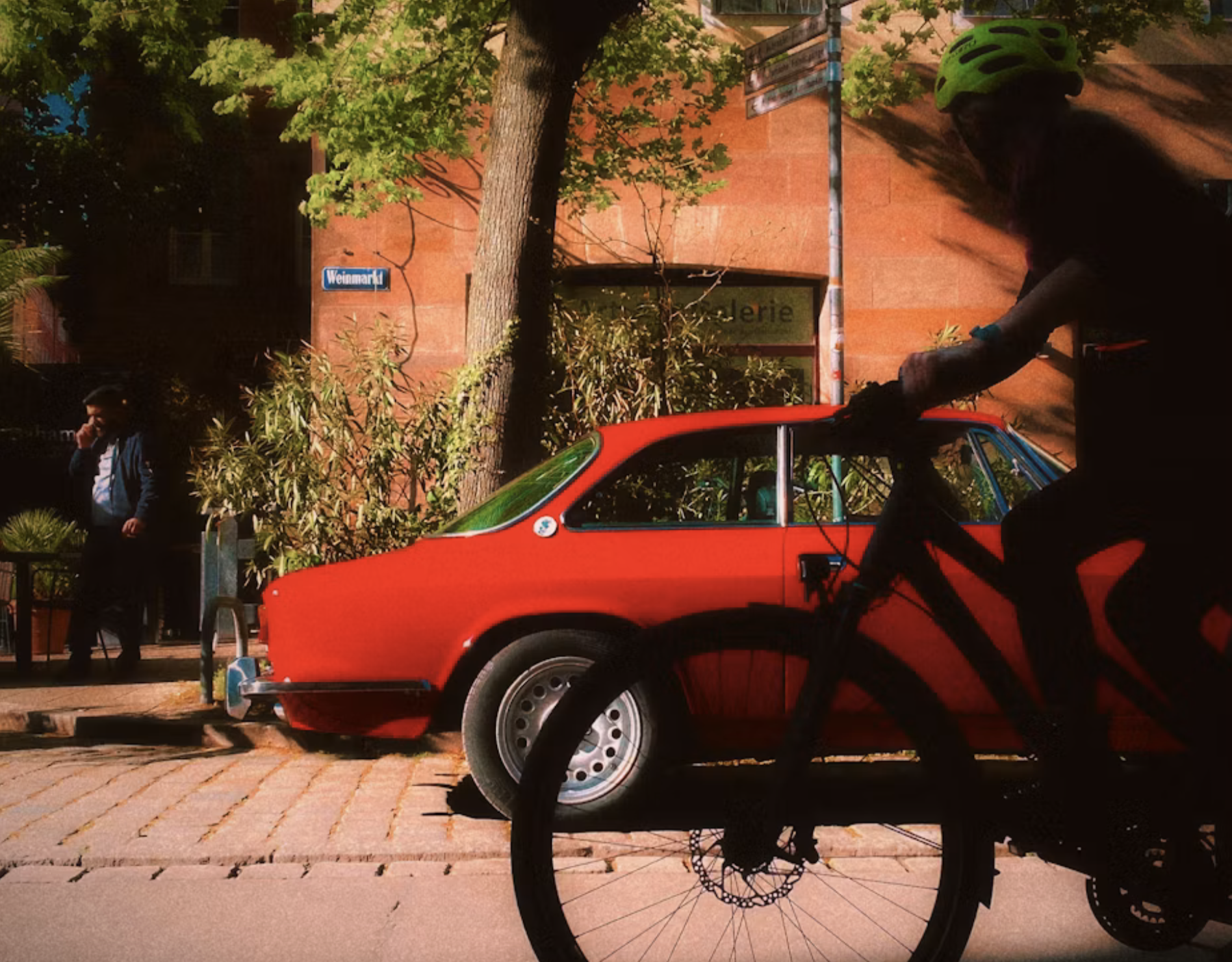
Capable of high speeds with zero physical exertion required, these machines began appearing in dense pedestrian zones. Incidents of near-misses, sidewalk riding, and collisions spiked in major urban centers.
Phase Four: The Media Storm and Regulatory Overcorrection (2025–Present)
Sensing a potent driver for digital engagement, corporate media seized upon the subset of dangerous e-moto behavior and cast a wide net that indiscriminately targeted all e-bikes. Sensationalized news segments and viral social media clips fueled public anxiety, prompting reactionary calls for blanket bans, mandatory registration, age limits, and heavy policing of ordinary pedal-assist cyclists. Rather than addressing the lack of safe, protected bike infrastructure or enforcing existing traffic laws against reckless operation across all vehicle types, political leaders found themselves pressured to legislate against the latest technological bogeyman.
Supporting Context & Metrics: Deconstructing the Hazard Hierarchy
In industrial hygiene and occupational health, safety professionals rely on the Hierarchy of Safety Controls to systematically rank hazard mitigation strategies from most to least effective:
- Elimination: Completely removing the hazard from the environment.
- Substitution: Replacing the hazard with something less dangerous.
- Engineering Controls: Isolating people from the hazard through physical design (e.g., protected bike lanes, physical road barriers).
- Administrative Controls: Changing the way people work or travel through rules, signage, and policies.
- Personal Protective Equipment (PPE): Equipping individuals with helmets, pads, and high-visibility gear at the bottom of the chain.
The fundamental flaw in modern traffic safety discourse is that public conversations about e-bikes and e-motos live almost entirely at the bottom two rungs—relying on administrative rules, warning signs, and individual helmet use—while ignoring structural engineering and elimination. Furthermore, humans are emotional creatures prone to availability bias; we fixate on the novel, terrifying image of a teenager speeding on a sidewalk while mentally normalizing the catastrophic, industrialized violence inflicted by multi-ton automobiles every single day.
The Staggering Toll of Motor Vehicles
To put the e-bike "crisis" into proper numerical perspective, one must examine the empirical data compiled by federal agencies and public health organizations regarding passenger vehicles.
According to data from the National Highway Traffic Safety Administration (NHTSA) and the Centers for Disease Control and Prevention (CDC):
- Total Crashes: In 2023 alone, the United States recorded approximately 6.14 million police-reported traffic crashes. Of those incidents, 71.7 percent resulted in property damage only, 27.6 percent involved non-fatal injuries, and 0.6 percent were fatal.
- Fatalities and Injuries: In that same year, 40,901 people were killed on American roads, and an estimated 2.44 million individuals were injured. The CDC separately tracked approximately 2.8 million emergency department visits specifically for car crash-related injuries.
- Economic and Social Costs: The financial burden of this carnage is astronomical. Medical expenses from car crashes cost a staggering $31 billion in 2019 alone. Looking at 2023 data, the CDC estimated the cost of crash deaths alone to exceed $457 billion, factoring in direct medical care and the statistical value of human lives lost. Taxpayers across the nation subsidize roughly 9 percent of all economic crash costs through public healthcare programs, emergency services, and municipal repairs, whether they choose to drive or not.
Comparing the Scale: Cars vs. E-Bikes
When juxtaposed against the automobile epidemic, the statistical footprint of e-bike incidents tells a vastly different story.
Federal tracking indicates that e-bike fatalities stood at 91 deaths in 2023 and rose slightly to 97 deaths in 2024, bringing the cumulative total from 2017 through 2024 to approximately 310 fatalities. While any loss of life is tragic, and the upward trend in e-bike injuries is a real phenomenon, this rise correlates directly with a massive, positive modal shift: millions of citizens are abandoning personal automobiles for short urban trips, replacing car-miles with e-bike-miles.
When automobiles kill roughly 40,000 people and send nearly 3 million people to the emergency room annually, directing intense political ire, legislative panic, and police resources toward devices that top out at 20 miles per hour is a profound failure of institutional triage.
Official Statements and Expert Perspectives
As municipalities grapple with the pressures of public anxiety, urban planners, safety advocates, and municipal officials are increasingly speaking out against the misdirected panic.

Dr. Elena Vance, a prominent urban mobility researcher at the Institute for Transportation Development, notes that the current discourse suffers from technological scapegoating:
"When a society refuses to redesign its streets to protect vulnerable road users from heavy cars, it looks for an easier target to blame. E-bikes have become the Rorschach test for our collective anxiety about changing public spaces. We are arguing over the wattage of a bicycle motor while ignoring the two-ton steel boxes that routinely crush pedestrians in broad daylight."
Law enforcement and city planners also emphasize the critical distinction between legal class-compliant e-bikes and illegal, high-powered e-motos. In cities like New York and Los Angeles, municipal task forces have begun targeting uncertified lithium-ion batteries and throttled electric motorcycles that exceed legal speed thresholds. However, transportation advocates caution that crackdowns must not sweep up low-income delivery workers or families using legitimate e-bikes for daily mobility.
Marcus Holloway, a municipal transit policy advisor, emphasizes the necessity of structural solutions over punitive bans:
"If a delivery rider is weaving through a crosswalk, it is often because our street design offers them no safe, dedicated space to ride. The solution is not to outlaw the vehicle that makes green, efficient urban logistics possible; the solution is to build protected, grade-separated bike networks that separate fast micro-mobility from pedestrians on sidewalks and heavy trucks on asphalt."
Future Outlook: Calibrating Our Attention for Safer Streets
As we look toward the future of transportation, cities stand at a critical crossroads. The electrification of personal mobility is irreversible, necessary, and fundamentally beneficial for reducing carbon emissions, mitigating traffic congestion, and offering affordable transportation options to millions of urban residents.
To navigate this transition successfully, policymakers, journalists, and citizens must calibrate their concerns to match empirical reality. E-motos and high-speed electric motorcycles do require sensible regulation, clear definitions, and enforcement against reckless sidewalk riding. But treating every battery-assisted bicycle as an existential threat to public safety is an irrational distraction.
We must embrace a rational proportion in our safety advocacy. To borrow a vital perspective on traffic safety priorities: our policy energy should focus 0.2 percent of our attention on e-bikes and 99.8 percent of our attention on motor vehicles.
By refocusing our resources on the top of the safety hierarchy—designing safer streets, narrowing travel lanes, lowering speed limits, and holding automobile operators accountable for lethal vehicle designs—we can dramatically reduce trauma on our roadways. Only then can we build cities where all road users—whether walking, pedaling, or rolling—can navigate public spaces safely, efficiently, and without fear.