











Executive Overview
For generations, venturing into the backcountry meant a deliberate, unyielding severing of ties with civilization. To step off-grid was to disappear entirely for days, weeks, or even months, leaving behind a profound silence for loved ones waiting at home. Today, that paradigm has fundamentally shifted. Modern satellite communication technology has evolved from bulky, military-grade emergency beacons into ultra-tough, palm-sized devices that slip effortlessly into a personal flotation device (PFD) pocket, strap to a bikepacking frame, or integrate directly into consumer smartphones.
Modern wilderness travelers no longer have to choose between total isolation and safety. Whether navigating remote whitewater rivers, embarking on multi-month continental cycling expeditions, or traversing international mountain ranges, today’s satellite communicators offer an unprecedented blend of durability, two-way messaging, real-time tracking, and emergency SOS functionality.
However, as the market expands to include everything from budget-friendly emergency messengers to high-speed portable broadband terminals and native smartphone satellite connectivity, choosing the right tool for an expedition has become increasingly complex. Based on rigorous real-world testing across paddling trips, bikepacking journeys, and remote expeditions, this guide evaluates the premier satellite communication devices on the market, analyzing their features, subscription models, battery efficiency, and ideal use cases.

Detailed Chronology: The Evolution of Off-Grid Communication
To understand where backcountry communication stands today, it is helpful to trace its technological lineage. For decades, emergency rescue relied almost exclusively on traditional 406 MHz Personal Locator Beacons (PLBs). These devices served a single, vital purpose: when activated, they transmitted a one-way distress signal to search-and-rescue authorities indicating that a user was in mortal peril. They offered no confirmation that the message had been received, provided no two-way communication to relay the nature of the emergency, and allowed for no casual check-ins with family.
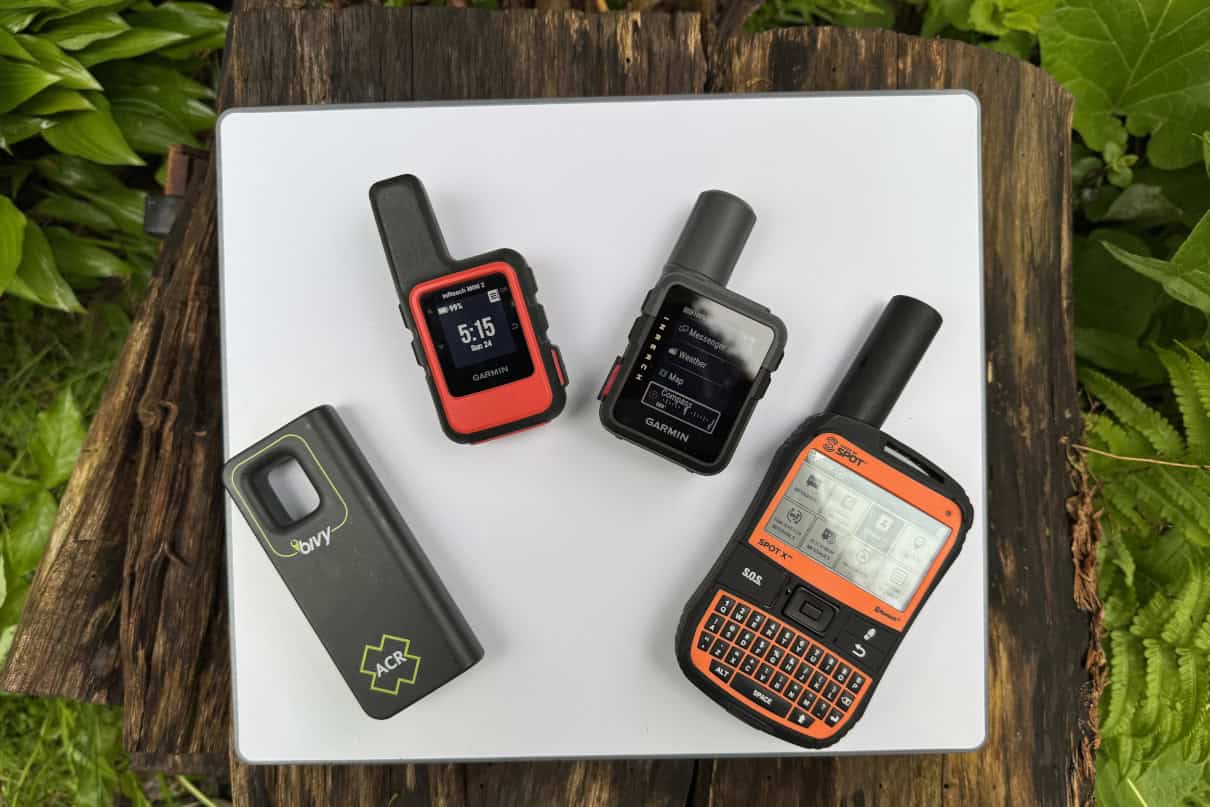
The introduction of consumer two-way satellite messengers in the late 2000s revolutionized backcountry travel. Brands like SPOT and Garmin (via its acquisition of DeLorme inlash technology) introduced pocket-sized units capable of sending custom and preset texts via low Earth orbit (LEO) satellite constellations. Users could finally let their families know they had reached camp safely or request non-emergency assistance.
By the early 2020s, smartphone integration became the industry standard. Devices began leveraging Bluetooth to pair with iOS and Android applications, transforming small hardware units into feature-rich communication hubs that utilized a phone’s familiar touchscreen interface for drafting messages.
The most disruptive leap occurred in the mid-2020s with two concurrent milestones: Apple’s rollout of native satellite messaging for everyday smartphones, and the commercialization of ultra-portable broadband terminals like the Starlink Mini. These developments democratized satellite connectivity, pushing basic emergency tracking into the pockets of casual day-hikers while offering digital nomads full high-speed internet access deep in the wilderness. Most recently, corporate consolidation—such as Amazon’s multi-billion-dollar acquisition of satellite operator Globalstar—signals an aggressive future where direct-to-device satellite communication will become a standard feature of consumer electronics rather than a specialized niche.

Supporting Context & Metrics: Evaluating the Top Contenders
Choosing a satellite communicator requires balancing weight, functionality, subscription costs, and hardware durability. Below is a comprehensive breakdown of the industry’s leading devices, based on exhaustive field testing.
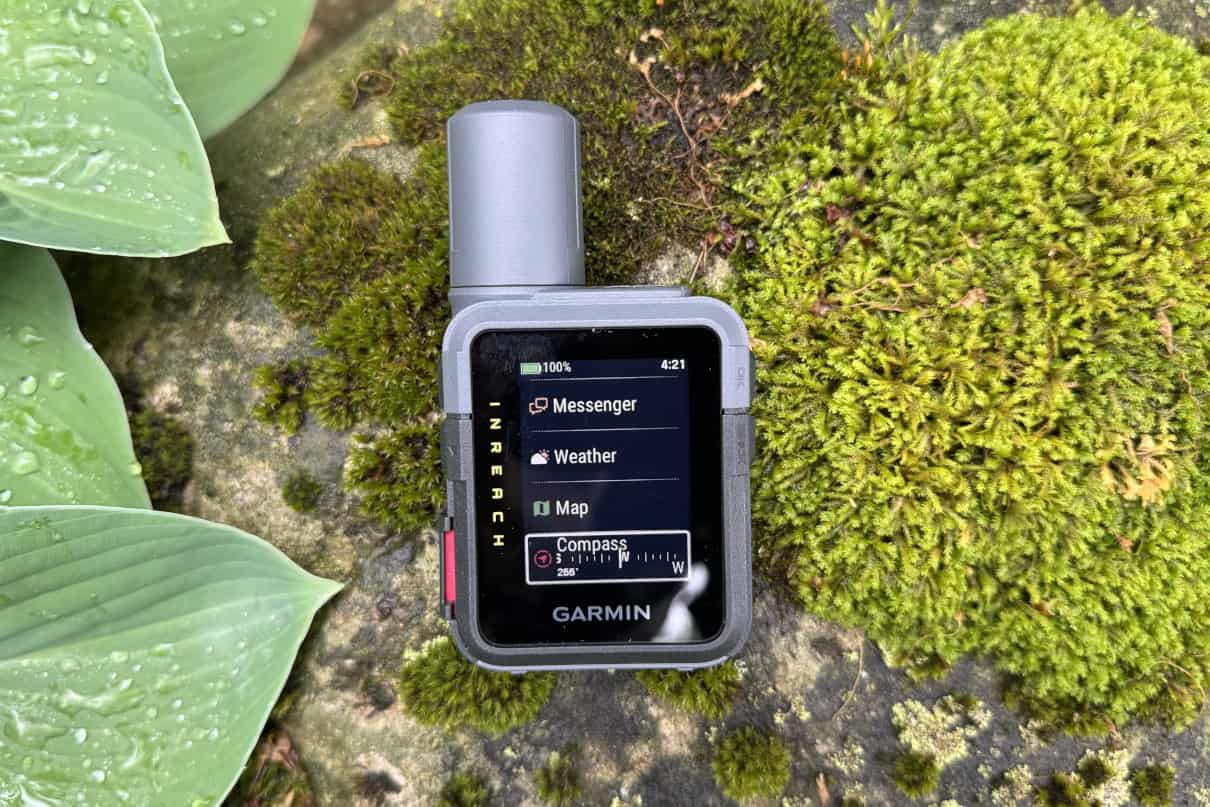
1. Best Overall Satellite Communicator: Garmin inReach Mini 3
- Price: $449 USD
- Weight: 4.3 ounces (0.27 lbs)
- Key Specs: Two-way messaging, interactive SOS, weather forecasts, color touchscreen display, up to 350-hour battery life at 10-minute tracking intervals.
- Subscription Costs: Plans start at $7.99/month with a one-time $39 activation fee; suspendible for up to 12 months while retaining SOS functionality.
The Garmin inReach Mini series has long been the gold standard for serious outdoor adventurers, and the iterative refinements in the Mini 3 solidify its dominance. Building upon the reliable foundation of the Mini 2, the third-generation iteration introduces a vibrant color touchscreen and a substantial boost in battery efficiency. Garmin claims up to 350 hours of operation when utilizing 10-minute tracking intervals.
During extensive multi-month testing across grueling cycling and paddling routes, the device proved exceptionally resilient. Setting the unit to update location hourly allowed family members thousands of miles away to track progress seamlessly, requiring only a single weekly recharge.
While core features—including global two-way messaging, SOS alerts, and location sharing—operate independently of a smartphone, upgrading to the Mini 3 Plus for an additional $50 unlocks the ability to transmit images and voice messages via Bluetooth. For budget-conscious buyers, older iterations like the Mini 2 often see steep discounts during seasonal sales, offering nearly identical core safety features at a fraction of the cost.
2. Most Lightweight Satellite Messenger: ACR Bivy Stick
- Price: $199.95 USD
- Weight: 3.3 ounces
- Key Specs: Ultralight footprint, companion app integration, detailed activity logging (time, distance, vertical gain, calories, speed).
- Subscription Costs: Annual plans from $14.99/month; month-to-month plans from $19.99/month; $29.99 activation fee (no deactivation fees after an initial three-month commitment).
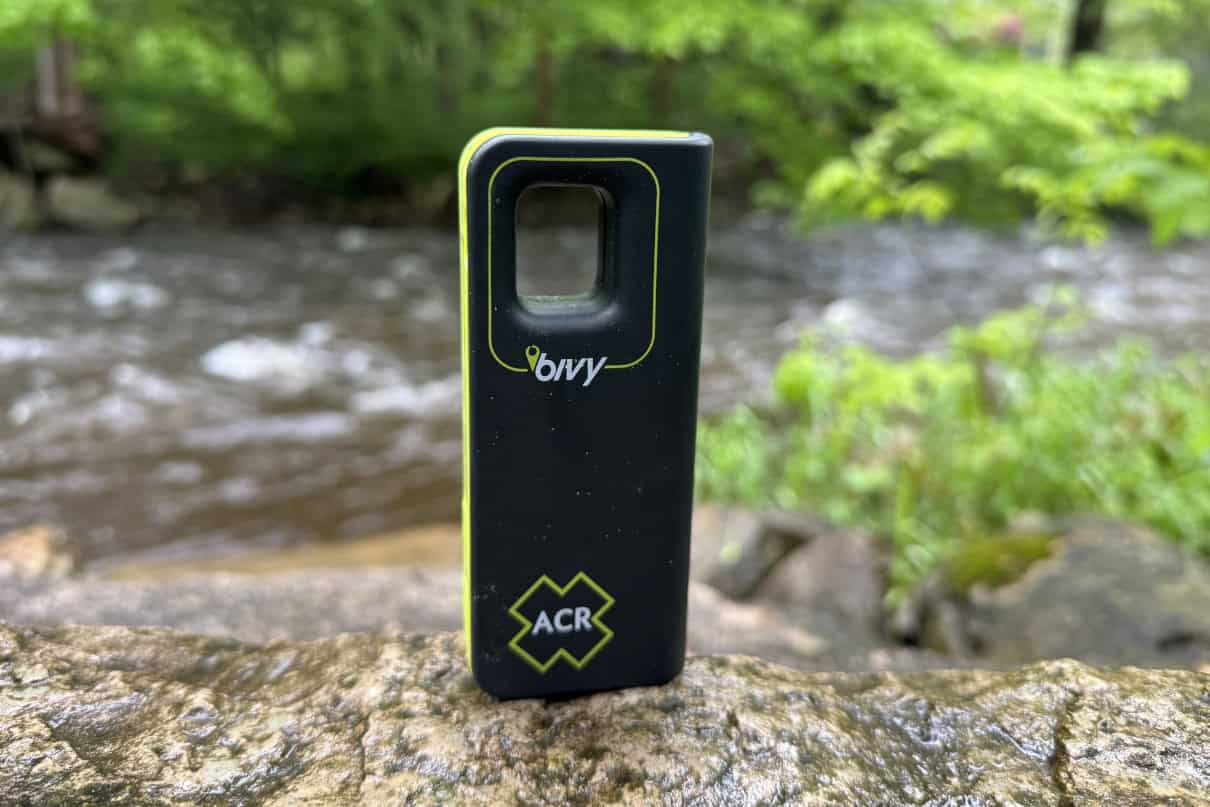
For ultralight backpackers, thru-hikers, and minimalists who count every ounce, the ACR Bivy Stick stands out as the lightest dedicated satellite messenger tested. Designed to be paired with a smartphone, the Bivy Stick provides robust standalone functionality for initiating an SOS, transmitting preset check-in messages, and toggling route tracking directly from the hardware unit.
The accompanying mobile application offers a remarkably user-friendly interface. Multisport adventurers particularly benefit from the app’s ability to categorize tracked outings by activity type while recording complex telemetry data such as vertical ascent, average speed, and caloric burn. Furthermore, its flexible subscription model—devoid of cancellation penalties following the initial three-month window—makes it an ideal seasonal choice for part-time adventurers.
3. Best for Day Trips: iPhone Satellite Messaging
- Price: Free (Included with iOS 18 on iPhone 14 or newer)
- Weight: Dependent on phone model
- Key Specs: Native satellite text messaging, emergency SOS via satellite, roadside assistance.
- Subscription Costs: Currently free.
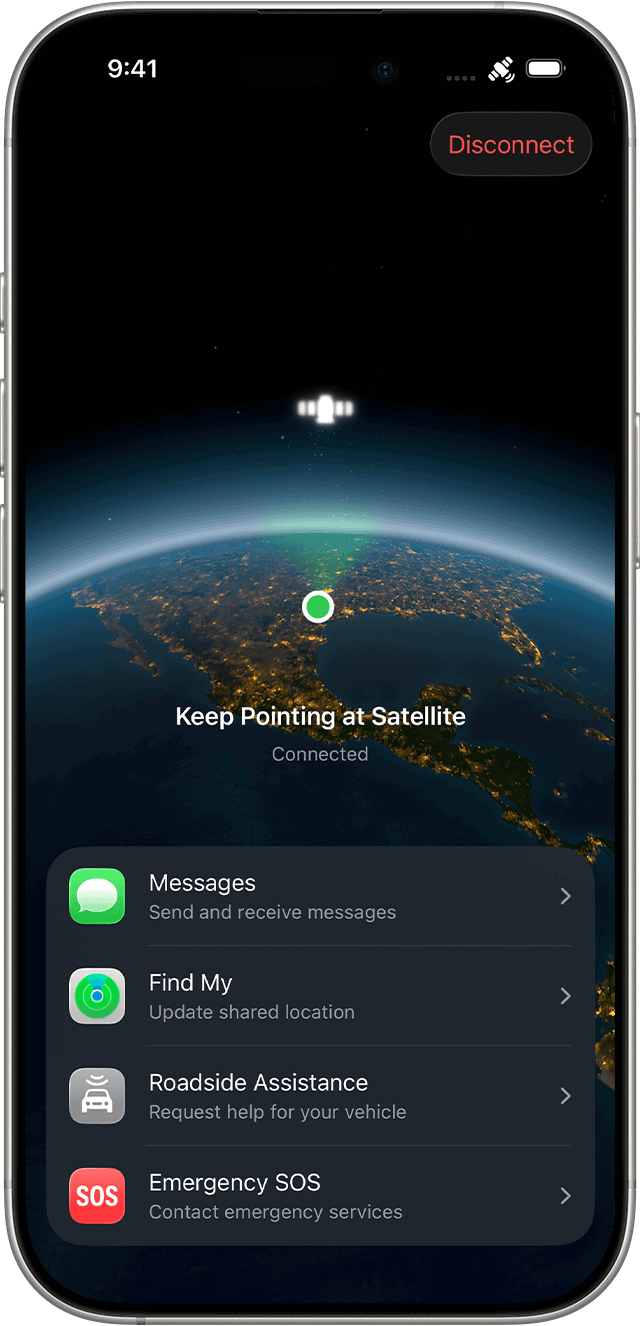
For casual adventurers operating within cell service fringes, modern smartphones running iOS 18 on iPhone 14 hardware or newer offer an enticing built-in solution. Upon losing cellular connectivity, a small satellite icon appears in the upper-right corner of the interface. Opening the native messaging app prompts the user to align their device with nearby overhead satellites.
On open bodies of water or elevated ridges, messages typically transmit within 30 to 60 seconds. The service allows individual text communication and requires zero additional hardware purchases or ongoing subscriptions.
However, seasoned wilderness guides remain skeptical of relying entirely on a smartphone. Smartphones are inherently delicate: sub-zero alpine temperatures or prolonged exposure to direct solar radiation can drain batteries rapidly or brick internal components. Furthermore, a shattered screen or accidental pocket-dial lockouts can render the device useless in a crisis. Smartphone satellite messaging serves as a brilliant safety net for day-trippers, but true expedition travelers will still want a rugged, dedicated backup.
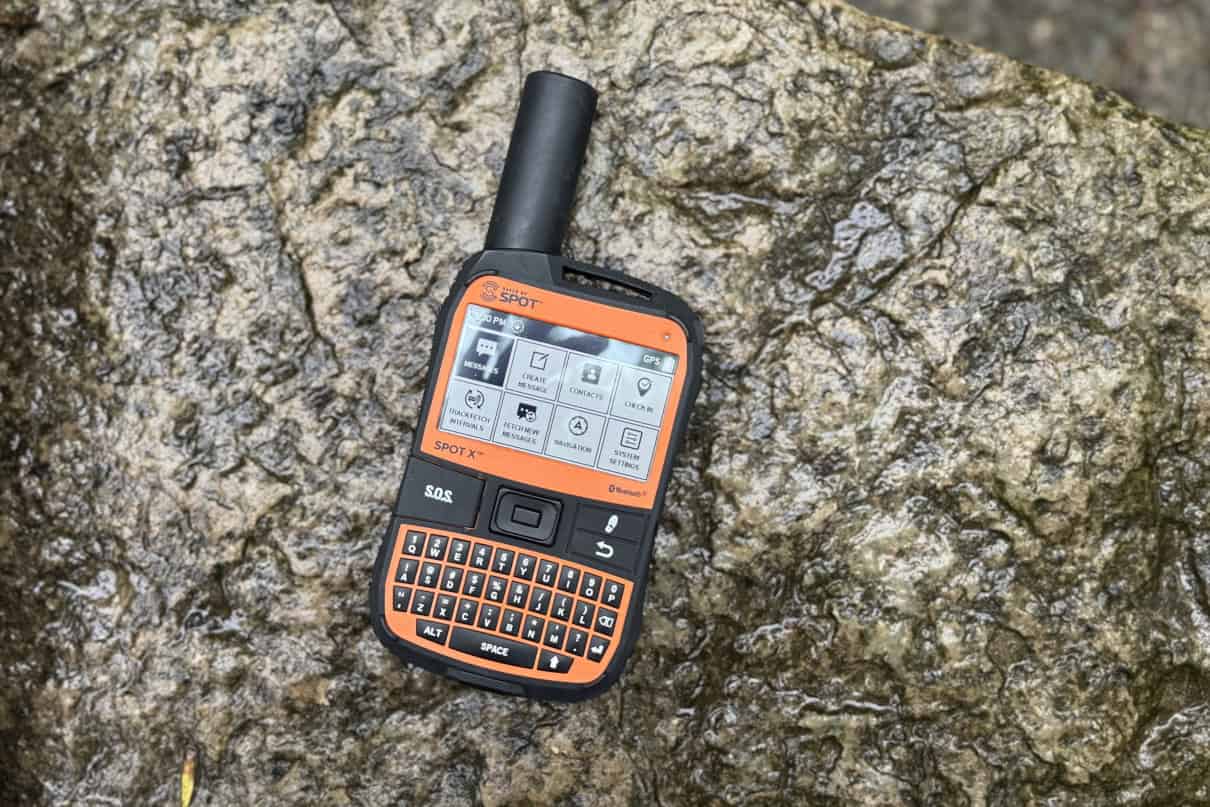
4. Best for Single-Device Functionality: SPOT X
- Price: $249 USD
- Weight: Approximately double most handheld competitors (~7–8 ounces)
- Key Specs: Physical QWERTY keyboard, Bluetooth smartphone pairing, direct messaging without phone dependency.
- Subscription Costs: Contract plans from $11.95/month; month-to-month plans from $14.95/month.
In an era where nearly all satellite communicators require a tethered smartphone to draft custom messages efficiently, the SPOT X offers a refreshingly nostalgic design. Equipped with a physical QWERTY keyboard reminiscent of classic mobile devices, it allows users to type out long-form, custom text messages directly on the hardware without ever booting up an app.
While its physical keyboard adds noticeable heft—weighing roughly twice as much as minimalist handhelds—it remains a favorite for users who prefer standalone reliability. Following corporate acquisitions within the satellite industry, SPOT devices continue to operate on their established networks, retaining their reputation for dependable tracking and messaging.
5. Best for High-Speed Internet: Starlink Mini
- Price: $250 USD (Hardware kit)
- Weight: 2 lbs (Terminal only); total kit including battery and protection cases approaches 16 lbs.
- Key Specs: High-speed broadband internet, Wi-Fi connectivity, weatherproof design.
- Subscription Costs: Roam data plans starting around $50 for 100 GB per month.
Deploying the Starlink Mini in a remote wilderness campsite blurs the line between traditional camping and modern remote work. Weighing approximately two pounds and engineered to roughly the dimensions of a MacBook Air, the weatherproof Mini brings high-speed broadband internet deep into the backcountry.
Activating the system is straightforward: users subscribe to a Roam data plan, place the unit under roughly 110 degrees of open sky, and connect their devices via Wi-Fi. In open environments like large lakes or alpine bowls, connection speeds are astonishing.
The logistical catch, however, lies in power consumption and weight. Because the Mini requires an external power source, field testers paired the unit with a portable power station (such as the Jackery 300 Plus Explorer). The battery adds an additional eight pounds and substantial bulk. When packed inside protective waterproof cases alongside cables and mounts, the entire Starlink ecosystem demands a dedicated backpack and weighs nearly 16 pounds. For digital nomads and remote vehicle-supported overlanders, it is unmatched; for human-powered backcountry travelers, it represents extreme overkill.
Official Industry Statements & Market Shifts
The satellite communication landscape is undergoing rapid commercial maturation. Industry experts note that the boundary between terrestrial cellular networks and space-based communication is dissolving.
In corporate financial disclosures and tech sector announcements, industry leaders emphasize that direct-to-device satellite connectivity will soon transition from a premium outdoor recreation accessory into standard infrastructure for mobile devices globally. Partnerships between satellite operators and consumer tech giants aim to bridge remote connectivity gaps completely, ensuring that emergency services remain accessible regardless of ground-based tower availability.
Despite these advancements, wilderness safety organizations and search-and-rescue (SAR) coordinators continue to stress the importance of hardware redundancy. Official guidance from outdoor safety coalitions highlights that while consumer electronics are becoming more capable, dedicated emergency messengers with physical SOS buttons, long battery reserves, and ruggedized drop-proof housings remain the safest choice for remote, high-risk environments.

Future Outlook
Looking ahead, the trajectory of backcountry communication points toward universal connectivity, increased data bandwidth, and lighter, more integrated hardware. As low Earth orbit (LEO) constellations expand exponentially, connection times will decrease while coverage density improves across polar and oceanic regions.
For the everyday outdoor enthusiast, this means peace of mind is no longer an expensive luxury. Whether opting for the zero-cost convenience of smartphone satellite messaging for a weekend hike, packing the ultralight ACR Bivy Stick for a fast-and-light traverse, or relying on the battle-tested durability of the Garmin inReach Mini 3 for an extended river expedition, keeping in touch with home has never been more accessible—or more reliable. As technology continues to evolve, the wilderness may feel just as wild, but the feeling of total isolation is officially a thing of the past.