





Executive Overview
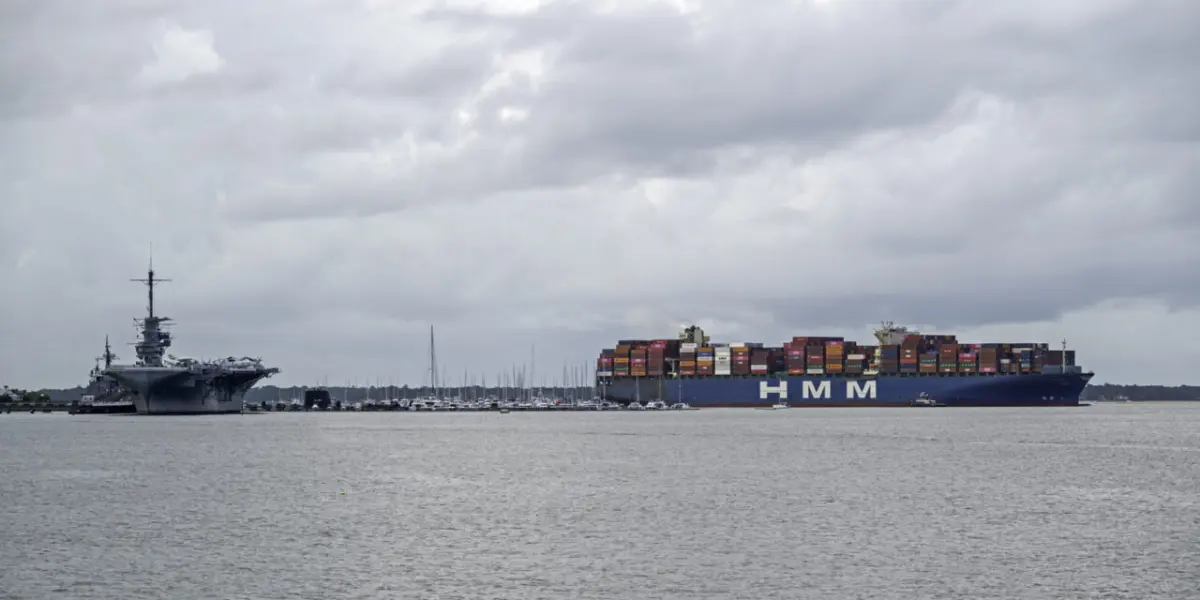
South Korean shipping giant HMM has demonstrated remarkable financial resilience and strategic agility, releasing its financial results for the first half of 2026. Against a backdrop of persistent geopolitical friction, volatile bunker fuel costs, and shifting macroeconomic tides, the ocean carrier posted a total revenue of KRW 6,121 billion (approximately $4.4 billion) for the opening six months of the year.
The company’s ability to optimize operational expenditures and capitalize on early peak-season freight rate recoveries translated into a solid net profit of KRW 765 billion ($550 million). Furthermore, HMM secured an operating profit of KRW 623 billion ($448 million), achieving a healthy operating margin of 10.2 per cent.
This performance underscores the efficacy of HMM’s ongoing structural transformation. Even as localized conflicts in the Middle East and evolving supply chain bottlenecks threatened to erode margins—triggering direct sales losses and inflated fuel expenses—the carrier successfully insulated its balance sheet through disciplined cost management and an innovative network configuration known as the "Hub & Spoke" strategy.
By strategically routing cargo through centralized transhipment hubs to maximize vessel utilization, HMM managed to offset network inefficiencies while simultaneously tapping into emerging demand pools across Southeast Asia.
Zooming in on the second quarter alone, HMM maintained its upward trajectory, generating revenue of KRW 3,402 billion ($2.45 billion). Quarterly net profit reached KRW 411 billion ($296 million), while operating profit stood at KRW 354 billion ($255 million).
These figures validate the carrier’s broader capital allocation philosophy. Having already poured KRW 10 trillion ($7.2 billion) into strategic assets and infrastructure enhancements over the past 15 months, HMM remains firmly committed to its ambitious KRW 29 trillion ($20.9 billion) mid-to-long-term investment roadmap through 2030.
As the global maritime industry braces for heightened volatility in the third quarter—marked by looming U.S. tariffs, Panama Canal transit dynamics, and chronic port congestion—HMM stands positioned as a financially fortified player capable of weathering external shocks while pursuing aggressive long-term growth.

Detailed Chronology & Financial Breakdown
First-Half Financial Snapshot and Q2 Momentum
The trajectory of HMM’s financial recovery throughout the first half of 2026 reflects a tale of two distinct operational environments. The initial weeks of the year were characterized by acute maritime disruption. The escalation of conflict in the Middle East, which intensified around March, immediately ripple-effected global shipping lanes. Carriers were forced to reroute vessels away from the Suez Canal and the Red Sea, opting instead for the longer transit around Africa’s Cape of Good Hope. This geographic detour added thousands of nautical miles to voyages, drastically inflating fuel consumption and driving up bunker fuel costs across HMM’s fleet.
Compounding these operational hurdles, the early months of the year saw regional sales losses as supply chains adjusted to the extended transit times. However, HMM’s proactive commercial strategy and cost-containment measures cushioned the blow. By the time the second quarter commenced, the financial metrics began to accelerate significantly.
In Q2 2026, HMM captured KRW 3,402 billion ($2.45 billion) in revenue, outstripping the revenue velocity of the first quarter. This acceleration was mirrored in the bottom line, with Q2 net profit climbing to KRW 411 billion ($296 million) and operating profit reaching KRW 354 billion ($255 million).
The catalyst for this quarterly surge was a convergence of market dynamics: an early arrival of the traditional peak shipping season, which prompted cargo owners to front-load shipments, coupled with a decisive upward correction in global freight rates from late May onward.
The Freight Rate Landscape: SCFI Movements
A critical driver of HMM’s revenue resilience during H1 2026 was the movement of the Shanghai Containerized Freight Index (SCFI). Across the first half of the year, the SCFI averaged 1,957 points, representing a notable 15 per cent increase compared to the average of 1,701 points recorded during the corresponding period in 2025.
This macroeconomic lift provided essential top-line support. While the early-year baseline was subdued by lingering post-Lunar New Year demand lulls and geopolitical uncertainty, the market fundamentally shifted as the industry approached the summer peak season. Driven by inventory replenishment cycles in North America and Europe—where retailers sought to preempt potential regulatory changes and supply chain bottlenecks—demand outstripped available vessel capacity on major East-West trade lanes.
HMM’s commercial desk successfully leveraged these market conditions, securing favorable contract renewals and capitalizing on spot market spikes without sacrificing core cargo volume commitments.
Supporting Context & Operational Metrics
The "Hub & Spoke" Strategy: Maximizing Fleet Efficiency
Behind HMM’s 10.2 per cent operating margin lies a rigorous operational playbook. Foremost among the company’s internal efficiency drivers is its signature "Hub & Spoke" strategy. In an era where operating sprawling, point-to-point direct services can expose a carrier to massive cost volatility—particularly when fuel prices spike—HMM has restructured its network architecture to centralize cargo consolidation.
The Hub & Spoke model operates by routing regional cargo volumes through designated, high-capacity transhipment terminals. Here, smaller feeder vessels offload containers onto ultra-large container vessels (ULCVs) designed to execute long-haul trunk routes at maximum economies of scale.
This approach minimizes under-utilized vessel capacity, reduces port call frequencies on secondary routes, and optimizes bunker fuel expenditure per transported container-equivalent unit (TEU).
Complementing this network optimization was HMM’s strategic pivot toward Southeast Asian markets. Recognizing shifting manufacturing footprints and regional economic dynamism, the carrier targeted new demand pools within ASEAN nations, successfully diversifying its revenue streams away from traditional reliance solely on Trans-Pacific and Asia-Europe trade lanes.
Furthermore, HMM has continued to make targeted capital investments in critical port infrastructure. Notably, the carrier recently boosted its capacity at the Tacoma terminal by nearly 50 per cent through comprehensive Washington United Terminals (WUT) upgrades, cementing its operational footprint in the Pacific Northwest and ensuring fluid cargo handoffs between marine and rail networks.
Geopolitical and Macroeconomic Headwinds
Despite its strong H1 financial showing, HMM’s leadership remains acutely aware of the external risks threatening the maritime sector. The ongoing conflict in the Middle East continues to cast a long shadow over global supply chains. The necessity of avoiding the Bab el-Mandeb strait and the Suez Canal has become the de facto operational reality, permanently altering transit economics by extending voyage durations by 10 to 14 days per leg. This structural shift absorbs global effective capacity, tightening the supply-demand balance but also exposing carriers to extreme bunker price volatility.
Beyond regional conflicts, HMM’s strategic review highlighted several compounding risk factors heading into the latter half of the year. Chief among these are prospective U.S. tariff implementations, which have the potential to trigger frantic front-loading followed by sudden demand cliffs.
Additionally, operational restrictions and draft constraints at the Panama Canal—stemming from historical weather pattern shifts—continue to complicate scheduling reliability for transits connecting Asian manufacturing hubs to the U.S. East Coast.
Finally, lingering congestion at major global container hubs threatens to disrupt vessel turn-around times, introducing schedule buffer requirements that demand absolute discipline from fleet managers.
Official Statements & Strategic Vision
Leadership Commentary on Cost Discipline and Agility
In official communications accompanying the financial release, HMM executives emphasized that the company’s ability to navigate turbulence is no accident of geography, but rather the direct result of deliberate institutional reform.
"Our capacity to secure resilient performance amidst profound market volatility validates the rigor of our operational strategies," an HMM spokesperson noted. "By maintaining strict cost discipline, optimizing our fuel consumption metrics, and maximizing fleet efficiency through our Hub & Spoke network architecture, we have built a shock-absorbent business model."
The company highlighted that while external disruptions—such as the Middle East conflict and associated fuel spikes—introduced severe cost pressures, HMM’s proactive risk management prevented these shocks from cascading into the bottom line.
By continuously evaluating vessel deployment, slow-steaming where appropriate to conserve bunker fuel, and aggressively pursuing growth opportunities in emerging intra-Asian and Southeast Asian trade lanes, HMM has proven its operational flexibility.
The KRW 29 Trillion ($20.9 Billion) Roadmap to 2030
Looking beyond immediate quarterly hurdles, HMM is aggressively positioning itself for the next decade of maritime commerce through massive capital deployment. The carrier confirmed that it has already invested KRW 10 trillion ($7.2 billion) over the past 15 months, laying the groundwork for a modernized, technologically advanced, and environmentally compliant fleet.
This expenditure forms the opening phase of HMM’s grander mid-to-long-term strategic blueprint, which envisions a total capital investment of KRW 29 trillion ($20.9 billion) running through to 2030. This extensive funding envelope is earmarked for several critical pillars of future competitiveness:
- Fleet Decarbonization and Modernization: Investing in dual-fuel eco-friendly vessels capable of utilizing alternative marine fuels (such as LNG, green methanol, and ammonia) to comply with increasingly stringent International Maritime Organization (IMO) carbon reduction mandates.
- Digital Transformation: Upgrading supply chain visibility tools, artificial intelligence-driven predictive maintenance systems, and automated terminal interfaces to enhance customer experience and operational transparency.
- Terminal and Logistics Infrastructure: Expanding strategic terminal holdings globally—akin to the Tacoma WUT upgrade—to secure dedicated, high-efficiency capacity in key gateway ports.
- Core Business Diversification: Broadening the carrier’s logistics ecosystem to encompass integrated end-to-end supply chain services, reducing exposure to pure ocean freight rate cyclicality.
Future Outlook
As HMM closes the books on an impressive first half of 2026, the maritime industry enters the third quarter with heightened caution. The convergence of U.S. trade policy shifts, ongoing geopolitical flashpoints, and structural constraints in critical waterways like the Panama Canal means that carriers cannot afford complacency.
However, HMM enters this uncertain horizon from a position of profound financial and operational strength. With KRW 765 billion ($550 million) in net profit secured in H1, a healthy 10.2 per cent operating margin, and a massive war chest dedicated to long-term modernization, the South Korean flag carrier has firmly established its credentials as a resilient, forward-looking titan of global trade.
By balancing rigorous short-term cost control with visionary multi-trillion-won capital investments, HMM is not merely surviving the current shipping cycle—it is actively engineering its dominance for the decade ahead.