



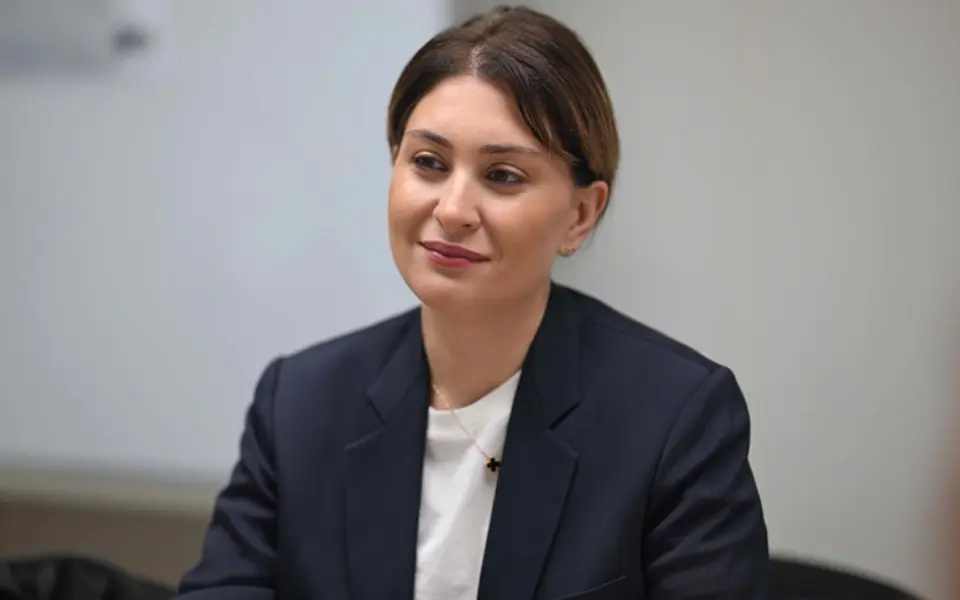
Tbilisi, Georgia — In a high-level site inspection that underscores the geopolitical and economic magnitude of the endeavor, Georgia’s Deputy Minister of Economy and Sustainable Development, Tamar Ioseliani, met this week with Tim Devolder, Director of the Georgian branch of global dredging titan Jan De Nul. Convened directly on the active construction grounds of the Anaklia Deep Sea Port along Georgia’s Black Sea coast, the strategic summit focused heavily on the rigorous execution of capital dredging, breakwater construction, and the synchronization of vital marine infrastructure timelines.
The high-stakes meeting, which also featured Zurab Sichinava, Director of Anaklia Sea Port LLC, highlights the accelerating momentum behind a project that has long been envisioned as a transformative trade gateway connecting Europe and Asia. As specialized dredging vessels reshape the seabed to accommodate next-generation commercial shipping, the collaboration between Georgian state authorities and international maritime engineering experts has entered a decisive operational phase.
Executive Overview
The Anaklia Deep Sea Port project represents one of the most ambitious infrastructure endeavors in the modern history of the Caucasus and Black Sea regions. Designed to capture a growing share of freight transit along the strategically vital Middle Corridor—the trans-Caspian trade route bridging China and the European Union without relying on Russian territory—the port requires state-of-the-art marine engineering to overcome natural coastal challenges.
During their on-site conference, Deputy Minister Ioseliani and Jan De Nul’s Country Director Tim Devolder conducted a granular review of current maritime operations. The discussions zeroed in on capital dredging activities required for the port’s approach channels, turning basins, and foundational breakwater protection zones. According to project updates released following the visit, operations are adhering strictly to baseline schedules, a critical indicator of reliability given the engineering complexities inherent in large-scale coastal construction.
With global supply chains continuously realigning and regional trade volumes surging, the timely delivery of the Anaklia Deep Sea Port is a top-tier priority for the Georgian government. The partnership with Jan De Nul—a family-owned enterprise globally renowned for complex hydraulic engineering, environmental remediation, and offshore services—brings world-class technical capability to the Black Sea coast, ensuring that Georgia’s maritime ambitions are supported by elite industry standards.
Detailed Chronology: From Vision to Execution
To fully appreciate the significance of the recent talks between the Ministry of Economy and Sustainable Development and Jan De Nul, it is necessary to examine the complex timeline that has shaped the Anaklia Deep Sea Port development.
The Genesis of the Anaklia Initiative
The conceptualization of a deep-water port at Anaklia dates back more than a decade, rooted in Georgia’s strategic geographical positioning on the eastern shores of the Black Sea. Historically, Georgian maritime trade has relied heavily on the existing ports of Poti and Batumi. However, both facilities face physical and bathymetric limitations, capping their capacity to handle the modern generation of deep-draught Panamax and Post-Panamax container vessels.
Recognizing this bottleneck, the Georgian government initiated comprehensive feasibility studies for a deep-sea harbor capable of handling up to 100 million tons of cargo annually upon full build-out. Anaklia was selected due to its favorable natural depths relative to other coastal stretches, minimizing—though not eliminating—the need for massive initial capital dredging.
Concession Shifts and State Resumption
The path to construction has encountered notable political and financial hurdles over the years. Following changes in consortium structures and subsequent contract terminations with early private developers, the Georgian government recalibrated its strategy. Recognizing the project’s national security and macroeconomic importance, the state adopted a hybrid model, retaining a controlling public stake while partnering with globally certified engineering and construction giants to execute specialized marine packages.
Jan De Nul’s Mobilization and the Current Phase
The entry of Jan De Nul into the Anaklia ecosystem marked a turning point in turning blueprints into physical reality. Mobilizing specialized trailing suction hopper dredgers (TSHDs) and cutter suction dredgers (CSDs) tailored for Black Sea conditions, the Belgian contractor began tackling the complex bathymetric alterations required for the port.
The recent meeting between Ioseliani and Devolder signifies the transition from preliminary site preparation to heavy marine civil engineering. Over the past several months, dredging operations have ramped up significantly. The creation of the breakwater channel—a vital shield designed to protect future terminal berths and cargo-handling operations from fierce Black Sea storms and wave action—has become the primary focal point of engineering oversight.
[2014-2016: Feasibility Studies]
       │
       ▼
[2017-2020: Early Consortium Phase & Setbacks]
       │
       ▼
[2021-2023: State Restructuring & Strategic Pivot]
       │
       ▼
[2024-2025: Contractor Procurement & Mobilization]
       │
       ▼
[2026 (Current): Active Capital Dredging & Breakwater Construction led by Jan De Nul]
Supporting Context & Metrics: Engineering the Black Sea Gateway
The construction of a deep-sea port from the ground up requires navigating demanding oceanographic, geotechnical, and environmental parameters. The ongoing works at Anaklia involve staggering logistical requirements and precise engineering metrics.
Capital Dredging and Hydrographic Realities
Capital dredging is the foundational step of port development. It involves excavating millions of cubic meters of seabed sediment, sand, and compacted material to achieve the necessary water depths for deep-draught vessels.
- Channel Depth and Width: The approach channels and turning basins are being engineered to accommodate vessels with deep drafts, ensuring that the port can service large container ships operating on international trunk lines.
- Sediment Management: The Black Sea basin presents unique sedimentological challenges, including littoral drift patterns that can lead to rapid siltation. Jan De Nul’s dredging methodologies incorporate advanced positioning systems and high-capacity pumps to ensure precision cutting and environmentally sound disposal or beneficial reuse of dredged material—such as coastal nourishment and land reclamation for port backing areas.
Breakwater Infrastructure: Defying the Elements
A deep-sea port on the Georgian coast cannot survive without robust coastal protection. The Black Sea is notorious for sudden, severe meteorological shifts, generating high-energy waves that can devastate harbor infrastructure.
- Breakwater Channel Works: The ongoing construction reviewed by Ioseliani and Devolder involves the placement of massive core materials, geotextiles, and armored rock layers (often supplemented by specially molded concrete armor units such as Accropodes or Tetrapods) to absorb and deflect wave energy.
- Structural Longevity: The breakwaters must be engineered to withstand 100-year storm events, protecting the berths, quay walls, and gantry cranes from destructive hydrodynamic forces.
Official Statements and Stakeholder Perspectives
The on-site inspection served not only as a technical audit but also as a powerful message of administrative commitment and private-sector partnership.
Government Resolve: Deputy Minister Tamar Ioseliani
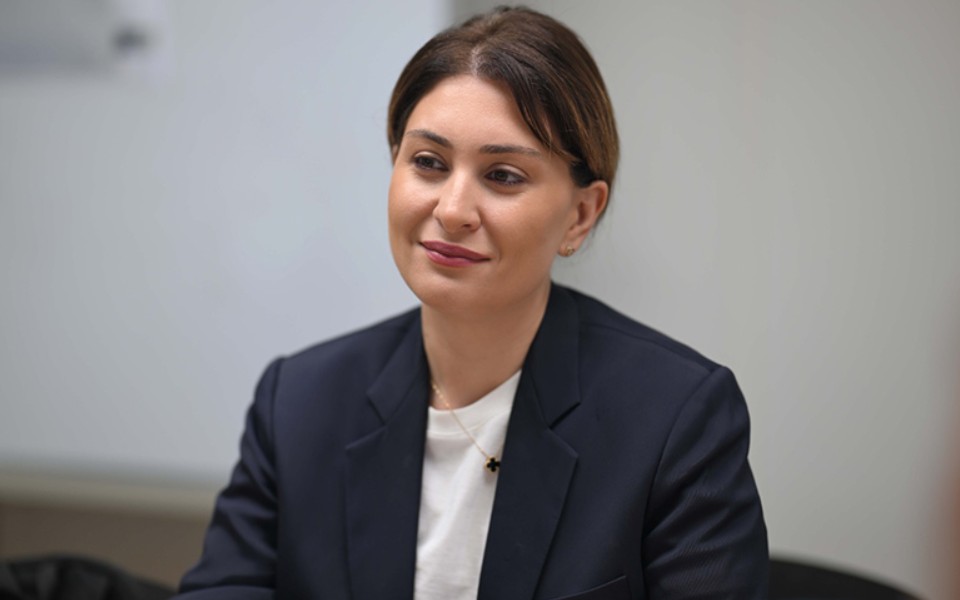
During the inspection of the active dredging zones, Deputy Minister Tamar Ioseliani emphasized the Georgian government’s unwavering dedication to keeping the project on schedule and up to international standards.
"The construction of the Anaklia Deep Sea Port is a cornerstone of Georgia’s national economic strategy and our integration into global transport networks," Ioseliani stated during the site visit. "Our close coordination with technical leaders like Jan De Nul ensures that every cubic meter dredged and every block of the breakwater placed meets the highest engineering benchmarks. We are seeing steady, tangible progress that aligns precisely with our projected milestones."
Contractor Confidence: Tim Devolder, Jan De Nul
Representing the contractor consortium, Tim Devolder, Director of Jan De Nul’s Georgia branch, expressed confidence in the collaborative framework established with the Georgian Ministry of Economy and Anaklia Sea Port LLC.
"Jan De Nul brings decades of global maritime experience to the Black Sea, and we are proud to apply our expertise to a project of this magnitude," noted Devolder. "The working relationship between our engineering teams and state authorities has enabled us to maintain optimal operational tempos. The ongoing dredging and breakwater works are progressing smoothly, thanks to advanced vessel deployment and rigorous project management."
Operational Alignment: Zurab Sichinava
Zurab Sichinava, Director of Anaklia Sea Port LLC, reinforced these sentiments, pointing out that daily coordination on the ground is the secret to neutralizing potential logistical roadblocks before they impact the critical path of the construction schedule.
Future Outlook: Geopolitical Significance and Economic Horizons
The acceleration of dredging and breakwater construction at Anaklia carries profound implications well beyond Georgia’s borders. As land-based trade routes across Eurasia undergo seismic shifts, the Middle Corridor has emerged as an indispensable alternative for international commerce.
The Middle Corridor Imperative
For years, the northern transit route connecting China to Europe via Russia handled the vast majority of overland freight. However, geopolitical friction and international sanctions have made shippers increasingly wary of northern corridors. The Middle Corridor—traversing Kazakhstan, the Caspian Sea, Azerbaijan, Georgia, and onward to Turkey or the Black Sea ports—offers a stable, efficient alternative.
The Anaklia Deep Sea Port is destined to become the crown jewel of this southern route. By providing deep-water access directly on the Black Sea, Anaklia will eliminate the maritime bottlenecks that currently restrict cargo throughput, enabling container ships to offload goods directly into the European logistical web via Georgian rail and highway networks.
Anticipated Economic Impact for Georgia
- GDP Growth and Employment: The construction phase alone injects substantial capital into the domestic economy, creating thousands of direct and indirect jobs for Georgian engineers, technicians, and support personnel.
- Logistical Hub Status: Upon completion of the initial phases, Georgia will transition from a transit corridor into a full-fledged regional logistics and distribution hub, attracting foreign direct investment (FDI) in warehousing, manufacturing, and value-added processing zones near the port.
- Long-Term Scalability: With Phase 1 dredging and breakwater protection advancing smoothly under the watchful eyes of the Ministry and Jan De Nul, future phases envision expanded container terminals, bulk cargo facilities, and multimodal rail integration, scaling capacity to meet the demands of 21st-century global trade.
As the dredgers continue to reshape the Anaklia coastline, the collaborative synergy between Georgian leadership and international engineering expertise signals that a new era for Black Sea maritime trade is rapidly taking shape.