Executive Overview
The global automotive industry is undergoing a structural transformation characterized by shifting consumer preferences, geopolitical trade dynamics, and a rapid pivot toward electrification. For legacy automakers—those deeply entrenched in the decades-long manufacturing paradigms of the internal combustion engine (ICE)—this transition has been both uneven and fraught with financial friction.
The BMW Group, a powerhouse of German luxury manufacturing encompassing the BMW, MINI, Rolls-Royce, and BMW Motorrad brands, provides a fascinating case study in this ongoing industry-wide evolution.
As detailed in the company’s financial and operational disclosures for the third quarter of 2026, the Munich-based automaker is experiencing a notably difficult down year. Like many of its traditional peers, BMW has faced severe headwinds, resulting in widespread year-over-year sales declines across almost its entire global portfolio.
Yet, buried within an otherwise sobering quarterly report lies a profound narrative of corporate redemption: Battery Electric Vehicles (BEVs).
For years, critics have accused legacy automakers like BMW of dragging their feet, exercising excessive caution, and actively lobbying against aggressive regulatory frameworks designed to accelerate the phase-out of fossil-fuel vehicles. However, the Q3 2026 data serves as an undeniable empirical vindication of the electric shift. In a quarter where traditional segments plummeted, fully electric vehicles emerged as the sole bright spot keeping the conglomerate’s delivery numbers afloat.
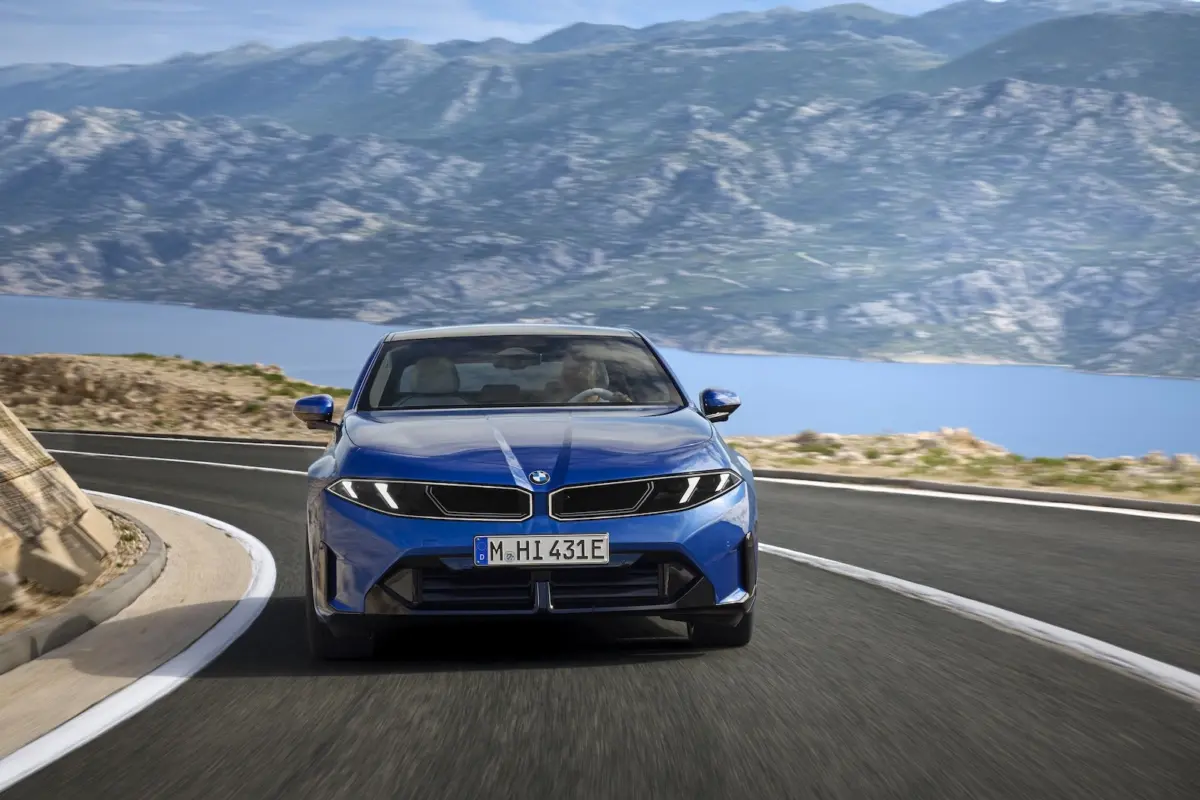
Globally, while the BMW brand (-6.8%), MINI (-2.4%), BMW Motorrad (-12.5%), and the ultra-luxury Rolls-Royce marque (-18.0%) all suffered steep contractions, BMW Group’s BEV sales surged by a robust 7.2%. In key regional strongholds like Europe and the company’s domestic German market, the divergence was even more staggering. In Europe, nearly one in every three vehicles delivered by the BMW Group was fully electric (34.7%), driven by an astounding 37.5% year-over-year growth in BEV deliveries.
Furthermore, a look at the year-to-date performance across the first nine months of 2026 reveals that the group’s only major brand to achieve overall year-over-year growth was MINI, a marque whose performance has been heavily supercharged by its electrification strategy, with nearly 38% of its sales consisting of pure electric units.
This report will examine the multifaceted factors shaping BMW’s current market standing, analyzing the regional collapse in China, the booming European EV demand, and the strategic lessons the automaker must learn if it hopes to secure its long-term dominance in a zero-emission future.
Detailed Chronology of Q3 2026: A Quarter of Contrasts
To truly understand BMW’s current operational reality, one must examine the chronological progression of the third quarter of 2026. The period from July through September laid bare the deep vulnerabilities facing traditional luxury automotive portfolios while simultaneously highlighting the urgent commercial viability of electric mobility.
July 2026: The Onset of Seasonal and Structural Headwinds
As the third quarter commenced, early internal delivery reports across the BMW Group signaled a challenging operating environment. Traditional dealership networks in North America and Europe reported softer foot traffic, exacerbated by macroeconomic pressures, lingering high interest rates, and consumer hesitation surrounding high-ticket purchases.
At the same time, supply chain adjustments and shifting model-year transitions placed a temporary drag on legacy production lines. While ICE and plug-in hybrid (PHEV) models faced immediate resistance, early July data already pointed to a resilient order backlog for newer all-electric additions, such as the freshly introduced BMW i3 variants and expanded MINI electric lineups.
August 2026: Deepening Declines in Key Global Markets
By the midpoint of the quarter, the broader market contraction deepened. Operations in the Asia-Pacific region—particularly mainland China—faced severe macro-economic headwinds and an unprecedented wave of domestic competition.
Traditional luxury badges that had enjoyed unmitigated dominance in China for decades found themselves rapidly losing ground to domestic electric vehicle manufacturers capable of moving at software-defined speeds.
During August, BMW’s leadership in Munich was forced to confront the reality that its traditional internal combustion models were experiencing steep double-digit volume drops in the world’s largest auto market. The counterweight to this bad news came almost exclusively from urban centers in Europe, where government incentives, expanding charging infrastructure, and maturing consumer awareness continued to drive foot traffic into showrooms specifically asking for pure electric configurations.
September 2026: Closing the Books on a Mixed Quarter
As the third quarter drew to a close at the end of September, the final global tally crystallized the dual-track nature of the contemporary automotive landscape.

When the aggregate numbers were compiled, the parent BMW Group recorded a global delivery contraction of 6.3% compared to the same three-month period in 2025. Individual brand metrics underscored the breadth of the downturn:
- BMW Brand: Down 6.8%
- MINI Brand: Down 2.4%
- BMW Motorrad (Motorcycles): Down 12.5%
- Rolls-Royce Motor Cars: Down 18.0%
- Total BMW Group Electrified Vehicles (BEVs + PHEVs): Down 0.3% (dragged down by declining PHEV demand)
Yet, standing in stark, defiant contrast to these negative figures was the standalone performance of Battery Electric Vehicles (BEVs). Defying the broader corporate gravity, BMW Group’s global BEV deliveries rose to 110,257 units, marking a solid 7.2% year-over-year increase.
The contrast could not have been clearer: vehicles propelled purely by electrons were thriving, while those tethered to internal combustion were dragging the company downward.
Supporting Context & Metrics: Regional Dynamics and Brand Performance
A macro-level view of a multinational automaker often masks profound regional divergences. BMW’s Q3 2026 performance is a textbook example of divergent regional fortunes, characterized by a staggering crisis in China juxtaposed with robust, electric-led expansion in Europe.
The China Crisis: A Cautionary Tale for Legacy Automakers
For over twenty years, the Chinese automotive market served as the primary engine of profitability for European luxury brands including BMW, Mercedes-Benz, and Audi. High-margin sedans and long-wheelbase variants sold in massive quantities to China’s burgeoning middle and upper classes.
However, the automotive landscape in China has undergone a revolutionary transformation that caught many legacy executives flat-footed. The market has rapidly pivoted toward "New Energy Vehicles" (NEVs), with domestic brands like BYD, Nio, Xpeng, and a host of tech-backed entrants introducing sophisticated, competitively priced, software-rich electric vehicles at a blistering pace.
In Q3 2026, this structural shift manifested as a severe blow to BMW’s bottom line. Sales in China crashed by an alarming 24.8%.
This dramatic double-digit drop underscores a hard truth for Munich’s strategists: the traditional cachet of a German heritage badge is no longer sufficient to insulate an automaker from technological obsolescence. Chinese consumers are increasingly prioritizing advanced autonomous driving features, smart-cabin ecosystems, and high-performance battery architectures—areas where legacy European automakers have historically lagged behind local competitors.
To minimize further sales crashes in this critical market, BMW is confronted with an urgent mandate: it must accelerate the localization of competitive EV architectures tailored specifically to Chinese digital and mechanical preferences. Failing to do so risks turning a cyclical downturn into a permanent loss of market share.
Europe: The Electric Safe Haven
While the situation in Asia proved challenging, the European market provided a much-needed structural cushion for the BMW Group, posting an overall sales growth of 2.7% for the period. More importantly, Europe served as the primary theater for the company’s electric success story.
European consumers demonstrated an enthusiastic appetite for the group’s latest generation of battery-powered offerings. Between July and September 2026, BMW Group delivered 81,941 fully electric vehicles within Europe alone—a staggering 37.5% year-over-year increase.
This surge meant that nearly one in every three (34.7%) vehicles delivered by the BMW Group to European customers during the third quarter was a pure BEV.
Domestically in Germany, the narrative was remarkably similar. BMW’s fully electric models recorded exceptional year-over-year growth of 38.5%, proving that despite local macroeconomic anxieties, domestic buyers are increasingly voting with their wallets in favor of zero-emission luxury transport.
The MINI Bright Spot: Electrification as a Growth Engine
Beyond the core BMW brand, the group’s subsidiary portfolios offered vital strategic insights. Over the first nine months of 2026, the MINI brand stood out as the sole major brand within the entire corporate structure to achieve positive year-over-year sales growth.
Delivering a total of 220,247 vehicles since January—a 6.8% increase over the same period in 2025—MINI’s success was anchored directly in its aggressive and successful transition toward electrification. 37.2% of all MINI vehicles sold during this nine-month stretch were fully electric.

This positive commercial trajectory was propelled by enthusiastic market reception for specialized variants, including the sporty John Cooper Works models and the design-forward MINI Paul Smith Edition. Furthermore, corporate leadership anticipates continued momentum driven by the commercial rollout of the new MINI Countryman Untamed Edition.
The takeaway from MINI’s performance is unmistakable: brands that lean decisively into appealing, youthful, and electric-first product strategies are far better equipped to weather broader market contractions.
Official Statements and Corporate Disclosures
In its official communications regarding the third-quarter financial results, the leadership at the BMW Group sought to highlight the structural resilience of its electrified portfolio while acknowledging the broader headwinds facing the global automotive sector.
Addressing the global delivery metrics, the company emphasized the pivotal role played by its expanding zero-emission lineup:
"Between July and the end of September 2026, the BMW Group delivered 110,257 fully electric vehicles worldwide (+7.2%). In Europe, one in three BMW Group vehicles delivered to customers during this period was fully electric (34.7%). BEV sales increased here disproportionately to 81,941 units (+37.5%). This also applies to Germany, where the BMW Group’s fully electric models recorded exceptionally high growth (+38.5%)."
These figures illustrate that wherever charging infrastructure, consumer incentives, and product availability align favorably—most notably across the European Union and Germany—consumers are overwhelmingly choosing battery-electric architectures over traditional internal combustion options.
Turning to the standout performance of the MINI brand across the first three quarters of 2026, the corporate release noted:
"Since the start of the year, MINI has sold a total of 220,247 vehicles, increasing its deliveries by 6.8%. 37.2% of those vehicles were fully electric. This positive trend was partly driven by the John Cooper Works models and the MINI Paul Smith Edition. Further impetus is expected from the new MINI Countryman Untamed Edition."
These official disclosures paint a portrait of a transition in progress. While the legacy pillars of the business—particularly combustion-engine luxury sedans and SUVs in Asian export markets—faced severe cyclical and structural pressure, the company’s forward-facing electrification strategy prevented the quarterly results from sliding into a much deeper financial trough.
Future Outlook: The Strategic Imperative Ahead
As the BMW Group looks past the third quarter and prepares for the final stretch of 2026 and beyond, the Q3 data offers a clear strategic roadmap. The historical irony is difficult to ignore: for years, legacy automotive executives, including voices within Munich, frequently expressed skepticism regarding the pace of EV adoption, lobbying regulators for compliance flexibility and arguing that consumer demand for battery-powered cars was artificially inflated.
Yet, the Q3 2026 financial realities tell an entirely different story. In a down market characterized by falling sales across nearly every traditional vehicle segment, Battery Electric Vehicles were the sole engine of growth.
Imagine, as industry analysts have frequently mused, what BMW’s quarterly balance sheet would look like today if the company had dedicated its immense engineering prowess, capital resources, and lobbying power toward leading the EV transition a decade earlier, rather than playing defensive catch-up.
The Road Ahead: Key Strategic Imperatives
- Double Down on Next-Generation EV Architectures: With the imminent rollout of the Neue Klasse vehicle platforms, BMW must ensure that its upcoming generation of electric vehicles leapfrogs the competition in battery efficiency, digital cockpit technology, and cost parity. There is no longer room for hesitation or half-measures.
- Reinvent the China Strategy: The 24.8% sales drop in China is an existential warning. BMW must decouple its product development cycles from European preferences when designing for the Chinese market. Partnering with local tech giants for advanced infotainment, autonomous driving software, and high-voltage battery supply chains will be non-negotiable for regaining lost ground against domestic EV giants.
- Scale European Momentum: Building upon the success that saw nearly 35% of European deliveries consist of BEVs, BMW must capitalize on growing consumer familiarity with electric cars. Expanding production capacity and streamlining supply chains will ensure that wait times for popular models like the i3 and MINI electric variants do not push impatient buyers toward competing brands.
- Embrace Agility Across All Brands: The success of the MINI brand proves that consumers respond positively to charismatic design paired with zero-emission powertrains. Rolls-Royce and BMW Motorrad must similarly accelerate their respective electrification roadmaps to insulate their niche markets from broader macroeconomic shifts.
Conclusion
The third quarter of 2026 will likely be remembered in automotive history books as an inflection point. It was the period when legacy automakers could no longer rely on the comfortable margins of the past to mask structural decay.
For the BMW Group, the lesson is written clearly in the ledger: Thank goodness for electric vehicles.
Without the 7.2% global growth in BEV deliveries—and the extraordinary 37.5% surge across Europe—the company’s third-quarter report would have painted a far more alarming picture. As the automotive industry charges headlong into the remainder of the decade, BMW’s future survival, profitability, and global prestige will depend entirely on how rapidly and completely it can transform from a legacy combustion-engine icon into a fully electric powerhouse.