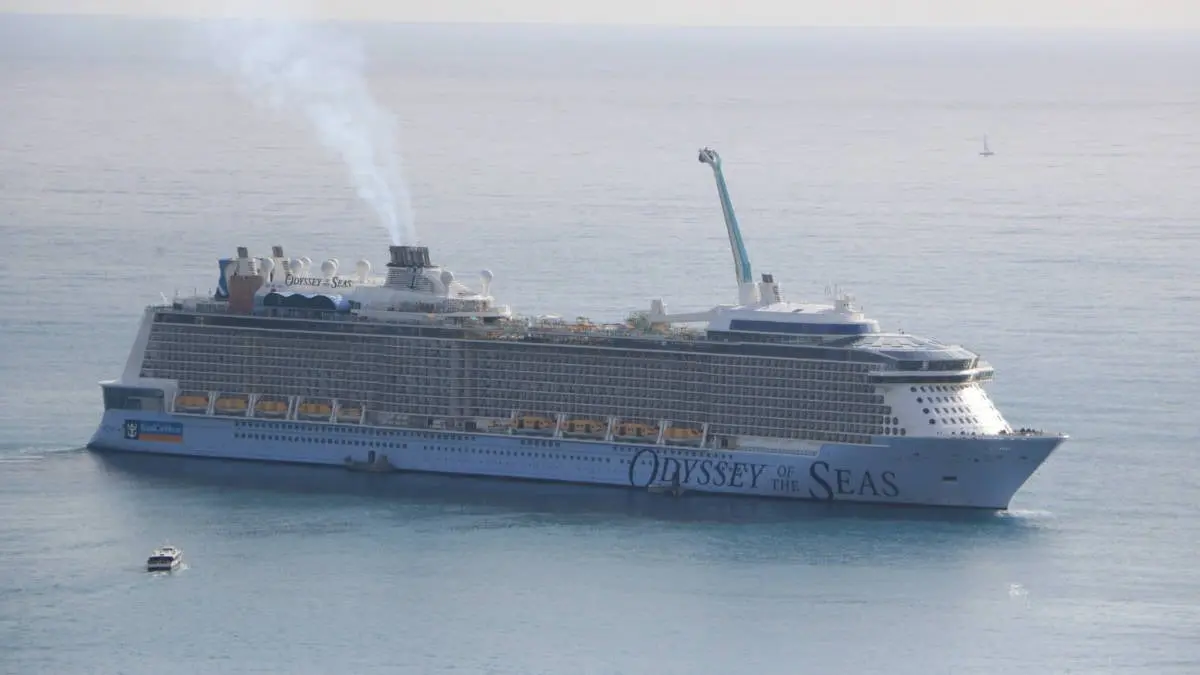
ATHENS, GREECE — In what maritime experts and rescue coordinators are calling an extraordinary survival story, a 44-year-old Salvadoran woman was pulled alive from the open waters of the Ionian Sea early on October 10, 2026. Having fallen overboard from Royal Caribbean International’s mega-cruise ship Odyssey of the Seas, the woman endured approximately 20 hours adrift in the open ocean before being spotted by a passing cargo vessel and subsequently recovered by the Hellenic Coast Guard.
The incident, which triggered a massive multi-vessel and aerial search-and-rescue operation southwest of Zakynthos, Greece, highlights both the perils of cruise ship travel and the profound effectiveness of international maritime coordination protocols. While the passenger is currently recovering from severe hypothermia in a Greek medical facility, the dramatic event forced significant itinerary alterations for thousands of guests onboard and underscored the unpredictable nature of cruise operations.
Executive Overview
The sequence of events began during the early morning hours of October 9, 2026, as Odyssey of the Seas—a massive 167,704-gross-ton vessel operated by Royal Caribbean—was navigating the Ionian Sea. The ship was transiting from Mykonos toward Naples, Italy, concluding a seven-night round-trip Greek Isles voyage that had originated in Civitavecchia (Rome) on October 4.
At some point during the early morning darkness, the 44-year-old female passenger went overboard into waters roughly 70 to 72 nautical miles southwest of the Greek island of Zakynthos. Following the activation of the ship’s emergency protocols, the captain executed a maneuver to turn the vessel around, launching an intensive, hours-long search alongside the Hellenic Coast Guard, local maritime assets, and passing commercial traffic.
After spending nearly an entire day exposed to the elements, the victim was sighted by a merchant ship traversing the same maritime lane. A Hellenic Coast Guard vessel was rapidly dispatched to the coordinates, recovering the woman alive and conscious. She was immediately transferred to Katakolo for urgent medical evaluation and treatment.
Though survival times following an overboard incident are statistically rare—particularly beyond the critical first few hours—this case joins a narrow percentage of maritime incidents with a miraculous outcome. The disruption also forced the cancellation of the cruise’s final scheduled port stop in Naples, converting what would have been a sightseeing day into a sea day as the ship headed directly back toward its homeport.
Detailed Chronology of Events
To understand the scope of the rescue operation, a meticulous review of the timeline reveals the scale of endurance demonstrated by the victim and the swift response of regional authorities.

October 9, 2026: The Incident and Immediate Response
- Early Morning Hours: The 44-year-old Salvadoran national goes overboard from Odyssey of the Seas while the vessel is sailing through the Ionian Sea. The precise circumstances and cause of the fall remain officially unconfirmed by authorities.
- Morning: Upon realizing a passenger is missing, the ship’s bridge team initiates an immediate man-overboard protocol. Odyssey of the Seas halts its forward progress toward Naples, turns around, and steams back to the approximate coordinates where the incident is believed to have occurred—roughly 72 nautical miles southwest of Zakynthos.
- Daytime Operation: The Hellenic Coast Guard’s Joint Search and Rescue Coordination Center (EKSED) assumes operational command. They deploy maritime patrol assets and a specialized search-and-rescue helicopter. Odyssey of the Seas remains on the scene, utilizing its advanced observational equipment and crew spotters to scour the choppy waters for approximately 14 hours. Other nearby commercial vessels also divert to assist in scanning the vast maritime sector.
- Evening: With daylight fading and fading statistical probability of survival, Odyssey of the Seas is eventually released from active search grid duties by the Hellenic Coast Guard so it can begin charting a return course toward Civitavecchia, albeit stripped of its final planned port stop. The search, however, continues through the night via regional and passing assets.
October 10, 2026: The Midnight Discovery
- Early Morning (approx. 2:00 AM): Roughly 20 hours after entering the water, a passing cargo ship operating in the Ionian Sea spots a figure struggling in the waves, roughly 70 nautical miles southwest of Zakynthos. The merchant vessel immediately alerts the Hellenic Coast Guard and maintains visual contact with the survivor.
- Rescue Execution: A Hellenic Coast Guard vessel races to the specified coordinates. Rescue swimmers pull the 44-year-old woman from the sea. Remarkably, she is found conscious, though severely exhausted and showing advanced signs of exposure.
- Medical Evacuation: The Coast Guard vessel transports the survivor to the port of Katakolo, where waiting medical personnel stabilize her before transferring her to a local hospital for specialized treatment, primarily focusing on severe hypothermia and dehydration.
- Passenger Announcement: Aboard Odyssey of the Seas, the captain makes an early morning address to the 4,198 guests, announcing the triumphant news of the rescue and updating passengers on the status of the victim, bringing a wave of emotional relief to the shipboard community.
Supporting Context, Vessel Metrics, and Environmental Factors
The successful recovery of a human being after 20 hours at sea under any circumstances is a statistical anomaly, dictated by oceanographic conditions, human resilience, and sheer fortune.
Vessel Specifications: Odyssey of the Seas
- Class: Quantum-Ultra Class
- Gross Tonnage: 167,704 GT
- Passenger Capacity: 4,198 guests (double occupancy); maximum capacity exceeding 5,000.
- Crew Complement: Approximately 1,550 international crew members trained in emergency response, safety protocols, and man-overboard procedures.
- Itinerary Impact: The ship was nearing the end of its 7-night Greek Isles voyage, having visited iconic destinations such as Santorini, Mykonos, and Ephesus (Kusadasi) before the tragedy disrupted the homeward leg.
The Challenge of Open-Ocean Survival
Surviving 20 hours in the Mediterranean’s Ionian Sea requires defying formidable odds. Key physical hurdles include:
- Hypothermia: Even in relatively temperate waters, the human body loses heat far faster than air. Prolonged immersion leads to core body temperatures dropping dangerously low, resulting in lethargy, unconsciousness, and cardiac arrest. The fact that the victim survived a full diurnal cycle—enduring both the chill of the nocturnal sea and the heat of the daytime sun—points to an extraordinary physiological constitution.
- Dehydration and Saltwater Ingestion: Inability to access fresh water over nearly a full day induces severe mental confusion and organ strain.
- Detection Visibility: A human head in the open ocean is notoriously difficult to spot from the bridge of a massive cruise ship or even from an aircraft, rendering the visual confirmation by a passing cargo vessel akin to finding a needle in a vast, watery haystack.
Official Statements and Onboard Reactions
While institutional response statements from Royal Caribbean International have remained measured to protect passenger privacy, the human element of the ordeal reverberated intensely across social media platforms like Reddit and cruise-focused forums.

Passengers aboard Odyssey of the Seas documented the eerie shift in atmosphere as the massive vessel ground to a halt and began its sweeping search patterns on October 9.
"Our day in Naples has been cancelled. Just hope the disruption to everyone’s travel plans will be kept to a minimum," shared one concerned guest on Reddit, reflecting the complex mix of frustration over missed holiday highlights and profound empathy for the missing individual.
By the early hours of October 10, the mood onboard shifted dramatically upon hearing the captain’s broadcast announcing the successful rescue. Fellow travelers expressed widespread astonishment that a person could survive a full day adrift in the open sea.
The Hellenic Coast Guard, through EKSED, coordinated a textbook multi-agency search operation, leveraging commercial shipping lanes, aviation assets, and local naval units. Maritime authorities have praised the vigilance of the unidentified cargo ship crew whose sharp eyes in the middle of the night made the difference between life and death.
Operational and Itinerary Aftermath
The logistical fallout of the incident required swift action from Royal Caribbean’s shore-side management and shipboard leadership.
Because the vessel dedicated nearly 14 hours to searching the waters off Zakynthos, its scheduled October 10 call to Naples, Italy, had to be entirely scrubbed. The captain and operations team recalculated the ship’s transit speed to ensure safe delivery of all guests back to Civitavecchia by the morning of October 11, in strict accordance with the published cruise contract.
- Port Omission: Naples was replaced by an unplanned sea day. Passengers spent their final vacation day onboard enjoying the ship’s amenities—such as the SeaPlex, North Star observation capsule, and multiple dining venues—while processing the emotional gravity of the past 48 hours.
- Disembarkation: Royal Caribbean confirmed that the scheduled October 11 disembarkation in Civitavecchia remains entirely unaffected.
- Future Sailings: Cruise tracking data indicates Odyssey of the Seas resumed its standard transit corridor toward Italy without mechanical or structural impairment. No disruptions have been announced for the subsequent seven-night Greek Isles itinerary scheduled to depart immediately following the ship’s return.
Future Outlook and Ongoing Investigations
As the 44-year-old Salvadoran national continues her recovery under medical supervision in Greece, questions remain regarding the precise circumstances that caused her to go overboard.
Maritime safety boards and the Hellenic Coast Guard are expected to conduct standard debriefs and investigations, reviewing closed-circuit television (CCTV) footage from Odyssey of the Seas and interviewing witnesses and crew members. Under international maritime law, cruise lines maintain rigorous safety standards—including high railings, advanced sensor technology, and automated man-overboard tracking systems—though incidents of individuals going overboard remain among the most challenging emergencies faced by the industry.
This remarkable event will likely be studied by maritime safety analysts for years to come. It serves as a stark reminder of the unpredictable perils of the sea, the vital importance of international cooperation between merchant vessels and coast guards, and a testament to the unyielding human will to survive against impossible odds.