











Executive Overview
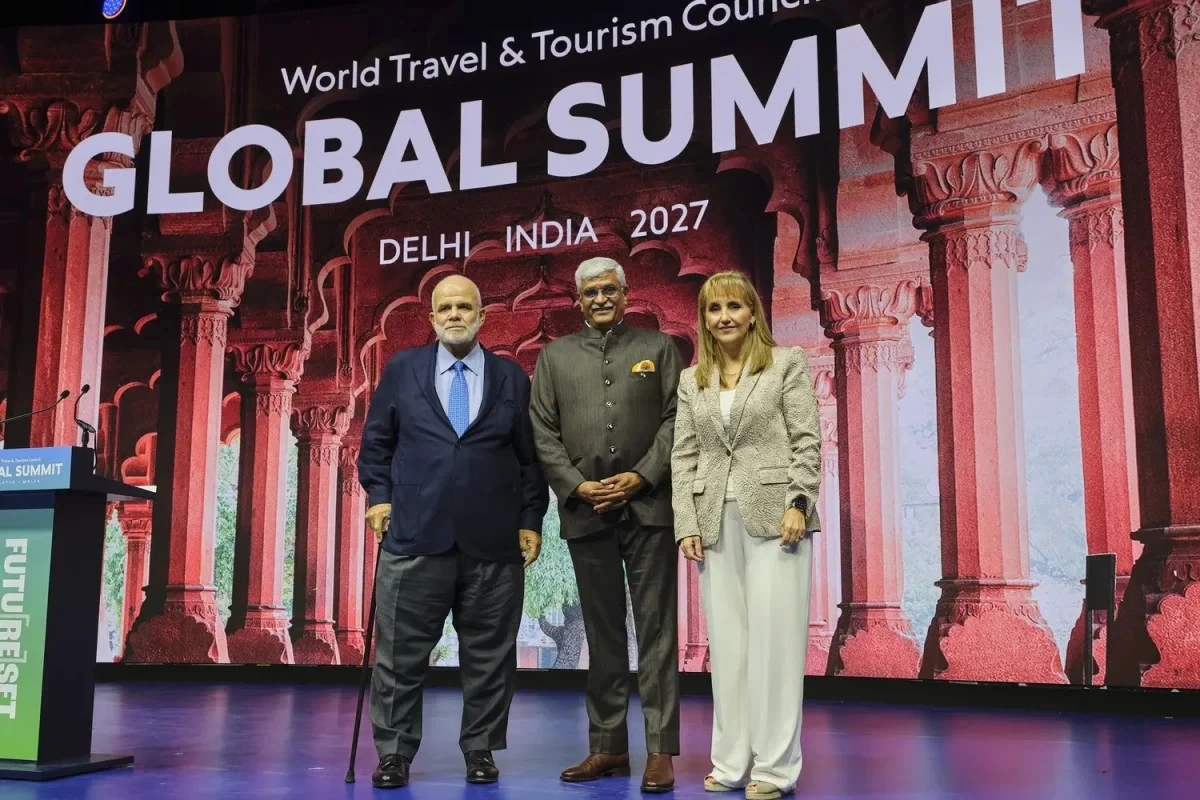
At the prestigious World Travel and Tourism Council (WTTC) Global Summit in Malta, Indian Tourism Minister Gajendra Singh Shekhawat laid out a breathtakingly ambitious roadmap for the nation’s visitor economy. Before an international audience of industry titans, policymakers, and global media, the minister asserted that India’s international tourist arrivals will skyrocket from a modest 9.2 million to an astonishing 100 million by 2047—coinciding with the centenary of the country’s independence. To achieve this monumental paradigm shift, Shekhawat introduced the strategic framework of the "Four Ps": Political will, Public spending, Partnership, and People’s participation.
Yet, this utopian vision stands in stark, immediate contrast to the ground realities currently crippling India’s travel and hospitality sector. Behind the glossy projections shared on the Mediterranean stage lies a deeply troubled domestic industry facing consecutive years of decline. In 2025, India welcomed a meager 9.2 million foreign tourists—representing a 9.4% drop compared to 2024, and sitting a sobering 17% below the pre-pandemic high-water mark of 10.9 million recorded in 2019.
Worse still, the short-term outlook for 2026 threatens to deepen the crisis. A recent, alarming report released by the PHD Chamber of Commerce estimates that inbound tourism could suffer a catastrophic 15% to 20% contraction this year alone. The primary catalyst? Geopolitical instability in the Middle East, specifically the escalating Iran conflict, which has severely fractured and severed vital air corridors relied upon by long-haul travelers from Europe and the Americas.
This special investigative report examines the widening chasm between India’s grand 2047 geopolitical ambitions and its immediate, structural vulnerabilities. We analyze the severe metrics governing the sector, unpack the ministry’s strategic framework, and evaluate whether a nation struggling to maintain a 9-million annual baseline can realistically sustain the 12%+ compounded annual growth required to meet its centennial target.
Detailed Chronology: From Pandemic Trauma to Geopolitical Shockwaves
To comprehend the sheer magnitude of Minister Shekhawat’s 100-million-arrival goal, one must trace the turbulent trajectory of India’s inbound tourism market over the past decade. The timeline reveals a sector repeatedly battered by exogenous shocks, structural bottlenecks, and shifting global dynamics.
2019: The Pre-Pandemic Zenith
India’s inbound tourism sector experienced its historic peak in 2019, recording 10.9 million foreign tourist arrivals (FTAs). Buoyed by aggressive global marketing campaigns like "Incredible India 2.0," simplified e-visa regimes, and expanding aviation bilateral agreements, the country appeared poised to break into the premier tier of global travel destinations. Tourism contributed significantly to the nation’s gross domestic product (GDP) and employment figures, laying a foundation of confidence that encouraged hotel chains to break ground on thousands of new rooms across tier-1 and tier-2 cities.
2020–2022: The COVID-19 Erasure
The onset of the global coronavirus pandemic in early 2020 brought international travel to a complete standstill. Border closures, stringent quarantine protocols, and the suspension of scheduled international commercial flights erased billions of dollars in economic value. While domestic tourism staged notable recoveries through "revenge travel" spurts, inbound international travel flatlined. Millions of hospitality workers, tour operators, and artisan communities dependent on foreign tourism were pushed to the brink of financial ruin.

2023–2024: The Sluggish, Fragile Recovery
As global travel restrictions lifted, many competing destinations—particularly across Southeast Asia and the Middle East—bounced back with aggressive pricing, streamlined visa waivers, and targeted marketing. India’s recovery, however, proved sluggish and uneven. Bureaucratic inertia, visa processing backlogs in key Western markets, and rising airfares hampered the return of high-spending long-haul tourists. By the end of 2024, arrivals hovered well below the elusive 2019 benchmark, signaling deep-seated structural issues that simple post-pandemic normalization could not resolve.
2025: The Secondary Slump
Rather than stabilizing, the situation deteriorated further in 2025. Annual international tourist arrivals tumbled to 9.2 million—a 9.4% year-over-year decline. Industry analysts pointed to a confluence of factors: inflation in source markets, intense regional competition from nations offering friction-free entry, and a lack of unified digital marketing infrastructure. The psychological barrier of falling back below the 10-million threshold raised red flags among industry stakeholders, prompting urgent demands for structural intervention from New Delhi.
2026: The Geopolitical Grounding
Entering 2026, the global landscape shifted dramatically for the worse. The outbreak of conflict involving Iran and surrounding Middle Eastern states fundamentally disrupted global aviation architecture. Because the Middle East serves as the primary global aviation bridge connecting North America and Europe to the Indian subcontinent, the closure or restriction of these vital air corridors forced carriers to reroute, inflating flight times and driving ticket prices to prohibitive heights. Consequently, the PHD Chamber of Commerce’s predictive models for 2026 project an additional 15% to 20% plunge in inbound arrivals, painting a grim picture for hoteliers, tour operators, and airline operators alike.
Supporting Context & Metrics: Crunching the Numbers
The mathematical reality of Minister Shekhawat’s vision exposes the staggering scale of the challenge ahead. Analyzing the metrics reveals just how steep the climb truly is.
The Mathematics of 100 Million by 2047
- Baseline Starting Point (2025): 9.2 million international arrivals.
- Target Destination (2047): 100 million international arrivals.
- Net Increase Required: Approximately 90.8 million additional visitors over a 22-year period.
- Compounded Annual Growth Rate (CAGR): To bridge this gap, India must achieve a sustained, year-on-year average growth rate of 12% or higher for over two decades straight.
Historically, very few nations have achieved a sustained 12% annual growth in inbound tourism over a multi-decade timeframe, particularly from a baseline of under 10 million. Nations that have managed rapid tourism expansion—such as post-WTO-accession China or pre-pandemic Southeast Asian tigers—did so by maintaining massive infrastructure investments, open-sky policies, and frictionless visa ecosystems.
Comparative Regional Analysis
To put India’s metrics into perspective, consider the regional landscape:
- France, the global leader in international arrivals, regularly welcomes upwards of 80 to 90 million visitors annually by leveraging open European borders, dense high-speed rail networks, and hyper-localized cultural marketing.
- Thailand, a regional tourism powerhouse, frequently captures nearly 40 million visitors annually by prioritizing visa-free access, affordable luxury, and robust aviation hubs.
- India, despite possessing an unparalleled civilizational heritage, diverse geographical ecosystems, and immense spiritual tourism potential, captures less than 1.5% of total global international tourist arrivals.
The Economic Ripple Effect of the Middle East Crisis
The disruption of air corridors via the Iran conflict highlights the acute vulnerability of India’s tourism ecosystem to external shocks. According to aviation data analytics firms, over 40% of European and American tourists traveling to India transit through Middle Eastern mega-hubs such as Dubai, Doha, and Abu Dhabi. When airspace closes or aviation fuel costs spike due to regional instability:
- Seat Capacity Shrinks: Airlines are forced to deploy aircraft elsewhere or absorb prohibitive insurance and rerouting costs.
- Ticket Prices Soar: Long-haul airfares to Indian metros (Delhi, Mumbai, Bengaluru) price out middle-class leisure travelers from Western source markets.
- Length of Stay Contracts: Travelers facing complex, multi-stop itineraries opt for closer-to-home destinations, directly impacting high-yield cultural and heritage circuits in Rajasthan, Kerala, and Uttar Pradesh.
Official Statements and the "Four Ps" Framework
Standing under the Mediterranean sun at the WTTC Global Summit in Malta, Tourism Minister Gajendra Singh Shekhawat chose not to downplay the hurdles, but rather to pivot the narrative toward visionary structural reform. His address centered squarely on the Four Ps, a strategic manifesto designed to transform the foundational architecture of Indian tourism over the next two decades.
1. Political Will
Shekhawat emphasized that long-term tourism planning cannot be treated as a subsidiary portfolio of state ministries or cultural departments. True transformation requires decisive political capital from the highest levels of governance. This entails streamlining inter-ministerial coordination—specifically aligning the Ministry of Tourism with the Ministry of Civil Aviation, the Ministry of Home Affairs (for visa security regimes), and state-level governments. Without unified political alignment, infrastructure projects stall, tourist taxes remain fragmented, and promotional campaigns lack cohesive execution.
2. Public Spending
Acknowledging that private capital often hesitates in the face of infrastructural deficits, the minister underscored the necessity of aggressive public investment. This involves modernizing secondary and tertiary airports, expanding regional rail connectivity (such as the Vande Bharat networks), upgrading highways leading to UNESCO World Heritage sites, and developing world-class visitor amenities at key archaeological and spiritual landmarks. Public spending must act as the seed capital that crowds in private sector hospitality development.
3. Partnership
No single government agency or private conglomerate can scale a nation’s tourism economy single-handedly. Shekhawat called for deep, institutionalized Public-Private Partnerships (PPPs). This includes collaborating with global hospitality brands, international airlines, online travel agencies (OTAs), and global marketing powerhouses. Partnerships must extend to international tourism boards to leverage cross-border promotional campaigns, sharing data analytics, and smoothing out seasonal travel dips.
4. People’s Participation (Jan Bhagidari)
Perhaps the most culturally resonant pillar of the minister’s address was the concept of Jan Bhagidari—people’s participation. Sustainable tourism cannot succeed as a top-down corporate imposition; it must be embraced by local communities. Shekhawat stressed the empowerment of rural clusters, home-stays, local artisans, and tour guides. When local populations directly benefit from the economic dividends of tourism, they become active custodians of their heritage, natural environment, and visitor safety—fostering the legendary Indian ethos of Atithi Devo Bhava ("The Guest is God").
Future Outlook: Can India Realize Its Centennial Vision?
As the global tourism community digests the targets presented in Malta, analysts and industry insiders are locked in debate over whether India’s 2047 roadmap is a feasible national strategy or an unattainable political aspiration.
Overcoming Structural Bottlenecks
To achieve the required 12%+ annual growth rate over the next 22 years, India must decisively tackle several long-standing systemic bottlenecks that have historically hindered its visitor economy:
- Frictionless Entry Systems: While the electronic visa (e-visa) regime was a welcome step introduced years ago, processing delays, ambiguous fee structures, and technical glitches continue to frustrate prospective travelers. India must move toward a more seamless, expansive visa-on-arrival or visa-free framework for key G20 and high-spending source markets, mirroring competitors like Indonesia and Vietnam.
- Safety, Sanitation, and Infrastructure: International travelers consistently cite concerns regarding localized hygiene, tourist harassment, erratic local transport, and inadequate sanitation facilities at major attractions. Comprehensive urban planning and municipal accountability around tourist zones are non-negotiable prerequisites for scaling volume.
- Diversification Beyond the Golden Triangle: While the Delhi-Agra-Jaipur "Golden Triangle" remains the standard entry point for foreign travelers, India possesses vast, untapped potential in wellness tourism, eco-tourism in the Northeast, coastal tourism in Goa and the Andaman Islands, and spiritual tourism along the Himalayan and southern corridors. Distributing footfall away from congested monuments protects heritage sites while expanding economic benefits regionally.
- Building Resilience Against Geopolitical Shocks: The 2026 crisis precipitated by the Iran conflict underscores the urgent need for domestic aviation self-sufficiency and the expansion of direct, point-to-point long-haul connectivity by Indian carriers like Air India and IndiGo. Relying heavily on third-country carriers leaves the Indian market vulnerable to every regional geopolitical tremor.
The Verdict
India stands at a pivotal historical crossroads. The stark drop to 9.2 million arrivals in 2025 and the grim 15–20% contraction forecasted for 2026 serve as a harsh wake-up call. They prove that baseline complacency and ad-hoc marketing campaigns are entirely inadequate in a hyper-competitive, volatile global tourism market.
However, the articulation of the Four Ps by Minister Gajendra Singh Shekhawat demonstrates that New Delhi recognizes the diagnostic severity of the problem. If India can successfully leverage its immense civilizational wealth, translate political will into tangible infrastructural delivery, forge robust global partnerships, and secure the active participation of its local populations, the 100-million-arrival milestone by 2047 ceases to be a mere statistical fantasy. Instead, it can become the defining triumph of a modernizing, confident nation stepping boldly onto the global stage.


