By Philippe Lazaro
Digital Content Manager | Special Report
Executive Overview
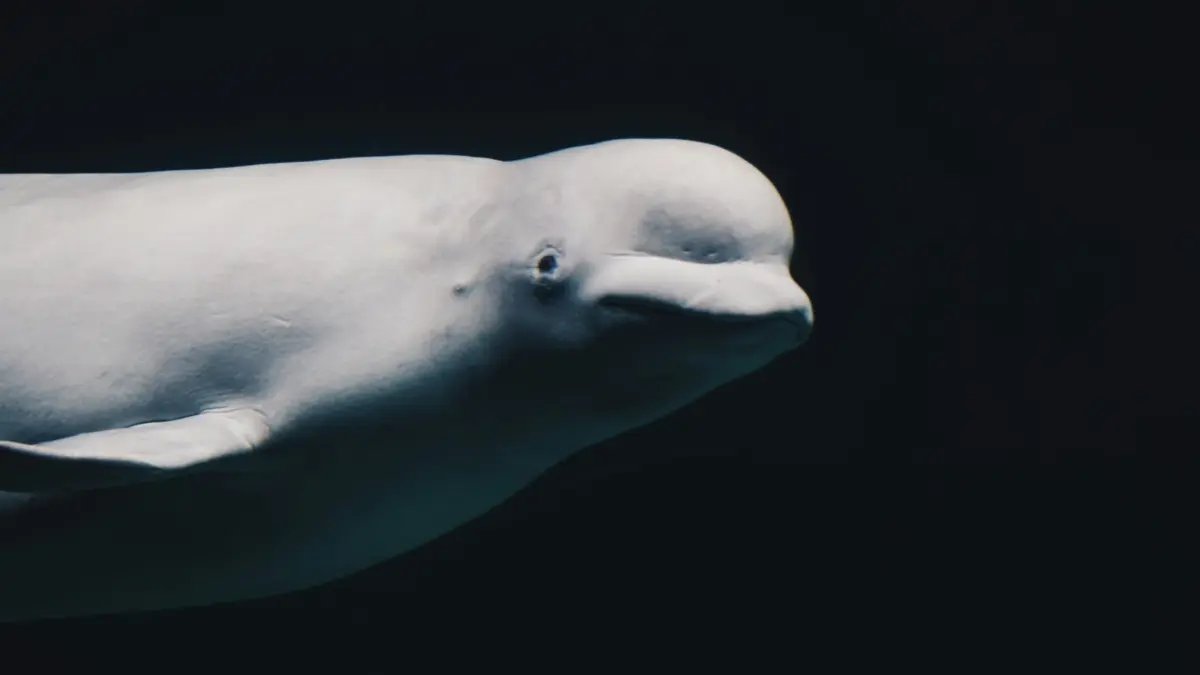
To stand along the banks of the St. Lawrence River in Quebec is to witness a rare and striking juxtaposition of the wild and the industrial. Amid the steady drone of passing cargo ships and the colorful splash of weekend kayaks, a sudden flash of ivory breaks the surface. It is a beluga whale (Delphinapterus leucas), navigating a freshwater corridor hundreds of miles from the open ocean.
While marine mammals are typically associated with vast, saline oceanic expanses, the St. Lawrence belugas have made their home in a river system for millennia. Yet, this improbable residency—forged in the freezing aftermath of the last Ice Age—is now facing an unprecedented existential threat.

Once numbering around 10,000 at the dawn of the 20th century, this genetically isolated population has plummeted to an estimated 900 to 1,800 individuals. Having endured commercial hunting until its eventual restriction in 1979, the survivors now confront a compounding crisis driven by industrial development, chemical contamination, heavy maritime traffic, and the accelerating impacts of climate change. As warming global temperatures shrink Arctic sea ice and drive apex predators into historical sanctuaries, the St. Lawrence belugas stand as a living barometer of a rapidly shifting marine environment. Their struggle highlights a sobering reality: the forces reshaping our oceans are reaching deeper inland and moving faster than at any point in recorded history.
Detailed Chronology: From Ancient Inland Sea to Modern Estuary
The story of how Arctic whales came to reside permanently in a Canadian river begins not with water, but with colossal sheets of ice.
The Retreat of the Wisconsin Glacier (15,000 Years Ago)
Approximately 15,000 years ago, the gargantuan Wisconsin glacier—which had blanketed vast swaths of North America—began its slow, climatic retreat. The immense weight of the ice sheet had profoundly depressed the Earth’s crust over millennia. As the glacier melted, this depression invited seawater to flood the resulting low basin, creating a massive inland water body known as the Champlain Sea.
At its height, the Champlain Sea stretched from the modern-day Atlantic coast westward toward the Great Lakes and modern-day New York. Marine mammals, including whales, walruses, narwhals, humpbacks, and seals, migrated into these inland waters.

The Fossil Record of Quebec and Ontario
Today, the physical evidence of this vanished marine ecosystem lies buried beneath fertile farm fields, suburban developments, and quiet forests throughout the St. Lawrence lowlands. Researchers have unspotted the fossilized remains of porpoises, humpback whales, fin whales, bowhead whales, and multiple seal and walrus species between Quebec City and the Ottawa Valley.
Notably, in 2001, researchers at the Université du Québec à Montréal recovered a remarkably well-preserved beluga fossil carbon-dated to more than 10,000 years old. These discoveries paint a vivid picture of a landscape utterly transformed.
Land Rebound and Isolation
As the ice age drew to a close, the landmass beneath the Champlain Sea began to rebound in a geological process known as isostatic uplift. The inland sea gradually drained away, leaving behind the modern St. Lawrence River system.
While most marine mammals returned to the open ocean as their temporary sea vanished, a population of beluga whales chose to stay. Trapped by receding waters and receding ice, these whales took up permanent residence in the newly formed St. Lawrence estuary. Over the next ten millennia, this population became genetically isolated from all other beluga groups inhabiting northern Canada, Russia, and Alaska.
For longer than recorded human history, this unique lineage has known no other home. Through thousands of years of adaptation, their seasonal patterns, communication methods, and physiological behaviors became finely tuned to the unique rhythms of the river. Furthermore, for generations of Indigenous communities across the region, these whales served as an essential subsistence resource, anchoring vital traditions of food security and cultural heritage.
Supporting Context & Metrics: A Population Under Pressure
Despite proving their resilience over 10,000 years of environmental shifts, the St. Lawrence belugas are now classified as endangered. Their modern trajectory is defined by a steep numerical decline and a barrage of compounding anthropogenic pressures.
The Numbers Behind the Decline
- 10,000: The estimated population of St. Lawrence belugas at the turn of the 20th century.
- 1,979: The landmark year when commercial hunting of the population was finally restricted, though unregulated hunting and culling had already wreaked havoc on their numbers.
- 900 to 1,800: Current scientific estimates of the remaining population. While historical counts hovered around 1,800, recent multi-year surveys indicate the population may be perilously closer to the 900 mark.
- 19: The number of consecutive record-low Arctic summer sea-ice minimums recorded between 2007 and 2025, according to the National Snow and Ice Data Center (NSIDC). Measured across nearly five decades of satellite data, this downward trend line moves in a singular, alarming direction.
Modern Threats: Contaminants, Noise, and Predators
Even after direct harvesting was halted, the St. Lawrence beluga population failed to rebound. The surrounding watershed experienced rapid industrialization and agricultural expansion, flooding the river with high loads of chemical contaminants, heavy metals, and persistent organic pollutants that bioaccumulate in the fatty tissues of these apex marine mammals, impairing their reproductive and immune systems.
Simultaneously, the escalation of commercial vessel traffic transformed the river into a noisy highway. Cargo ships, ferries, and whale-watching boats generate persistent underwater noise pollution that disrupts the complex acoustic communication networks belugas rely upon to navigate, forage, and reproduce.
Most recently, climate change has introduced a novel and deadly variable: habitat overlap with apex predators. As climate change warms the Arctic at nearly four times the global average and reduces multi-year sea ice, killer whales (Orcas) have been increasingly documented pushing south into historical beluga habitats. With less ice cover to serve as a natural refuge, belugas face heightened predation pressure from orcas—a species that preys upon all major Arctic cetacean populations.
Official Statements and Conservation Perspectives
Conservation scientists and environmental organizations emphasize that the plight of the St. Lawrence belugas carries profound implications for global biodiversity and climate resilience.
"Groups of belugas in places like the St. Lawrence River and the Arctic have been separated for such long periods that they highlight the ultimate importance of genetic diversity when it comes to climate resilience," notes a representative from Ocean Conservancy. "Losing a distinct population like the St. Lawrence belugas cannot simply be offset by healthy populations elsewhere in the world. They represent thousands of years of unique history, culture, and evolutionary adaptation."
Marine biologists stress that saving these populations requires moving beyond passive observation into aggressive legislative and regulatory action. Protecting cetaceans from modern maritime hazards demands a fundamental shift in how human infrastructure coexists with marine life.
To combat the escalating dangers of vessel strikes and acoustic trauma, conservation advocates are pushing for legislative frameworks such as the Whale CHARTS Act. This vital proposed legislation would amend the National Oceanic and Atmospheric Administration’s (NOAA) near-real-time monitoring and mitigation programs for large cetaceans. By doing so, it aims to dramatically improve scientific understanding of the exact locations and extents of baleen and sperm whale migration routes, as well as critical feeding, mating, and calving grounds—enabling authorities to implement dynamic speed limits and vessel rerouting before strikes occur.
Future Outlook: Charting a New Course for Whales
The story of the St. Lawrence beluga is simultaneously a window into the ancient past and an urgent warning about our collective future. The very same geological forces—glacial retreat and dramatic climate shifts—that created the Champlain Sea and stranded their ancestors in a river system are now playing out again on a compressed, catastrophic timeline.
Other beluga populations are similarly imperiled. In Alaska, the Cook Inlet beluga population is also listed as endangered under the Endangered Species Act, while several other Canadian stocks face severe conservation status evaluations.
Protecting these distinct populations requires a multifaceted approach championed by groups like Ocean Conservancy: supporting robust marine ecosystem health, preserving biodiversity corridors, reducing toxic chemical runoff, and aggressively curbing greenhouse gas emissions to stabilize the rapidly warming Arctic.
The beluga whale of the St. Lawrence River is a living chronicle of what our ocean once was, and a stark signal of what it risks becoming. As our climate continues to change, humanity must recognize that the health of the ocean shapes life in ways that travel far inland, persist for millennia, and demand our immediate stewardship.