For the vast majority of travelers dreaming of a sun-drenched Caribbean escape, the United States Virgin Islands (USVI) offer a familiar promise: pristine white-sand beaches, vibrant marine life, lush emerald topography, and the seamless convenience of domestic travel without the bureaucratic hassle of a passport. Yet, hidden within this tropical archipelago lies a lesser-known geographical superlative that sets one of its islands apart from every other territory under the American flag.
Perched on the rugged, wind-swept eastern coast of St. Croix is Point Udall, an unassuming yet deeply significant destination that serves as the absolute easternmost point of the United States. Here, where the rolling green hills of the island drop sharply into the turquoise expanse of the Caribbean Sea, visitors stand at the literal frontier of the nation. As the Earth rotates toward the dawn, this remote overlook claims a unique daily distinction: it is the very first place in the United States to greet the rising sun.
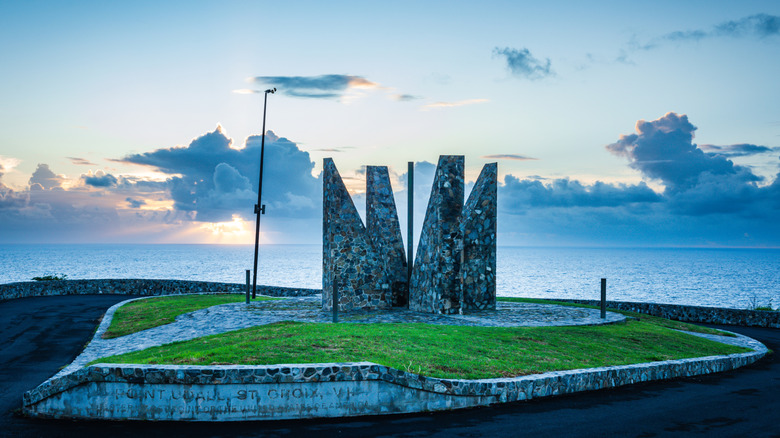
Marked by an imposing 18-foot stone sundial known as the Millennium Monument, Point Udall combines geopolitical curiosity, striking natural beauty, and a rich historical tapestry. While millions of American citizens travel internationally each year, requiring complex documentation and currency exchanges, St. Croix remains an accessible domestic sanctuary—having been integrated into the United States in 1917. This comprehensive report explores the origins, geographical significance, visitor logistics, and broader cultural and environmental context of Point Udall, providing a definitive guide for travelers seeking to stand at the edge of the American morning.
Detailed Chronology: From Colonial Footprint to Millennium Beacon
The story of Point Udall is inextricably linked to the broader historical trajectory of the U.S. Virgin Islands, a narrative shaped by colonial ambition, strategic naval positioning, and eventual American stewardship.
The Colonial Era and the Strategic East
Long before it bore the name of a cabinet secretary, the easternmost tip of St. Croix was recognized by indigenous peoples and early European colonizers as a commanding vantage point. St. Croix itself—historically contested by the Spanish, Dutch, English, French, Knights of Malta, and the Danish—changed hands with remarkable frequency. In 1733, the island was sold to the Danish West India Company, ushering in a long period of Danish rule characterized by a booming sugar plantation economy driven by enslaved labor.
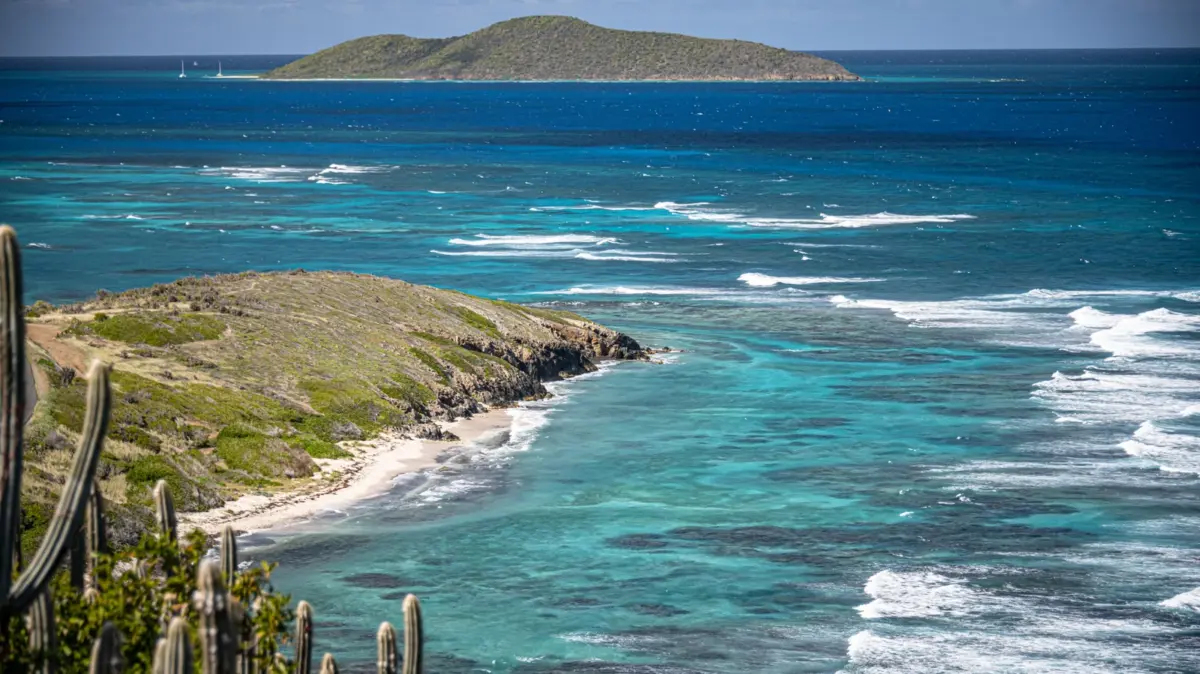
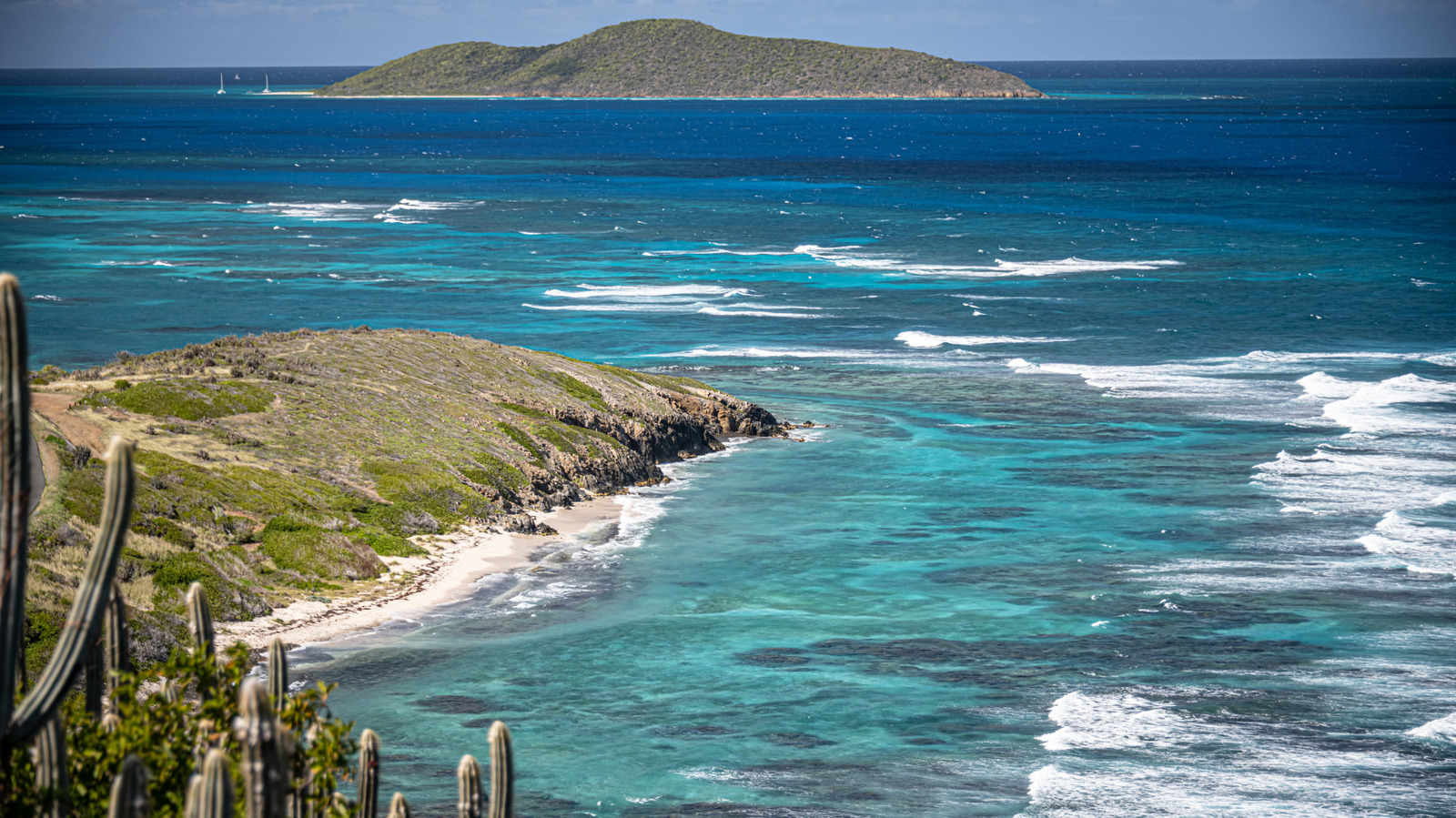
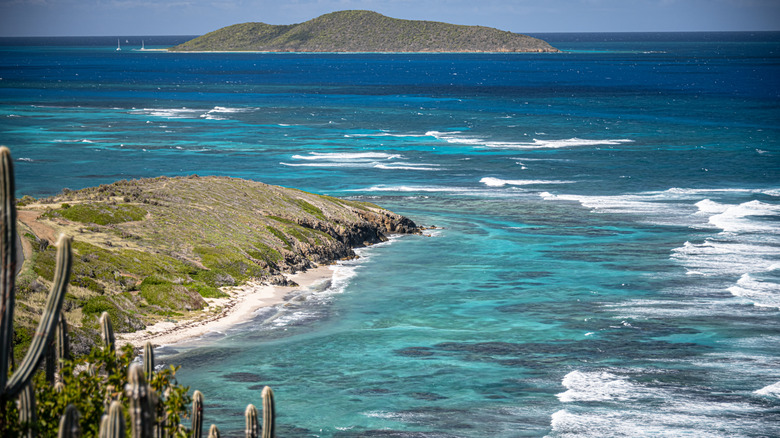
During the Danish colonial period, the eastern peninsula of St. Croix, known locally as East End, served primarily as a pastoral and defensive frontier. Its jagged coastline and strong ocean currents made large-scale settlement difficult, leaving the dramatic cliffs largely untouched. The landscape remained a rugged expanse of dry tropical forest, cactus-studded hills, and sweeping ocean vistas.
The American Acquisition (1917)
The pivotal turning point in the modern identity of St. Croix occurred on March 31, 1917. Amid the escalating tensions of World War I, the United States grew increasingly concerned that Germany might establish a submarine base in the Danish West Indies, threatening maritime trade routes and the approaches to the newly opened Panama Canal.
Through a treaty negotiated with Denmark, the United States purchased the islands of St. Croix, St. Thomas, and St. John for $25 million in gold. The formal transfer of sovereignty transformed the islands into an unincorporated U.S. territory. Overnight, the remote eastern tip of St. Croix was reclassified, quietly becoming the easternmost geographic extreme of the United States—a title it has held ever since.
The Naming of Point Udall (1968)
For decades following the transfer, the easternmost point of the island remained an unmarked, albeit breathtaking, natural overlook. That changed in 1968 when the site was officially designated as Point Udall.
The landmark was named in honor of Stewart L. Udall, who served with distinction as the U.S. Secretary of the Interior under Presidents John F. Kennedy and Lyndon B. Johnson from 1961 to 1969. Secretary Udall was a visionary conservationist, a champion of the National Park System, and an early advocate for environmental protection, public lands, and the preservation of America’s natural heritage. His dedication to conservation made the rugged, untamed eastern tip of St. Croix an exceptionally fitting tribute to his legacy. (Note: A western counterpart, also named Point Udall, was later established on Guam, marking the westernmost point of the United States under the jurisdiction of the same name).
The Millennium Monument and the Turn of the Century (2000)
As the world approached the year 2000, communities across the globe sought unique ways to welcome the new millennium. Given its status as the easternmost point flying the American flag, St. Croix was uniquely positioned to be the first domestic location to ring in the year 2000.
To commemorate this monumental global milestone, an ambitious architectural installation was commissioned at Point Udall. Workers erected a massive, 18-foot-tall stone sundial known as the Millennium Monument. Designed with precise astronomical alignment, the monument was dedicated during massive, island-wide celebrations on December 31, 1999, and January 1, 2000. Thousands of locals and visitors gathered in the dark hours of the early morning to witness the historic first sunrise of the new millennium illuminate the Caribbean sky, cementing Point Udall’s place in modern cultural history.
Supporting Context & Metrics: Geography, Astronomy, and Tourism
Understanding the allure of Point Udall requires examining the unique physical and geographical metrics that govern this remote corner of the U.S. Virgin Islands.
Geographic and Astronomical Positioning
St. Croix is the largest of the U.S. Virgin Islands, measuring roughly 28 miles long and 7 miles wide, encompassing a total land area of approximately 84 square miles. Despite its modest size, the island features diverse ecological zones, ranging from the lush rainforests of the western interior to the semi-arid, cactus-dotted scrublands of the East End.
Point Udall sits at coordinates that place it further east than any other point in the fifty states or U.S. territories, giving rise to its famous geographical claim. Because of this extreme eastern orientation, visitors experience dawn significantly earlier than mainland U.S. locations.
Furthermore, the region operates under Atlantic Standard Time (AST) and does not observe Daylight Saving Time (DST). Consequently, the local time remains constant throughout the year relative to solar position. This immutability plays a crucial role in the precision of the Millennium Monument’s design.
Anatomy of the Millennium Monument
The centerpiece of Point Udall is not merely an artistic sculpture; it is a functional, highly calculated astronomical instrument. A plaque embedded in the monument details its exact geometric purpose:
"The alignment of the shadow pole and marker pin designates the azimuth of the sun on January 1, 2000. The shadow of the pole on the true north line designates local noon daily."
The towering central pillar acts as a gnomon (the casting part of a sundial), throwing its shadow across a circular stone compass floor. Because St. Croix does not shift its clocks for Daylight Saving Time, the shadow cast by the sun at local solar noon hits the true north marker with remarkable consistency every single day of the year.
Tourism Metrics and Visitor Demographics
According to tourism data and major travel platforms like TripAdvisor, Point Udall consistently ranks among the top three attractions on the island of St. Croix. It attracts a diverse demographic of travelers, including:
Geographical enthusiasts keen on visiting extreme territorial borders of the United States.
Eco-tourists and hikers using the area as a jumping-off point for coastal trail explorations.
Stargazers and astronomy buffs drawn by the minimal light pollution on the island’s remote eastern edge.
Visitor reviews frequently highlight the tranquility of the site. Unlike heavily commercialized tourist traps, Point Udall offers an open, windswept expanse where visitors can frequently find moments of absolute solitude, particularly during late afternoons or midnight hours.
Official Statements and Expert Perspectives
The enduring appeal of Point Udall is echoed by local officials, conservation advocates, and seasoned travelers who recognize the site’s unique blend of natural splendor and national heritage.
In reflections concerning the legacy of Stewart L. Udall, historians often emphasize his sweeping vision for American public lands. During his tenure, the Department of the Interior added numerous national parks, wildlife refuges, and historic sites to the federal portfolio. While St. Croix itself is best known for attractions like the Buck Island Reef National Monument and the Salt River Bay National Historical Park and Ecological Preserve, the naming of Point Udall stands as a personal testament to his commitment to preserving unspoiled coastal ecosystems.
Travel writers and local guides frequently emphasize the sensory transformation that occurs at the site during dawn. A prominent travel reviewer noted:
"What begins as a dark silhouette of hills and ocean slowly gains definition as the first light appears over the horizon. Blues begin to separate from the darkness, the clouds pick up color, and eventually the Caribbean and surrounding hills are illuminated by the morning sun."
For photographers, professional guides routinely offer technical advice for capturing the monument:
"Photographers should bring their widest lens to capture the sweeping curvature of the coastline and the scale of the 18-foot sundial, alongside a sturdy tripod to manage low-light conditions during the pre-dawn blue hour."
Local tourism boards emphasize that Point Udall represents the accessible yet adventurous spirit of the U.S. Virgin Islands. Because U.S. citizens can travel to St. Croix without a passport, entering this tropical environment is remarkably straightforward, yet it offers an experience that feels genuinely exotic and far removed from the mainland United States.
Practical Guide: What to Know Before Visiting Point Udall
For travelers planning a pilgrimage to the easternmost point of the United States, careful preparation ensures a seamless and rewarding experience.
1. Transportation and Navigation
St. Croix is a compact island, but navigating its roads requires attention and patience.
The Drive: If you are arriving via cruise ship, you will likely dock in Frederiksted, situated on the extreme western coast of the island. Traveling from Frederiksted to Point Udall on the far east side requires a drive of approximately 45 to 50 miles round-trip (roughly 50 minutes each way), depending on traffic.
Road Conditions: As you approach the East End, the roads narrow and wind through steep, rolling hills with dramatic drop-offs.
Driving on the Left: A critical detail for mainland American travelers is that in the U.S. Virgin Islands, motorists drive on the left side of the road. While rental cars have steering wheels on the conventional left side (matching mainland standards), navigating left-hand traffic requires heightened concentration, particularly on winding mountain roads. Drivers uncomfortable with this arrangement can easily book guided island tours through reputable local operators.
2. Amenities and Costs
Cost: Point Udall is a public, un-ticketed roadside attraction. Visiting the monument is 100% free, making it one of the most memorable budget-friendly experiences in the Caribbean.
Facilities: Because the site is preserved in a relatively natural, undeveloped state, there are no restrooms, visitor centers, or concession stands at the immediate monument site. Travelers must plan ahead, utilizing facilities in nearby towns before making the trek east.
Parking: Free parking is available along the paved roadside and within the dedicated turnaround loop surrounding the Millennium Monument.
3. Safety Recommendations
Secure Valuables: While St. Croix is generally welcoming, local authorities and tourism guides strongly advise visitors not to leave valuables, bags, or electronics visible inside unattended vehicles, particularly if you plan to park and hike down the remote coastal trails branching out from the monument.
Sun and Wind Protection: Perched high on an exposed coastal cliff, Point Udall experiences powerful trade winds and intense tropical sun. Sunscreen, hats, and windbreakers (especially for early morning visits) are highly recommended.
4. Beyond the Monument: Exploring the East End
A trip to Point Udall serves as an ideal anchor for a broader exploration of St. Croix’s eastern shore and surrounding marine reserves:
Buck Island Reef National Monument: Visible clearly from the bluffs of Point Udall, this protected marine park features world-class coral reef snorkeling along an underwater underwater trail.
Sandy Point National Wildlife Refuge: Located on the opposite end of the island, this pristine beach boasts some of the clearest waters in the Caribbean and serves a vital nesting ground for endangered leatherback sea turtles.
Historic Towns: Between outdoor excursions, visitors can explore the colorful colonial architecture, artisan boutiques, and culinary hotspots of Christiansted and Frederiksted.
Future Outlook
As global tourism continues to evolve, travelers increasingly seek destinations that combine authentic cultural heritage, natural preservation, and profound geographical significance without the complications of international red tape. Point Udall and the island of St. Croix occupy a unique nexus of these desires.
Looking ahead, local preservationists and tourism authorities are placing heightened emphasis on sustainable travel practices to protect the fragile coastal ecosystems surrounding St. Croix’s East End. Efforts are underway to ensure that increased visitor interest does not compromise the natural integrity of the landscape, keeping the sweeping ocean views, pristine night skies, and historic Millennium Monument pristine for generations to come.
Whether viewed in the quiet, reflective darkness before dawn as the stars fade above the Caribbean, or bathed in the brilliant midday glare of the tropical sun, Point Udall remains a powerful symbol of American geography. It stands as a reminder that the borders of the United States stretch far beyond the North American continent—reaching out into the warm, turquoise waters of the Caribbean to catch the very first light of a new day.