By Philippe Lazaro
Digital Content Manager
Executive Overview
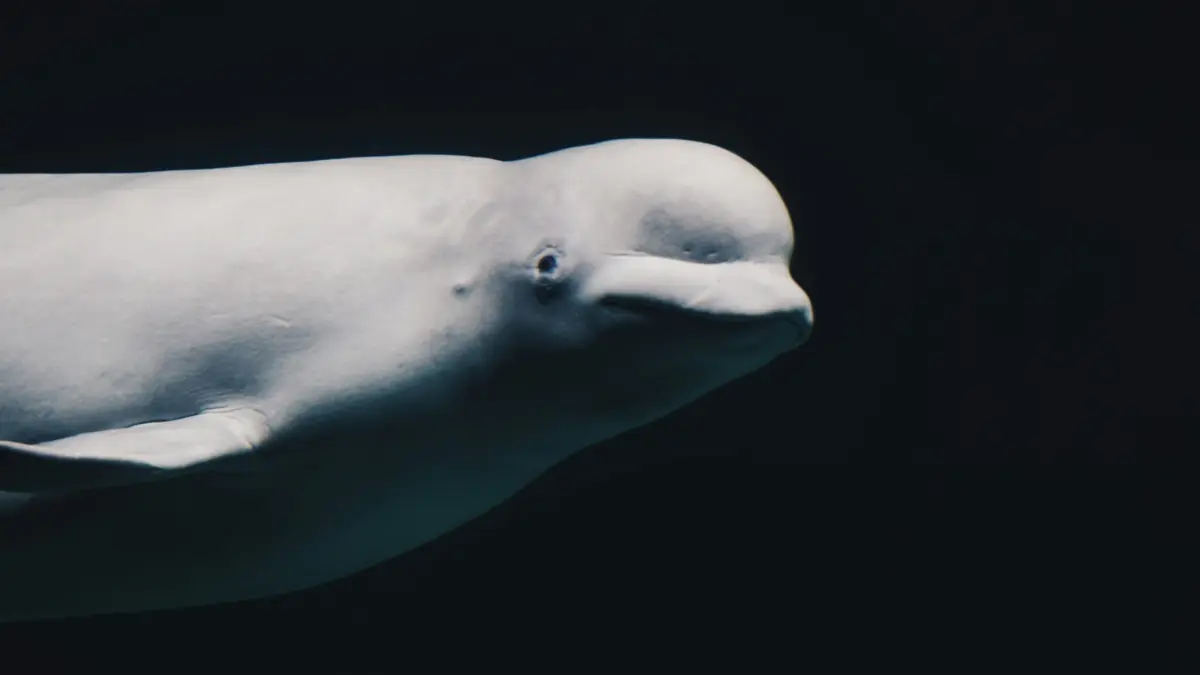
To stand on the wind-scoured banks of the St. Lawrence River in Quebec is to witness a rare and haunting spectacle. Beneath the dark, churning surface, a sudden flash of ivory breaks the water—the distinctive, ghostly white of a beluga whale.
These Arctic mammals, typically associated with the frigid, remote packs of the far north, inhabit a major Canadian river hundreds of miles away from the open ocean. They navigate the very same freshwater corridors plied by massive commercial cargo ships, recreational watercraft, and touring kayaks. Yet, the unlikely presence of these ivory sentinels in a southern Canadian river is not a modern anomaly; it is a living geological inheritance. Their story does not begin with the water we see today, but with the colossal, vanishing ice sheets of the last glacial maximum.

For more than 10,000 years, this genetically isolated population has adapted to the shifting ecosystems of the St. Lawrence estuary. They have survived centuries of human industrialization, historical overhunting, and habitat degradation. Today, however, these resilient cetaceans face an existential crisis moving at an unprecedented velocity.
Driven by rapidly warming global temperatures and shrinking Arctic sea ice, climate change is unleashing a compounding wave of pressures. Invasive apex predators, mounting industrial noise, and heavy vessel traffic now threaten to erase a lineage that has called the St. Lawrence home since the dawn of the Holocene epoch.
Detailed Chronology: From Glacial Sea to Riverine Refuge
The story of the St. Lawrence belugas is inextricably linked to the dramatic reconfiguration of North America’s topography at the close of the Pleistocene epoch.
The Wisconsin Glacier and the Champlain Sea (15,000 Years Ago)
Approximately 15,000 years ago, the gargantuan Wisconsin ice sheet—which had blanketed vast stretches of the North American continent for millennia—began its slow, stuttering retreat. The sheer weight of this colossal glacier had profoundly depressed the Earth’s crust beneath it.

As the ice melted, this depressed basin was rapidly inundated by cold saline water surging in from the Atlantic Ocean. The result was the formation of the Champlain Sea, a massive inland body of water that stretched from the present-day Atlantic coast westward toward the Great Lakes and into modern-day New York State.
A Subarctic Ecosystem Inland
During the height of the Champlain Sea’s existence, subarctic marine life thrived hundreds of miles inland. Ancient fossil records recovered from farm fields, suburban developments, and river valleys between Quebec City and the Ottawa Valley reveal a remarkably rich marine ecosystem.
Researchers have unearthed the fossilized remains of:
- Porpoises
- Humpback whales (Megaptera novaeangliae)
- Fin whales (Balaenoptera physalus)
- Bowhead whales (Balaena mysticetus)
- Multiple species of seals and walruses (Odobenus rosmarus)
Notably, in 2001, researchers at the Université du Québec à Montréal (UQAM) cataloged a beluga fossil recovered from regional sediments that was carbon-dated to more than 10,000 years old.
Isolation and Adaptation
As the last ice age finally drew to a close, the landmass beneath the Champlain Sea experienced post-glacial rebound, slowly rising as the heavy burden of ice melted away. The inland sea gradually drained, leaving behind the modern St. Lawrence River basin.
While most marine species retreated northward with the receding cold waters, a distinct population of belugas chose to remain. Trapped by receding coastlines and adapting to the changing salinity of the newly formed estuary, these whales established permanent residency. Over millennia, they became genetically isolated from all other beluga populations inhabiting northern Canada, Alaska, and Russia.
For more than ten millennia, this lineage has known no other home. Indigenous communities along the St. Lawrence have long revered these animals, utilizing them historically as a vital source of sustenance, food security, and cultural identity. Their deep-rooted behavioral adaptations are finely synchronized with the unique seasonal rhythms, tidal currents, and ice cycles of the river system.
Supporting Context & Metrics: A Population Under Siege
Despite surviving the end of an ice age, the St. Lawrence belugas are currently failing to weather the pressures of the modern industrial era. Once numbering an estimated 10,000 individuals at the dawn of the 20th century, the population has plummeted drastically.
Today, conservation scientists estimate that only about 1,800 belugas remain in the St. Lawrence estuary, with recent, sobering surveys suggesting the actual number may hover closer to 900.
Historical and Contemporary Stressors
- Commercial Hunting: Intensive harvesting severely depleted the population throughout the 19th and early 20th centuries. Although commercial and bounty hunting was finally restricted and halted in 1979, the population has failed to rebound.
- Chemical and Industrial Contamination: Situated at the drainage outlet of North America’s industrial heartland, the St. Lawrence River has historically accumulated high loads of heavy metals, PCBs, polycyclic aromatic hydrocarbons (PAHs), and agricultural runoff. These contaminants bioaccumulate in the fatty tissues of belugas, causing high rates of cancer, reproductive failure, and immune suppression.
- Vessel Traffic and Acoustic Pollution: The busy shipping lanes connecting the Atlantic Ocean to the Great Lakes cut directly through critical beluga feeding and calving grounds. Propeller noise and commercial ship engines generate chronic underwater noise pollution, severely disrupting the complex echolocation and acoustic communication systems these mammals rely on for navigation, socializing, and hunting.
The Amplifying Threat of Climate Change
While historical pressures crippled the population’s recovery, contemporary climate change is introducing entirely novel threats from an unexpected direction.
As global temperatures rise, the Arctic is warming at nearly four times the rate of the rest of the planet. Every September, scientists at the National Snow and Ice Data Center (NSIDC) mark the annual Arctic sea ice minimum—the point at which summer melting reaches its maximum extent before winter refreezing begins. The last 19 recorded September minimums (spanning from 2007 to 2025) represent the 19 lowest ice extents in satellite observational history. The multi-decade trend line points decisively in one direction: toward an increasingly ice-free Arctic.
This loss of sea ice has catastrophic ecological ripple effects. Most notably, the retreat of Arctic ice has opened up pathways for transient killer whales (Orcinus orca) to penetrate deeper into historical beluga sanctuaries. Orcas—apex predators capable of hunting all three major Arctic whale species—now pose a direct, lethal threat to St. Lawrence belugas, which lack behavioral defenses against these sophisticated predators.
Furthermore, diminishing ice cover invites increased commercial shipping, resource extraction, and exploratory drilling into regions that once served as natural sanctuaries for marine mammals.
Official Perspectives and Conservation Frameworks
Conservation organizations and marine biologists emphasize that the plight of the St. Lawrence beluga is emblematic of a broader, systemic failure in global ocean management.
"The belugas in the St. Lawrence River are a living record of what the ocean once was and a stark signal of what it is rapidly becoming," notes marine biodiversity specialists at Ocean Conservancy. "Our ocean shapes life in ways that travel far inland and last vastly longer than human planning cycles anticipate."
Biologists point out that the St. Lawrence belugas are not an isolated conservation failure. In Alaska, Cook Inlet belugas face a similarly perilous path toward extinction, while other Canadian Arctic populations remain under severe ecological stress.
Crucially, conservationists stress that genetic diversity cannot be treated as interchangeable. Because St. Lawrence belugas have been genetically separated from their Arctic counterparts for thousands of years, their unique genomic adaptations to riverine, temperate-subarctic environments are irreplaceable. The potential extinction of this single population cannot be offset by healthy populations elsewhere; it represents the permanent silencing of a ten-thousand-year evolutionary chapter.
Future Outlook: Charting a New Course for Cetaceans
Preventing the extinction of the St. Lawrence beluga requires immediate, aggressive policy interventions and structural shifts in how human societies manage shared marine spaces.
Legislative Solutions: The Whale CHARTS Act
To combat the escalating threat of vessel strikes and acoustic harassment, conservation advocates are rallying behind targeted legislative frameworks, such as the proposed Whale CHARTS Act (Connecting Habitats and Protecting Endangered Species).
If enacted, this legislation would fundamentally strengthen federal marine protections by:
- Amending and expanding National Oceanic and Atmospheric Administration (NOAA) near-real-time monitoring and mitigation programs for large cetaceans.
- Improving scientific mapping of baleen and sperm whale migration corridors.
- Identifying and legally safeguarding critical feeding, mating, and calving grounds from commercial vessel encroachment and excessive underwater noise.
Ecosystem-Level Resilience
Protecting distinct, vulnerable populations like the St. Lawrence belugas ultimately requires looking beyond single-species management. Ocean Conservancy and allied international groups continue to advocate for comprehensive ecosystem-based management strategies that prioritize ocean biodiversity, enforce stricter limits on industrial effluent discharge, mandate vessel slowdowns in critical habitats, and aggressively curb greenhouse gas emissions to stabilize Arctic temperatures.
The belugas of the St. Lawrence River are survivors of a world carved by ice. Whether they can survive a world reshaped by human-induced warming remains one of the defining conservation challenges of our time.