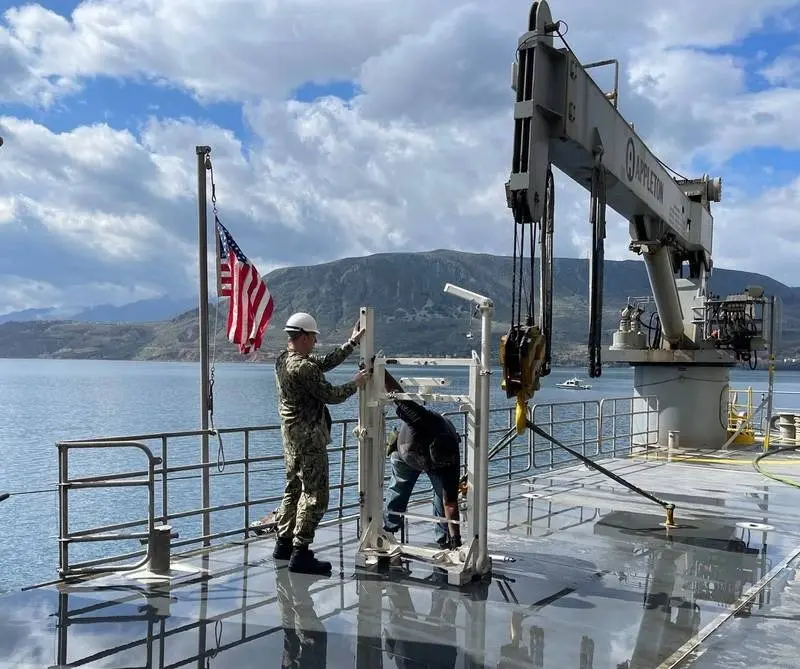
The global power projection of the United States Navy rests upon a foundational, yet frequently overlooked, strategic truth: a combat fleet is only as effective as the supply chain that sustains it. While nuclear-powered aircraft carriers, stealth destroyers, and fast-attack submarines capture public attention and dominate defense budgets, their operational reach is entirely dictated by the auxiliary vessels of the Military Sealift Command (MSC). Tasked with delivering fuel, ammunition, provisions, and spare parts to combatants operating in contested waters worldwide, MSC is the indispensable backbone of the Navy-Marine Corps "away team."
In recent years, however, this critical logistics machine has faced a severe, systemic crisis. A prolonged nationwide shortage of qualified merchant mariners, compounded by punishing operational tempos and uncompetitive civil service compensation, left MSC severely short-staffed. The personnel deficit grew so acute that the command was forced to make a drastic tactical concession: temporarily sidelining operational ships to consolidate remaining crews.
To reverse this trajectory, Rear Admiral Benjamin Nicholson, Commander of MSC, has initiated a sweeping, multi-front campaign to overhaul the civilian mariner workforce. In an in-depth discussion on Maritime Matters: The MarineLink Podcast, RADM Nicholson outlined a comprehensive strategy that prioritizes the human element over hardware. By implementing historic wage increases, removing archaic federal pay caps, deploying modern shipboard connectivity, and pioneering new recruitment pipelines, MSC is aggressively competing with the commercial maritime sector. The goal is not merely to fill empty berths, but to structurally transform the profession, building a resilient, highly trained workforce capable of sustaining America’s naval supremacy in an increasingly volatile geopolitical landscape.
Detailed Chronology: From Operational Crisis to Force Stabilization
The current reform movement within MSC is the direct result of a multi-year operational bottleneck. To understand the speed and scale of today’s initiatives, it is necessary to trace the timeline of the command’s personnel crisis and its subsequent recovery efforts.
[2020–2022: Peak Attrition & Burnout]
  ──> Attrition reaches ~15%. Severe crew shortages lead to extended deployments.

[Late 2023: Force Generation Risk Reduction Initiated]
  ──> MSC takes 17 ships temporarily offline to consolidate CIVMAR crews and stabilize rotations.

[Early 2024: Structural Compensation Reforms]
  ──> Federal pay caps are modified/removed; retroactive overtime pay is distributed.

[Mid 2024: Technology & Quality of Life Rollout]
  ──> CIVMAR Wireless Internet Network (WIN) is deployed to 26+ ships.

[Late 2024 & Beyond: Recruitment & Fleet Growth]
  ──> CIVMAR force grows to 6,200+; target set for 9,300 to restore long-term fleet resilience.
The "Can-Do" Culture Bottleneck
For years, MSC operated under a culture of relentless execution. Despite a dwindling pool of Civil Service Mariners (CIVMARs), the command continually accepted demanding mission taskings. This "can-do" attitude, while admirable, ultimately exacerbated the workforce crisis. Mariners were kept at sea for extended periods, rotations were missed, leave was routinely deferred, and critical professional development training was delayed.
By 2022, CIVMAR attrition had spiked to approximately 15%. Experienced mariners were leaving for the commercial sector, where wages were rising rapidly and sea-to-shore rotations were more predictable. The resulting personnel deficit created a cascading failure: fewer mariners meant longer deployments for those who remained, driving further burnout and even higher attrition.
The Tactical Retreat: Sidelining the Fleet
Recognizing that the status quo was unsustainable, MSC leadership initiated a drastic "force generation risk reduction" effort. The command made the difficult decision to take 17 government-owned, government-operated ships temporarily out of active service.
By placing these vessels in a reduced operating status, MSC was able to reassign their crews to the remaining active fleet. This consolidation immediately brought crewing levels on operational ships closer to safety and mission requirements. Crucially, it allowed exhausted mariners to finally rotate off their ships, take long-overdue leave, and return to maritime academies for mandatory training and licensing upgrades.
The Path to Stabilization
Today, this controlled consolidation is yielding tangible dividends. At the time of RADM Nicholson’s address, the number of sidelined ships had decreased to 15, with plans to return several more to active status in the immediate future as recruitment numbers climb.
By systematically addressing the root causes of mariner dissatisfaction—compensation, connectivity, and quality of life—MSC has successfully arrested its downward slide. Attrition has been cut in half, dropping from 15% to a far healthier 7%, and the total CIVMAR workforce has begun a steady upward trajectory.
Supporting Context & Metrics: The Cost of Attracting Top Talent
To compete effectively with a robust commercial maritime industry, MSC has completely restructured its financial and operational metrics. The command’s new recruitment and retention model relies on aggressive compensation packages, targeted recruitment pipelines, and a long-term plan to scale the workforce.
Unprecedented Entry-Level Compensation
For graduates of state and federal maritime academies, MSC has introduced compensation packages that are virtually unmatched in the entry-level civilian job market.
Third Mates / Third Officers: A newly licensed deck officer joining MSC can expect an average first-year salary exceeding $188,000, paired with an upfront signing bonus of nearly $58,000.
Third Assistant Engineers: Due to an acute global shortage of marine engineers, engineering graduates command even higher rates. A newly licensed third engineer starts with an average salary of nearly $209,000 and a signing bonus approaching $76,000.
These figures represent a deliberate effort by the Navy to position MSC as the premier employer for young, licensed mariners, offering immediate financial stability that outpaces the commercial sector.
Rebuilding Workforce Depth
While attracting entry-level officers is critical, MSC’s broader objective is to build systemic depth across all ranks.
The current CIVMAR force of over 6,200 represents a solid recovery from the crisis baseline of 5,500. However, RADM Nicholson’s ultimate target is 9,300 mariners—an additional 3,000 personnel. This target is not designed to expand the active fleet, but to establish a healthy mariner-to-billet ratio. Achieving this depth ensures that MSC can support seamless crew rotations, allow mariners to take leave without disrupting fleet operations, and provide adequate windows for training and medical recovery.
Eliminating the Federal Pay Cap
Historically, one of MSC’s most significant retention hurdles was the federal aggregate pay cap. Under the legacy system, senior mariners—specifically Masters (Captains) and Chief Engineers—frequently hit a federal compensation ceiling. Any overtime or premium pay earned beyond this cap was withheld and placed into a non-interest-bearing government escrow account, accessible only upon retirement.
This policy severely disadvantaged MSC when competing with commercial shipping firms, where senior officers were paid their full earnings in real-time. MSC successfully advocated for the modification of these caps. While the base salary cap technically remains, it has been raised well above current pay levels. More importantly, the aggregate pay cap restricting overtime and premium earnings has been eliminated.
In addition to resolving this issue for future earnings, MSC was authorized to retroactively distribute millions of dollars in withheld pay to its workforce. RADM Nicholson likened these retroactive payouts to "lottery winnings," noting that they instantly restored trust and boosted morale among the command’s most senior and experienced shipboard leaders.
Official Statements: Leadership, Culture, and the "Away Team" Philosophy
In his address, Rear Admiral Benjamin Nicholson emphasized that solving MSC’s operational challenges requires looking past steel and machinery to focus on the human beings who operate them.
"You can have all of the things in the world, but if you don’t have the people to make the things operate, nothing works. So my number one priority is our mariners, specifically the civil service mariners."
— RADM Benjamin Nicholson, Commander, MSC
This philosophy represents a cultural shift within the Navy, recognizing that logistics personnel are just as vital to combat readiness as the tactical crews aboard combatant vessels. Nicholson frequently uses a sports analogy to convey this dynamic to broader military audiences:
"MSC is not the flashy player making magazine covers, but it is the player a team has difficulty winning without."
Modernizing Shipboard Quality of Life
Nicholson also addressed the shifting expectations of the modern merchant mariner, noting that competitive pay must be accompanied by acceptable shipboard living conditions. Chief among these is digital connectivity. While commercial shipping lines have offered robust satellite internet for years, military operational security and procurement hurdles historically left CIVMARs digitally isolated at sea.
To close this gap, MSC has rapidly rolled out the CIVMAR Wireless Internet Network (WIN).
"The commercial industry for quite some time has had full-blown internet at sea and we didn’t… That’s a super important thing, having that connection with people. There was a day where a ship would pull into port and all of the sailors, they were looking for the closest bar. Now we pull into port, the sailors are looking for the closest Wi-Fi."
By installing permanent and temporary satellite internet kits across the fleet, MSC is enabling mariners to maintain video contact with families, manage personal finances, and stay connected to modern life while deployed in remote ocean regions.
Developing the "Hawsepipe" and Softer Skills
To ensure long-term retention, MSC is investing heavily in career progression. Programs like the "AB-to-Mate" initiative allow selected Able Seamen to attend officer candidate courses at the command’s expense, returning to the fleet with a Third Mate’s license. This traditional "hawsepipe" advancement path is highly valued in the maritime industry.
Furthermore, Nicholson is expanding the curriculum for senior shipboard officers to include modern leadership training:
"I want masters and chief engineers that our people want to work for."
By introducing week-long seminars focused on the "softer skills" of personnel management, emotional intelligence, and conflict resolution, MSC aims to foster a more supportive, professional onboard culture that actively encourages mariners to remain with the command.
Future Outlook: Fleet Recapitalization and Strategic Integration
As Military Sealift Command stabilizes its workforce, it must simultaneously confront the realities of an aging fleet. The strategic environment of the 21st century—marked by peer competition in the Indo-Pacific—demands a highly survivable, modern logistics fleet.
Addressing an Aging Auxiliary Fleet
MSC currently manages an active fleet of approximately 166 vessels:
62 government-owned, government-operated vessels crewed by CIVMARs.
An average of 61 short- and long-term chartered commercial vessels.
Currently, MSC’s government-owned ships are operational only about 60% of the time, with the remaining 40% dedicated to maintenance. This high maintenance overhead is directly tied to vessel age. Commercial operators typically retire or sell vessels after 20 to 25 years of service. In contrast, MSC is forced to operate its fleet replenishment oilers, dry cargo ships, and specialized tenders far past their commercial shelf lives.
Some of MSC’s legacy 187-class oilers are projected to reach 40, 46, or even 48 years of service before they are fully replaced. Operating steam and early-generation diesel propulsion systems of this age puts immense physical strain on both the hulls and the mariners tasked with maintaining them, especially during demanding underway replenishment (UNREP) operations.
The Recapitalization Strategy: Commonality and Commercial Charters
To accelerate fleet modernization, RADM Nicholson is advocating for two key structural changes in how the Navy designs and acquires auxiliary ships:
Platform Commonality: Rather than designing completely unique hulls for every support mission (such as hospital ships, submarine tenders, and cable layers), Nicholson advocates for building these diverse platforms on a common hull design. By utilizing identical engineering plants, propulsion systems, and bridge controls, the Navy can drastically reduce lifecycle maintenance costs, simplify spare parts logistics, and allow mariners to transition between different ship classes without requiring extensive retraining.
Strategic Commercial Chartering: To stimulate the domestic shipbuilding sector and modernize the wider U.S. merchant fleet, Nicholson suggests that the Navy leverage longer-term commercial charter commitments. By guaranteeing multi-year government charters, private ship operators can secure the commercial financing necessary to build new, state-of-the-art vessels in domestic shipyards, reducing the capital burden on the federal budget while expanding the national maritime reserve.
Conclusion: The Ultimate Mission
Ultimately, the success of MSC’s recruitment, retention, and fleet recapitalization efforts will determine the operational limits of the United States Navy. In any future high-intensity conflict, the ability to sustain operations in contested environments will depend entirely on the civilian mariners of MSC. By treating these mariners as tactical assets, elevating their compensation, and modernizing their shipboard environment, MSC is working to ensure that the "away team" always has the fuel, ammunition, and support it needs to prevail.