Executive Overview
The global electric vehicle (EV) landscape is witnessing a profound structural shift, and industry titan BYD is once again at the epicenter of this transformation. Following a sluggish start to the year characterized by macroeconomic headwinds and shifting consumer dynamics, BYD has successfully course-corrected, registering a stellar performance in September 2026. Delivering an impressive 456,713 passenger vehicles during the month, the Chinese manufacturing giant recorded a 5.4% increase over August 2026 and an assertive 16.2% jump compared to September 2025.
A deeper dive into the data reveals a compelling narrative beneath these top-line figures: the market is decisively favoring Battery Electric Vehicles (BEVs) over Plug-in Hybrid Electric Vehicles (PHEVs). While BYD’s overall passenger vehicle sales demonstrate solid recovery, the fully electric sector is surging ahead with staggering year-over-year gains. This divergence underscores a broader global transition away from transitional powertrain technologies and toward zero-emission, pure-electric mobility. As BYD rapidly closes the cumulative deficit from earlier in the year, the company’s Q3 performance serves as a bellwether for the future of green transportation, highlighting both the resilience of its manufacturing apparatus and changing consumer preferences in an increasingly competitive marketplace.
Detailed Chronology: From a Slow Start to a Resurgent September
To understand the magnitude of BYD’s September 2026 triumph, one must contextualize the trajectory of the automaker’s sales cycle over the past twelve months. The beginning of 2026 presented significant challenges for legacy and new-energy automakers alike. Intensifying price wars, inflationary pressures, and shifting regional subsidies created a volatile trading environment. For BYD, these obstacles initially manifested as subdued month-over-month growth during the first quarter, forcing the company to recalibrate its production and distribution strategies.

However, as the calendar turned toward the summer and early autumn months, BYD’s strategic investments in supply chain optimization, next-generation battery technology, and aggressive international expansion began to bear fruit. August 2026 laid a stable foundation, but September shattered previous expectations. With 456,713 total passenger vehicle deliveries secured, the company established a powerful upward trajectory heading into the final quarter of the year.

This momentum was not distributed evenly across BYD’s product catalog. Instead, September marked a critical inflection point where the company’s fully electric offerings decisively outpaced its hybrid line. Industry analysts tracking the month-by-month evolution noted that while consumer interest in electrified transport remained robust, the tipping point toward pure-electric ownership had accelerated far faster than many had projected at the start of the fiscal year.
Supporting Context & Metrics: The BEV vs. PHEV Divergence
A rigorous examination of BYD’s sales ledger for September 2026 illuminates a fascinating market dynamic. Because BYD’s passenger vehicle portfolio is exclusively divided between BEVs and PHEVs, any variance in their respective growth rates tells a clear story about consumer demand.
The Rise of Battery Electric Vehicles (BEVs)
The crown jewel of BYD’s September performance was undoubtedly its BEV segment. Fully electric vehicle sales climbed to 273,143 units. This represents a robust 6.6% increase compared to August 2026 and a phenomenal 33.2% surge year-over-year, rising dramatically from the 205,050 BEVs delivered in September 2025.

This exceptional growth highlights several key trends:

- Cost Parity and Range Confidence: Improvements in energy density, faster charging architectures, and lower production costs have made BYD’s BEV lineup increasingly attractive to mainstream buyers.
- Global Market Acceptance: As BYD continues to scale its exports into Europe, Latin America, Southeast Asia, and Australia, international demand for its pure-electric platforms—such as those built on its advanced e-Platform 3.0—has acted as a major volume catalyst.
- Erosion of ICE Market Share: The sheer velocity of BEV adoption suggests that consumers looking to replace traditional internal combustion engine (ICE) vehicles are bypassing hybrids and jumping straight to full electrification.
The Contraction of Plug-in Hybrid Electric Vehicles (PHEVs)
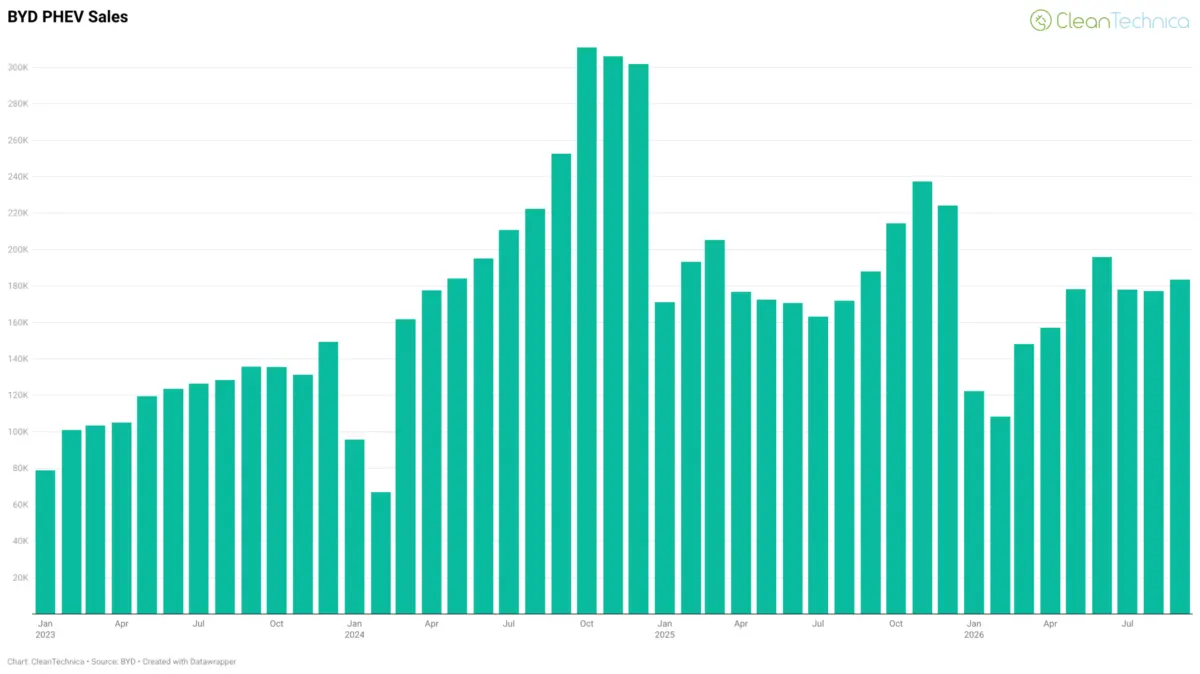
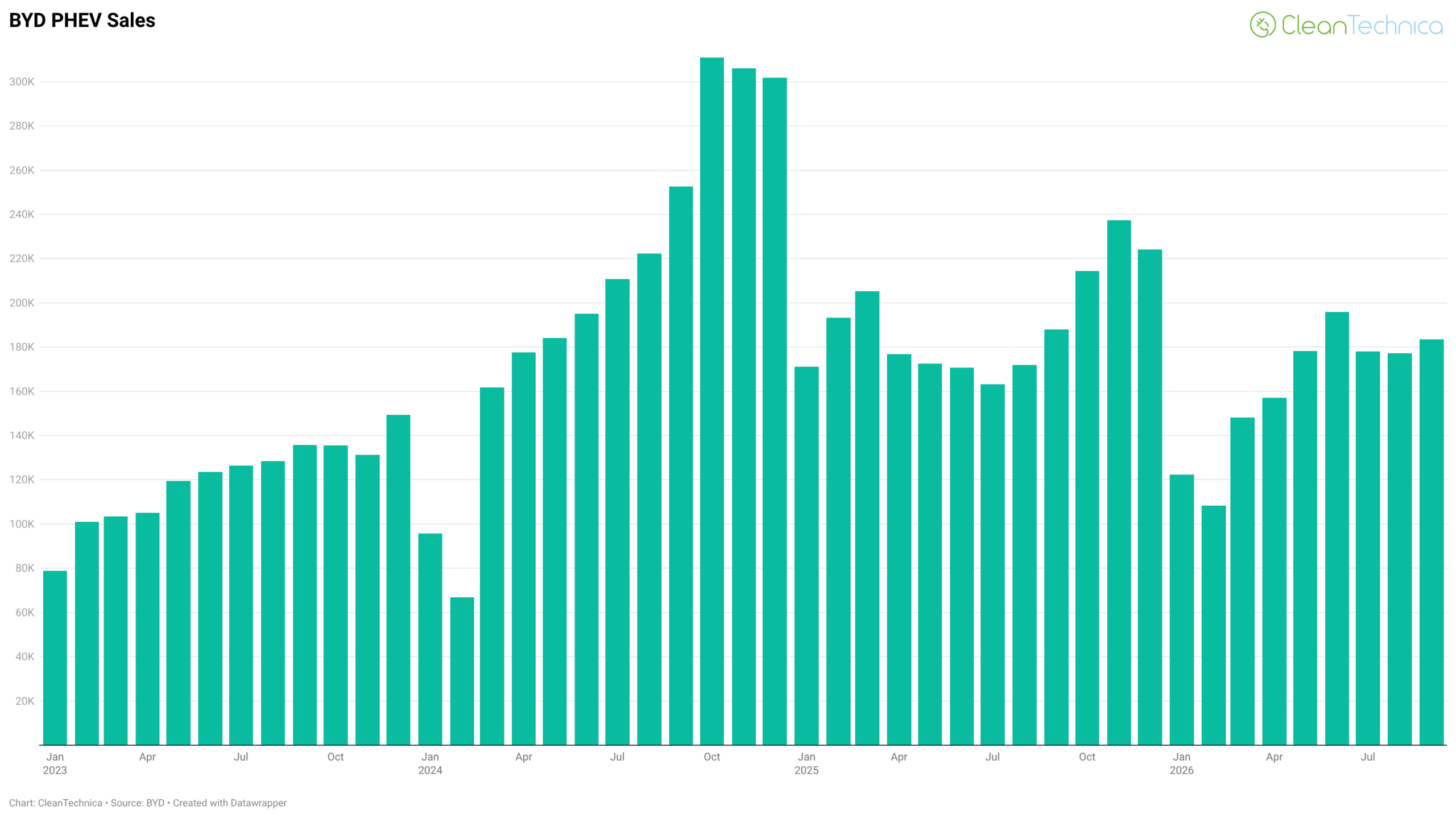
Conversely, BYD’s PHEV sector experienced a noticeable cooling off. While PHEV sales managed a modest 3.6% increase month-over-month (moving from August figures to 183,570 units in September 2026), they actually decreased by 2.4% year-over-year when compared to the 188,010 PHEVs sold in September 2025.
This contraction suggests that plug-in hybrids—long viewed as a crucial "bridge" technology for drivers hesitant about public charging infrastructure—are beginning to lose market share to their pure-electric counterparts. As charging networks mature and battery ranges expand, the compromises inherent in maintaining a dual-powertrain system (such as added mechanical complexity and maintenance overhead) appear to be driving consumers toward the simplicity and lower operating costs of BEVs.
Cumulative Year-to-Date (YTD) Performance
When evaluating the broader financial and operational year, the figures further emphasize this structural evolution:
- Total Passenger Vehicles: Cumulative sales for the first three quarters of 2026 stand at 3,078,544 units. While this reflects a minor 4.4% decrease compared to the 3,218,862 passenger vehicles delivered during the same period in 2025, the gap is rapidly closing thanks to September’s record-setting pace.
- BEV Year-to-Date Triumph: Remarkably, BYD’s BEV division has already crossed into positive annual territory. Fully electric sales for the first three quarters of 2026 reached 1,629,957 units—a 1.5% increase over the 1,605,903 BEVs sold during the first three quarters of 2025.
- PHEV Year-to-Date Adjustment: Reflecting the annual decline seen in September, YTD PHEV sales dropped by 10.2%, shifting from 1,612,959 units in 2025 down to 1,448,587 units in 2026.
To put the raw volume into perspective, overall plug-in passenger vehicle sales (BEVs + PHEVs combined) rose from 393,060 units in September 2025 to 456,713 units in September 2026—representing an influx of over 63,000 additional clean vehicles onto global roadways in a single month.
Official Statements and Industry Insights
While corporate earnings reports provide the hard data, industry stakeholders and executive communications offer vital context into the motivations driving BYD’s aggressive operational strategy. Speaking on the condition of anonymity regarding unannounced quarterly targets, supply chain partners close to BYD have indicated that the company’s recent surge is the direct result of a calculated pivot in manufacturing allocation.
"BYD anticipated the tightening margins in the hybrid sector and proactively shifted factory line capacity toward next-generation BEV architectures," noted a senior automotive supply analyst based in Shenzhen. "The company’s vertical integration model—producing its own semiconductors, battery cells, and vehicle bodies—gives it an agility that traditional legacy automakers simply cannot match. When demand signals shift toward pure electrics, BYD can re-tool and scale production within weeks rather than quarters."
Furthermore, market researchers point out that BYD’s aggressive pricing strategies, coupled with continuous software and hardware upgrades (such as the integration of advanced driver-assistance systems), have allowed the brand to maintain pricing power even in hyper-competitive domestic markets like China. By capturing the high ground in BEV volume, BYD is effectively consolidating its position as the world’s leading new-energy vehicle (NEV) manufacturer, putting mounting pressure on both domestic rivals and Western automotive giants.
Future Outlook: Navigating the Road Ahead
As BYD closes out the final quarter of 2026, the road ahead appears both promising and fiercely competitive. The data from September provides a clear roadmap for where the company’s strategic focus must lie: doubling down on Battery Electric Vehicle innovation and market penetration.

Several key factors will dictate BYD’s trajectory over the next 12 to 24 months:
- International Expansion and Trade Barriers: As BYD continues to establish manufacturing footprints outside of China—including planned and operational facilities in Europe, South America, and Asia—its ability to navigate localized trade tariffs, regulatory approvals, and geopolitical friction will be paramount. Maintaining cost competitiveness while exporting high volumes of BEVs will test the resilience of its global logistics network.
- Next-Generation Battery Innovations: The commercialization of advanced chemistry batteries, such as enhanced lithium-iron-phosphate (LFP) variants and potential solid-state developments, will likely widen BYD’s technological moat. Continued reductions in battery costs will enable the company to introduce even more affordable long-range BEVs, capturing lower-tier market segments currently dominated by ICE vehicles.
- Infrastructure Synergies: As public charging infrastructure scales globally, the gradual decline of PHEV demand observed in the 2026 data is expected to accelerate. BYD’s strategic retreat from heavy reliance on hybrids in favor of pure-electric platforms positions the company perfectly to capture the entirety of the long-term zero-emission transition.
- Closing the Annual Deficit: With year-to-date passenger vehicle sales now tracking just 4.4% behind 2025 levels—and BEVs already showing positive annual growth—BYD is well-positioned to challenge its previous annual sales records if current fourth-quarter momentum holds or exceeds expectations.
In summary, September 2026 will likely be remembered as the turning point where BYD definitively transitioned from recovering ground to breaking new frontiers. By proving that pure-electric vehicles can drive massive, sustained growth despite macroeconomic headwinds, BYD has reinforced its status as an unstoppable force in the global clean energy transition.