




Executive Overview
The debate over the future of American infrastructure has reached a critical juncture. As traffic fatalities remain at stubbornly high levels across the United States, advocacy groups, urban planners, and transportation reformers are intensifying pressure on Congress to fundamentally alter how federal infrastructure dollars are distributed. Leading this charge is Transportation for America, a prominent national advocacy organization that has formally called on federal lawmakers to tie all future surface transportation funding directly to verifiable, measurable improvements in roadway safety.
For decades, federal transportation policy has largely operated on a business-as-usual model, distributing billions of dollars to state departments of transportation (DOTs) with minimal accountability regarding pedestrian, cyclist, and motorist mortality rates. Critics argue that this formulaic approach—often prioritizing high-speed vehicular throughput over community safety—has actively contributed to the design of deadly "stroads" and car-dependent urban landscapes that put vulnerable road users at constant risk.
By demanding that federal purse strings be tied to performance outcomes, organizations like Transportation for America hope to shift the paradigm. Under this proposed framework, states and metropolitan planning organizations (MPOs) would no longer receive a blank check for highway expansion and maintenance unless they can demonstrate tangible progress in reducing traffic deaths and severe injuries. This comprehensive report explores the background of this policy push, the systemic issues plaguing American street design, the implications for federal legislation, and what the future holds for the movement to end car dependency and prioritize human life on public rights-of-way.
Detailed Chronology of a Safety Crisis
To understand the urgency behind Transportation for America’s latest policy mandate, one must examine the timeline of federal transportation funding and the escalating crisis on American streets.
The Legacy of the Interstate Era and Formula Funding
Since the mid-20th century, federal transportation legislation—from the creation of the Interstate Highway System to modern multi-year surface transportation acts like the FAST Act and the Infrastructure Investment and Jobs Act (IIJA)—has historically favored highway construction and widening.
While federal programs ostensibly include safety components, the vast majority of funding flows through formula grants that prioritize vehicle capacity and speed over safety mitigations. State DOTs have long enjoyed immense flexibility in how they spend federal block grants, frequently diverting funds designated for "safety" into highway expansions that inadvertently induce demand, increase vehicle speeds, and elevate pedestrian risk.
The Pandemic Spike and the "Deadly by Design" Reality
In the wake of the COVID-19 pandemic, American roadways experienced an unprecedented surge in fatal crashes. Even as total vehicle miles traveled plummeted during lockdowns, traffic fatality rates per mile spiked dramatically, driven by reckless driving, oversized vehicles, and sprawling roadway designs engineered for maximum speed rather than contextual safety.
Urban advocates repeatedly highlighted that many American thoroughfares—particularly "stroads," which attempt to combine the high-speed transit of a highway with the local access of a street—are quite literally "deadly by design." Despite national initiatives like the Department of Transportation’s "National Roadway Safety Strategy" and the adoption of the Safe System Approach, actual on-the-ground implementation by state agencies has lagged far behind rhetoric.
The 2026 Policy Pivot
As the nation looks toward upcoming legislative cycles and accountability checks within federal infrastructure spending, September 2026 has emerged as a watershed moment. With the release of Transportation for America’s direct policy directive on September 30, 2026, the conversation has shifted from voluntary safety guidelines to mandatory financial accountability. Advocacy groups are no longer asking state DOTs to voluntarily adopt Vision Zero principles; they are demanding that Congress withhold federal dollars from jurisdictions that fail to curb preventable traffic deaths.
Supporting Context & Metrics: The Human and Financial Toll
The argument for tying funding to safety metrics is underpinned by sobering statistics regarding American traffic violence, infrastructure prioritization, and public health.
The Scale of Carnage
Every year, tens of thousands of pedestrians, cyclists, and motorists lose their lives on American streets—a death toll that dwarfs that of almost any other high-income nation. Pedestrian fatalities, in particular, have climbed to levels not seen in four decades.
- The Vulnerable User Crisis: Seniors, children, and low-income individuals—who are statistically more likely to rely on walking, biking, or public transit—bear the brunt of unsafe street designs.
- The Equity Gap: Studies consistently show that low-income neighborhoods and communities of color are disproportionately underserved by safe sidewalks, marked crosswalks, and lighted intersections, resulting in drastically higher crash and fatality rates in these areas.
The Anatomy of the "Stroad"
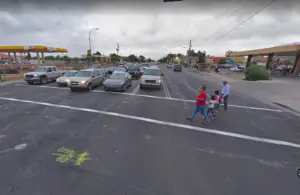
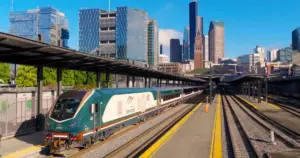
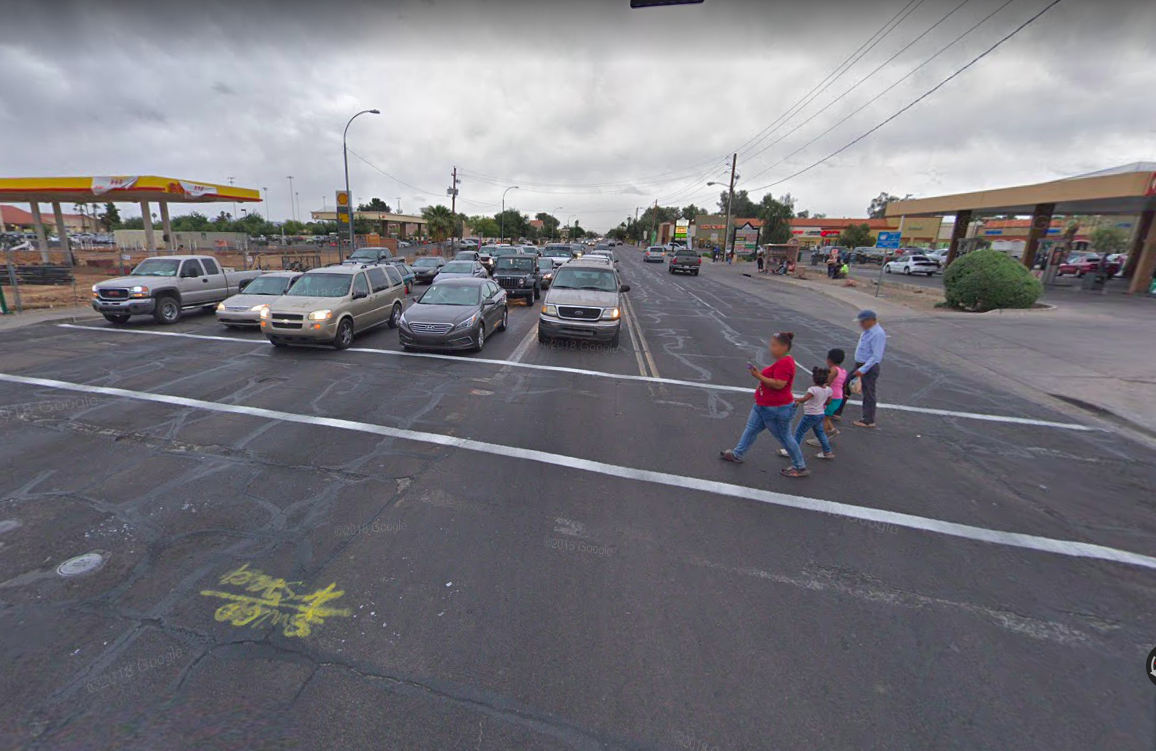
A primary visual and engineering culprit in the American safety crisis is the stroad. As illustrated by decades of urban planning critiques and documented urban environments (such as those in Phoenix, Arizona), stroads encourage high-speed vehicular movement while permitting frequent commercial access points, driveway cuts, and unmanaged pedestrian crossings.
[Traditional Highway] ---> High Speed, Controlled Access
[Local Street]       ---> Low Speed, High Access
[The "Stroad"]       ---> High Speed + High Access = Extreme Danger for Pedestrians
When federal transportation dollars are funneled into maintaining and expanding these hazardous typologies without safety prerequisites, the federal government inadvertently subsidizes public health hazards.
The Economic Argument for Performance-Based Funding
Proponents of tying funding to safety metrics emphasize that traffic violence is not merely a moral tragedy, but an enormous economic drain. Medical costs, emergency response expenditures, lost productivity, and property damage cost the U.S. economy hundreds of billions of dollars annually.

By restructuring federal grants to reward jurisdictions that achieve measurable reductions in crashes, Congress can incentivize cost-effective, life-saving interventions—such as road diets, protected bike lanes, narrower vehicle lanes, pedestrian refuge islands, and lowered speed limits—while penalizing agencies that continue to prioritize vehicle throughput at the expense of human lives.
Official Statements and Institutional Perspectives
The call for structural reform has drawn sharp lines between local urban advocates, state transportation bureaucracies, and federal policy makers.
Transportation for America’s Position
In statements surrounding their September 2026 policy rollout, representatives for Transportation for America were unequivocal: the current system of federal transportation funding creates perverse incentives.
"For decades, we have rewarded state agencies for moving cars faster, regardless of the body count left in their wake," an advocacy spokesperson noted. "Congress must fundamentally re-engineer federal transit and highway programs. Funding should not be a guaranteed entitlement; it must be tied directly to transparent, verifiable, and measurable improvements in roadway safety. If a state agency cannot prove it is making its streets safer for human beings, it should not receive federal blank checks for highway expansions."
The State DOT Dilemma
Historically, state departments of transportation have pushed back against stringent federal performance metrics, citing logistical hurdles, varying local contexts, and administrative burdens. Many state engineers argue that federal mandates interfere with local engineering judgment and that factors influencing traffic safety—such as vehicle size, driver behavior, and substance use—are outside the direct control of road designers.
However, reform advocates counter that engineering is the primary variable within a state DOT’s control. Street design dictates driver behavior; wide lanes invite speeding, while narrow, tree-lined, traffic-calmed streets naturally induce safer driving speeds.
Future Outlook: Rebuilding the American Right-of-Way
As the movement to end car dependency gains traction, the debate over federal transportation funding serves as a proxy for a much larger question: What kind of communities do we want to build?

The Road Ahead in Congress
Legislation incorporating performance-based safety metrics will face intense lobbying from entrenched highway construction interests, auto lobbies, and rural lawmakers who fear the diversion of funds away from traditional car-centric infrastructure.
Nevertheless, the mounting human and financial cost of traffic violence, combined with growing grassroots pressure from organizations like Streetsblog USA and Transportation for America, has shifted the political calculus. Lawmakers from both sides of the aisle are increasingly recognizing that pouring billions into deteriorating, dangerous roadways without accountability is fiscally irresponsible and socially unsustainable.
Transforming Mobility and Community Design
If Congress ultimately heeds the call to tie funding to safety outcomes, the transformation of American towns and cities could be swift and profound:
- Prioritizing Complete Streets: State and local agencies would be legally and financially compelled to adopt "Complete Streets" policies, ensuring that every roadway project accommodates people of all ages and abilities, whether walking, rolling, biking, or taking transit.
- Data-Driven Accountability: Funding allocations would rely on transparent, real-time safety data rather than political patronage or outdated traffic-forecasting models that prioritize reducing driver delay over saving lives.
- A Cultural Shift: Ultimately, conditioning federal dollars on safety performance signals a fundamental cultural shift—acknowledging that public streets are public spaces meant to connect communities, not high-speed raceways designed to divide them.
As the policy debate evolves through late 2026 and beyond, all eyes remain on Capitol Hill to see whether federal lawmakers will muster the political will to align transportation funding with the most fundamental metric of all: human survival.