









Executive Overview
Montana, a solidly red state celebrated for its rugged landscapes and self-reliant political ethos, is preparing to step into uncharted constitutional waters. Driven by deep public frustration with the deluge of unaccountable political spending, the state is advancing an ambitious ballot initiative for 2026 designed to directly challenge the U.S. Supreme Court’s landmark 2010 Citizens United v. FEC ruling. If passed, the measure would explicitly revoke the state corporate charter of any organization failing to comply with strict political expenditure regulations, leveraging the historic premise that states hold the absolute right to define and regulate corporations operating within their borders.
This move is not occurring in a vacuum. It forms part of a broader, quietly escalating national phenomenon known as "soft secession" or "uncooperative federalism." Across the political spectrum, state governments are increasingly flexing their jurisdictional muscles to bypass, dilute, or flatly refuse cooperation with federal policies and judicial mandates they deem destructive to their citizens’ well-being. From historical precedents like antebellum personal liberty laws to modern marijuana decriminalization and state-level climate alliances, jurisdictions are adopting an asymmetric warfare approach to governance.
By weaponizing the traditional mechanics of state corporate chartering against dark money, Montana’s proposed ballot initiative has unified an unlikely coalition of reformers, independents, and even veteran conservatives. Yet, the path forward is fraught with intense legal hurdles. As federal courts continue to scrutinize state-level interventions—such as recent challenges to environmental superfund laws in New York and Vermont—Montana’s initiative will serve as a definitive litmus test for whether state sovereignty can effectively pierce the shield of federal corporate jurisprudence.

Detailed Chronology
Understanding the trajectory of Montana’s anti-dark money movement requires tracing the legal and political milestones that have shaped both state-level resistance and the broader national conversation on federalism.
- January 2010 (The Watershed Moment): The U.S. Supreme Court issues its 5-4 ruling in Citizens United v. Federal Election Commission, striking down provisions of the Bipartisan Campaign Reform Act and determining that corporate funding of independent political broadcasts in elections cannot be limited under the First Amendment. This ruling unleashes billions of dollars in anonymous "dark money" into American political campaigns.
- The Ensuing Years: Political spending grows exponentially, fueling an onslaught of opaque, unidentifiable attack ads that saturate local and national media markets. Public dissatisfaction climbs steadily across the political aisle.
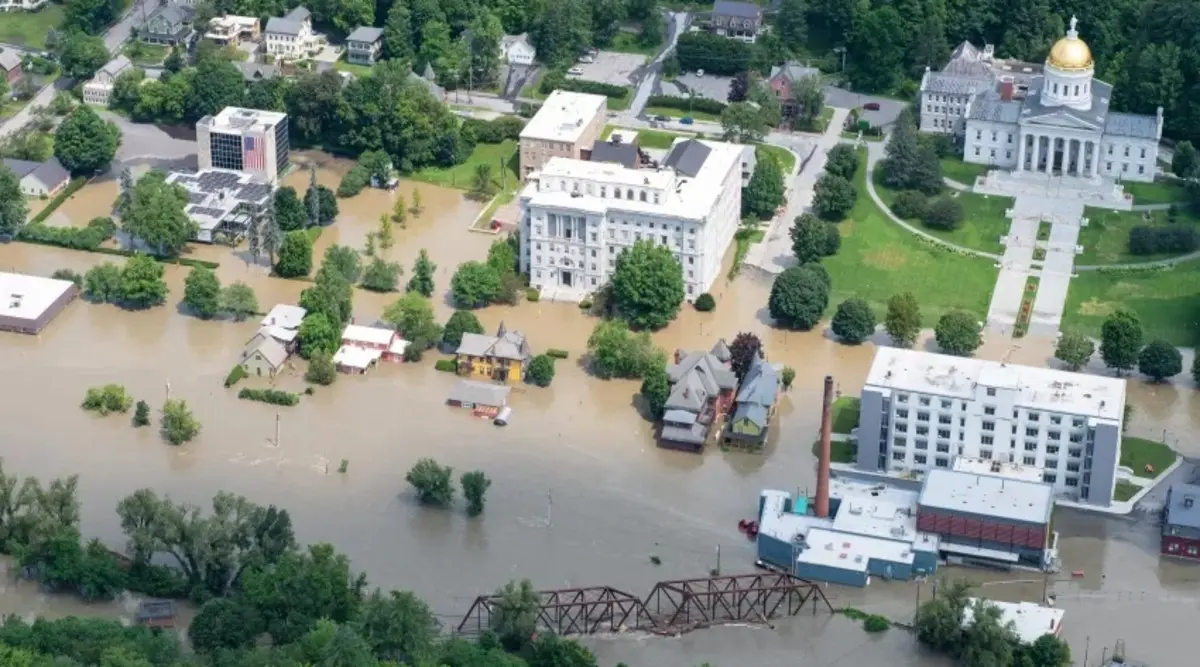
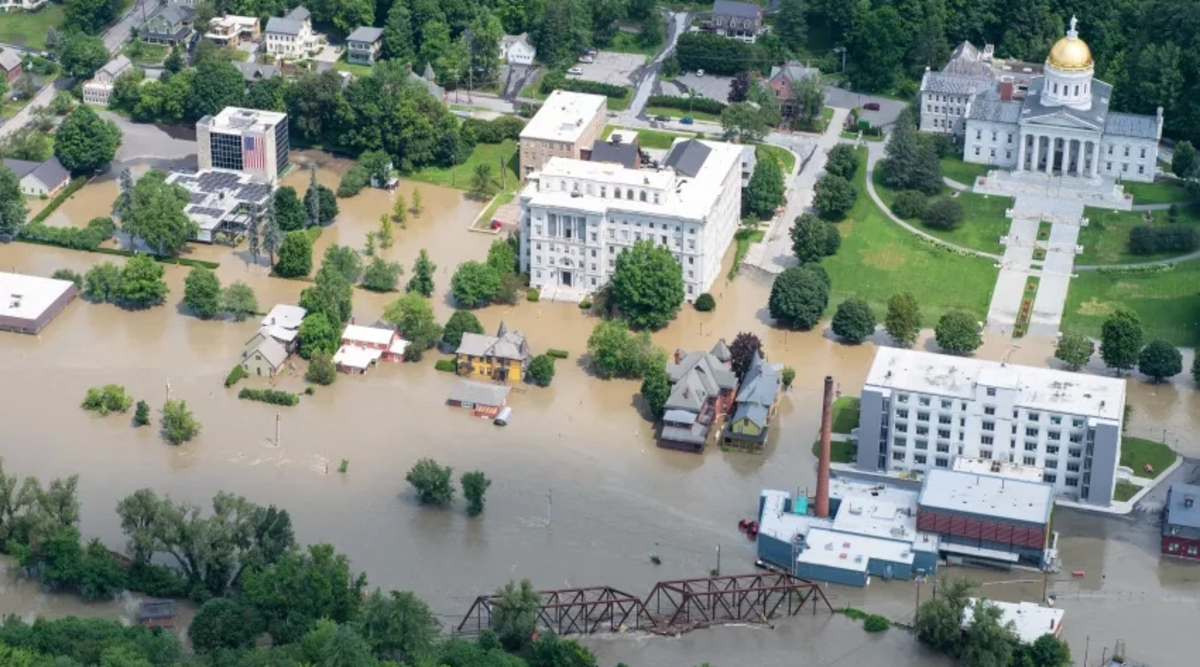
- July 2023: A Vermont National Guard helicopter surveys severe flood damage in the state’s capital, Montpelier, highlighting the escalating and costly human and infrastructural toll of a rapidly changing global climate—a crisis increasingly exacerbated by corporate lobbying and political inaction.
- Late 2024 / 2025: Grassroots organizations mobilize across Montana. The Transparent Election Initiative, founded by lifelong resident Jeff Mangan, begins gathering momentum for a radical legislative maneuver to challenge Citizens United at the ballot box. Concurrently, legal scholars and policy analysts begin identifying a parallel trend of "uncooperative federalism" and "soft secession" taking root in states nationwide.
- November 2025: A comprehensive poll conducted by the pro-democracy group Issue One reveals staggering popular backing for Montana’s proposed ballot initiative, finding that 74 percent of voters—including robust majorities of Republicans and Independents—support the measure.
- Late 2025 / Early 2026: Federal courts aggressively assert federal supremacy elsewhere, striking down New York’s climate superfund law and launching attacks on a similar environmental accountability framework in Vermont. Despite these judicial roadblocks, bipartisan figures in Montana—including former Governor Marc Racicot and former U.S. Senator Jon Tester—cross party lines to publicly advocate for the anti-dark money initiative.
- September 2026: Prominent media outlets, including The New York Times, spotlight the Montana initiative as a pioneering legal strategy. Legal scholars debate the initiative’s viability, setting the stage for a historic showdown ahead of the 2026 midterms.
Supporting Context & Metrics
The push to dismantle corporate political spending in Montana is anchored in concrete data, historical legal philosophy, and an explicit interpretation of the state’s foundational documents.
Constitutional Roots and Populist Pragmatism
Montana’s political identity has long defied simple national stereotypes. While solidly conservative in many respects, its populace remains profoundly pragmatic. This ethos is codified in Section I of Article IX of the Montana Constitution, which outlines the state’s duty to maintain and improve a clean and healthful environment for present and future generations. While a small cadre of wealthy resource barons has historically resisted such protections, the rank-and-file citizenry recognizes environmental stewardship and democratic integrity as fundamental prerequisites for survival.
This pragmatic streak is the bedrock of the 2026 ballot initiative. According to data compiled by Issue One:

- 74% Voter Approval: Overwhelming majorities of Montanans—spanning self-identified Republicans, Democrats, and Independents—express direct support for the ballot initiative.
- The Dark Money Flood: Billions of dollars now flow through serpentine networks of opaque political entities, rendering the ultimate source of campaign funding entirely unidentifiable to the average voter.
The Mechanics of "Soft Secession"
The theoretical foundation supporting Montana’s strategy draws heavily from the concept of "uncooperative federalism," a term coined by legal scholars Jessica Bulman-Pozen and Heather Gerken. As explored by Substack analyst Christopher Armitage, soft secession operates on the premise that states are not administrative appendages of the federal government.
This principle echoes the conservative judicial philosophy of the late Supreme Court Justice Antonin Scalia. In the landmark case Printz v. United States (1997), Scalia wrote that the federal government "may neither issue directives requiring the States to address particular problems, nor command the States’ officers … to administer or enforce a federal regulatory program."
Historically, this posture has manifested in several ways:
- Antebellum Personal Liberty Laws: Northern states passed legislation that rendered the federal Fugitive Slave Act of 1850 virtually unenforceable, refusing to deploy state resources to capture escaping slaves.
- State Marijuana Legalization: By establishing state-licensed dispensaries and decriminalizing cannabis, states rendered federal prohibition largely a dead letter because the Drug Enforcement Administration (DEA) lacked the state-level police infrastructure to execute wholesale arrests.
- Climate and Voting Rights Coalitions: Twenty-four governors comprising the U.S. Climate Alliance represent roughly 60 percent of the national economy, while the eleven-state Regional Greenhouse Gas Initiative has successfully cut power-plant emissions by more than half. Furthermore, ten states have enacted independent voting-rights acts to fill the regulatory void left by weakened federal statutes.
Official Statements and Expert Perspectives
The intersection of state autonomy, corporate personhood, and campaign finance reform has elicited sharp commentary from legal scholars, former politicians, and democracy advocates.
Jeff Mangan, Founder and President of the Transparent Election Initiative:
"I haven’t talked to a person yet that doesn’t think that there’s too much money in politics. The money moves around through these serpentine collections of entities and groups, then it becomes unidentifiable."
Marc Racicot, Former Governor of Montana (1993–2001) and Former RNC Chair:
Describing the contemporary political system as having become "rancid" in the wake of Citizens United, Racicot noted that the proliferation of anonymous attack ads has severely degraded public discourse and obscured political accountability.
Justin Levitt, Law Professor at Loyola Marymount University:
Describing the initiative as "creative lawyering," Levitt acknowledged the strategic novelty of redefining corporate personhood at the state level. However, he also issued a pragmatic caveat regarding the limits of such legislation: "This wouldn’t change a thing about Elon Musk’s political spending."
Tom Moore, Senior Fellow for Democracy and Government at the Center for American Progress:
Highlighting the universal disdain for anonymous political spending, Moore stated bluntly, "Everybody hates dark money," emphasizing the broad, cross-demographic appeal of expenditure restrictions.
Future Outlook
As Montana prepares for its historic 2026 ballot initiative, the implications extend far beyond Big Sky Country. The central legal question is whether a state possesses the inherent authority to revoke the corporate charter of any entity that refuses to abide by local campaign finance regulations, thereby bypassing the sweeping protections granted by Citizens United.
Skeptics, including corporate defense attorneys and state business leaders, argue with absolute confidence that the Supremacy Clause of the U.S. Constitution will render the initiative null and void. They point to recent judicial interventions—such as the federal judge’s ruling striking down New York’s climate superfund law and ongoing federal challenges to Vermont’s parallel environmental legislation—as evidence that federal preemption remains a formidable shield for corporate interests.
Conversely, proponents view these setbacks not as permanent defeats, but as inevitable friction points in a necessary constitutional struggle. By utilizing the state’s traditional authority over corporate charters—treating corporations strictly as "artificial persons" devoid of absolute free speech rights—supporters believe they have engineered a legal mechanism capable of surviving judicial scrutiny.
If Montana successfully implements and defends this initiative, it could establish a transformative blueprint for other states seeking to curb the influence of dark money. It would operationalize the principles of uncooperative federalism, demonstrating that when the federal government and judicial bodies fail to safeguard democratic integrity, regional jurisdictions can—and will—erect their own defensive walls. Ultimately, Montana’s gamble represents a bold assertion that state sovereignty is not a one-way street, signaling that the future of American democracy may well be forged through deliberate, peaceful, and localized resistance.