








Executive Overview
The Marine Accident Investigation Branch (MAIB) has officially published its comprehensive accident investigation report regarding the tragic marine incident involving the United Kingdom-registered creel fishing vessel Sea Eagle. The vessel was discovered unmanned and aground on the coastline of Inverbervie, Scotland, on 20 December 2025, setting off a massive multi-agency search and rescue operation that ultimately ended in profound sorrow.
The skipper, who was operating the commercial fishing vessel entirely on his own, was not located during the immediate or subsequent search operations. Authorities have concluded that he is presumed to have drowned after entering the water while the vessel was underway.
This formal investigation sheds critical light on the severe, inherent risks associated with single-handed commercial fishing—a cornerstone of coastal economies throughout the British Isles. While investigators were unable to establish the precise mechanical or physical sequence of events that precipitated the skipper’s entry into the sea, physical evidence recovered from the scene strongly suggested that he was actively engaged in hauling and shooting two strings of creels at the time of the accident. This demanding operational workload significantly elevated the likelihood of a dangerous physical interaction with heavy fishing gear, a recognized catalyst for man-overboard (MOB) tragedies within the industry.
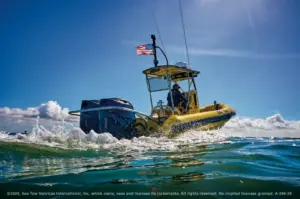
Significantly, the Sea Eagle report underscores the perilous realities of solo maritime operations, focusing in particular on the near-insurmountable challenges of self-recovery when a fisherman enters the water unobserved and without immediate assistance. Despite the profound grief surrounding this incident, the MAIB has noted that the fundamental safety lessons and operational hazards highlighted by the Sea Eagle disaster are already well-documented across decades of maritime safety literature. Consequently, no novel safety recommendations have been issued in this report; instead, the regulatory body emphasizes that existing, comprehensive guidance remains wholly applicable and vital to saving lives at sea.
Detailed Chronology of Events
The Final Voyage and Operational Context
On the morning of 20 December 2025, the Sea Eagle, a dedicated creel fishing vessel registered in the United Kingdom, set out to sea from its habitual port. The skipper, an experienced hand familiar with the treacherous local waters and localized weather patterns off the Scottish coast, was operating alone. Single-handed fishing is an economic necessity for many small-scale operators in the sector, yet it strips away the immediate safety net provided by a multi-person crew—a crew capable of executing an immediate man-overboard recovery maneuver, raising a distress call, or maintaining a continuous lookout.
The primary objective of the day’s outing was the tending of static fishing gear, specifically two distinct strings of creels deployed along the seabed. Creel fishing involves dropping baited traps connected by heavy groundlines. Hauling these lines requires sustained physical exertion, often in close proximity to rapidly moving ropes, heavy buoys, and mechanical haulers.
The Grounding and Discovery
As the day progressed, the unmanned Sea Eagle drifted toward the shore before running hard aground on the sandy and rocky expanse of Inverbervie beach in Aberdeenshire, Scotland. The sight of an uncrewed commercial vessel stranded and listing on the coastline immediately alerted local residents and maritime authorities, who recognized the ominous implications of an abandoned ship under power or adrift.
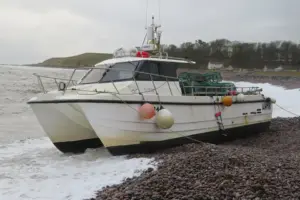
At the time of its grounding, the vessel’s engine was either still engaged or had been running immediately prior to the impact, propelling the abandoned hull onto the beach. The lack of any human presence aboard galvanized local emergency services into action, triggering an urgent maritime response to locate anyone who may have been cast into the freezing coastal waters.
The Search and Rescue Operation
Upon notification of the stranded vessel, a coordinated and extensive search and rescue (SAR) operation was instantly deployed. The rescue effort saw the mobilization of multiple assets across air, sea, and land domains:
- Her Majesty’s Coastguard: Deployed multiple coastal rescue teams to scour the rugged shoreline, cliffs, and tidal zones surrounding Inverbervie.
- RNLI Lifeboats: All-weather and inshore lifeboats from nearby stations launched into the area, conducting exhaustive grid searches of the coastal waters amidst challenging sea states and winter weather conditions.
- Search and Rescue Helicopters: Equipped with thermal imaging and advanced optical sensors, airborne assets swept the marine environment in an effort to locate a heat signature or a person in the water.
- Vessel Traffic and Local Craft: Nearby commercial and recreational vessels were alerted via urgency broadcasts to maintain a sharp lookout.
Despite a comprehensive, multi-hour saturation search covering vast marine and terrestrial perimeters, no trace of the skipper was found. As daylight faded and environmental conditions restricted further viable search parameters, the rescue operation was eventually suspended. The cumulative weight of evidence—the unmanned vessel, the open stretch of cold Scottish waters, and the absence of any survival indicators—led authorities to formally conclude that the skipper had entered the sea while the vessel was underway and had tragically drowned.
The Forensic Investigation
Following the suspension of the rescue effort, investigators from the Marine Accident Investigation Branch assumed jurisdiction over the incident. Their mandate was to reconstruct the final moments of the voyage and determine the root causes and contributing factors that led to the vessel becoming unmanned.
Forensic examinations of the Sea Eagle yielded critical clues regarding the sequence of events. Investigators analyzed the deck layout, the configuration of the hauling machinery, and the state of the fishing gear. Crucially, physical evidence confirmed that the skipper had been working two strings of creels. The state of the gear indicated that hauling operations had either just been completed or were actively underway when the incident occurred.
However, in the absence of eyewitnesses, closed-circuit television (CCTV) footage, or electronic tracking data detailing the exact moments on deck, investigators could not definitively ascertain the precise mechanical or physical trigger that caused the skipper to fall overboard. Whether he became entangled in a fast-running bight of rope, lost his footing on a wet and rolling deck, or was struck by shifting gear remains unconfirmed. What remains indisputable, however, is that the demanding physical environment of a solo working deck created an intolerable risk profile that ultimately ended in disaster.
Supporting Context & Metrics: The Perils of Lone Fishing
The Structural Vulnerability of Single-Handed Operations
The tragedy of the Sea Eagle is far from an isolated incident within the annals of commercial maritime safety; rather, it reflects a persistent and systemic vulnerability inherent in the global and domestic fishing sector. Fishing consistently ranks among the most hazardous occupations in the world, and within this industry, single-handed operators face exponentially higher risks of fatal outcomes compared to those working aboard fully manned vessels.
When a fisherman operates alone, the margin for error is effectively zero. A momentary lapse in concentration, an unexpected surge of a wave against the hull, or a sudden snag in the fishing gear can instantly transition a routine task into a life-or-death emergency. Without a second person on board to observe the accident, halt the vessel’s progress, or immediately deploy recovery equipment, a man-overboard event transforms almost instantaneously from a manageable crisis into a fatal inevitability.

The Mechanics of Gear Interaction and Entanglement
The MAIB’s findings in the Sea Eagle investigation emphasize the lethal hazards associated with handling multiple strings of creels simultaneously. Creel fishing is labor-intensive, requiring operators to manually or mechanically haul heavy wire-and-net traps from the seabed. As the vessel drifts or steams slowly to maintain position, groundlines under immense tension pass through haulers and across decks.
Key mechanical and physical hazards identified in such operations include:
- Rope Entanglement: Fast-moving ropes under tension can snare clothing, limbs, or footwear, pulling an operator overboard in fractions of a second before they can react to cut or release the line.
- Deck Dynamics: Wet, greasy, and movement-restricted working decks increase the incidence of slips, trips, and falls—particularly in sub-optimal weather conditions common to Scottish coastal waters.
- Lack of Self-Recovery Mechanisms: Even if a lone fisherman manages to survive the initial fall into cold water, recovering oneself back onto an underway or drifting vessel without assistance is exceptionally difficult. High freeboards, cold-water shock induced muscle incapacitation, heavy protective clothing, and the absence of boarding ladders or remote engine-kill switches create an insurmountable barrier to self-preservation.
Statistical Parallels in Maritime Safety
Historical data compiled by the MAIB and international maritime safety organizations demonstrates a recurring pattern where lone fishermen are lost at sea without witnesses. In many of these historical cases, vessels are subsequently recovered drifting or grounded, mirroring the exact scenario witnessed at Inverbervie beach.
Despite decades of safety campaigns, the economic pressures driving small-scale fishermen to work single-handedly remain powerful. Many operators feel financially compelled to forego the additional crew member cost, inadvertently accepting an asymmetric risk profile where an untethered slip means certain death.
Official Statements and Regulatory Perspective
The MAIB’s Analytical Stance
In its formal report, the Marine Accident Investigation Branch addressed the recurrent nature of these tragedies. The decision by the MAIB to issue no new recommendations in the wake of the Sea Eagle investigation is a calculated regulatory judgment, grounded in the premise that the safety issues surrounding lone fishing and man-overboard risks are already exhaustively understood.
An MAIB spokesperson noted that the causal factors—such as the dangers of gear entanglement, the absence of crew to raise alarms, and the near-impossibility of self-recovery—have been analyzed in numerous previous safety bulletins and accident reports. Introducing new legislative recommendations would not change the fundamental physical realities of solo fishing. Instead, the existing guidance published by the Maritime and Coastguard Agency (MCA), safety bodies, and fishing federations remains entirely comprehensive and directly applicable to every commercial fisherman operating in UK waters.
Existing Guidance and Compliance
The regulatory framework governing commercial fishing vessels under 15 meters places a heavy emphasis on personal responsibility, risk assessments, and the utilization of specialized safety equipment. Key pillars of this existing guidance include:
- Personal Flotation Devices (PFDs): The mandatory or strongly advised wearing of inherently buoyant PFDs or automatic lifejackets equipped with Personal Locator Beacons (PLBs). A PLB can transmit an immediate distress signal with GPS coordinates directly to coastguard authorities the moment a PFD is immersed in water.
- Engine Kill Switches / Man-Overboard Alarms: The adoption of wireless tether systems or proximity-based engine cut-offs that automatically stop the vessel’s propulsion if the skipper moves beyond a specified distance from the helm. This simple technological intervention prevents the vessel from sailing away from a fallen crew member and stranding itself ashore.
- Deck Safety Protocols: Recommendations to establish physical barriers, maintain clear and uncluttered working decks, and avoid working multiple heavy gear strings simultaneously without mechanical fail-safes.
- Vessel Tracking and Reporting: The implementation of regular check-in protocols with shore-based contacts, ensuring that if a vessel fails to return by a specified time, an immediate search can be initiated while the search area is still tightly defined.
Future Outlook: Industry Implications and Safety Culture
Fostering a Proactive Safety Culture
The loss of the Sea Eagle serves as a stark, sobering reminder of the unforgiving nature of the marine environment. While regulatory bodies like the MAIB can investigate, document, and educate, the ultimate responsibility for mitigating these profound risks rests within the commercial fishing community itself.
Industry stakeholders, fishermen’s associations, and safety charities are increasingly focusing on shifting the cultural mindset within small-scale and single-handed fisheries. Historically, a rugged individualism has characterized the fishing sector, often leading to a dismissive attitude toward personal safety equipment—such as lifejackets being viewed as cumbersome or restrictive during heavy manual labor.
However, modern safety campaigns are successfully reframing PFDs and electronic tracking devices not as burdensome regulatory impositions, but as essential tools of survival. The widespread adoption of lightweight, automatic lifejackets combined with integrated PLBs represents the single most effective technological defense against fatalities resulting from unexpected man-overboard events.
Technological Innovations on the Horizon
Looking forward, the mitigation of solo fishing risks will increasingly rely on the integration of accessible, affordable marine technology. As electronic sensors, automated vessel identification systems (AIS), and wireless proximity-detection devices drop in price and improve in reliability, their integration into smaller vessels is becoming more feasible.
Future safety initiatives within the UK and international fishing fleets are expected to concentrate on:
- Mandatory Remote Engine Shut-Offs: Pushing for industry standards that require automated engine-stop mechanisms on all single-handed commercial vessels to prevent runaway ships.
- Enhanced Training and Simulation: Providing practical, hands-on safety training for lone operators, focusing heavily on self-rescue techniques, emergency communication, and the rapid deployment of survival gear.
- Community-Based Monitoring: Encouraging informal buddy systems or automated shore-side check-in networks among independent coastal fishermen to drastically reduce the response window in the event of an unobserved accident.
Conclusion
The tragic grounding of the Sea Eagle at Inverbervie is a profound loss for the maritime community and a devastating blow to the family and colleagues of the skipper. While the formal MAIB investigation has drawn to a close without new statutory recommendations, the enduring legacy of the report lies in its stark reiteration of well-known truths.
As commercial fishermen continue to harvest the seas around the British Isles, the lessons of the Sea Eagle demand unyielding vigilance, the rigorous adoption of existing safety guidance, and a collective industry commitment to ensuring that no fisherman ever has to face the perils of the deep alone without the vital safety nets modern technology and protocol can provide.