





Executive Overview
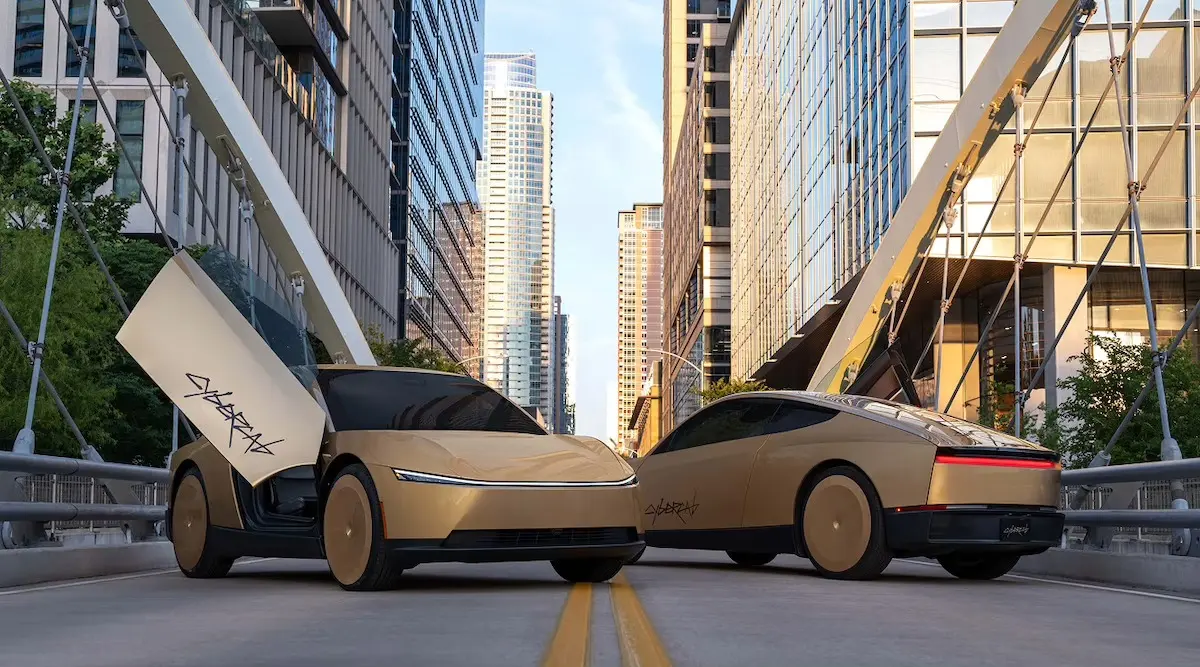
The long-awaited rollout of Tesla’s autonomous Cybercab in Austin, Texas, was designed to mark a monumental leap forward in commercial robotaxi deployment. Instead, the September 3 debut devolved into a complex narrative of corporate absences, investor hesitation, bizarre vehicle navigation glitches, and an immediate regulatory crackdown.
Headlining the fallout is a rigorous Audit Query (AQ) launched by the U.S. Department of Transportation’s National Highway Traffic Safety Administration (NHTSA). Armed with a sweeping "Special Order," federal regulators have issued a demand for 21 specific categories of technical information regarding how Tesla self-certified the Cybercab under Federal Motor Vehicle Safety Standards (FMVSS).
This regulatory intervention hits at a fragile time for both Tesla and the broader U.S. electric vehicle (EV) market. While Tesla continues to dominate domestic EV sales, shifting macroeconomic tides, volatile global energy markets influenced by geopolitical conflicts, and changing federal policies have placed unprecedented scrutiny on autonomous vehicle (AV) safety. As Tesla races to prove its technological readiness, the company faces a high-stakes September 30 deadline to answer federal regulators under oath—a reckoning that could redefine the future of unsupervised self-driving in America.
Detailed Chronology of a Controversial Rollout
The September 3 Premiere in Austin
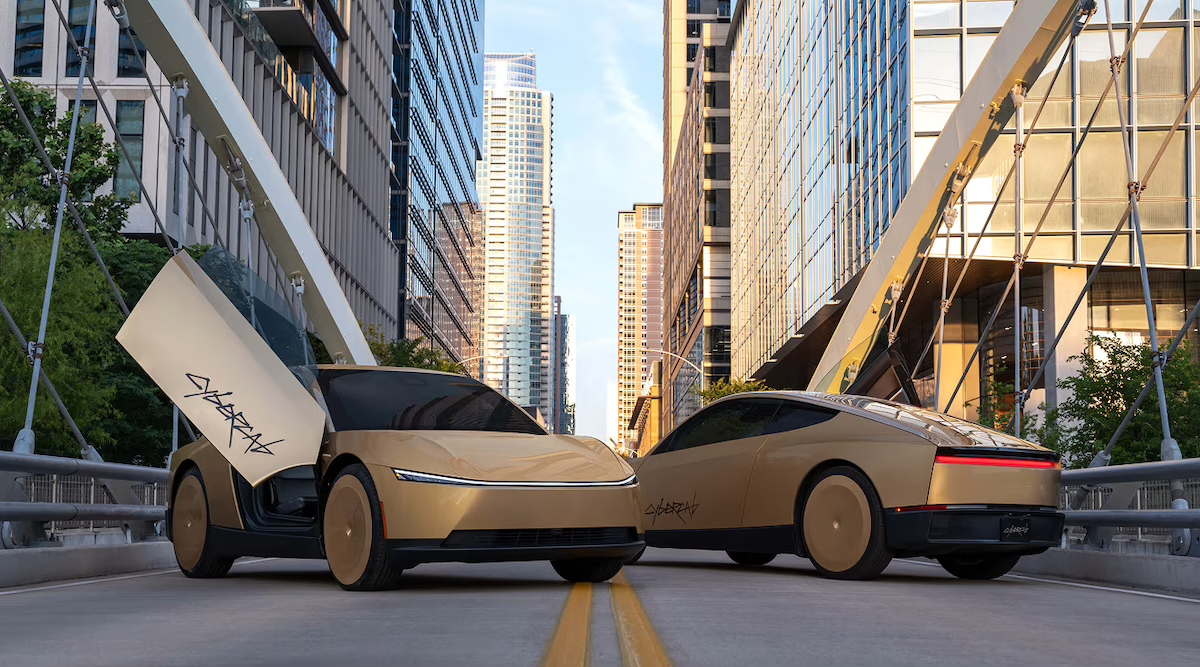
The rollout event on September 3, 2025, in Austin, Texas, was supposed to be a triumphant showcase of Tesla’s pure robotaxi vision—a vehicle constructed explicitly without a steering wheel, pedals, or traditional human driver controls. However, the event’s atmosphere was instantly subdued by a glaring omission: CEO Elon Musk was notably absent from the proceedings.
Investors reacted tepidly to the unveiling. Tesla’s stock slumped in the days immediately following the event, reflecting growing weariness over delayed timelines, vague technical specifications, and the sheer regulatory hurdles facing unsupervised autonomous fleets. Although the stock has experienced a modest market rebound since, the underlying uncertainties have only deepened.
Navigational Nightmares and Public Stunts
Shortly after the launch, real-world testing of the Cybercab revealed severe operational hiccups. In one widely circulated incident documented on social media platform Reddit, a passenger attempting a routine 10-minute trip from a local retail center to a nearby neighborhood found themselves trapped as the vehicle bypassed the direct route. Opting for an inexplicable, 70-minute southern detour through East Austin, the vehicle underscored ongoing concerns that current autonomous routing algorithms are not yet fully optimized for complex, real-world transit environments.
Compounding these reliability issues, the Austin rollout attracted a wave of local pranksters. Videos surfaced online showing individuals intentionally jumping in front of moving Cybercabs to "test" or "prove" the vehicle’s collision-avoidance capabilities. These viral stunts not only highlighted risks to pedestrian safety but also intensified scrutiny from municipal authorities and federal watchdogs regarding how the autonomous fleets handle erratic human behavior.
Official Scrutiny: NHTSA’s 21-Point Interrogation
The Audit Query and Special Order
Just one day after the Austin debut, the NHTSA intervened to signal that the Cybercab was far from ready for unfettered public deployment. The agency announced an official Audit Query (AQ) to investigate Tesla’s self-certification process. Under U.S. law, automotive manufacturers are permitted to self-certify that their vehicles comply with all applicable Federal Motor Vehicle Safety Standards (FMVSS). However, NHTSA’s Audit Query aims to rigorously evaluate the technical data and engineering processes Tesla relied upon to clear a vehicle completely devoid of manual driving controls.
To formalize the investigation, NHTSA issued a legally binding Special Order addressed directly to Tesla Head of Litigation Brian Jazeri and Associate General Counsel Eric Williams. The order mandates that Tesla submit exhaustive documentation under oath by September 30.
Parsing the 21 Demands: Hidden Controls and Turn Signals
The Special Order outlines 21 explicit requests for information, several of which target the core engineering claims made during the Austin rollout.
- The Manual Control Paradox (Requests #5 and #6): While Tesla markets the Cybercab as a pure, steering-wheel-free robotaxi, prominent automotive publications like MotorTrend have reported that the vehicles feature a "secret" virtual joystick or temporary manual overrides. NHTSA’s Request #5 demands confirmation on whether the subject vehicles are indeed capable of being operated by a human driver using temporarily attached controls. Request #6 goes a step further, asking whether these temporary controls formed any part of Tesla’s basis for certifying compliance with FMVSS safety standards.
- The Turn Signal Compliance Question (Request #13): NHTSA appears to have caught Tesla in a potential contradiction regarding the physical layout of the Cybercab. Request #13 explicitly asks whether the vehicles feature a turn signal operating unit that self-cancels via steering wheel rotation, alongside a manually operated control unit. If the answer is negative, Tesla must provide a detailed engineering breakdown explaining how the vehicle meets the strict safety mandates of FMVSS No. 108 without standard physical switchgear.
The irony of this federal intervention has not been lost on industry observers. Elon Musk previously spearheaded sweeping staffing reductions across federal regulatory bodies—including the NHTSA—during his tenure advising the federal budget-cutting "DOGE" initiative. Consequently, questions linger regarding the agency’s enforcement reach, yet this Special Order demonstrates that federal safety regulators retain significant legal teeth.
Supporting Context, Market Metrics, and Geopolitical Pressures
The State of U.S. EV Sales
While the Cybercab rollout dominates technology headlines, Tesla’s broader automotive business operates within a shifting macroeconomic landscape. Tesla remains the undisputed leader in U.S. electric vehicle sales, but the domestic EV market as a whole is experiencing a severe contraction.
According to recent sales data released by Kelley Blue Book (KBB), the broader U.S. EV market suffered a steep downturn compared to previous years. While July-to-August month-over-month figures showed a modest 2.5% increase in new EV sales, year-over-year metrics revealed a staggering 46.9% drop. EVs accounted for a meager 5.7% of total new vehicle sales in the U.S. during August—a figure that pales in comparison to the global marketplace, where EV adoption routinely exceeds 25%.
This domestic slowdown is largely attributed to the abrupt restructuring of federal energy policies and the phasing out of consumer tax incentives, which caused legacy automakers like Ford and General Motors to temporarily pull back on their aggressive electrification roadmaps. In August, Tesla led the EV segment, followed by brands like Toyota, Rivian, Hyundai, and Cadillac. Notably, while Tesla’s monthly sales dipped by 3.8% from July to August, competitors like Toyota saw significant monthly gains, up 34.9% over the same timeframe.

Global Geopolitical Ripples and Oil Markets
Ironically, international conflicts may inadvertently provide a lifeline for American EV adoption. Ongoing geopolitical instability—including escalating tensions in the Middle East and the protracted war in Ukraine—continues to wreak havoc on global fossil fuel infrastructure.
With Ukrainian defensive operations increasingly targeting Russian oil refineries, exports of refined diesel and gasoline from Russia have faced severe disruptions. These pressures on global petroleum supply chains threaten to drive conventional fuel prices upward, potentially renewing consumer interest in the insulation and cost-stability offered by electric mobility.
Furthermore, domestic competition is intensifying regardless of regulatory headwinds. Emerging alternatives, such as Ford’s upcoming Fathom electric pickup truck slated for volume production next year, alongside competitors like Rivian—which recently secured a substantial $4.5 billion loan from the Department of Energy to construct a state-of-the-art manufacturing facility in Georgia—prove that the market for alternative-fuel vehicles is evolving well beyond Tesla’s ecosystem.
Future Outlook
The road ahead for Tesla’s Cybercab is fraught with complex technological, legal, and political obstacles. The immediate horizon hinges on the September 30 deadline, by which Tesla’s legal team must comprehensively answer NHTSA’s 21-point Special Order under oath. If federal investigators determine that the company’s self-certification lacks sufficient engineering justification—particularly concerning the absence of manual controls and standard safety hardware—Tesla could face formal stop-sale orders, mandatory recalls, or forced design overhauls.
Simultaneously, Tesla must address the operational vulnerabilities exposed during its public demonstrations. Navigational anomalies, such as the 70-minute detour through East Austin, and susceptibility to public stunts demonstrate that the Full Self-Driving (FSD) software powering the Cybercab still requires extensive refinement before it can safely manage complex urban environments without human supervision.
Ultimately, the Cybercab launch represents a pivotal stress test for the autonomous vehicle industry. As regulatory scrutiny tightens, consumer patience wanes, and competitors narrow the technological gap, Tesla’s ability to transparently address federal safety concerns will determine whether its robotaxi ambitions can transition from an ambitious promotional stunt into a commercially viable, legally compliant reality.