







Executive Overview
They say you never truly forget your first time on a wild river. For whitewater enthusiasts, that baptism by foam is etched into memory with cinematic clarity. Rowing a first-ever Class IV rapid on the recreational stretch of Oregon’s legendary Rogue River, one veteran guide recalls heading slow and sideways into the run’s most intimidating drop. On impact, the left tube pitched upward to an astonishing 80-degree angle just as the pins-and-clips on the right oar blew out entirely. Miraculously, the boat didn’t flip. Four seasons of professional guiding, over 10,000 river miles, and dozens of Class IV rapids later, that rapid still evokes the electrifying rush of a first encounter—a testament to the enduring allure of river running.
Yet, stepping into the world of whitewater rafting can feel daunting to the uninitiated. While the river environment demands respect and constant vigilance, a rafting trip can range from a serene, flatwater float to a heart-pounding alpine descent depending entirely on the chosen stretch of water. Because no two days on a living river are ever identical, every rafter—from weekend warriors to seasoned expedition leaders—effectively returns to basics every single time they push off the bank.
Mastering this dynamic sport requires a firm grasp of fundamental knowledge: understanding human-powered watercraft configurations, outfitting oneself for immersion rather than ambient air temperature, decoding essential river navigation techniques, and executing airtight logistics. This comprehensive guide breaks down the core tenets of whitewater rafting to set beginners safely on a lifelong journey of river exploration.

Detailed Chronology & Structural Anatomy of Rafting
To understand how to navigate a river, one must first understand the vehicle beneath them. Rafts are fundamentally categorized by how they are propelled and how their hulls are constructed.

Oar Rigs vs. Paddle Rafts
There are two primary methods of human-powered propulsion in whitewater rafting: oars and paddles.
- Oar Rigs: An oar setup utilizes long, weighted rowing oars secured via oarlocks to a rigid metal frame strapped directly to the raft. Typically positioned near the center of the boat, a single rower commands the vessel. Oar rigs are the undisputed kings of multi-day river expeditions because a single operator can efficiently maneuver a heavily laden craft packed with gear, kitchen setups, and overnight equipment.
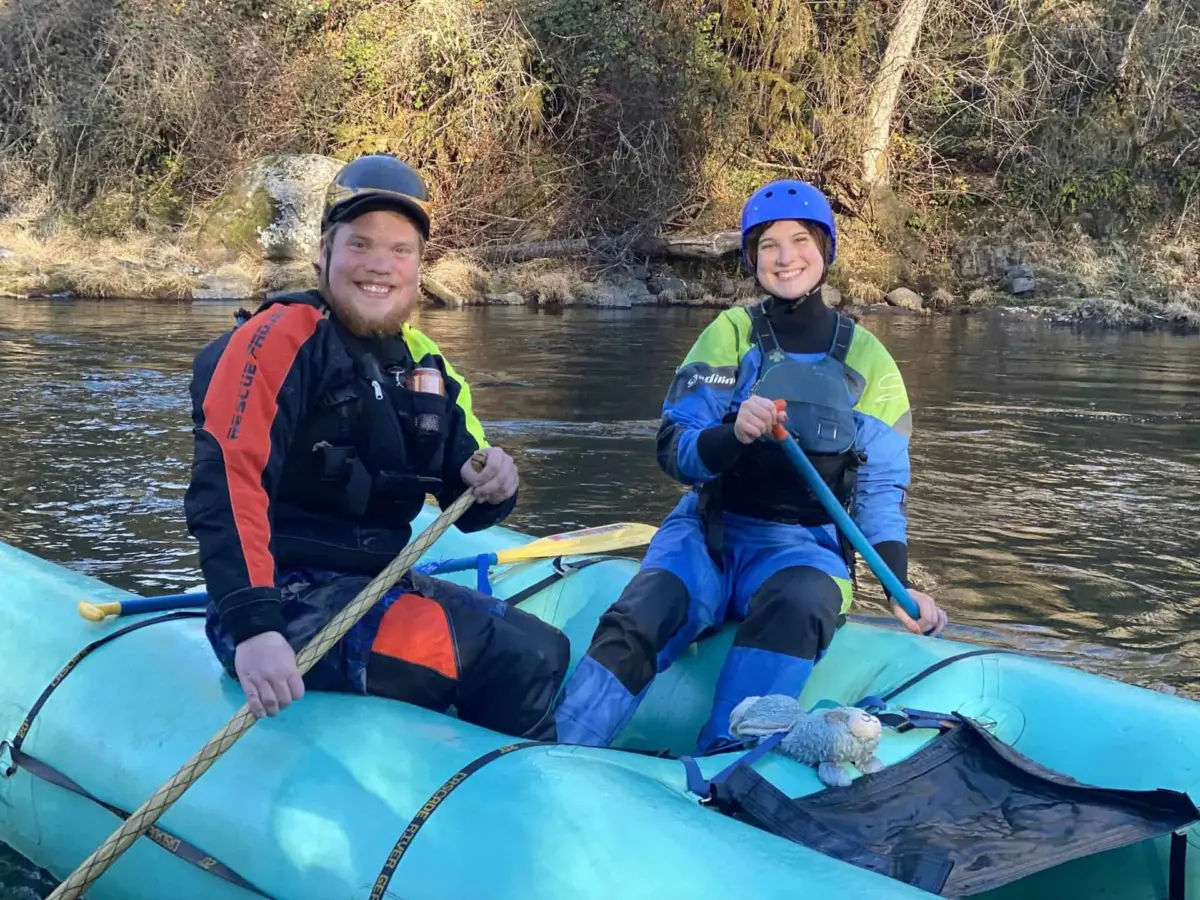
- Paddle Rafts: In contrast, paddle rafts feature no structural frame. Instead, a crew of passengers sits along the outer tubes, using single-bladed paddles—resembling canoe paddles—to propel and steer the boat through synchronized strokes. Hybrid configurations also exist, featuring stern-mounted oars paired with a forward crew of active paddlers. Paddle rafts dominate day trips down technical, high-action runs, allowing every participant to share directly in the physical engagement of the rapid.
The Physics of Control:
Instructors often summarize the mechanical difference between the two systems with an evocative analogy: paddles are like hammers, while oars are sledgehammers. This highlights the immense kinetic damage both tools can inflict if not strictly controlled. A free-wheeling T-grip on a paddle can easily dislodge a passenger’s teeth during an involuntary swim.
Conversely, an independently operating oar carries catastrophic potential. The sheer weight of the oar combined with the hydrodynamic force of water striking the blade can rip the handle straight out of a boater’s grip. Consequences range from the handle sliding through a life jacket to unseat the rower, to the oar launching forward like a baseball bat—multiplying the water’s force by the oar’s weight—and striking a passenger in the back. Beginners are frequently advised to start on paddle rafts to build river sense before transitioning to the complex mechanics of rowing.
Round Rafts and Catarafts
Beyond propulsion, hull designs vary significantly between traditional round rafts and specialized catarafts.
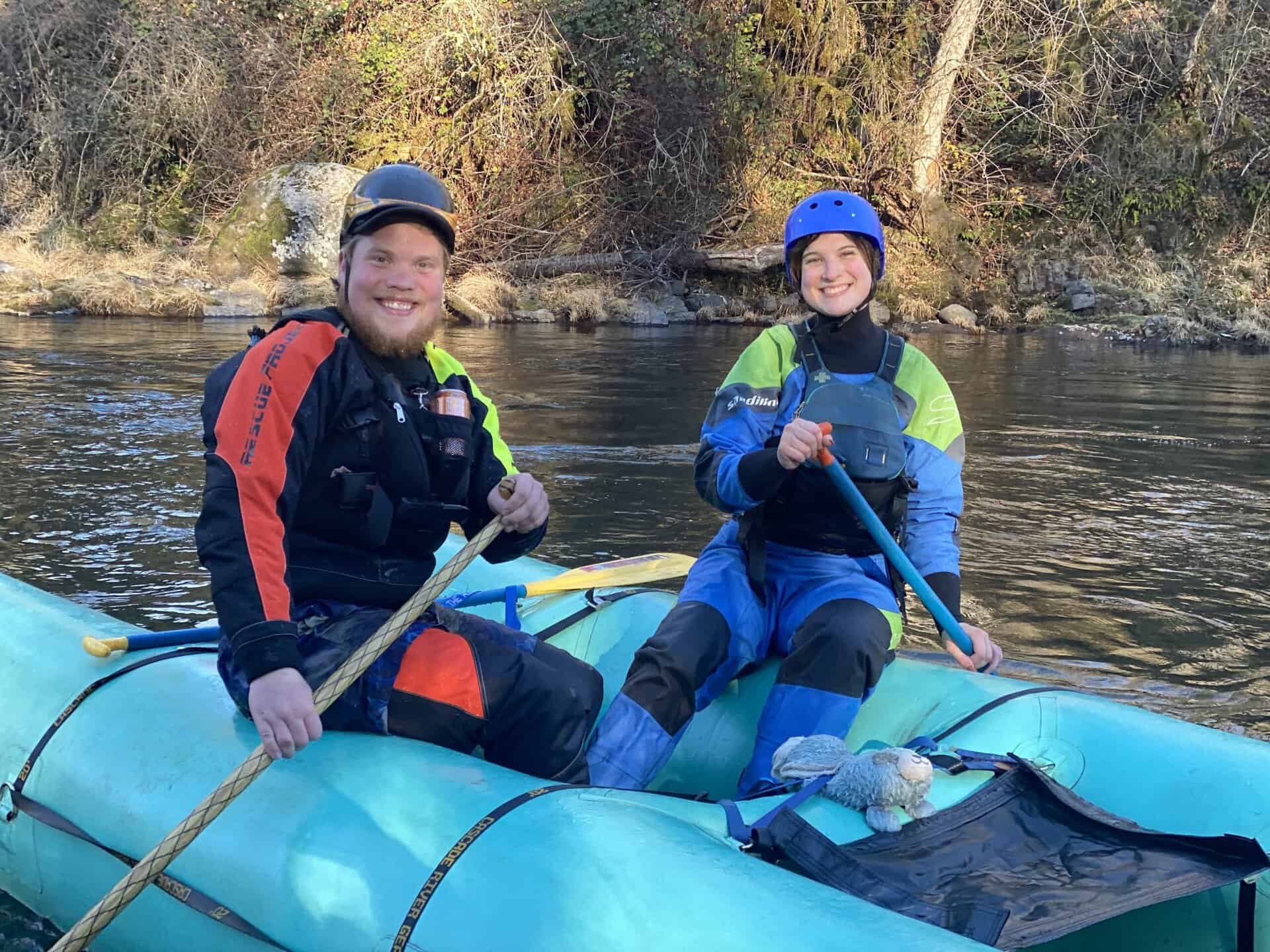
- Round Rafts: Elongated and circular in perimeter, round rafts feature inflated outer tubes, internal inflated thwarts (cross-tubes), and a fabric floor. They offer exceptional versatility, comfortably accommodating mixed parties of passengers and generous amounts of overnight gear.
- Catarafts & Paddlecats: Catarafts consist of two independent, cigar-shaped inflated pontoons held together by a rigid metal oar and gear frame. Because only two narrow pontoons contact the water’s surface, catarafts offer blazing speed and high-performance maneuverability. Paddlecats represent a smaller, frame-less variation featuring inflated thwarts designed specifically for crew-paddled whitewater descents.
Supporting Context & Metrics: Safety, Gear, and Logistics
Entering the whitewater ecosystem requires strict adherence to personal safety protocols and meticulous logistical planning. The margin for error on moving water is razor-thin, making preparation non-negotiable.
The Mandatory Whitewater Uniform
Dressing for a river trip is governed by a singular, immutable rule: Dress for immersion, not for air temperature. Even on a blazing summer afternoon, alpine snowmelt can plunge river temperatures into dangerous hypothermic ranges.
- PFDs & Helmets: A US Coast Guard-approved, whitewater-rated Personal Flotation Device (PFD) that fits snugly is the absolute baseline of river safety. Paired with a dedicated whitewater helmet designed to absorb multidirectional impacts, these items are non-negotiable before leaving the eddy.
- Thermal Protection: For cold-weather or early-season runs, a high-quality drysuit is mandatory. In moderate conditions, neoprene wetsuits, dry tops, and splash pants keep core temperatures stable. Summer runs demand rigorous sun protection, alongside high-traction water shoes or old, grippy sneakers capable of handling slick, boulder-strewn riverbanks.
- Emergency Essentials: Every responsible rafter carries secondary safety gear, including a signaling whistle, a secured river knife, a personal flip-line, and a personal throw rope. Waterproof dry bags protect extra layers, emergency rations, and drinking water.
Essential Rafting Skills & Maneuvers
Rowing Mechanics
Rowing an oar rig is an exercise in leverage and spatial awareness. Rowers typically face downstream to monitor hazards, utilizing two foundational motions: push strokes and pull strokes. To maintain ergonomic efficiency, boaters keep grips centered in front of their chests, rotating forward from the waist rather than mechanical "chicken-wing" arm pulls. Synchronized pushes move the boat forward; simultaneous pulls move it backward. Asymmetrical strokes turn the vessel.
Paddling Team Dynamics
Paddling is an inherently collaborative discipline. Crews sit stably on the outer tubes with feet firmly braced inside the hull. Hands must maintain proper placement: one hand lower on the shaft near the blade, and the other permanently locked over the top T-grip.
- Forward Strokes: Executed by rotating the torso, planting the blade vertically, and unwinding the torso to pull the boat past the paddle. Cadence and power must match across the crew.
- Back Strokes: Used for dynamic braking or executing swift directional pivots.
- Sweep Strokes: Sweeping the blade in an outward arc from the bow to decisively turn the boat.
Swiftwater Self-Rescue and Scouting
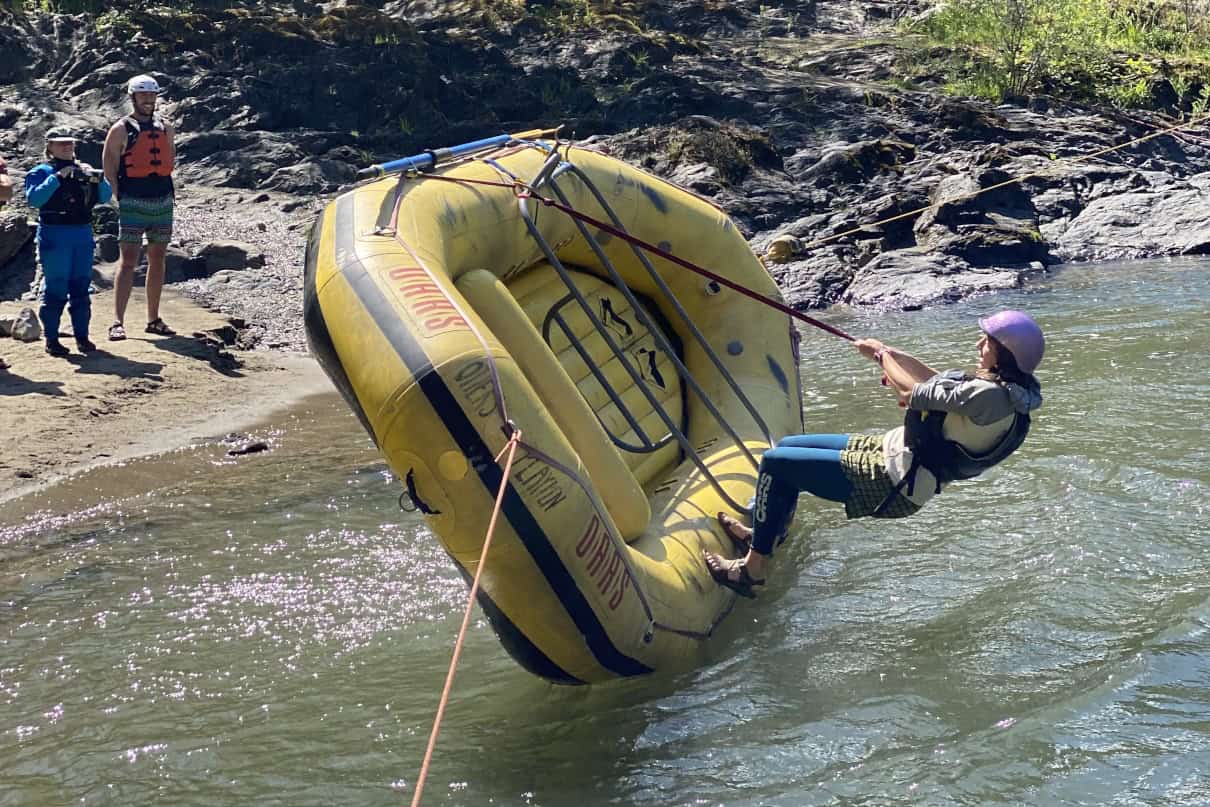
Even master boaters occasionally flip. Whitewater rescue courses teach essential recovery methods, such as using a webbed flip-line to leverage an overturned hull back upright. Furthermore, when approaching roaring whitewater with obscured lines, crews must pull over into a secure eddy, tie off their watercraft, and hike along the bank to scout the rapid. Identifying a clean route and memorizing visual river markers prevents catastrophic pinning.
Logistical Masterclass: Transport, Shuttling, and Permits
A successful river trip begins long before the boat touches the water.
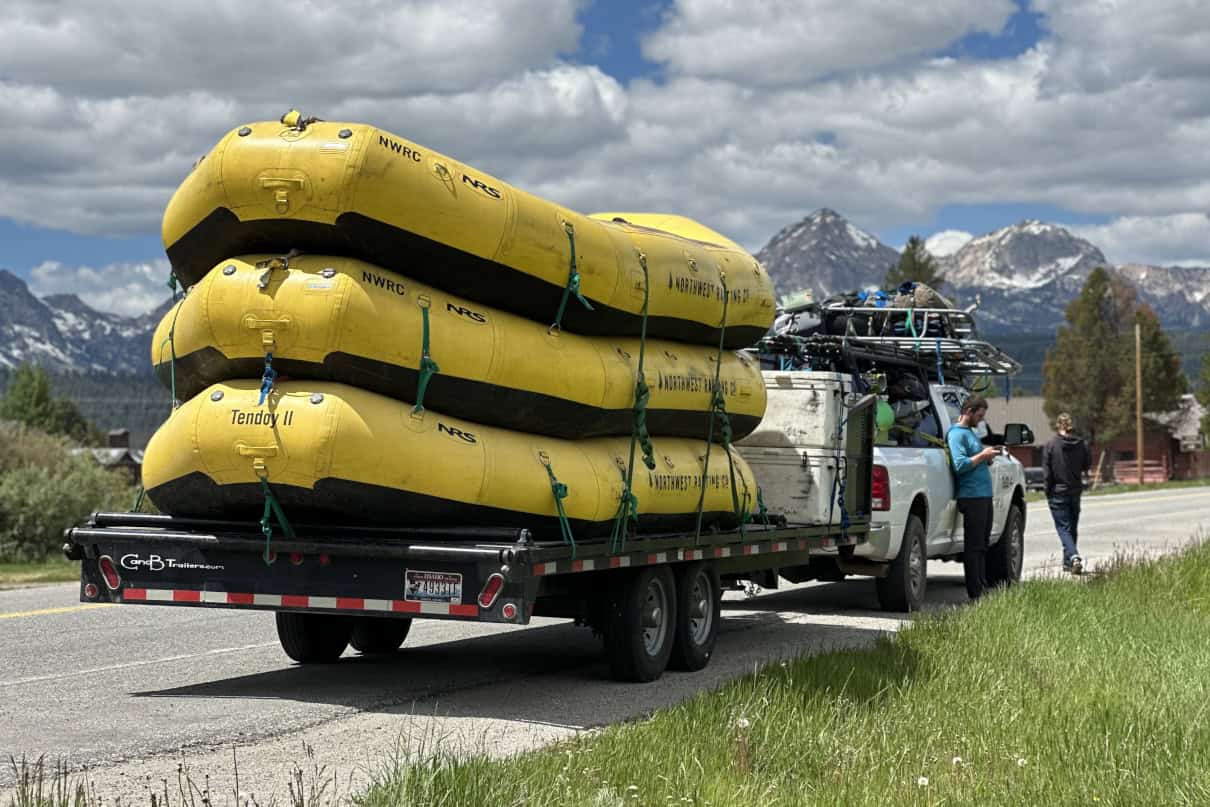
- Transport & Rigging: Trailering is the gold standard for moving rafts, allowing quick deployment and gear stacking. For those without trailers, deflating and rolling rafts into a vehicle’s hatch, truck bed, or roof basket is a viable alternative. Modular oar frames must be meticulously secured using heavy-duty cam straps lashed to at least four exterior D-rings and cross-braced across the floor.
- Shuttle Operations: Because rivers flow in one direction, vehicle shuttles require coordination. A minimum of two vehicles and two drivers are required to execute a self-contained shuttle between the put-in and take-out points. Alternatively, commercial shuttle services can relocate vehicles for a fee.
- Flows and Permits: Before launching, boaters must consult online databases like American Whitewater to analyze real-time cubic feet per second (CFS) flow gauges. Additionally, many premier multi-year and regional river corridors require navigating competitive permit lotteries months in advance.
Future Outlook: The Evolution of River Access and Conservation
As outdoor recreation surges in popularity, the future of whitewater rafting faces unique challenges and progressive technological shifts. Increased pressure on public waterways has amplified the importance of Leave No Trace ethics, particularly on multi-day wilderness corridors where human waste management and campsite preservation are legally mandated.
Concurrently, advancements in gear technology—such as ultra-durable drop-stitch PVC floor inserts, lightweight carbon-composite oars, and high-pressure electric lithium pumps—are making river running more accessible and efficient than ever before. However, technological convenience must be balanced with rigorous education. Organizations such as the American Canoe Association (ACA) and local paddling guilds continue to champion swiftwater safety clinics, ensuring that the next generation of river runners treats dynamic watersheds with the profound respect they demand.
Whether you are planning a lazy afternoon float or preparing to drop into your first technical canyon, the river remains an untamed, ever-changing classroom. Equip yourself wisely, respect the current, and see you upright and downriver.