






Executive Overview
The modern cruise vacation is carefully engineered to deliver relaxation, entertainment, and leisure on a grand scale. Central to this multi-billion-dollar industry is the concept of all-inclusive enjoyment, frequently embodied by premium beverage packages that promise unlimited access to cocktails, beers, and spirits throughout a voyage. However, this carefree atmosphere operates within a tightly regulated maritime environment governed by strict international safety regulations, zero-tolerance policies for disorderly conduct, and the ultimate authority of the ship’s master.
A recent viral incident aboard a Carnival Cruise Line vessel has thrust the delicate balance between guest indulgence and operational safety back into the public eye. A TikTok video posted by user @juicyloveboo revealed the immediate, tangible consequences faced by a passenger who pushed the limits of the cruise line’s alcohol consumption policies. Escorted back to her stateroom by a phalanx of security personnel, the traveler discovered a stark reality of modern cruise management: when intoxication compromises safety, cruise lines possess both the right and the protocol to strip away key amenities—including stateroom balcony access and beverage package privileges.
This comprehensive report examines the events surrounding the viral footage, analyzes the protocols deployed by Carnival Cruise Line to manage onboard intoxication, evaluates the physical and legal architecture of passenger safety at sea, and considers the broader implications for the cruise industry as lines strive to maintain a harmonious environment for thousands of passengers confined to a floating resort.
Detailed Chronology of the Incident
The Viral Disclosure and Social Media Reception
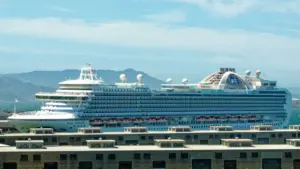
The incident first came to light on Sunday, August 30, 2026, when TikTok user @juicyloveboo uploaded a 15-second video documenting her encounters with shipboard security. The footage, which quickly garnered significant traction and commentary across social media platforms, shows the creator being escorted down a passenger deck corridor by three members of the Carnival Firenze security team.
Rather than attempting to conceal her overindulgence, the passenger offered a candid—and humorous—admission in her video caption:
"Yes, you should get the drinking packages, No you shouldn’t get 15 shots of patron reposado."
Patron Reposado, a premium brand of blue agave tequila aged for at least four months in oak barrels, is well-regarded for its smooth finish and nuanced vanilla and oak notes. However, consuming 15 shots of any high-proof spirit within a compressed timeframe represents a massive influx of alcohol, capable of inducing severe intoxication, acute alcohol poisoning, or dangerous behavioral disinhibition.
Stateroom Security Measures and Amenity Revocation
Upon reaching her stateroom, the video captures the security detail unlocking the door and allowing the guest inside. Walking toward the balcony to catch a breath of fresh air, the passenger discovered a critical modification to her quarters: the interior handle had been systematically removed from the balcony door.
"They took my balcony handle & revoked my drinking package," she remarked in the video, acknowledging her severe inebriation.
In subsequent comment sections, the passenger clarified the full scope of administrative and disciplinary actions taken by the ship’s security team. Beyond losing her balcony access and her lucrative "Cheers!" beverage package, her room key was confiscated. She noted that she was not subjected to criminal detention or placed in the ship’s brig—colloquially known as the "lockup"—but rather confined administratively through the removal of her key card, which effectively prevented her from leaving the room independently, interacting with public venues, or purchasing further alcohol. Furthermore, the cruise line issued no financial refund for the unutilized portion of her beverage package.
Establishing the Timeline and Physical Location
Geographic and contextual clues within the video helped verify both the identity of the ship and the timing of the occurrence. The hashtag #carnivalfrienze (a typographical error for Carnival Firenze) pointed directly to the 4,126-passenger vessel. Operating under Carnival’s "Costa by Carnival" concept—bringing Italian-themed styling to the North American market—the ship is permanently homeported at the Port of Long Beach, California, where it routinely conducts three- and four-night round-trip itineraries to Ensenada and Catalina Island, Mexico.
Through the glass of the closed balcony door in the video, the iconic silhouette of the Queen Mary is clearly visible. Moored permanently in Long Beach since 1967 and currently operating as a floating hotel, museum, and event center, the historic ocean liner definitively places the vessel at its Southern California terminal.
While the video was published on August 30, 2026, exact chronological alignment presented minor complexities. On that date, Carnival Firenze was wrapping up the final full day of a weekend cruise that had departed on August 28. However, the creator added a confounding detail in her comment thread, mentioning that a passenger fatality early in the itinerary had forced the ship to alter its route.
Cruise Hive records from late August 2026 indicate that on August 25, a critically ill passenger was medically evacuated from Carnival Firenze during a sailing between Long Beach and Catalina Island. While no official confirmation of a passenger death was linked to that specific evacuation, these operational irregularities highlight the complex, fast-paced environment in which cruise security teams operate daily.
Supporting Context & Metrics: Alcohol Policy and Maritime Safety
The Mechanics of the "Cheers!" Beverage Package
Carnival Cruise Line’s "Cheers!" package is one of the most popular ancillary revenue drivers across its fleet. For a fixed daily fee, guests of legal drinking age (21 on North American departures) are permitted to consume up to 15 alcoholic beverages per 24-hour cycle, alongside unlimited sodas, specialty coffees, energy drinks, and bottled water.
While the program offers financial predictability for travelers, it also presents distinct management challenges for shipboard staff. The 15-drink daily limit is hard-coded into Carnival’s point-of-sale terminals to prevent accidental over-service. However, as the viral video demonstrates, consuming the maximum allotment—particularly when concentrated into a short window of time—can easily surpass safe blood alcohol concentration (BAC) thresholds.
In her reflections on the incident, the passenger noted a strategic shift for future sailings:
"So I’ve learned I have to start drinking early then space them out. Don’t start at 7pm trying to race the clock because the bars close at 1:30am."
This commentary underscores a common behavioral trap aboard cruise ships: the psychological pressure guests feel to "get their money’s worth" out of prepaid packages before bars close for the evening.
The Physics and Perils of Balconies at Sea
Removing a balcony door handle may seem like an extreme administrative measure, but from a maritime risk-management perspective, it is a vital intervention. Cruise ship balconies sit dozens of feet above the waterline, suspended over a moving vessel traveling at speeds between 18 and 22 knots.
When an individual is severely inebriated, motor skills, spatial awareness, and risk assessment are severely compromised. The dangers associated with intoxicated guests on cruise balconies include:
- Man Overboard (MOB) Incidents: Accidental falls caused by leaning over railings, attempting to climb between adjacent balconies, or losing balance while under the influence.
- Property Disruption: Throwing furniture, glassware, or personal belongings overboard, which can create navigational hazards or strike passengers on lower decks.
- Self-Harm and Structural Risks: Falling against glass sliding doors, attempting unauthorized access to exterior maintenance areas, or experiencing acute psychological distress amplified by heavy drinking.
By removing the interior handle, the ship’s technical and security teams effectively neutralize the balcony as an immediate risk factor without needing to weld or structurally modify the door, allowing the guest to sleep off their intoxication in a climate-controlled, secure environment.
Official Statements and Industry Standards
Carnival’s Stance on Responsible Service
Carnival Cruise Line has consistently maintained that guest safety supersedes all other operational concerns, including beverage sales revenue. John Heald, Carnival’s prominent Brand Ambassador and corporate spokesperson, has repeatedly addressed the issue of onboard alcohol consumption across his widely followed social media channels.
Heald has emphasized that Carnival’s bartenders, bar servers, and security personnel undergo rigorous training to identify the physiological and behavioral markers of intoxication. Crew members are fully empowered—and explicitly instructed—to refuse service to any guest who appears impaired, regardless of:
- The time of day or night.
- Whether the guest has purchased the "Cheers!" package.
- The total number of drinks the guest has consumed thus far.
- The guest’s protests or expressions of dissatisfaction.
Furthermore, Carnival’s Passage Contract—the legal agreement every passenger accepts upon booking—grants the ship’s captain and security officers absolute authority to restrict guest movements, confiscate identification cards, cancel package privileges, or disembark disruptive individuals at the next port of call without refund or compensation.
Comparative Industry Protocols
Carnival is not alone in enforcing strict boundaries regarding alcohol consumption. Major global cruise operators—including Royal Caribbean International, Celebrity Cruises, Norwegian Cruise Line, and Princess Cruises—enforce comparable codes of conduct.
Across the industry, cruise lines utilize integrated digital tracking systems that monitor alcohol purchases across all onboard venues. If a passenger exhibits aggressive behavior, creates a public disturbance, or poses a danger to themselves or others, security teams are dispatched immediately. Penalties routinely escalate from verbal warnings and drink package revocations to confinement in the ship’s holding facility, hefty fines, and permanent placement on the cruise line’s "no-sail" blacklist. In severe cases involving physical assault or major property damage, local law enforcement authorities are waiting at the pier to take suspects into custody the moment the ship docks.
Future Outlook: Managing the Balance Between Fun and Safety
The incident aboard Carnival Firenze serves as a cautionary tale and a catalyst for broader industry conversations regarding the culture of "fun" promoted by contemporary cruise lines. As ships grow larger—accommodating upwards of 5,000 to 6,000 passengers—the density of public spaces requires social behavior to remain within safe, respectful parameters.
Evolving Surveillance and Intervention Strategies
Looking ahead, cruise operators are expected to refine their approach to alcohol management through several key initiatives:
- Enhanced Staff Training: Continuous education for hospitality staff focusing on early intervention, enabling bartenders to cut off guests before they reach dangerous levels of intoxication.
- Smart-Card Technology: Integration of advanced data analytics at point-of-sale terminals to flag rapid successive purchases or unusual drinking patterns in real-time.
- Public Awareness Campaigns: Clearer messaging from brand ambassadors and pre-cruise communications emphasizing that unlimited packages do not equate to license for disorderly conduct.
- Physical Safety Hardening: Continued deployment of rapid-response security details and structural fail-safes—such as removable balcony handles and reinforced door locks—to manage high-risk situations effectively.
Conclusion
The viral TikTok video featuring @juicyloveboo offers a rare, behind-the-scenes look at the intersection of cruise line hospitality and maritime law enforcement. While the passenger’s candid confession and lighthearted tone resonated with social media audiences, the underlying administrative actions taken by Carnival Cruise Line underscore a serious operational reality.
At sea, safety remains the paramount priority. When an individual’s choices transform a vacation into a hazard, cruise lines will decisively step in—revoking packages, removing balcony handles, and confiscating room keys—to ensure that the voyage remains safe for every soul on board.