






Executive Overview
In the evolving landscape of urban mobility and municipal sustainability, public transit agencies are frequently challenged to justify the substantial capital investments required to transition their fleets from diesel and compressed natural gas to zero-emission alternatives. While the environmental and public health benefits of battery-electric buses (BEBs) are well-documented—chiefly through the reduction of greenhouse gas emissions and particulate matter in densely populated corridors—their utility has historically been viewed through a singular, traditional lens: passenger transportation from point A to point B.
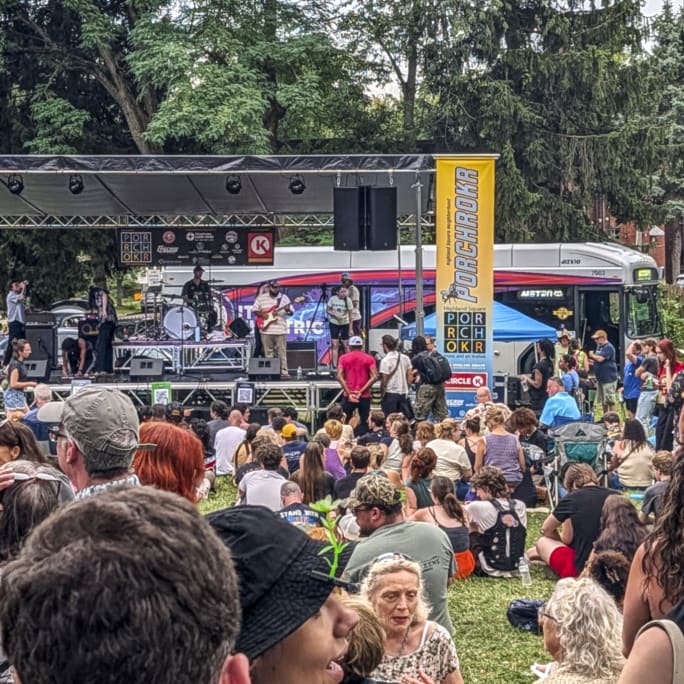
However, a groundbreaking operational pilot executed during the 2026 PorchROKR Music Festival in Akron, Ohio, has fundamentally challenged this narrow paradigm. The METRO Regional Transit Authority (RTA), serving Summit County, partnered with the Highland Square Neighborhood Association to demonstrate that modern battery-electric transit fleets can serve as mobile, high-capacity microgrids. By deploying three state-of-the-art Gillig battery-electric buses not only to transport approximately 1,000 festivalgoers via a dedicated Park & Ride service, but also to act as the primary electrical generators for three distinct music stages, METRO RTA unlocked a novel blueprint for community resilience and asset utilization.
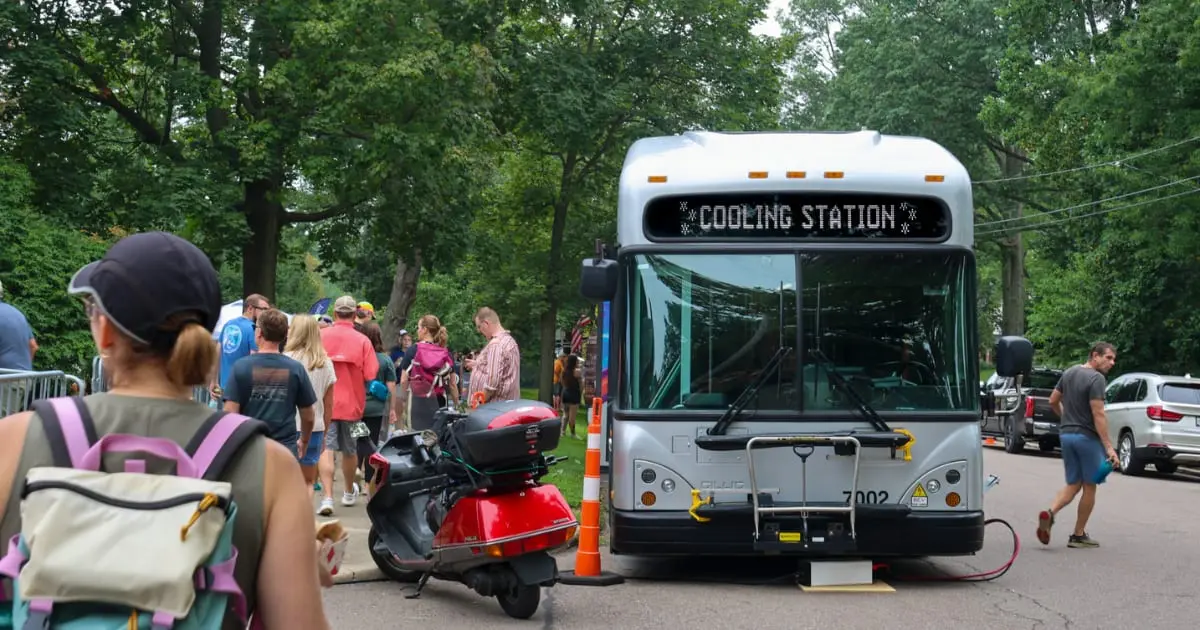
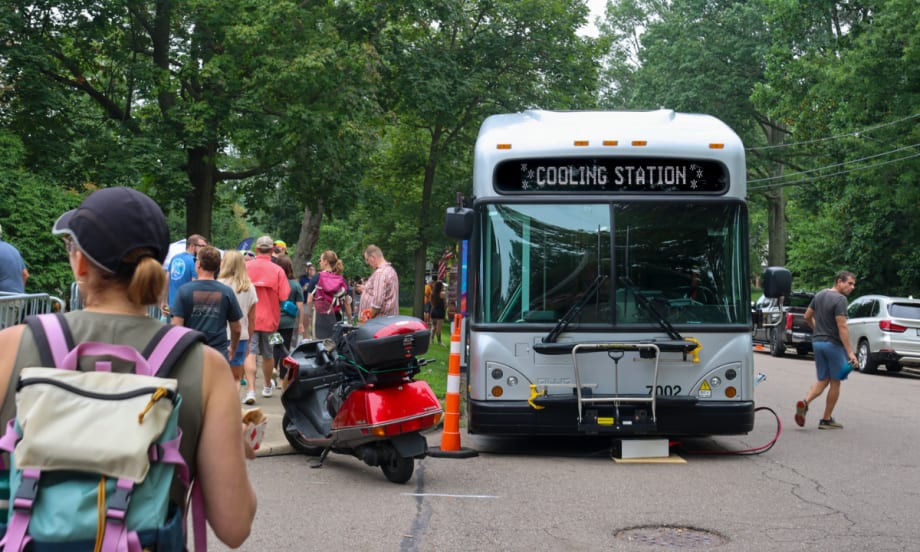
The initiative, which took place during an event drawing up to 25,000 attendees and featuring roughly 160 local musical acts, showcased the latent technological capabilities embedded within modern heavy-duty transit batteries. Operating seamlessly for roughly 10 hours straight, the buses powered professional-grade sound systems, stage lighting, and custom LED destination signs while simultaneously doubling as air-conditioned cooling stations and device-charging hubs for the public. Most remarkably, these mobile power plants accomplished this feat while consuming a fraction of their total energy reserves, leaving them with more than enough charge to return directly to standard fixed-route transit service without interim recharging.
This comprehensive investigative report examines the mechanics, metrics, and strategic implications of METRO RTA’s PorchROKR deployment. By breaking down the technological infrastructure, reviewing operational data, analyzing community partnerships, and exploring future applications—including emergency disaster response—this article explores how transit agencies nationwide can leverage existing investments to drive civic innovation.
Detailed Chronology: From Concept to Festival Reality
The genesis of METRO RTA’s multi-functional electric bus initiative did not happen overnight; rather, it represents the culmination of a multi-year institutional evolution in how the agency approaches community engagement and equipment utilization.
Paving the Way: The Evolution of Non-Traditional Fleet Uses
For decades, public transit authorities have viewed their fleets through a lens of strict operational rigidity: vehicles are purchased for revenue service, maintained in specialized depots, and retired after a designated lifecycle. Deviations from this schedule were traditionally viewed as inefficiencies. However, as agencies began adopting zero-emission fleets over the past decade, forward-thinking operators recognized that an electric bus is essentially a massive, mobile energy storage system on wheels.
METRO RTA first began testing the boundaries of non-traditional electric bus deployment through smaller community events. A prime institutional precedent was the creation of the agency’s annual "Boo Bus," deployed for the Downtown Akron Partnership’s Fall Fest. In previous iterations—such as the 2025 "Nightmare Before Christmas"-themed activation—METRO utilized an external inverter connected to an electric bus to power string lights, fog machines, and complex animatronics. Transforming a multi-million-dollar transit vehicle into a "haunted house on wheels" for families to walk through provided critical operational insights. It proved that auxiliary power could be safely drawn from the bus’s electrical architecture to support external systems without compromising core vehicle integrity.
The Genesis of the PorchROKR Collaboration
The collaboration for the 2026 PorchROKR Music Festival began taking shape in early 2026. Representatives from the Highland Square Neighborhood Association approached METRO RTA with a specific request: establish an official Park & Ride service to alleviate the severe traffic congestion and parking shortages that traditionally plague the eclectic, high-density neighborhood during the single-day festival.
As initial planning discussions progressed between METRO RTA leadership and neighborhood organizers, the conversation expanded organically. Organizers noted the logistical challenges of securing reliable, clean power sources for remote stages dispersed throughout the neighborhood park spaces, where traditional diesel generators would create undesirable noise pollution, exhaust fumes, and logistical routing headaches.
METRO RTA’s operations team seized upon the opportunity. Having experimented with smaller electrical loads during events like the Fall Fest, leadership hypothesized that a modern battery-electric bus could easily handle the sustained electrical demands of a professional stage setup. What started as a standard transit planning meeting quickly matured into an ambitious technological experiment that would redefine the boundaries of transit agency participation in community festivals.
Technical Architecture & Operational Execution
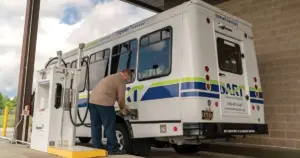
The technical execution of powering live music stages with transit buses requires a clear understanding of vehicular electrical systems, power conversion, and battery chemistry. METRO RTA’s deployment relied on a carefully selected triad of Gillig low-floor battery-electric buses representing different model years and battery configurations.
Fleet Specifications and Battery Capacities
The agency deployed three specific zero-emission vehicles for the PorchROKR festival:
- Bus No. 7001: A 2021 Gillig Gen 2 battery-electric bus equipped with six high-voltage battery packs boasting a combined storage capacity of 456 kWh.
- Bus No. 7002: A 2022 Gillig Gen 3 battery-electric bus equipped with six high-voltage battery packs featuring a combined capacity of 576 kWh.
- Bus No. 7003: A companion 2022 Gillig Gen 3 battery-electric bus identical to No. 7002, housing six packs with a combined capacity of 576 kWh.
The Conversion and Power Delivery Mechanism
The physical setup at each festival stage was engineered for reliability and safety. Each bus was parked in a pre-determined, stabilized location adjacent to the performance areas. Temporary stages were constructed directly in front of or beside the vehicles, establishing a tight footprint that minimized cable runs.
The electrical interface relied on standard power conversion hardware. Heavy-duty electrical inverters were bridged to the buses’ electrical systems to step down and convert the stored direct current (DC) power. Specifically, the inverters converted the buses’ standard 24-volt DC architecture into the 120-volt alternating current (AC) required by standard professional audio mixing boards, amplifiers, stage lighting rigs, and instrument backline equipment. Heavy-gauge extension cords and distro boxes distributed the clean, uninterrupted power safely across the stages.
+-------------------------------------------------------+
|                 METRO RTA Electric Bus                |
|  (456 kWh to 576 kWh High-Voltage Battery Storage)    |
+---------------------------+---------------------------+
                            |
                     (24V DC Output)
                            v
+-------------------------------------------------------+
|                  External Inverter                    |
|          (Converts DC to 120V AC Power)               |
+---------------------------+---------------------------+
                            |
                     (120V AC Output)
                            v
+-------------------------------------------------------+
|            Stage Equipment & Amenities                |
|     (Audio Systems, Lighting Rigs, A/C, USB Ports)    |
+-------------------------------------------------------+
Energy Consumption Metrics and Thermal Management
A primary concern for transit operators considering auxiliary load draws is "parasitic drain"—the fear that powering external devices will deplete the batteries to a level that compromises subsequent transit operations. METRO RTA’s post-event data analysis completely dispelled these fears.
All three buses entered the festival footprint at a 100% state of charge (SoC). Over the course of approximately 10 hours of continuous deployment, the energy draw proved remarkably modest. For instance, Bus No. 7001—the oldest vehicle in the deployment group—utilized less than 25% of its total stored energy, consuming roughly 114 kWh out of its 456 kWh capacity.
This energy envelope did not just power the amplifiers and stage lights; it also sustained heavy auxiliary loads onboard the vehicle. Throughout the 10-hour event, the bus operated its onboard air conditioning system set to maximum cooling capacity to serve as a climate-controlled sanctuary for overheated festivalgoers. Furthermore, the buses powered interior LED lighting, onboard Wi-Fi routers, USB charging ports for public device re-charging, and exterior LED destination signs programmed with custom, festival-specific messaging.
Upon the conclusion of the festival, all three vehicles retained more than 75% of their total battery capacity. Agency officials confirmed that the buses required zero mid-event charging and possessed more than enough residual energy to be dispatched directly onto standard, demanding fixed-route transit runs the following morning without returning to the depot for an emergency top-off.
Supporting Context & Quantitative Metrics
Beyond the technological novelty of stage power generation, METRO RTA’s integration into the 2026 PorchROKR festival yielded significant quantitative wins across ridership, public engagement, and civic collaboration.
Ridership Surges: The Park & Return Impact
The dedicated Park & Service offered by METRO RTA played a vital role in mitigating the neighborhood’s acute parking deficit. Operating along a specialized routing structure tied into Route 1, the service successfully moved approximately 1,000 festival attendees safely to and from the heart of the Highland Square district.
When measured against historical benchmarks from the 2025 PorchROKR festival, the operational metrics demonstrated explosive growth:
- Route 1 Park & Ride Ridership: Experienced a staggering 56.18% year-over-year increase, indicating robust public adoption of the transit agency’s designated parking alternative.
- Systemwide Ridership Lift: On the specific day of the 2025-versus-2026 festival comparison, METRO RTA recorded a 5.49% increase in overall systemwide ridership, illustrating a halo effect where event-goers utilized broader transit connections to access the broader metropolitan area.
Community Amenities: The Bus as Public Infrastructure
In addition to serving as generators and transit vehicles, the buses were intentionally repurposed as multi-functional public safety and comfort hubs. August festivals in Ohio routinely present extreme heat risks. By opening the doors of the air-conditioned Gillig buses, METRO provided a much-needed cooling refuge for vulnerable populations, families with small children, and elderly attendees.
Equipped with complimentary Wi-Fi and functional USB charging stations, the bus interiors became impromptu digital sanctuaries where visitors could recharge personal communication devices. Externally, one of the buses was strategically positioned to act as a physical safety barrier, shielding pedestrian zones and stage setups from active vehicular roadways—highlighting yet another layer of dynamic municipal utility.
Official Statements and Institutional Perspective
The success of the PorchROKR pilot has sent ripples through Ohio’s public transit sector, positioning METRO RTA as a forward-thinking leader in asset versatility and sustainability.
Eric Scott, Chief Operations Officer at METRO RTA, reflected on the philosophical shift required to conceptualize the project:
"Being part of the public transit industry also means being part of a green industry, and this partnership highlighted that. Overall, this experience showed us that even after 50+ years of attending community events and forming local partnerships, there are always new, creative ways to make an impact."
Scott emphasized that the agency’s success stemmed from looking inward at existing assets rather than seeking complex, expensive external interventions:
"When you think you’ve ‘been there, done that,’ maybe it’s time to flip the script and look at things from a different perspective. Essentially, leveraging the resources, assets, and programs that we already had ended up being more effective than reinventing the wheel."
Local community organizers echoed these sentiments. Representatives from the Highland Square Neighborhood Association praised the seamless integration of transit infrastructure into a hyper-local arts festival, noting that the absence of noisy, polluting diesel generators vastly improved the acoustic and atmospheric quality of the neighborhood stages.
Future Outlook: Emergency Power, Grid Support, and Beyond
While music festivals and Halloween-themed haunted buses provide fantastic public relations and community goodwill, the underlying technological capability demonstrated by METRO RTA points toward much higher-stakes applications in urban planning and emergency management.
Disaster Response and Grid Resiliency
Transit agencies operate fleets that represent millions of dollars in rolling electrical storage capacity. As extreme weather events driven by climate change increasingly threaten regional power grids—causing prolonged blackouts during ice storms, severe thunderstorms, and heatwaves—municipalities are actively seeking decentralized energy assets.
METRO RTA has already established a precedent of supporting local law enforcement and municipal authorities during community crises, such as providing warming and evacuation buses during apartment building emergencies. The successful deployment at PorchROKR opens the door for formalizing these capabilities into structured disaster-response protocols.
In the event of a localized power outage affecting critical infrastructure—such as water treatment facilities, neighborhood cooling centers, communications nodes, or emergency shelters—heavy-duty battery-electric buses equipped with bidirectional or inverter-driven export power could theoretically be deployed as mobile microgrid generators. By plugging directly into municipal facilities or emergency command posts, transit fleets can serve as life-saving redundancy assets.
Vehicle-to-Grid (V2G) Integration
Looking further into the future, the lessons learned from Akron’s festival experiment align with the broader national trajectory toward Vehicle-to-Grid (V2G) and Vehicle-to-Building (V2B) technologies. As transit agencies continue to expand their zero-emission fleets, the integration of smart-charging depots that allow bi-directional energy flow will become standard practice.
During off-peak hours—such as overnight or during midday lulls when transit demand is low—electric buses parked in depots can feed stored energy back into the local utility grid, helping stabilize electrical demand and generating revenue for the transit agency. During peak emergencies or community events, they can be dispatched outward to supply mobile power wherever it is most urgently required.
Conclusion
The 2026 PorchROKR Music Festival will be remembered in Akron not only as a celebration of local arts and culture, but as a watershed moment for urban infrastructure innovation. By transforming three Gillig battery-electric buses into multi-functional nodes of power, cooling, safety, and transportation, METRO RTA shattered the traditional boundaries of what a transit agency can—and should—achieve.
The quantitative success—highlighted by a 56.18% surge in Park & Ride ridership, minimal battery depletion of under 25% across a 10-hour operational window, and zero disruption to subsequent transit schedules—proves that sustainability and operational efficiency are not mutually exclusive. Instead, they are deeply complementary forces waiting to be unlocked by creative leadership.
As transit systems across the United States navigate the complex, capital-intensive transition to zero-emission fleets, METRO RTA has provided a replicable, highly effective playbook. By viewing electric buses not merely as replacement vehicles for burning fossil fuels, but as dynamic, mobile energy reserves capable of enriching community life and bolstering emergency resilience, Akron has pointed the way toward a smarter, more adaptable urban future.