



By Jeff Watters, Vice President of External Affairs, Ocean Conservancy
Published: August 2026 — 7-minute read
Executive Overview
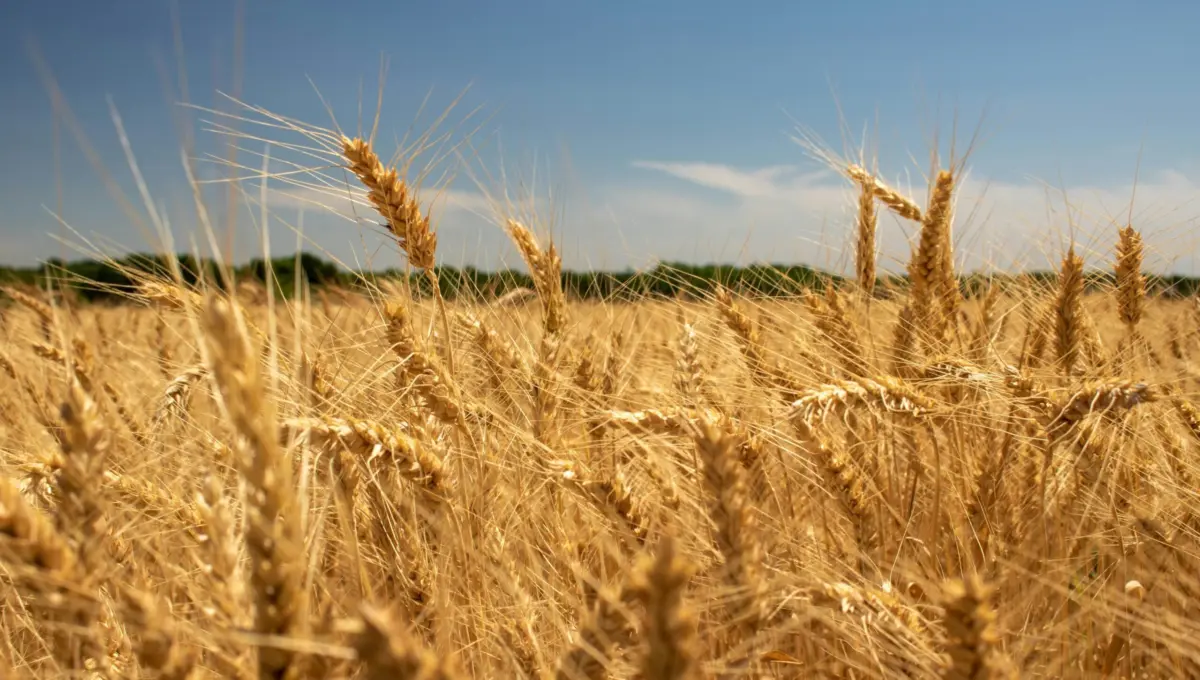
When people visualize the geographic footprint of American marine dependency, their minds naturally wander to the jagged, salty coastlines of the Pacific Northwest, the sun-drenched beaches of the Atlantic Seaboard, or the bustling commercial ports of the Gulf of Mexico. Few would look past the sweeping, amber wheat fields of Kansas and imagine a direct, lifeline connection to the world’s oceans. After all, the "Sunflower State" features no breaking surf, no maritime shipping terminals, and no coastal salt air.
Yet, according to a compelling new report released by Ocean Conservancy, Kansas serves as a profound paradox and an illuminating case study. It proves an enduring scientific truth that environmental advocates and meteorologists have long understood: the ocean does not stop mattering at the shoreline.
Far from the rolling waves, the daily lives of Kansans—from rural agriculturalists and cattle ranchers to urban civil engineers and emergency managers—are intimately bound to the health, stability, and scientific monitoring of the global marine environment. At the center of this intricate web is the National Oceanic and Atmospheric Administration (NOAA). While colloquially pigeonholed as an agency focused strictly on marine life and coastal waters, NOAA functions as an indispensable engine of national infrastructure. From providing the crucial lead-time on a terrifying spring tornado bearing down on Wichita to charting the Pacific climate oscillations that dictate severe summer droughts in the Great Plains, NOAA’s ocean-centric observation systems protect lives and livelihoods thousands of miles inland.
As lawmakers in Washington continually debate federal environmental budgets and scientific funding, the story of Kansas challenges the notion that ocean conservation is merely a regional concern for coastal states. It is a shared national imperative.
Detailed Chronology: Tracing the Invisible Rivers from Ocean to Plains
To understand why a landlocked state like Kansas relies so heavily on a marine-focused federal agency, one must trace the invisible, atmospheric rivers that bind the world’s oceans to the North American interior. Weather does not respect state borders, nor does it originate exclusively over dry land.
The Marine Fuel for Great Plains Storms
The meteorological journey of a Kansas thunderstorm typically begins hundreds, if not thousands, of miles away. During the spring and summer months, relentless solar heating over the warm waters of the Gulf of Mexico evaporates colossal volumes of moisture into the lower atmosphere. Prevailing lower-level jet streams sweep this warm, moisture-laden air northward across Texas and Oklahoma, funneling it directly into the heart of the Great Plains.

When this tropical marine air mass collides with cool, dry air cascading southward from the Rocky Mountains, the thermodynamic result is explosive. Supercell thunderstorms, devastating straight-line winds, and catastrophic tornado outbreaks are born from this atmospheric collision. Without the persistent thermal energy and moisture supplied by the ocean, the severe weather dynamics of the American breadbasket would look fundamentally different.
The Pacific Connection: Drought and Climate Oscillations
Beyond immediate weather events, Kansas agriculture is at the mercy of long-term climatic rhythms dictated by ocean temperatures in the Pacific basin. Phenomena such as El Niño and La Niña—shifts in sea surface temperatures along the equatorial Pacific—exert a profound influence on global jet stream configurations.
During a La Niña cycle, the jet stream often shifts northward, depriving the Great Plains of vital winter snowpack and spring rainfall. For Kansas wheat farmers and cattle ranchers, these ocean-driven temperature anomalies spell the difference between a bountiful harvest and a crippling, multi-year drought. By monitoring these distant oceanic shifts months in advance, meteorologists can issue seasonal outlooks that allow agricultural producers to make critical financial and operational decisions—such as adjusting herd sizes or altering crop rotations—long before dry soils threaten their bottom lines.
Supporting Context & Metrics: Unpacking NOAA’s Inland Footprint
The public often views NOAA through the narrow lens of a consumer weather app or a coastal hurricane tracker. In reality, NOAA operates as a vast, technologically advanced matrix of satellites, ocean buoys, radar networks, and supercomputing centers. The agency’s operations span atmospheric chemistry, fisheries management, geodetic surveying, and deep-sea exploration.
The Upstream Engine of Local Forecasts
When a severe weather alert lights up a smartphone screen in Topeka or Dodge City, most citizens assume it is the product of local radar towers alone. In truth, those local forecasts are the downstream results of an immense, global data-gathering apparatus.
- Space-Based Observations: NOAA operates a fleet of advanced geostationary and polar-orbiting environmental satellites that continuously monitor atmospheric moisture, cloud tops, and sea surface temperatures worldwide.
- Deep-Ocean Telemetry: Networks of autonomous ocean buoys (such as the Argo float array) measure temperature and salinity profiles across the global ocean, feeding the high-resolution numerical models that meteorologists use to predict weather patterns weeks in advance.
- Data Integration: Supercomputers process petabytes of ocean-atmosphere data to run predictive models that form the backbone of every national weather service forecast office in the country.
If funding or political support for these "upstream" components is compromised, the degradation of data quality does not stay neatly contained in Washington, D.C., budget spreadsheets. It trickles down directly to the local level, manifesting as reduced forecast accuracy, shorter warning lead times, and heightened vulnerability for inland communities.
Infrastructure and Engineering on Dry Land
The ocean’s influence on Kansas extends far beyond meteorology into the realm of civil engineering and public safety. When municipal engineers design stormwater management systems, highway bridges, and flood control reservoirs in Kansas, they rely heavily on historical precipitation data and future climate models generated by federal scientists.
As global ocean temperatures rise, the capacity of the atmosphere to hold and dump moisture increases, leading to more frequent and intense extreme precipitation events. Engineers must account for these ocean-driven climate signals when calculating "100-year flood" thresholds. Without NOAA’s continuous monitoring of global hydrological and atmospheric cycles, Kansas communities would be flying blind as they invest millions of dollars into resilient infrastructure designed to withstand changing climate realities.
Official Statements and Expert Perspectives
The release of Ocean Conservancy’s landmark Kansas report underscores a growing push by environmental advocates to reframe how the American public—and federal legislators—perceive the scope of ocean science.
"If you asked most people in America which states depend on the ocean, Kansas would probably not top the list," writes Jeff Watters, Vice President of External Affairs at Ocean Conservancy. "No beaches. No ports. No salt air. But that is exactly why Kansas is such a powerful reminder of something ocean lovers everywhere have long understood: The ocean does not stop mattering at the shoreline."
Watters emphasizes that viewing federal marine and atmospheric budgets through a purely coastal lens is a dangerous political fallacy.
"Conversations about NOAA funding can be misleading—this agency isn’t just a coastal concern, or just a weather app with a federal logo. NOAA is much bigger than the forecast people see on their phones," Watters notes. "If those upstream pieces are cut or weakened, the impacts show up in our everyday lives as less reliable guidance, less lead time, and more uncertainty for communities that can least afford to guess."
Environmental scientists and policy analysts echo this sentiment, pointing out that extreme weather events fueled by warming oceans cost the U.S. economy tens of billions of dollars annually. In states like Kansas, where agriculture represents a foundational pillar of the economy, the economic fallout of unpredicted weather volatility can devastate rural communities. By safeguarding NOAA’s data-gathering capabilities, the federal government provides an essential public safety net that shields inland economies from the remote shocks of a changing marine environment.
Future Outlook: A Nonpartisan Imperative for the Planet
As the global climate system continues to experience unprecedented shifts, the interconnectedness of Earth’s oceans and terrestrial ecosystems will only intensify. The challenges facing coastal reef systems and Arctic ice sheets are no longer isolated from the challenges facing Great Plains agriculture and Midwestern flood management.
The story of Kansas serves as a unifying call to action. It bridges the artificial political and geographic divide between "blue states" and "red states," or "coastal interests" and "inland priorities." Meteorology, hydrology, and marine science form a continuous, unbroken chain of planetary life support.
Safeguarding the ocean and adequately funding agencies like NOAA is not a partisan wedge issue; it is a fundamental prerequisite for modern economic stability and public safety. Whether an American casts a fishing line off a pier in Maine, harvests corn in a Kansas field, or commutes to an office in downtown Chicago, everyone lives downstream—and downwind—from the ocean.
Take Action: Protect Our Ocean and Essential Science
Safeguarding our ocean and atmospheric infrastructure requires a collective, nationwide voice. The future of resilient communities—from the coastlines to the Great Plains—depends on robust, sustained support for federal scientific agencies.
- Read the Full Report: Explore the complete data and analysis in Ocean Conservancy’s dedicated briefing: How Ocean Data Become Kansas Decisions.
- Add Your Voice: Join the movement to ensure that critical scientific funding remains strong, independent, and bipartisan. Visit Ocean Conservancy’s action portal to support NOAA and its vital programs.
Div. Attribution / Data-Attr: ci-cta-box-block_4230b65d08f72c99679339d0f7c36931