









Executive Overview
The global maritime supply chain is facing a silent and escalating safety crisis. The World Shipping Council (WSC)—the premier trade association representing the international liner shipping industry—has issued an urgent call to action for global governments and regulators. At the heart of their warning is a critical and dangerous loophole within international shipping frameworks that allows massive consignments of lithium-ion batteries to be transported across the world’s oceans completely undetected by ship operators, vessel crews, port authorities, and emergency first responders.
This regulatory blind spot stems from Special Provision 188 (SP188) of the International Maritime Dangerous Goods (IMDG) Code. Originally designed to simplify the transport of small, low-capacity consumer electronics, the provision exempts certain smaller lithium batteries from the stringent declaration, documentation, and placarding requirements applied to hazardous materials. However, because SP188 contains no cap on the aggregate volume or quantity of these exempt batteries loaded into a single shipping container, a loophole has emerged. Shippers can legally pack a single 20- or 40-foot container with thousands of individual consumer devices—such as laptops, smartphones, and power tools—without notifying the ocean carrier of the hazardous nature of the cargo.
+-----------------------------------------------------------------------+
|                      THE SP188 REGULATORY LOOPHOLE                     |
+-----------------------------------------------------------------------+
|  Individual battery fits capacity limits -> Exempt from IMDG rules    |
|  NO aggregate limit per container       -> Thousands packed together  |
|  RESULT: Up to 416+ kWh of undeclared energy stored in a single box   |
+-----------------------------------------------------------------------+
The consequences of this omission are severe. A single container packed with approximately 4,200 laptops can hold an estimated 416 kilowatt-hours (kWh) of stored electrochemical energy—an energy density equivalent to three or four fully charged electric vehicles (EVs). Under current international rules, this container can be stowed deep in the hold of a mega-container ship, completely unmarked and undocumented as dangerous cargo. If a thermal runaway event occurs, the ship’s crew will have no knowledge of the hazard, no ability to deploy targeted fire suppression, and no way to prevent a catastrophic shipboard fire.
As battery demand surges globally to fuel the transition to digital and green technologies, the WSC, backed by a coalition of five sovereign nations and multiple industry organizations, has submitted a formal reform proposal to the International Maritime Organization (IMO). The coalition demands a strict, container-level threshold that would strip high-volume shipments of their exempt status, forcing transparency and protecting lives at sea.
Detailed Chronology: The Evolution of Special Provision 188
To understand how this vulnerability developed, it is necessary to examine the history of the IMDG Code and the rapid evolution of consumer electronics over the past two decades.
  [Early 2000s]                           [2010s - 2020s]                          [Present Day]
  SP188 established for                   Massive scale-up of e-commerce           WSC submits reform proposal
  individual consumer devices             and high-density battery shipping        to IMO to establish container-
  (small scale).                          without updated cargo limits.            level declaration thresholds.
The Genesis of SP188
The IMDG Code, governed by the IMO, is the globally accepted standard for the safe carriage of dangerous goods by sea. Within this code, Special Provision 188 was established during the early days of widespread lithium-ion battery commercialization.
At the time, the rule was practical: it aimed to prevent excessive bureaucratic red tape for shippers moving small quantities of retail goods, such as a box of replacement mobile phone batteries or a small shipment of digital cameras. Under SP188, lithium-ion cells containing not more than 20 Watt-hours (Wh) of energy, and lithium-ion batteries containing not more than 100 Wh, are exempt from the standard requirements of the IMDG Code, provided they meet basic manufacturing, testing (UN 38.3), and sturdy packaging standards.
The Scale-Up and the Loophole
As manufacturing shifted toward massive consolidation in East Asia, the logistics of consumer electronics transformed. Instead of shipping small pallets of electronics mixed with other retail goods, manufacturers and e-commerce giants began consolidating entire production runs into dedicated container loads.
Because SP188 was written to regulate the individual cell or battery capacity rather than the cumulative volume of the container, logistics companies realized they could pack entire 40-foot high-cube containers with thousands of individual, retail-ready laptops, tablets, and lithium-ion power banks. Because each individual device fell under the 100 Wh threshold, the entire container remained exempt from being declared as "Class 9: Miscellaneous Dangerous Goods."
This regulatory mismatch has effectively made entire container loads of high-energy-density cargo invisible to the maritime supply chain. The ship’s master receives a cargo manifest listing the container’s contents simply as "electronic goods" or "computer hardware," masking the true fire hazard stowed onboard.
Inside the Danger Zone: The Science of Battery Fires and Stowage Logistics
The primary danger of undeclared lithium-ion batteries is thermal runaway—a rapid, self-sustaining chemical reaction that occurs when an internal short circuit, mechanical damage, manufacturing defect, or external heat exposure causes a battery cell to overheat.
+-----------------------------------------------------------------------------+
|                         THERMAL RUNAWAY CASCADE                             |
+-----------------------------------------------------------------------------+
|  1. Internal short, defect, or external heat exposure occurs.               |
|  2. Battery cell temperature spikes, releasing flammable toxic gases.       |
|  3. Off-gassing creates explosive atmosphere inside the sealed container.   |
|  4. Intense heat transfers to adjacent cells (thermal cascading).           |
|  5. Catastrophic, self-sustaining fire erupts; extremely difficult to extinguish. |
+-----------------------------------------------------------------------------+
Once a single cell enters thermal runaway, it releases highly flammable and toxic gases (including hydrogen fluoride, carbon monoxide, and hydrogen) and generates intense heat. This heat quickly transfers to adjacent cells in a process known as thermal cascading.
Within minutes, a single compromised battery can cause an entire container of electronics to erupt into an intense, self-sustaining fire that cannot be easily extinguished by traditional marine firefighting systems.
The Critical Role of Stowage and Segregation
In ocean transport, the location of a container on a vessel is determined by complex stowage planning software. Dangerous goods are subject to strict segregation and stowage rules under the IMDG Code:
- Heat Source Avoidance: Declared hazardous materials are kept away from potential heat sources, such as the ship’s engine casing, heated fuel tanks, or direct, prolonged sunlight on the upper deck.
- Accessibility: Containers holding hazardous materials are often stowed in positions where they can be monitored by the crew and reached by shipboard fire hoses.
- Segregation: They are segregated from highly flammable materials, such as chemicals, industrial solvents, or plastics, to prevent a localized fire from escalating.
When a container of lithium batteries is shipped under the SP188 exemption, it is treated as standard dry freight. As a result, it may be stowed deep inside the ship’s hold, surrounded by hundreds of other containers, completely inaccessible to the crew.
If a fire starts in an undeclared container stowed five tiers down in a cargo hold, the crew may only detect it when smoke begins billowing from the hold’s ventilation systems. By that point, the fire has likely spread to adjacent cargo, making containment nearly impossible.
Supporting Context & Metrics: The Escalating Crisis of Maritime Fires
The WSC’s push for regulatory reform comes at a time of unprecedented growth in the global battery market, coupled with a troubling rise in maritime fire incidents.
The Surge in Battery Demand
According to the International Energy Agency (IEA), the global deployment of lithium-ion batteries has experienced exponential growth. In 2025, global deployment was six times higher than it was in 2020.
This trajectory is set to steepen further, with global battery demand projected to double by 2030 as industries transition away from fossil fuels and consumer demand for smart devices, personal mobility (such as e-bikes and e-scooters), and portable power systems continues to rise.
GLOBAL LITHIUM-ION BATTERY DEPLOYMENT TRENDS
============================================================
2020: Base Level [■]
2025: 6x Increase [■■■■■■]
2030: 12x Increase (Projected) [■■■■■■■■■■■■]
============================================================
Source: International Energy Agency (IEA)
The Cost of Maritime Fires
The rising volume of battery shipments correlates with a dangerous increase in shipboard fires. Marine insurer Allianz Global Corporate & Specialty (AGCS) publishes annual safety analyses that highlight this trend:
- Frequency: A container ship fire occurs on average once every 17 days.
- Severity: Fires involving lithium-ion batteries are among the most difficult to control, often burning at temperatures exceeding 1,000°C (1,832°F) and requiring massive volumes of water to cool.
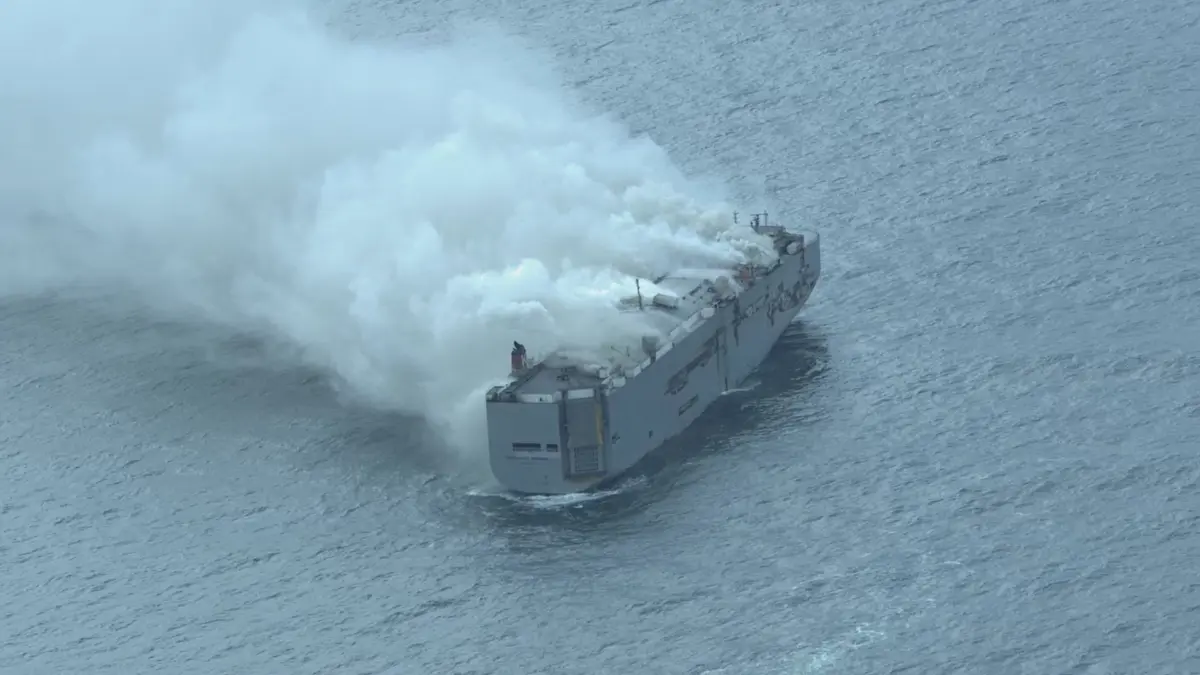
- Losses: Recent high-profile maritime casualties, including the sinking of the car carrier Felicity Ace in 2022 and severe fires on vessels like the X-Press Pearl and Yantian Express, have cost the shipping industry billions of dollars in lost cargo, hull damage, environmental cleanup, and salvage operations.
+-------------------------------------------------------------------+
|                    KEY MARITIME SAFETY METRICS                     |
+-------------------------------------------------------------------+
|  • Container Ship Fire Frequency: Average of 1 every 17 days      |
|  • Peak Burn Temperatures (Battery Fires): Exceeds 1,000°C        |
|  • Global Battery Demand Growth: Projected to double by 2030      |
+-------------------------------------------------------------------+
Official Statements and Industry Advocacy
The World Shipping Council has taken a firm, public stance on the necessity of immediate regulatory intervention, framing the issue as an essential safety measure rather than an administrative burden.
"Right now, a container can be packed with thousands of lithium batteries and still travel without being declared as dangerous goods. The SP188 exemption was intended to simplify the transport of individual devices with small batteries, not to make entire container loads invisible."
— Joe Kramek, President and CEO of the World Shipping Council
Kramek emphasized that the liner shipping industry is not looking to ban or restrict the movement of lithium-ion batteries, which are essential to modern commerce and the green energy transition. Instead, the focus is entirely on transparency, risk mitigation, and visibility.
"We know what can happen when hazards are invisible. Batteries shipped under the exemption have caused serious container fires, putting people, ports, ships and the marine environment at risk. The current rules are not working as intended. As battery shipments continue to grow, we need a better solution that makes these cargoes visible and allows the risks to be properly managed."
— Joe Kramek, President and CEO of the World Shipping Council
The Coalition for Reform
The WSC is not acting alone. Recognizing the systemic risk to their fleets and crews, five sovereign governments along with a broad coalition of international maritime industry organizations have co-sponsored the proposal. This coalition includes major flag states, shipowner associations, and maritime safety groups who argue that the status quo is no longer tenable.
The proposed amendment submitted to the IMO focuses on a simple, enforceable mechanism: a container-level threshold. Under this proposal:
- The Threshold: If the cumulative Watt-hour capacity of lithium batteries shipped under SP188 inside a single container exceeds a specific, defined limit, the exemption is voided for that container.
- The Mandate: Once this threshold is crossed, the shipment must be fully declared as Dangerous Goods (Class 9).
- The Execution: The shipper must provide standard dangerous goods documentation, and the container must display the appropriate hazardous materials placards on its exterior.
Future Outlook: The Road to IMO Reform
The proposal to close the SP188 loophole is scheduled for formal review by the IMO Sub-Committee on Carriage of Cargoes and Containers (CCC), which will meet in London from September 14-18.
                           [ SEPTEMBER 14-18 ]
                                    │
                                    ▼
               IMO Sub-Committee on Carriage of Cargoes
                  and Containers (CCC) in London
                                    │
              ┌─────────────────────┴─────────────────────┐
              ▼                                           ▼
   [Option A: Approval]                        [Option B: Rejection/Delay]
   - Threshold limits established              - Status quo remains
   - Mandatory declarations enforced           - Higher risk of undeclared
   - Enhanced maritime safety                    cargo fires at sea
The CCC Sub-Committee is the primary technical body responsible for updating the IMDG Code and ensuring that international transport regulations keep pace with emerging technology and cargo profiles.
Potential Challenges to Adoption
While safety advocates strongly support the proposal, the regulatory process at the IMO often involves navigating competing commercial interests. Some delegations and shipper coalitions may express concern over:
- Increased Administrative Costs: Shippers of consumer electronics may face higher operational costs associated with preparing dangerous goods declarations and managing hazardous cargo logistics.
- Surcharges: Many ocean carriers impose hazardous cargo surcharges to cover the cost of specialized stowage, monitoring, and emergency response readiness. Shippers currently utilizing the SP188 exemption to avoid these fees may resist the change.
- Supply Chain Friction: Requiring placards and declarations for high-volume consumer electronic shipments could introduce compliance checks and potential delays at ports of origin.
The Path Forward
Despite these potential hurdles, industry experts believe the momentum is shifting in favor of reform. The sheer scale of recent maritime losses, combined with the clear data on battery fire risks, has made safety a top priority for flag states and classification societies.
If approved by the CCC Sub-Committee, the proposed changes would be forwarded to the Maritime Safety Committee (MSC) for formal adoption, eventually becoming a mandatory amendment to the IMDG Code.
The outcome of the London meeting will be a critical indicator of whether the international maritime community can move quickly enough to address the realities of the modern, battery-powered global economy. Closing the SP188 loophole is a necessary step to ensure that the ships carrying the technology of tomorrow can navigate safely today.