










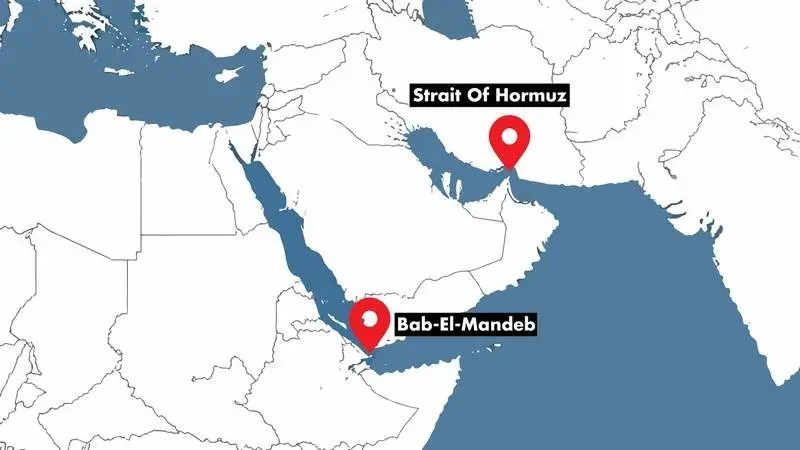
Executive Overview
In a dramatic escalation of the widening Middle East conflict, Yemen’s Iran-aligned Houthi movement has seized the highly strategic island of Perim in the Bab el-Mandeb Strait, according to multiple Yemeni government and regional security sources. The rapid maritime offensive, which also saw Houthi fighters capture the key mainland coastal town of Dhubab and the historic port city of Mocha, represents a severe blow to the internationally recognized, Saudi-backed Yemeni government. More critically, it threatens to place a second global maritime chokepoint under the de facto control of pro-Iranian forces.
                    RED SEA
                       │
                       │   ▲ North
                       │
             [Mocha] ──┴── (Captured by Houthis)
                       │
             [Dhubab] ─┴── (Captured by Houthis)
                       │
  [Perim Island] ──────*── (Captured by Houthis; bisects the strait)
                       │
             ┌─────────┴─────────┐
             │  BAB EL-MANDEB    │
             │     STRAIT        │
             └─────────┬─────────┘
                       │
                       ▼ South
                 GULF OF ADEN
The seizure of Perim Island (also known as Mayun), which sits directly in the narrow waters of the Bab el-Mandeb, potentially gives the Houthi militia the ability to choke off shipping through the southern gate of the Red Sea. With the Strait of Hormuz already severely disrupted by ongoing conflict involving Iran, a dual-chokepoint crisis could paralyze international energy markets and disrupt a massive portion of global maritime trade.
As global oil prices threaten to break past $100 a barrel, the geopolitical fallout is reverberating across Washington, Riyadh, and Tehran. While Saudi Arabia has pleaded for direct U.S. military intervention to halt the Houthi advance, the administration of U.S. President Donald Trump has reportedly rejected calls for American airstrikes, opting instead to bolster Saudi defensive capabilities while desperately seeking to avoid direct military entanglement. Meanwhile, behind-the-scenes diplomatic efforts are underway in Oman, where regional powers are attempting to broker a temporary maritime truce to prevent a total shutdown of the world’s most critical energy corridors.
Detailed Chronology of the Red Sea Offensive
The fall of Perim Island is the culmination of a lightning-fast, highly coordinated Houthi offensive along Yemen’s western coastline. Driven by mountain-hardened fighters and allegedly backed by direct tactical advice from Iran’s Islamic Revolutionary Guard Corps (IRGC), the operation caught the Saudi-backed Yemeni coalition off guard.
CHRONOLOGY OF THE HOUTHI COASTAL OFFENSIVE
┌─────────────────────────┐
│        THURSDAY         │ ──► Captured strategic port city of Mocha
│                         │ ──► Seized the Red Sea islands of Hanish
└─────────────────────────┘
             │
             ▼
┌─────────────────────────┐
│     FRIDAY MORNING      │ ──► Yemeni government forces withdraw from Dhubab
│                         │ ──► Government forces abandon positions on Perim Island
└─────────────────────────┘
             │
             ▼
┌─────────────────────────┐
│     FRIDAY AFTERNOON    │ ──► Houthi fighters establish positions on Perim Island
│                         │ ──► Complete control of the Bab el-Mandeb shipping channel
└─────────────────────────┘
The Fall of Mocha and the Hanish Islands
The offensive began in earnest earlier in the week, with Houthi forces pushing rapidly southward from their northern strongholds. On Thursday, Houthi units overran the strategic port city of Mocha (Al-Mukha), a vital coastal hub that had been held by government-aligned forces for several years. Simultaneously, Houthi amphibious units seized the Hanish Islands, a volcanic archipelago in the southern Red Sea that controls the approaches to the shipping lanes.
The Capture of Dhubab and Perim Island
By Friday morning, the situation for the internationally recognized government had deteriorated rapidly. Two senior military sources confirmed that government forces, facing overwhelming pressure and a lack of air support, withdrew from the mainland coastal town of Dhubab. Located just north of the Bab el-Mandeb, Dhubab directly overlooks the narrowest point of the strait.
Following the collapse of the mainland defensive line at Dhubab, Houthi forces crossed the narrow channel to Perim Island. By Friday afternoon, four Yemeni government sources confirmed to Reuters that Houthi fighters had established physical control over the island. The withdrawal of government forces from Perim was described by military insiders as a tactical retreat, though independent analysts view it as a catastrophic defensive failure that leaves the southern Red Sea highly vulnerable.
Government Forces Plot a Counter-Offensive
In the wake of these defeats, the Yemeni government’s military command announced plans to launch an immediate counter-offensive to retake the lost coastal territories.
Military spokesman Colonel Majed al-Nazili issued a public statement indicating that the government would deploy heavy weaponry and military aircraft to neutralize Houthi movements along the strategic coastal highways. Al-Nazili specifically warned civilians to avoid the primary transit routes linking the inland city of Taiz to the newly captured port of Mocha, warning that any Houthi military equipment or troop concentrations would be targeted.
However, military experts express skepticism regarding the government’s ability to mount a successful counter-attack without substantial foreign air support, noting that the Houthis are highly resilient mountain fighters who successfully withstood years of intensive Saudi-led coalition airstrikes during the height of the Yemeni civil war.
Supporting Context & Metrics: Chokepoints, Oil, and Global Commerce
The seizure of Perim Island has sent shockwaves through international energy markets due to the unique geography of global maritime trade.
GLOBAL SHIPPING CHOKEPOINTS IN JEOPARDY

                       [ Strait of Hormuz ]
                     /   - 1/5 of global oil historically
    [ Suez Canal ]  /    - Currently effectively closed
          |        /
          |       /
   [ Red Sea Route ]
          |
   [ Bab el-Mandeb ] <--- *NEWLY THREATENED BY HOUTHIS*
                         - Critical alternative for Saudi oil
                         - Controls access to Suez/Europe
The Strategic Geography of Perim Island
Perim Island is a volcanic landmass that bisects the Bab el-Mandeb Strait, creating two distinct shipping channels:
- The Eastern Channel (Bab Iskender): Approximately 2 miles (3 km) wide and relatively shallow, used primarily by smaller vessels.
- The Western Channel (Mayun Channel): Approximately 16 miles (26 km) wide, deep enough to accommodate ultra-large crude carriers (VLCCs) and container ships.
By occupying Perim, any military force can easily monitor, intercept, or target commercial shipping passing through both channels using relatively low-cost anti-ship missiles, drone boats, and sea mines.
The Double-Chokepoint Squeeze
Historically, approximately 10% of global seaborne oil and over $1 trillion in commercial goods pass through the Bab el-Mandeb annually, bound for the Suez Canal and European markets.
The geopolitical risk is amplified by the ongoing closure of the Strait of Hormuz due to the broader conflict with Iran. When Hormuz was effectively closed to safe commercial transit, Saudi Arabia—the world’s largest oil exporter—rerouted a significant portion of its crude exports westward via its East-West pipeline to Red Sea ports like Yanbu. From there, tankers sailed south through the Bab el-Mandeb to reach Asian markets, or north through the Suez Canal to Europe.
With the Houthis now commanding the Bab el-Mandeb, this vital Red Sea bypass route is directly threatened. If both Hormuz and the Bab el-Mandeb are compromised, global energy markets face an unprecedented logistical bottleneck.
| Metric / Indicator | Value / Status | Economic Impact |
|---|---|---|
| Global Oil Price (Brent Crude) | Crossed $100/barrel (weekly projection) | Highest level since mid-May; drives global inflation. |
| Bab el-Mandeb Trade Volume | ~8.8 million barrels/day of crude & products | Interruption forces tankers to reroute around the Cape of Good Hope (+10-14 days transit). |
| Strait of Hormuz Status | Effectively closed / Highly disrupted | Forces reliance on Red Sea bypass pipelines, which are now threatened. |
| Maritime Insurance Premiums | Up over 200% for Red Sea transits | Significantly increases the retail cost of imported goods and energy in Europe. |
Official Statements and Diplomatic Friction
The rapidly unfolding crisis on the Yemeni coast has triggered intense diplomatic maneuvering and highlighted deep rifts between Washington and its traditional Gulf allies.
           [ Saudi Arabia ] (MBS)
                  │
                  ├─► Demands: Airstrikes on Houthi targets
                  ▼
         [ United States ] (Trump)
                  │
                  ├─► Response: Rejects military action; fears escalation
                  ▼
         [ Iran / IRGC ]
                  │
                  ├─► Strategy: Provide funding/weapons to open new front
The Trump-MBS Phone Calls
According to a report by Axios, citing U.S. officials, Saudi Crown Prince Mohammed bin Salman (MBS) made two urgent telephone calls to U.S. President Donald Trump on Thursday. The Crown Prince reportedly urged the U.S. president to launch immediate, direct military airstrikes against Houthi positions to halt their coastal advance and protect the Bab el-Mandeb.
President Trump reportedly rejected the request. U.S. officials stated that while the administration is deeply concerned about the escalating conflict in Yemen, it does not intend to commit American forces to direct military action against the Houthis at this time. Instead, the U.S. plans to step up intelligence sharing, logistics support, and defensive hardware deliveries to Saudi Arabia, while strictly avoiding direct kinetic involvement that could spark a wider war with Iran.
The Iranian Connection
The reluctance of the U.S. to intervene directly comes amid intelligence reports that the Houthi advance is being heavily directed and financed by Tehran.
According to Yemeni government, Iranian, and regional security sources, the dramatic Houthi offensive along the Red Sea coast was launched under the direct guidance of Iran’s Islamic Revolutionary Guard Corps (IRGC). The objective is to open a new, highly disruptive front in Iran’s broader regional proxy conflict with the United States and its allies.
Two Iranian sources revealed that Tehran instructed Houthi leadership last week to significantly escalate attacks on Saudi Arabia and promised a substantial increase in financial aid, advanced weaponry, and senior military advisors to facilitate the offensive.
While Iran publicly denies these allegations, maintaining that the Houthis are an independent entity and "not a proxy," Western intelligence agencies assert that the sophistication of the Houthis’ anti-ship missile capabilities and drone operations points directly to Iranian state sponsorship.
Future Outlook: Diplomatic Maneuvers and Escalation Risks
As the military situation on the ground remains highly fluid, the international community is looking toward a potential diplomatic off-ramp to prevent a total collapse of global shipping.
The Salalah Summit: A Last-Ditch Effort
Attention is currently focused on a planned diplomatic gathering in the Omani coastal city of Salalah, scheduled for Monday. Brokered by Oman and Iran, the meeting is expected to bring together Gulf foreign ministers and their Iranian counterpart.
The primary objective of the talks is to secure a temporary, emergency agreement to manage shipping through the Strait of Hormuz and potentially ease tensions in the Red Sea. If successful, such a deal could provide a mechanism to de-escalate the maritime conflict, stabilize oil markets, and prevent further Houthi actions against commercial vessels in the Bab el-Mandeb.
However, the viability of any such agreement remains highly uncertain. The Houthis, emboldened by their significant territorial gains, may demand major political concessions from the Saudi-backed coalition as a prerequisite for guaranteeing safe passage through the strait.
Potential Escalation Scenarios
If diplomatic efforts fail, the region faces several highly volatile paths:
                      [ Diplomatic Failure ]
                                │
         ┌──────────────────────┴──────────────────────┐
         ▼                                             ▼
[ Scenario A: Total Blockade ]               [ Scenario B: U.S./Coalition Entry ]
- Houthis shut Bab el-Mandeb                 - Escalate to direct naval escort
- Global oil surges past $120/bbl            - High risk of direct clash with Iran
- Severe supply chain disruption - Broad regional maritime war- Total Maritime Blockade: The Houthis could establish a de facto blockade of the southern Red Sea, utilizing Perim Island as a base for coastal artillery and drone deployment. This would force all international shipping to bypass the Suez Canal entirely, routing around the southern tip of Africa. Such a shift would add weeks to global supply chains and push oil prices well past $120 a barrel.
- U.S.-Led Naval Coalition Intervention: Despite the Trump administration’s current reluctance to engage in direct airstrikes, a sustained threat to global commerce could force the United States and its European allies to form an active maritime protection coalition. This could involve direct naval escorts through the Bab el-Mandeb and preemptive strikes on Houthi coastal radar installations, bringing the U.S. into direct military conflict with Iranian-backed forces.
- A Protracted War of Attrition: The Yemeni government may attempt to execute its promised counter-offensive. Given the difficult terrain and the Houthis’ defensive posture, this would likely result in a grinding, bloody stalemate along the Red Sea coast, turning the vital shipping lane into a permanent active combat zone for the foreseeable future.
The coming days, and the outcome of the scheduled talks in Oman, will likely determine whether the Bab el-Mandeb remains an open artery of global commerce or becomes the central battleground of a wider Middle Eastern war.