









Executive Overview
Move over, late-night talk show hosts and chauffeured luxury vehicles—there is a fresh, pedal-powered paradigm taking over the urban mobility conversation. Enter Urbanists on Bakfiets Talking Cities, a breakout YouTube series conceptualized and produced by Urban Mobility Explained. Hosted by urbanist and communicator Lior Steinberg, the series strips away the sterile artifice of the television studio, replacing leather-bound limousine interiors with the raw, honest wooden bucket of an Urban Arrow electric cargo bike.
The premise is deceptively simple: seat prominent thinkers, designers, and advocates inside the front cargo box of a bakfiets (the traditional Dutch heavy-duty cargo bicycle), pedal through the arteries of a vibrant European city, and discuss the future of human-centric urban design. Yet, beneath its charming, lo-fi aesthetic lies a serious investigative exploration into the mechanics of city-making. The show offers an unfiltered look at how metropolitan areas are shedding their post-war, automobile-dependent paradigms in favor of human scale, active mobility, and sustainable public spaces.
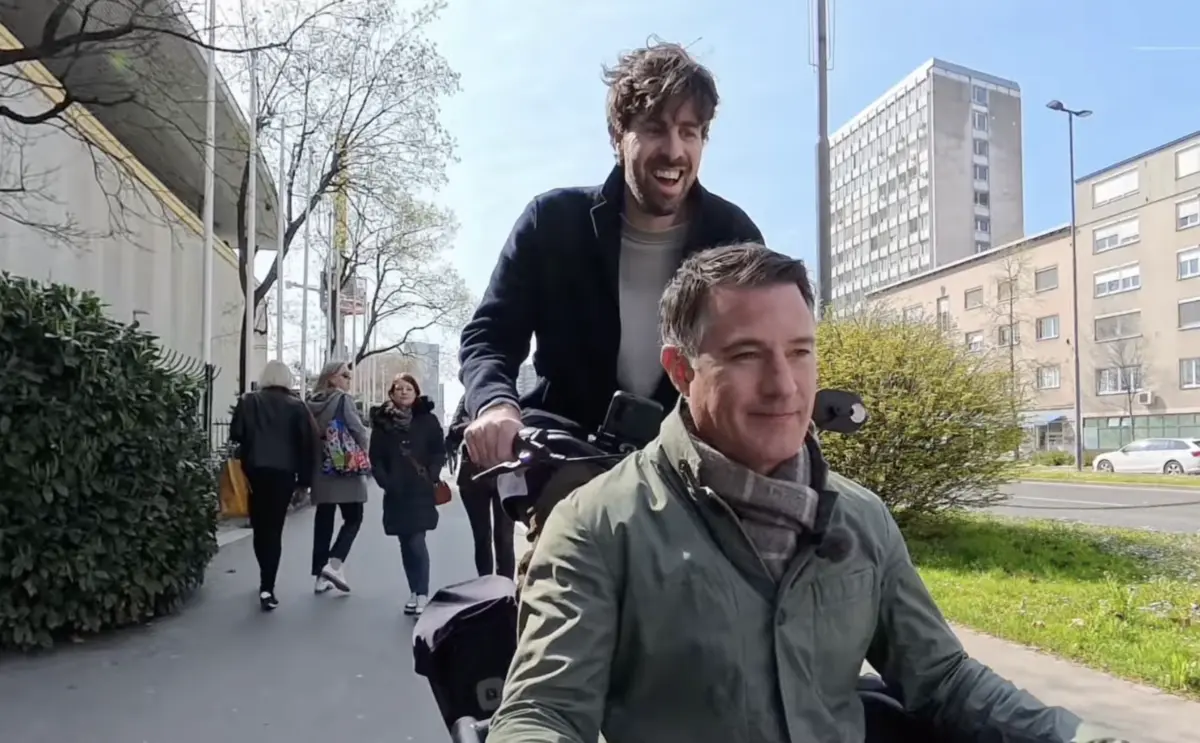
In the inaugural episode, Steinberg trades conventional transit for pedal power in Ljubljana, Slovenia, rolling alongside one of the definitive architects of the modern tactical urbanism movement, Mike Lydon. Co-author of the seminal text Tactical Urbanism: Short-term Action for Long-term Change, Lydon brings a wealth of international perspective to the moving interview. As Steinberg navigates Ljubljana’s impeccably integrated cycling infrastructure and pedestrianized core, the duo examines the intersection of grassroots activism, municipal policy, and the tangible transformation of streetscapes.
This article explores the genesis of this innovative series, dissects the philosophy of tactical urbanism through Lydon’s lens, analyzes Ljubljana’s remarkable urban renaissance, and evaluates the broader metrics driving the global shift toward cargo-bike logistics and micro-mobility.
Detailed Chronology: From Concept to Cargo Bike
To understand the cultural resonance of Urbanists on Bakfiets Talking Cities, one must examine the timeline of how urban mobility media has evolved, alongside the specific journey of its premier episode in Slovenia’s capital.
The Evolution of Mobility Media
For decades, discussions surrounding urban planning were confined to academic journals, closed-door municipal zoning board meetings, and dry policy papers. While influential, this body of work rarely captured the popular imagination. The 2010s saw a democratization of urbanist discourse, catalyzed by digital media platforms. Podcasts, YouTube channels, and social media advocacy groups began translating complex civil engineering and urban economics principles into accessible, digestible content.
Jerry Seinfeld’s Comedians in Cars Getting Coffee proved that intimate, conversational mobile interviews could captivate mainstream audiences. Urban Mobility Explained recognized a parallel opportunity: apply that same conversational intimacy to the world of city planning. By utilizing a bakfiets—an iconic symbol of the European cycling revolution—the creators immediately establish an authentic, sustainable tone. The vehicle is not merely a prop; it is an active participant in the narrative, demonstrating the exact type of zero-emission utility vehicle that urbanists argue should replace urban delivery vans and private automobiles.

The Ljubljana Expedition
The premiere episode of the series was not filmed in a cycling heartland like Amsterdam or Copenhagen, but rather in Ljubljana, Slovenia—a city undergoing one of the most remarkable urban transformations in modern European history.
- The Launch (00:00 – 05:00): Host Lior Steinberg introduces the concept while unboxing the Urban Arrow cargo bike. He sets the stage by highlighting Ljubljana’s pedestrianized center, a masterclass in reclaiming asphalt from cars.
- The Encounter with Lydon (05:01 – 15:30): Mike Lydon joins Steinberg, climbing into the front bucket of the bakfiets. As Steinberg navigates the bustling cycle tracks, the discussion immediately pivots to the psychological impact of street design. Lydon shares anecdotes from his decades of consulting with cities worldwide.
- The "School Street" Pass-By (15:31 – 25:00): The rolling interview serendipitously passes a temporary "school street"—a traffic-calmed zone directly outside an educational facility where vehicular access is restricted during drop-off and pick-up hours. Lydon breaks down how this intervention mirrors the core tenets of tactical urbanism: low-cost, high-impact, and community-driven.
- Reflections on the Future (25:01 – End): The episode concludes with a synthesis of how temporary experiments harden into permanent infrastructure, leaving viewers with a profound sense of "vacation envy" paired with actionable takeaways for their own hometowns.
Supporting Context & Metrics: The Science of the Bakfiets and Tactical Urbanism
To fully appreciate the dialogue between Steinberg and Lydon, one must examine the dual pillars of the episode: the rise of cargo bike logistics and the methodology of tactical urbanism.
The Rise of the Bakfiets in Urban Logistics
The bakfiets (literally translated from Dutch as "box bike") has transitioned from a niche familial transport vehicle into a cornerstone of sustainable urban logistics. Modern iterations, equipped with electric pedal-assist motors (e-bikes), can carry payloads exceeding 100 kilograms (220 pounds) in addition to adult passengers.
- Space Efficiency: A standard delivery van occupies approximately 10 to 12 square meters of urban real estate when parked and demands significantly more dynamic space while moving. Conversely, a cargo bike requires a fraction of that footprint, effectively eliminating double-parking congestion on narrow European-style streets.
- Emissions Reductions: According to recent data from the European Cycle Logistics Federation (ECLF), replacing light commercial vans with cargo bikes for urban freight delivery can reduce delivery-related carbon emissions in dense urban cores by up to 90%. Furthermore, cargo bikes neutralize particulate matter (PM2.5 and PM10) and nitrogen oxide ($NO_x$) emissions at the street level.
- Economic Viability: Studies in cities like London, Paris, and Berlin indicate that cargo bikes are often up to 60% faster than delivery vans in congested downtown areas during peak hours, owing to their ability to utilize protected cycle tracks and bypass gridlock.
Tactical Urbanism: Low-Cost, High-Impact Transformation
Mike Lydon’s contributions to modern urban planning cannot be overstated. Alongside Anthony Garcia, Lydon formalized the concept of "Tactical Urbanism"—an approach to neighborhood building using short-term, low-cost, and scalable interventions intended to catalyze long-term spatial change.
+-----------------------------------------------------------------+
|                 THE TACTICAL URBANISM PIPELINE                  |
+-----------------------------------------------------------------+
          |
          +---> 1. IDENTIFY: Local community or municipal bottleneck
          |
          +---> 2. EXPERIMENT: Low-cost materials (paint, planters, bollards)
          |
          +---> 3. EVALUATE: Measure foot traffic, safety, and public sentiment
          |
          +---> 4. INSTITUTIONALIZE: Convert temporary fix to permanent concrete
Traditional urban planning projects routinely take 5 to 15 years from conception to ribbon-cutting, often bogged down by bureaucratic inertia, exorbitant capital costs, and intense political resistance. Tactical urbanism flips this script. By utilizing semi-permanent materials—such as traffic paint, potted plants, reclaimed wood, and temporary seating—municipalities and grassroots activists can test radical design changes over a weekend.
In the Ljubljana episode, the observation of the temporary "school street" underscores this philosophy. By blocking vehicular traffic for a few hours each day using movable barricades, the city creates a safe, vibrant play space for children without allocating millions of dollars to capital reconstruction. Once parents and business owners witness the safety and social benefits firsthand, political will naturally builds to make the intervention permanent through traditional engineering.
Official Statements and Expert Perspectives
The intersection of mobile media, active transport, and tactical intervention has drawn commentary from leading figures in global urban design.
Lior Steinberg, host and creator of Urbanists on Bakfiets Talking Cities, emphasized the deliberate choice of medium in a recent project statement:
"We wanted to break out of the echo chamber of traditional conferencing and studio interviews. When you put someone in the bucket of a cargo bike, the conversation changes. You are experiencing the city in real-time—feeling the wind, dodging pedestrians, listening to the ambient noise of a vibrant street. It grounds the intellectual theories of urban planning in the visceral reality of the pavement."
Mike Lydon, reflecting on his ride through Ljubljana and the evolution of tactical interventions, noted the increasing openness of municipal leaders to rapid prototyping:
"For a long time, cities were terrified of making mistakes, so they did nothing, or they spent a decade planning a single intersection. What tactical urbanism—and the broader micro-mobility movement—has proven is that cities are living laboratories. When you ride through a space like Ljubljana on a bakfiets, you realize that transforming a city isn’t about massive budgets; it’s about the political courage to reallocate public space from cars to people."
Municipal transportation planners in Ljubljana have likewise championed the city’s ongoing pedestrianization strategy, pointing out that closing the historic center to motorized traffic in 2007 catalyzed a 700% increase in downtown foot traffic and spawned a vibrant café culture that has revitalized the local economy.
Future Outlook: Where Do We Go From Here?
As Urbanists on Bakfiets Talking Cities continues its episodic journey across global metropolises, the series serves as both entertainment and a diagnostic tool for the future of urban mobility. Several key trends will dictate how cities evolve in the wake of these ideas:
- Mainstreaming of Micro-Mobility Infrastructure: As demonstrated by the cargo bike medium, cities will increasingly prioritize the separation of micro-mobility (e-bikes, cargo bikes, and scooters) from heavy vehicular traffic. Protected cycle tracks will transition from isolated bike lanes into comprehensive, interconnected networks.
- Institutionalization of Tactical Approaches: Forward-thinking municipal governments are moving away from treating tactical urbanism as a purely grassroots, guerrilla activity. Instead, cities like Paris, Bogotá, and Melbourne are establishing official "rapid response" tactical urbanism departments, empowering communities to co-design temporary interventions that feed directly into long-term capital improvement plans.
- The Death of the Private Urban Automobile: As urban population density intensifies, the spatial inefficiency of the private automobile becomes mathematically unsustainable. Series like Urbanists on Bakfiets visually demonstrate that human-scale transport models are not utopian fantasies, but practical, joyful, and efficient necessities for the 21st-century city.
Ultimately, whether viewed for its scenic tour of Ljubljana, its masterclass in urban planning theory, or simply the delightful novelty of watching prominent thinkers ride shotgun in a bicycle bucket, Urbanists on Bakfiets Talking Cities points the way toward a more sustainable urban future—one pedal stroke at a time.