








Executive Overview
In a major strategic realignment of the Yemeni conflict, Iran-aligned Houthi militants have seized control of the historic port city of Mocha. According to four military sources within the internationally recognized Yemeni government, the fall of Mocha marks a decisive shift in Houthi military strategy. The group has pivoted from regional territorial consolidation in northern Yemen toward securing direct control over the country’s extensive Red Sea coastline.
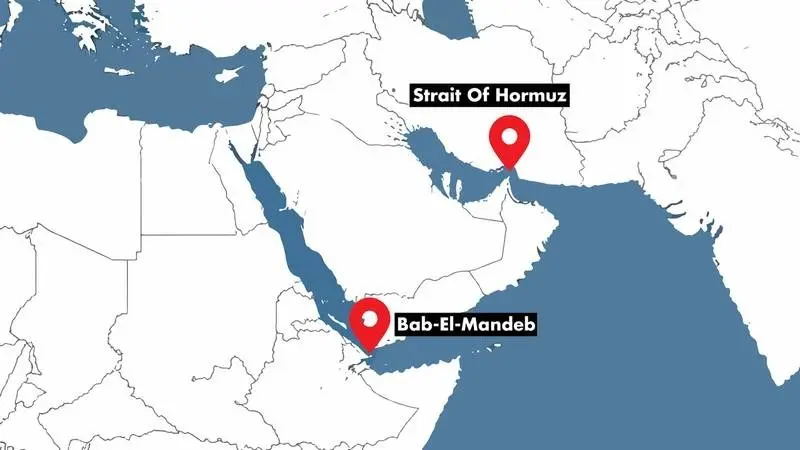
This coastal offensive poses an immediate threat to the Bab el-Mandeb Strait, a narrow maritime chokepoint that serves as one of the world’s most vital shipping corridors. By pushing government forces southward, the Houthis are positioning themselves to exert unprecedented leverage over global commerce.
The escalations have effectively opened a highly volatile second front in the broader Middle East conflict, directly pitting Saudi-backed government forces against an increasingly sophisticated, Tehran-supported insurgency. The geopolitical fallout was immediately felt in global markets, where Brent crude prices surged past $100 per barrel.
As shipping routes through both the Strait of Hormuz and the Red Sea face severe disruption, the safety of global energy transfers and commodity supply chains hangs in a delicate balance.
====================================================================
                  RED SEA GEOPOLITICAL CHOKEPOINT
====================================================================
               [Suez Canal / Egypt]
                        |
                        | (Red Sea Route)
                        v
               [Yanbu Port (Saudi Arabia)]
                        |
                        |
                        v
               [Hodeidah (Houthi Stronghold)]
                        |
                        v
               [Mocha (Newly Captured by Houthis)]
                        |
   ==================================================
  /       BAB EL-MANDEB STRAIT (Gate of Tears)
  |  [Dhubab] <---------------------> [Perim Island]  |
    (Govt Forces Pushed Here)      (Strategic Key)  /
   ==================================================
                        |
                        v
               [Gulf of Aden / Indian Ocean]
====================================================================
Detailed Chronology of the Coastal Offensive
The capture of Mocha is the culmination of a rapid, highly coordinated offensive along Yemen’s western littoral zone. Over the past week, Houthi forces launched a multi-pronged assault aimed at dismantling the defensive lines of the Saudi-backed coalition.
+-----------------------------------------------------------------+
|                    CHRONOLOGY OF ESCALATION                     |
+-----------------------------------------------------------------+
| 1. Capture of Mocha:                                            |
|    Houthi militants overrun the historic port city, shifting    |
|    focus from northern highlands to western maritime corridors.  |
+-----------------------------------------------------------------+
| 2. Assault on Hanish Islands:                                   |
|    Strategic Red Sea islands targeted, forcing government       |
|    defenders to retreat southward.                              |
+-----------------------------------------------------------------+
| 3. Defensive Collapse at Dhubab:                                |
|    Government forces pushed back to Dhubab, directly adjacent   |
|    to the critical Perim Island chokepoint.                     |
+-----------------------------------------------------------------+
| 4. Command Relocation:                                          |
|    Gen. Tarek Saleh orders National Resistance Forces to        |
|    abandon vulnerable coastal bases for secure inland positions. |
+-----------------------------------------------------------------+
The Fall of Mocha and the Push South
Mocha, historically famous for its pivotal role in the global coffee trade, holds immense modern strategic value due to its deep-water port facilities and proximity to international shipping lanes. Houthi fighters overran government positions in the city, forcing a rapid retreat of local garrisons.
Following the fall of the city, the militants extended their operations westward into the Red Sea, launching amphibious and drone-supported assaults on the strategic Hanish Islands.

These islands, which command the central shipping lanes of the southern Red Sea, fell shortly after, forcing government forces and their regional allies to withdraw further south to Dhubab. Dhubab sits directly on the coast of the Bab el-Mandeb Strait, facing Perim Island—a heavily fortified volcanic island that acts as the physical gatekeeper to the strait. Military analysts warn that if Dhubab and Perim Island fall, the Houthis will achieve absolute physical control over the southern entrance of the Red Sea.
The Retreat of the National Resistance Forces
The severity of the government’s defensive collapse on the west coast was underscored by instructions issued by General Tarek Saleh, commander of the National Resistance Forces and nephew of the late Yemeni President Ali Abdullah Saleh.
Broadcast on the Al-Jumhuriya television channel, Saleh directed his field commanders to immediately establish an alternative, hardened command center in a secure inland location. This directive confirmed that the National Resistance Forces, once viewed as a formidable bulwark against Houthi expansion along the Tihama coast, are being steadily displaced by the Houthi advance.
Celebration and Ideological Mobilization
Following their tactical victories, videos verified by independent news agencies showed Houthi fighters celebrating their advances inside a captured security directorate building in the Hays district, located south of the key port city of Hodeidah.
The fighters, armed with assault rifles and chewing qat—the mild green leaf stimulant central to Yemeni social life—were filmed chanting their signature slogan: "Death to America, death to Israel, a curse upon the Jews, victory to Islam."
The footage highlights the ideological fervor driving the group’s rank-and-file, framing their local territorial conquests as part of a broader, global confrontation with Western powers and their regional allies.
Cross-Border Retaliation
The escalation on the ground has triggered a corresponding rise in cross-border hostilities. Houthi military spokespersons reported that heavy Saudi airstrikes targeted several northern and southern provinces, including:
- Al Jawf
- Marib
- Saada (the traditional Houthi heartland)
- Taiz
- Hodeidah
The strikes on Hodeidah were particularly intense, aimed at disrupting the port infrastructure the Houthis use as a staging ground for naval drone deployments.
In retaliation, Houthi units launched a series of missile and loitering munition attacks targeting civilian and economic infrastructure in southern Saudi Arabia. Saudi authorities confirmed that these strikes wounded at least 73 people, including women and children, marking one of the most significant civilian casualty events inside the Kingdom since the 2022 truce.
Supporting Context & Economic Metrics
The battle for Yemen’s coast is not merely a localized civil conflict; it is a direct threat to the arteries of global commerce. The Bab el-Mandeb Strait, known historically in Arabic as the "Gate of Tears" due to its treacherous navigation, is a narrow channel measuring just 18 miles (29 kilometers) wide at its narrowest point.
====================================================================
                GLOBAL MARITIME CHOKEPOINT COMPARISON
====================================================================
Chokepoint:        BAB EL-MANDEB STRAIT
Daily Oil Flow:    ~6.2 Million Barrels (Crude & Refined Products)
Key Destinations:  Europe, North America, Asia via Suez Canal
Major Threat:      Houthi Coastal Anti-Ship Missiles & Drone Swarms
--------------------------------------------------------------------
Chokepoint:        STRAIT OF HORMUZ
Daily Oil Flow:    ~21 Million Barrels (Global Transit Chokepoint)
Key Destinations:  Global Markets (Highly sensitive to Iranian threats)
====================================================================
The Strait’s Economic Vitality
Through this narrow passage flows roughly 10% of global seaborne petroleum trade and an estimated $1 trillion in commercial goods annually. It is the primary route for crude oil, liquefied natural gas (LNG), and refined petroleum products traveling from the Persian Gulf north through the Suez Canal to European and North American markets.
Additionally, it serves as a critical conduit for agricultural products, manufactured goods, and raw materials moving from Europe and Russia to Asia.
The Oil Supply Shock
The threat of a Houthi-enforced blockade at the Bab el-Mandeb has sent shockwaves through energy markets. Brent crude’s rise above $100 per barrel reflects deep anxiety over a worst-case scenario: the simultaneous disruption of both the Strait of Hormuz and the Red Sea corridor.
                    BRENT CRUDE PRICE REACTION

   $105 +-------------------------------------------------------+
        |                                                       |
   $100 |==================================                     |
        |                                                      |
    $95 |                                                      |
        |                                                      |
    $90 |                                                      |
        +-------------------------------------------------------+
                              Recent Escalation
To mitigate risks associated with the Strait of Hormuz—which is highly vulnerable to direct Iranian interdiction—Saudi Arabia has historically relied on its East-West Pipeline. This infrastructure transports millions of barrels of crude daily across the Arabian Peninsula to the port of Yanbu on the Red Sea.
From Yanbu, tankers transport the oil south through the Bab el-Mandeb to Asian buyers, or north toward the Suez Canal.
               SAUDI ARABIA'S CRITICAL OIL BYPASS ROUTE

  [Persian Gulf]
        |
        x  <-- Strait of Hormuz (Vulnerable to Iran)
        |
  [East-West Pipeline] ===> [Yanbu Port (Red Sea)]
                                   |
                                   v
                         [Bab el-Mandeb Strait] <-- Threatened by Houthis
With the Houthis seizing Mocha and advancing on Dhubab, the Yanbu bypass strategy is compromised. If the Houthis secure the Bab el-Mandeb, Saudi Arabia’s primary alternative export route to Asia will be under the direct targeting envelope of an adversary that has already declared a formal naval blockade against the Kingdom.
Evolution of Houthi Military Capabilities
The current offensive highlights the transformation of the Houthi movement. What began in the early 2000s as a localized, poorly equipped Zaydi Shia revivalist insurgency in the rugged mountains of Saada has evolved into a highly capable de facto state military.
Following their capture of the capital, Sanaa, in 2014, and the subsequent Saudi-led military intervention in 2015, the Houthis capitalized on extensive Iranian technical assistance, training, and logistical support.
Under the leadership of Abdul Malik al-Houthi, the group has developed sophisticated asymmetric capabilities, including:
- Medium-range ballistic missiles capable of striking deep within Saudi Arabia and the UAE.
- Land-attack cruise missiles and long-range loitering munitions (drones).
- Advanced anti-ship cruise missiles (ASCMs) and GPS-guided waterborne improvised explosive devices (WBIEDs).
- Sea mines and reconnaissance drones used to track commercial shipping.
This arsenal allows the Houthis to project power far beyond their land borders, effectively turning a domestic rebellion into a major regional security threat.
Official Statements and Behind-the-Scenes Diplomacy
The rapid escalation has triggered intense, behind-the-scenes diplomatic maneuvering aimed at preventing a wider regional war.
+-----------------------------------------------------------------+
|                  TRIANGULAR DIPLOMATIC CHANNELS                 |
+-----------------------------------------------------------------+
|                                                                 |
|     [Saudi Arabia]  =======>  [Pakistan]  =======>  [Iran]      |
|     (Demanded halt            (Intermediary         (Publicly   |
|      to attacks)               Conduit)              Denied     |
|                                                      Control)   |
|                                                                 |
|                            [Tehran]                             |
|                                |                                |
|                                v (Private Directive)            |
|                            [Houthis]                            |
|                     (Ordered to step up strikes)                |
+-----------------------------------------------------------------+
The Backchannel Warning via Islamabad
According to diplomatic sources in Riyadh, Islamabad, and Tehran, Saudi Arabia recently utilized Pakistan as a backchannel intermediary to deliver an urgent warning to Iran. The message, conveyed to Tehran on Tuesday, demanded that Iran rein in its Houthi allies before the conflict escalated past the point of no return.
A senior Iranian official confirmed receipt of the Pakistani-brokered message but maintained the public diplomatic line that:
"Iran does not control the decisions of the Houthis. They are an independent national resistance movement acting in defense of their own territory and sovereign interests."
Intelligence Reveals Direct IRGC Coordination
Despite Tehran’s public disavowals, intelligence reports paint a different picture of deep, direct coordination. Two Iranian security sources revealed that senior officials within the Islamic Revolutionary Guard Corps (IRGC) met with Houthi representatives in Tehran. During these meetings, the Houthis were instructed to intensify their attacks on Saudi territory and Red Sea shipping.
In return, Tehran promised increased shipments of advanced guidance systems, solid-fuel rocket components, and additional financial subsidies. Furthermore, several high-ranking IRGC Quds Force commanders have reportedly traveled to Yemen to assist in planning and coordinating the coastal offensive.
Houthi and Regional Rhetoric
The Houthis have framed their renewed military campaign as a direct response to foreign aggression. A Houthi military spokesperson stated:
"Our naval operations are a legitimate defense against the ongoing American-Zionist aggression. We will continue to expand our theater of operations until the siege on our people is lifted, and the imperialist war against our allies in the Axis of Resistance is halted."
The reference to the "Axis of Resistance" aligns with their 2023 campaign, during which they launched dozens of drone and missile attacks against commercial ships in the Red Sea, claiming solidarity with Palestinians in Gaza.
In 2024, these attacks have expanded, with the Houthis citing direct U.S. and British airstrikes on their territory as justification for targeting any vessel associated with the Western-led maritime coalition.
Future Outlook
The capture of Mocha and the looming battle for Dhubab and Perim Island mark the end of the fragile status quo established by the 2022 UN-brokered truce. While that agreement halted major offensive operations for nearly two years, it failed to produce a comprehensive, lasting political settlement. The current offensive threatens to plunge Yemen back into a state of total, unrestricted warfare.
Potential Scenarios for Global Shipping
If the Houthis consolidate their grip on the Bab el-Mandeb Strait, international shipping companies will face an increasingly perilous operating environment.
+-----------------------------------------------------------------+
|                  FUTURE SCENARIOS & PROJECTIONS                 |
+-----------------------------------------------------------------+
| Scenario A: Cape of Good Hope Diversion                          |
| * Shipping lines completely abandon the Red Sea route.          |
| * Average transit times increase by 10-14 days.                 |
| * Global supply chains experience persistent inflationary shock. |
+-----------------------------------------------------------------+
| Scenario B: Direct Western Military Escort                      |
| * U.S. and coalition warships expand naval escort operations.   |
| * High risk of direct military clashes with Houthi coastal      |
|   batteries.                                                    |
+-----------------------------------------------------------------+
| Scenario C: Renewed Saudi-Led Coalition Offensive               |
| * Saudi Arabia restarts heavy airstrikes and ground campaigns.   |
| * Deepens the humanitarian crisis, affecting millions.          |
+-----------------------------------------------------------------+
The diversion of shipping around the Cape of Good Hope, which adds thousands of miles and up to two weeks to transit times, could transition from a temporary mitigation measure to a permanent reality for a large portion of the global merchant fleet. The resulting increase in fuel consumption, insurance premiums, and charter rates would exert persistent inflationary pressure on global supply chains.
Geopolitical Repercussions and Regional Stability
For Saudi Arabia, the Houthi advance to the Bab el-Mandeb represents a major national security crisis. It places a hostile, heavily armed non-state actor directly on its southern maritime flank, with the ability to interdict both its primary and alternative oil export routes.
This development may force Riyadh to abandon its current diplomatic engagement with Tehran and reactivate its military coalition in Yemen, a move that would immediately extinguish any lingering hopes for a negotiated peace.
For the United States and its Western allies, the situation presents a difficult security challenge. While the U.S.-led Operation Prosperity Guardian has sought to protect Red Sea shipping, naval escorts and defensive interceptions are costly and resource-intensive.
If the Houthis establish permanent, fortified missile and radar installations on Perim Island and the cliffs of Dhubab, securing the waterway may require a sustained, high-intensity military campaign targeting land-based assets—an intervention that carries a high risk of escalation with Iran.
As the battle lines harden around the "Gate of Tears," the conflict in Yemen has evolved far beyond a domestic struggle for power. It is now a primary front in a regional contest for control over the world’s most critical maritime corridors, with the stability of global energy markets and international trade hanging in the balance.