






Executive Overview
Atlanta’s culinary landscape is experiencing a golden age, driven by a booming local economy and a cultural ethos that treats dining out not merely as a necessity, but as a core pillar of community life. While Southern classics like barbecue and soul food historically defined the Georgia capital’s gastronomic identity, the past decade and a half has witnessed the explosive rise of a world-class, hyper-local burger scene.
Driven by culinary entrepreneurs, a commitment to sustainable sourcing, and a fiercely loyal local following, Atlanta’s premier burger destinations have evolved from humble late-night novelties and neighborhood hideaways into institutional landmarks. This report examines the economic, cultural, and historical trajectory of five defining burger destinations in the metropolitan area—Grindhouse Killer Burgers, The Vortex Bar & Grill, H&F Burger, Farm Burger, and Evergreen Butcher + Baker—highlighting how these establishments reflect the broader transformation of the city’s food culture.
Supporting Context & Metrics: The Economic Engine of Atlanta’s Dining Scene
Food is big business across Georgia. According to data from the National Restaurant Association, the state’s food and drink industry generated an astonishing $49.8 billion in direct economic activity and employed nearly 494,000 people. This robust economic ecosystem provides a fertile environment for independent restaurateurs, artisanal butchers, and visionary chefs to experiment with elevated casual dining concepts.
In Atlanta, culinary trends are heavily influenced by the city’s unique geography. Locals traditionally divide the metropolitan area into two distinct zones: ITP (Inside the Perimeter, referencing the boundary created by Interstate 285) and OTP (Outside the Perimeter). While urban sprawl has pushed many popular concepts into the northern and eastern suburbs, the heart of Atlanta’s innovative burger culture remains anchored ITP, thriving in historically vibrant, walkable neighborhoods such as Little Five Points, Decatur, Kirkwood, and Poncey-Highland.
Detailed Chronology: The Rise of Atlanta’s Iconic Burger Spots
The modern Atlanta burger renaissance can be traced through a timeline of grit, culinary craftsmanship, and grassroots popularity that spans from the late 2000s to the present day.
[2009] Grindhouse opens in Municipal Market
  │
[2008-2010] H&F Burger & Farm Burger launch
  │
[Early '90s - Present] The Vortex establishes L5P dominance
  │
[2019] Evergreen Butcher + Baker debuts Sunday cheeseburgers
2009: Grindhouse Killer Burgers – Cult Cinema Meets Counter Culture
Grindhouse Killer Burgers entered the Atlanta scene in 2009, when founder Alex Brounstein opened the original location inside the historic Municipal Market (frequently known as the Sweet Auburn Curb Market). The market itself carries deep historical resonance: during the era of segregation, Black vendors were prohibited from selling goods inside the main building, forcing them to conduct commerce along the curb outside.
Brounstein’s concept tapped into a different kind of counter-culture: the retro aesthetic of 1960s and ’70s "grindhouse" exploitation cinema. Offering fully customizable patties alongside tongue-in-cheek specialty items—such as the Cowboy Style (cheddar, bacon, crispy Vidalia onion rings, and BBQ sauce) and the Southern-inspired Dixie Style (featuring a pimento cheese-stuffed fried green tomato)—Grindhouse quickly captured the city’s imagination. Today, the brand has expanded to multiple metropolitan locations, including a vital outpost inside Hartsfield-Jackson Atlanta International Airport, ensuring travelers can experience local flavor right up until departure.

2010: Farm Burger – The Sustainable Grass-Fed Revolution
In 2010, the convergence of sustainable agriculture and gourmet fast-casual dining birthed Farm Burger. Founded by farmer-rancher Jason Mann and restaurateur George Frangos in Decatur, the brand set a new standard for ingredient transparency by utilizing 100% grass-fed beef sourced from cattle raised without antibiotics or added growth hormones.
Evolving far beyond a standard neighborhood joint, Farm Burger cemented its regional footprint through traditions like "Farm Burger Fridays"—a ritual embraced by locals and recognized nationally, earning a spot in USA Today’s 10 Best Reader’s Choice Awards for Best Regional Fast Food. By pairing classic formulations with adventurous toppings like local goat cheese, roasted bone marrow, and house-made sauces (such as smoked paprika mayo and sherry-date barbecue sauce), Farm Burger proved that ethical sourcing and high-volume operations could successfully coexist.
2011–Present: The Vortex Bar & Grill – The Unapologetic King of L5P
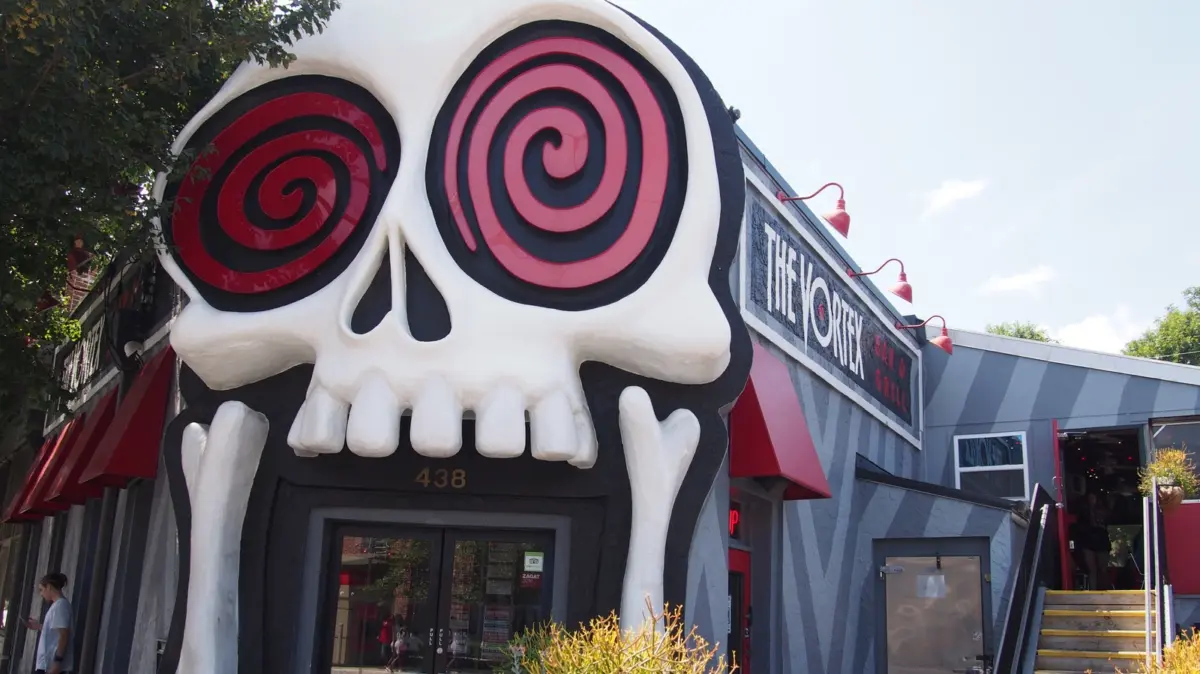
While many modern establishments lean into sleek, minimalist aesthetics, The Vortex Bar & Grill has proudly stood as a defiant, larger-than-life institution in the trendy Little Five Points (L5P) neighborhood since the early 1990s. Patrons cannot miss the entrance: a towering, 20-foot-tall Laughing Skull through which diners walk to enter the establishment.
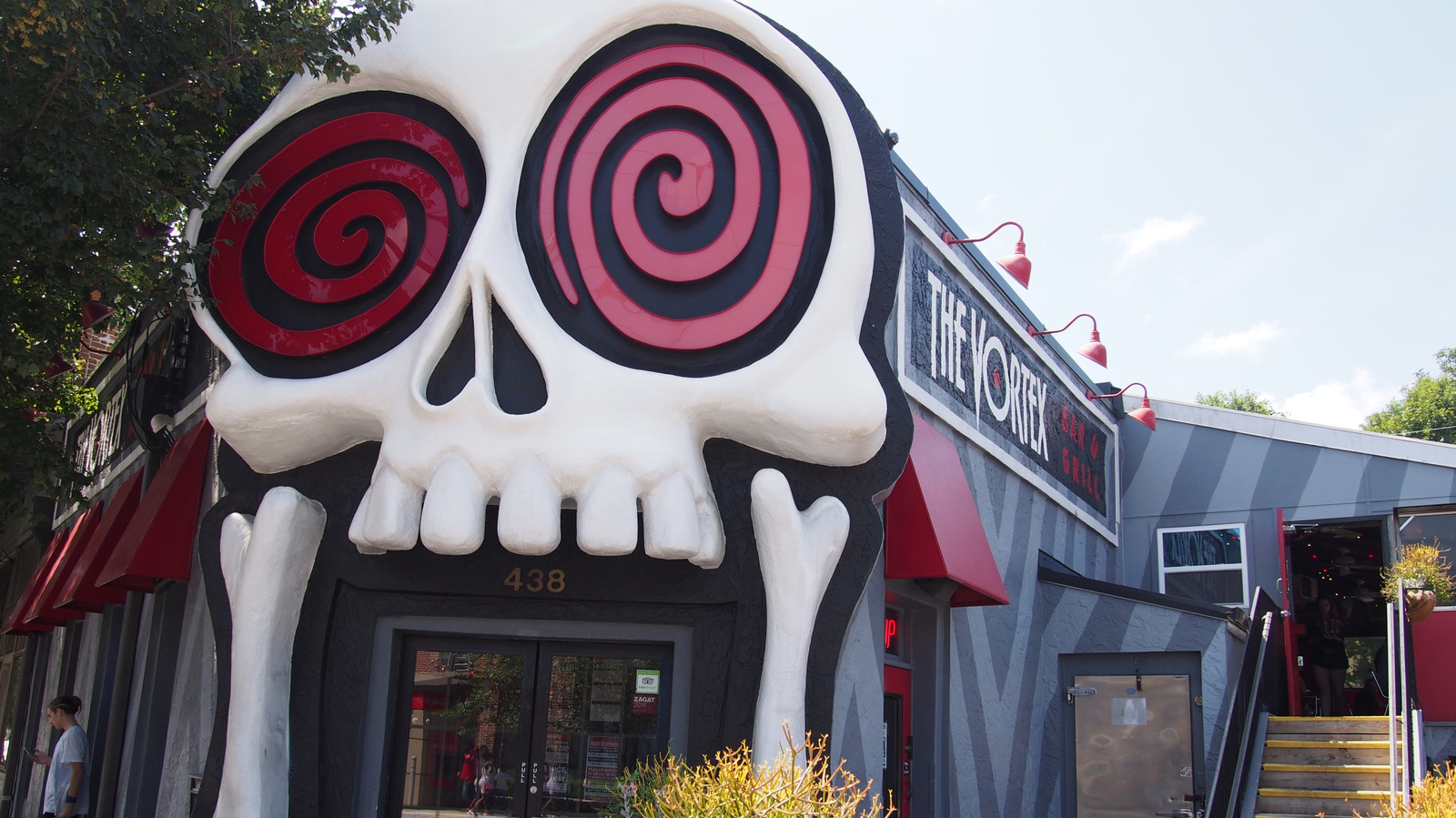
Operated under a strictly enforced, tongue-in-cheek "Idiot-Free Zone" policy and restricted to guests 21 and older, The Vortex serves heavy-hitting, calorie-dense creations like the Hell’s Fury (featuring atomic death sauce and habanero relish) and the Elvis-inspired Fat Elvis (topped with peanut butter, bacon, and fried plantains). Accompanied by potent cocktails like the "Skull Crusher," The Vortex represents the unfiltered, rebellious spirit of Atlanta’s alternative subcultures.
The Evolution of H&F Burger: From Strict Exclusivity to Ponce City Market
Few culinary origin stories in the South match the mystique of H&F Burger. In 2008, acclaimed chef Linton Hopkins was initially hesitant to offer a cheeseburger at his upscale gastropub, Holeman & Finch Public House, fearing it would overshadow his meticulously prepared proteins like roast Moulard duck breast. His wife, Gina Hopkins, engineered a brilliant compromise: offer the burger exclusively as a late-night menu item, strictly limited to 24 units per night, announced precisely at 10 p.m. via megaphone.
This artificial scarcity transformed the double-patty, American cheese-laden creation into the most sought-after late-night item in the city. As crowds swelled and lines stretched down the block, the concept naturally outgrew its gastropub origins. Today, H&F Burger operates as a full-fledged destination inside Ponce City Market, a massive, vibrant adaptive reuse of a former Sears, Roebuck & Co. catalog store along the Atlanta BeltLine.
2019–Present: Evergreen Butcher + Baker – Artisanal Craftsmanship on Sundays
The most recent addition to Atlanta’s elite burger tier represents the pinnacle of micro-batch dedication. Founded in 2019 by the husband-and-wife duo Sean and Emma Schacke in the historic Kirkwood neighborhood, Evergreen Butcher + Baker operates primarily as an artisanal butcher shop and bakery.
However, every Sunday at 1 p.m., Evergreen transforms into a pilgrimage site for burger aficionados. Sticking strictly to a batch of 175 cheeseburgers made from whole-animal butchery leftovers—paired with Emma’s long-fermented organic sourdough sesame seed buns—the shop sells out rapidly. The demand has reached such legendary status that local media reports have documented informal secondary markets outside the shop, prompting management to enforce a strict one-burger-per-customer limit.
Official Statements & Industry Perspectives
Industry analysts note that Atlanta’s burger culture thrives because it bridges the gap between casual comfort food and high-end culinary technique.
"The strength of Atlanta’s dining scene lies in its refusal to be pigeonholed," notes a regional hospitality consultant. "You have chefs utilizing whole-animal butchery alongside fast-casual pioneers scaling sustainable agriculture. It’s an environment where a $5 diner experience and a $20 artisanal creation can both achieve legendary status, provided the quality and authenticity remain uncompromised."
Local purveyors continually emphasize community engagement over corporate uniformity. Whether through weekly trivia nights at Grindhouse, community-driven neighborhood spots like Farm Burger in Decatur, or the strict community-first rationing at Evergreen, Atlanta’s premier burger destinations operate as social hubs rather than mere feeding stations.
Future Outlook
Looking ahead, Atlanta’s burger landscape is poised for continued innovation and regional expansion. As urban development along the Atlanta BeltLine and surrounding transit-oriented corridors accelerates, neighborhood institutions are finding new avenues for growth while preserving the gritty, authentic roots that first propelled them to fame.
Supply chain transparency, hyper-local sourcing, and a dedication to scratch-made ingredients—pioneered by trailblazers like Linton Hopkins, Jason Mann, and Sean and Emma Schacke—will continue to set the baseline for incoming culinary talent. For both lifelong residents and visitors navigating the city’s dynamic culinary topography, Atlanta’s burger culture proves that the city remains, as its historical moniker suggests, "too busy to hate"—and far too passionate about great food to ever settle for ordinary.