






Executive Overview
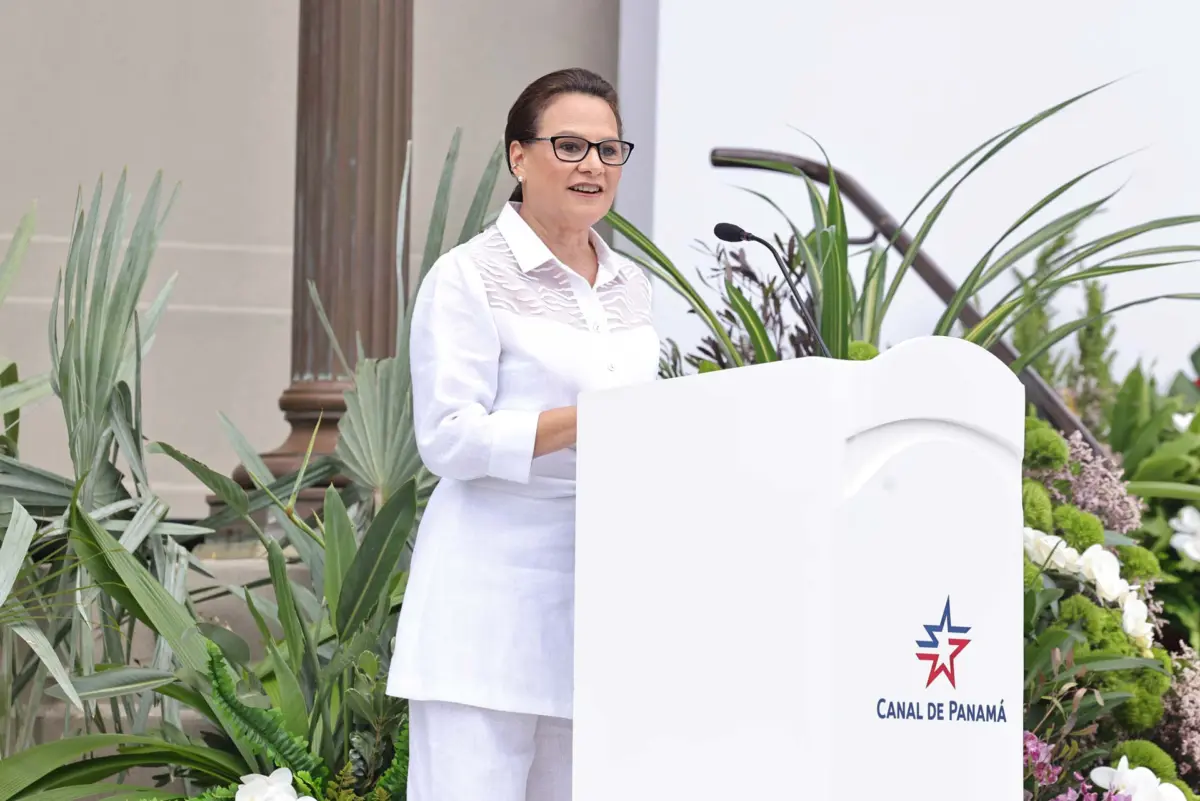
In a historic milestone for global maritime commerce, Ilya Espino de Marotta has officially assumed office as the Administrator of the Panama Canal. She is the first woman to lead the interoceanic waterway since its inauguration in 1914. Espino de Marotta, a seasoned marine engineer with over four decades of service within the Panama Canal Authority (ACP), succeeds Ricaurte Vásquez Morales for a seven-year term running through 2033.
This transition comes at a critical juncture. The Panama Canal, which facilitates approximately 5% of global maritime trade, is confronting a dual crisis: acute climate-induced hydrological volatility and the urgent need to diversify its economic model. Espino de Marotta’s administration begins as a strengthening El Niño cycle threatens to plunge the region back into prolonged drought, echoing the severe operational disruptions of 2023–2024.
To safeguard the canal’s long-term viability, the ACP is embarking on its highly ambitious 2025–2035 Strategic Plan. This multibillion-dollar blueprint aims to transform the canal from a simple vessel transit route into a comprehensive, climate-resilient logistics, maritime, and energy hub. The strategic plan features the proposed $1.6 billion Río Indio reservoir, a 76-kilometer overland energy corridor, and massive new container terminals on both the Atlantic and Pacific coasts. Espino de Marotta’s leadership will be defined by her ability to balance immediate water conservation measures with the execution of these capital-intensive, transformative infrastructure projects.
Detailed Chronology
A Trailblazing Career: From Shipyard to Administrator (1985–2026)
Ilya Espino de Marotta’s ascent to the highest office in the ACP is the culmination of a 41-year career characterized by engineering excellence and administrative leadership.
[1985] Joins ACP as sole female shipyard marine engineer
  │
[2007-2016] Leads $5.25B Expansion Program (EVP of Engineering)
  │
[2016-2019] Serves as Vice President for Operations
  │
[2020-2024] Appointed Deputy Administrator
  │
[2024] Becomes first Chief Sustainability Officer
  │
[2026] Inaugurated as first female Administrator (Term through 2033)- 1985: Espino de Marotta joined the canal workforce as a marine engineer. At the time, she was the only female engineer working in the shipyard of the Industrial Division, navigating a heavily male-dominated sector.
- Late 1980s to 2000s: She climbed through the ranks, gaining hands-on experience across multiple core divisions, including dredging, accounting, project development, resource administration, and maritime operations.
- 2007–2016: As Executive Vice President for Engineering and Program Management, she oversaw the historic $5.25 billion Panama Canal Expansion Program. This project culminated in the opening of the Neopanamax locks in June 2016, doubling the waterway’s capacity.
- 2016–2019: Following the expansion, she served as Vice President for Operations, managing the daily transit of vessels through the newly configured canal.
- 2020–2024: On January 1, 2020, she took office as Deputy Administrator, working alongside outgoing Administrator Ricaurte Vásquez Morales to steer the waterway through the COVID-19 pandemic and subsequent supply chain crises.
- 2024: She was designated as the Canal’s first Chief Sustainability Officer, a role created to integrate climate adaptation directly into the canal’s operational DNA.
- Present: On Monday, she formally assumed office as Administrator during an inauguration ceremony at the Canal’s historic Administration Building.
The Hydrological Crisis of 2023–2024 and the El Niño Resurgence
The immediate backdrop to Espino de Marotta’s inauguration is a volatile hydrological landscape. The canal is still recovering from the historic drought of 2023–2024, which was exacerbated by one of the strongest El Niño events on record.
During the peak of the drought, the ACP was forced to implement drastic conservation measures. Gatun Lake, the artificial freshwater reservoir that feeds the locks and provides drinking water to more than half of Panama’s population, fell to near-record low levels. In response, the ACP reduced daily vessel transits from a normal average of 36 down to a low of 22, while simultaneously restricting maximum drafts for Neopanamax vessels. This created massive shipping bottlenecks, forced carriers to pay millions in auction fees to secure transit slots, and diverted significant cargo volumes to alternative routes, such as the Suez Canal and the Cape of Good Hope.
While seasonal rains temporarily eased these restrictions in mid-2024, the reprieve has proven short-lived. A resurgent El Niño threatens another extended period of below-normal rainfall. In response, the ACP has proactively adjusted its transit schedules and draft limits:

- September 3: Neopanamax daily transit slots were adjusted to nine per day.
- September 15: Panamax daily transit slots were scheduled to decline to 23.
- October: The ACP temporarily postponed a scheduled reduction in the maximum authorized draft for Neopanamax vessels, maintaining it at 48 feet to support shipping lines, though officials warn this baseline remains highly vulnerable to hydrological trends.
Supporting Context & Metrics
To understand the scale of the challenge and the strategic response planned under Espino de Marotta’s administration, it is necessary to examine the key operational metrics and capital projects that define the 2025–2035 Strategic Plan.
| Strategic Initiative | Primary Objective | Estimated Cost / Capacity | Key Specifications |
|---|---|---|---|
| Río Indio Reservoir | Water security for transits and municipal use | $1.6 Billion | 6-year construction; increases freshwater storage capacity |
| Energy Corridor | Dry-land transit of liquefied gases | Up to 2.5 Million barrels/day | 76-kilometer pipeline; handles propane, butane, and ethane |
| Corozal Container Terminal | Expand transshipment on Pacific coast | 5.0 – 6.0 Million TEUs (combined) | New deep-water container berths |
| Telfers Container Terminal | Expand transshipment on Atlantic coast | Integrated with Corozal capacity | Optimizes Atlantic logistics and cargo consolidation |
The Hydrological Imperative: Río Indio Reservoir
The core vulnerability of the Panama Canal is its reliance on freshwater. Unlike the Suez Canal, which is a sea-level ditch filled with saltwater, the Panama Canal utilizes a gravity-fed lock system. Each vessel transit consumes approximately 50 million gallons of freshwater, which is ultimately discharged into the ocean.
To secure this resource, the ACP is championing the development of the Río Indio Reservoir.
- Financial Investment: Estimated at $1.6 billion.
- Timeline: Construction is projected to take approximately six years.
- Socio-Economic Impact: The reservoir will secure drinking water for over 2.5 million Panamanian citizens while providing the additional hydrological capacity needed to maintain stable vessel drafts during future droughts.
- Operational Mechanism: The project involves damming the Río Indio and constructing a multi-kilometer diversion tunnel to transfer freshwater into Gatun Lake, stabilizing its levels during the dry season.
Decoupling Revenue from Rainfall: The Energy Corridor
Perhaps the most innovative aspect of the 2025–2035 Strategic Plan is the proposed Energy Corridor. This initiative represents an operational shift, allowing the ACP to generate revenue from energy transport without consuming freshwater resources.
- Infrastructure: A 76-kilometer pipeline linking terminal facilities on the Atlantic and Pacific coasts.
- Capacity: Designed to transport up to 2.5 million barrels per day of liquefied petroleum gas (LPG) and natural gas liquids (NGLs), specifically propane, butane, and ethane.
- Strategic Advantage: By moving these volatile energy commodities overland via pipeline, very large gas carriers (VLGCs) can discharge their cargo on one coast and reload on the other, or transfer cargo to other vessels, without needing to transit the locks. This preserves valuable freshwater and frees up transit slots for container ships and bulk carriers.
- Current Status: The ACP completed the document-submission phase of the project’s prequalification process in July and is currently evaluating bidding consortia.
Expanding Maritime Infrastructure: Corozal and Telfers Terminals
To capture a larger share of the global logistics value chain, the ACP is expanding its port operations:
- Capacity Expansion: The proposed container terminals at Corozal (Pacific) and Telfers (Atlantic) are projected to add between 5 million and 6 million Twenty-Foot Equivalent Units (TEUs) of annual transshipment capacity.
- Value Proposition: Rather than serving as a passive transit route, Panama aims to become a major regional cargo consolidation and redistribution hub. This will allow shipping lines to optimize their routes by transshipping cargo at canal terminals, further reducing their reliance on direct transits during periods of low water levels.
Official Statements
During her inauguration ceremony at the Canal’s Administration Building, Administrator Espino de Marotta emphasized her deep institutional ties and her commitment to public trust.
"Forty-one years ago, I came here to learn. Today, it is my turn to lead, but my conviction remains exactly the same: to serve Panama with honesty, discipline, and profound respect for this institution. My commitment is to remain focused on efficiency, transparency, and ethics, because every dollar we manage at the Canal belongs to Panama, and that is how we will treat it. I accept this appointment with a profound sense of duty and with absolute confidence in the people who make it possible to run the Canal every day."
— Ilya Espino de Marotta, Administrator of the Panama Canal
The ceremony was attended by key political and industrial leaders, including Panamanian President José Raúl Mulino and the Minister for Canal Affairs, José Ramón Icaza, who also serves as the Chairman of the Panama Canal Board of Directors. Icaza highlighted the strength of the canal’s governance model, which was established following the transfer of the waterway from United States control to Panamanian sovereignty on December 31, 1999.
"With this inauguration, Panama demonstrates once again its ability to transfer the leadership of its most important asset through strong governance, clear rules and processes, and institutions that work."
— José Ramón Icaza, Minister for Canal Affairs and ACP Board Chairman
Future Outlook
As Ilya Espino de Marotta begins her seven-year tenure, the decisions made by her administration will have long-term implications for global trade networks.
                       [CLIMATE VOLATILITY]
                 (El Niño, Gatun Lake depletion)
                               │
                               ▼
               [ESPINO DE MAROTTA ADMINISTRATION]
             (Focus: Sustainability & Engineering)
                               │
            ┌──────────────────┴──────────────────┐
            ▼                                     ▼
  [MITIGATION INFRASTRUCTURE]           [BUSINESS DIVERSIFICATION]
  • $1.6B Río Indio Reservoir           • 76km overland Energy Corridor
  • Dynamic draft & slot management     • Corozal & Telfers terminals
            │                                     │
            └──────────────────┬──────────────────┘
                               ▼
               [A RESILIENT GLOBAL LOGISTICS HUB]
Navigating the Energy Transition and Geopolitical Shifts
The shipping industry is undergoing a structural shift driven by decarbonization regulations, such as the FuelEU Maritime initiative and the integration of shipping into the EU Emissions Trading System (ETS). Espino de Marotta’s background as Chief Sustainability Officer positions her to align the ACP with these global mandates. Under her leadership, the canal is expected to introduce new green vessel incentives, optimize transit scheduling to reduce fuel burn and emissions, and explore the bunkering of alternative marine fuels like green methanol and ammonia.
Furthermore, geopolitical tensions—including disruptions in the Red Sea—have highlighted the critical importance of secure maritime chokepoints. By diversifying into land-based pipelines and expanding port infrastructure, the ACP is positioning itself as a highly resilient logistical corridor. This strategy aims to ensure that even if climate change limits the number of physical transits through the locks, Panama will remain an indispensable hub for global supply chains.
The Engineering Challenge of a Generation
Ultimately, Espino de Marotta’s legacy will likely be determined by her ability to deliver the Río Indio Reservoir. Engineering a massive reservoir in a tropical environment while minimizing social and environmental disruption is a highly complex undertaking. The project will require extensive community engagement, environmental impact mitigation, and precise engineering execution.
If successful, her administration will not only have secured the water supply needed to keep global trade moving through Panama for the next half-century, but will also have proved that one of the world’s greatest engineering marvels can adapt to the challenges of a changing climate.