






Executive Overview
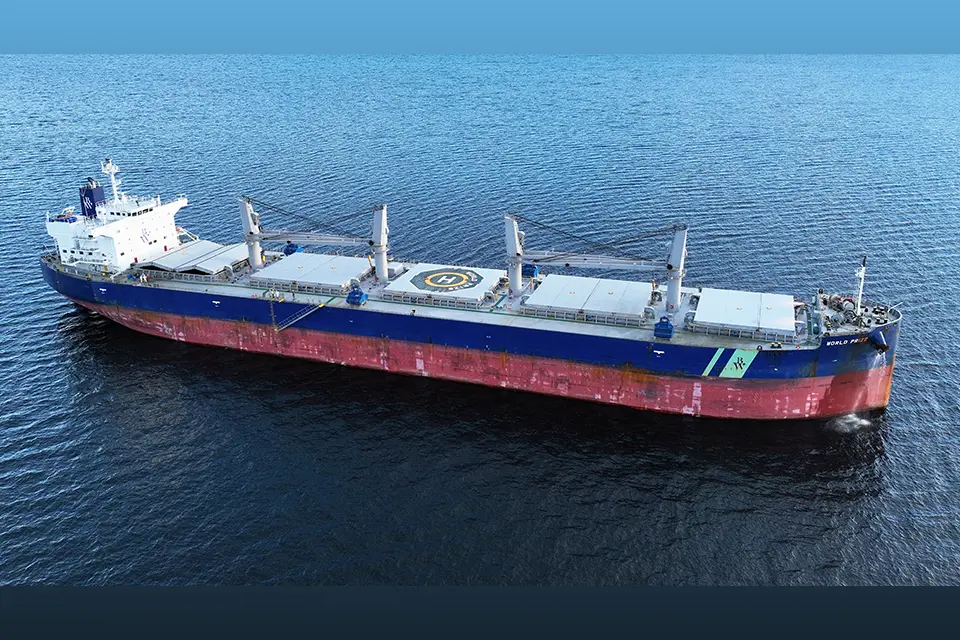
The United Kingdom’s Marine Accident Investigation Branch (MAIB) has officially published its comprehensive accident investigation report regarding a tragic man overboard incident that resulted in the loss of a crew member’s life aboard the Isle of Man-registered bulk carrier World Prize. The incident, which occurred on October 14, 2025, has reignited critical industry-wide discussions surrounding at-sea safety protocols, crew member accountability during deck operations, weather-related hazard mitigation, and the operational efficacy of rapid-response recovery procedures on large commercial vessels.
The investigative proceedings were conducted by the MAIB acting on behalf of the Isle of Man Administration. This operational delegation was executed in strict accordance with the prevailing Memorandum of Understanding (MoU) established between the MAIB and the Red Ensign Group Category 1 registries—a classification that encompasses the Isle of Man, the Cayman Islands, Bermuda, and Gibraltar. By leveraging this bilateral cooperative framework, the MAIB deployed specialist marine investigators to analyze the mechanical, environmental, and human factors that converged to create the fatal sequence of events.
The newly released documentation offers a meticulous reconstruction of the final moments leading up to the crew member entering the water, scrutinizing the shipboard safety management systems (SMS), the utilization and availability of personal protective equipment (PPE), and the bridge team’s execution of search and rescue (SAR) maneuvers. While the full scope of the report—accessible directly through the official government publication portal—outlines granular technical findings and the subsequent corrective measures instituted by the vessel’s operators, the broader implications of the World Prize tragedy extend far beyond a single administrative filing. It serves as a stark reminder of the unforgiving nature of the marine environment and the imperative for unrelenting vigilance within the global bulk carrier sector.

Detailed Chronology
Pre-Incident Operations and Environmental Conditions
On the morning of October 14, 2025, the World Prize was operating on the high seas, navigating through waters subject to deteriorating meteorological conditions. The bulk carrier, designed for the efficient transport of dry cargo commodities, was engaged in routine deck maintenance and operational checks as part of its passage plan. According to the MAIB’s reconstructed timeline, wind speeds and sea states were beginning to escalate, introducing notable dynamic forces onto the vessel’s main deck and working areas.
Maritime safety management frameworks dictate that as environmental conditions worsen, risk assessments must be dynamically updated to reflect heightened operational hazards—particularly regarding work conducted in proximity to the ship’s sides or in un-barricaded exterior zones. The initial phases of the shift proceeded under standard operational parameters, with crew members assigned to various upkeep tasks across the vessel’s superstructure and main deck manifolds.
The Critical Incident
The precise sequence of events culminating in the man overboard emergency unfolded during midday operations. While navigating the open deck, a crew member became separated from their working party and subsequently entered the water. The exact mechanism of the fall—whether precipitated by a sudden ship roll induced by heavy swells, a failure of temporary securing rigging, or an unmitigated slip and fall hazard—forms a core component of the MAIB’s analytical findings detailed in the official report.
The environmental realities of the incident compounded the severity of the situation. Low water temperatures, combined with the vessel’s forward momentum and prevailing wind-driven drift, meant that the window for a successful recovery was razor-thin.

Immediate Emergency Response and Bridge Actions
Upon the realization that a crew member was missing and subsequently sighted in the water, the shipboard emergency alarm was sounded. The bridge team initiated standard man overboard (MOB) protocols, which included:
- Executing immediate helm maneuvers (such as the Williamson turn or standard Williamson/Scharnow recovery tracks) to bring the vessel back toward the datum.
- Releasing automated lifebuoys equipped with self-igniting lights and smoke signals to mark the position in the water.
- Notifying the vessel’s engine control room to prepare for immediate maneuvering adjustments.
- Muster station execution, accounting for all remaining crew members, and the deployment of the designated rescue boat crew.
Despite the rapid activation of the ship’s emergency response plan, environmental interference, visibility challenges, and the inherent difficulties of locating a single person amidst open-ocean wave crests severely hampered the recovery operation. The subsequent search effort, transitioning from an immediate shipboard response to a coordinated multi-agency SAR operation, ultimately failed to recover the crew member alive, resulting in a fatality that has prompted intensive scrutiny from maritime regulators.
Supporting Context & Metrics
The Vulnerability of Bulk Carrier Crews
Statistical data compiled across the international maritime sector consistently highlights deck operations and navigation in adverse weather as high-risk domains. Bulk carriers, characterized by their expansive, unobstructed main decks and substantial freeboards, present unique challenges during heavy weather operations. When towering waves break across the weather deck, water on deck (WOD) forces can exert immense structural and kinetic energy against anything—or anyone—in their path.
According to historical trends monitored by the International Maritime Organization (IMO) and classification societies, man overboard incidents remain among the most lethal categories of maritime accidents. Unlike enclosed-space asphyxiation or machinery entanglement, an MOB event frequently occurs in chaotic, dynamic environments where survival hinges entirely upon three critical variables:
- Immediate Detection: Whether a witness or automated electronic sensor notes the fall instantly.
- Environmental Survival Time: Water temperature, immersion suit availability, and the victim’s physical resilience.
- Recovery Efficiency: The speed and accuracy with which a massive commercial vessel—often requiring miles to decelerate or turn—can safely re-intercept a person in the water.
Regulatory Frameworks and the Red Ensign Group
The investigation into the World Prize underscores the complex jurisdictional and regulatory architecture governing international shipping. Registered under the Red Ensign Group via the Isle of Man Administration, the vessel is subject to rigorous safety standards aligned with UK maritime legislation and international conventions, including SOLAS (Safety of Life at Sea) and STCW (Standards of Training, Certification and Watchkeeping).
When accidents occur on vessels flying Category 1 Red Ensign registries, the established Memorandum of Understanding (MoU) between the MAIB and the registry administrations ensures that independent, highly professional investigations are conducted without administrative interference. This arms-length investigative approach is vital for maintaining global confidence in maritime safety standards, ensuring that systemic failures—whether procedural, mechanical, or human—are brought to light and rectified.
Official Statements
The Role and Findings of the MAIB
In releasing the investigation report, the MAIB emphasized the objective nature of its inquiry. The primary objective of marine casualty investigation is not to apportion blame or liability, but rather to determine the causal factors and make safety recommendations designed to prevent the recurrence of similar tragedies.
While the comprehensive report can be accessed directly via the official government portal (https://www.gov.uk/maib-reports/man-overboard-from-the-bulk-carrier-world-prize-with-the-loss-of-1-life), the overarching conclusions highlight critical areas for improvement in operational safety management. These include stricter enforcement of Permit to Work (PTW) systems for exterior deck tasks, mandatory utilization of personal fall-arrest equipment during marginal weather conditions, and enhanced bridge crew training in rapid MOB tracking methodologies.
Administrative and Operator Responses
In the wake of the incident, the Isle of Man Administration, in conjunction with the vessel’s technical managers and operators, has initiated a series of mandatory safety reviews. These measures include:
- Issuing fleet-wide safety bulletins to all managed bulk carriers emphasizing the dangers of uncoordinated deck work during heavy weather.
- Conducting comprehensive audits of shipboard safety management systems (SMS) to ensure that risk assessments accurately capture environmental deterioration.
- Reviewing the stowage, maintenance, and deployment readiness of all life-saving appliances (LSAs), ensuring that rescue boats and launching mechanisms are maintained to the highest operational standards.
Future Outlook
Industry-Wide Implications and Lessons Learned
The tragedy aboard the World Prize serves as an urgent catalyst for ongoing safety modernization within the global bulk carrier fleet. As shipping companies face commercial pressures to maintain tight operational schedules, the temptation to carry out routine maintenance during marginal weather remains an insidious threat to seafarer safety.
The findings from the MAIB report are expected to drive several key developments across the maritime sector:
- Technological Integration: Increased adoption of wearable personal locator beacons (PLBs) and automatic identification system (AIS) man-overboard transmitters integrated directly into crew work vests, ensuring that an individual falling overboard can be tracked independently of visual bridge line-of-sight.
- Enhanced Training Simulations: Greater emphasis on unannounced man overboard drills during simulator training for deck and bridge officers, focusing specifically on high-stress recovery execution under adverse sea states.
- Stricter Regulatory Oversight: Potential tightening of Flag State inspection parameters regarding weather-deck work restrictions, holding operators more stringently accountable for adherence to dynamic risk management principles.
Contact Information and Ongoing Inquiries
For media representatives, maritime stakeholders, and researchers seeking further information regarding the World Prize investigation report, official channels remain open through the MAIB.
- Media Enquiries (Office Hours): 01932 440015
- Media Enquiries (Out of Hours): 0300 7777878
As the maritime community absorbs the lessons of this avoidable tragedy, the collective focus must remain steadfastly fixed on the core tenet of modern seafaring: that no cargo, schedule, or operational imperative supersedes the fundamental right of every crew member to return home safely.