







Executive Overview
For decades, the global perception of Florida has been defined by a singular, sun-drenched script: high-octane theme parks, densely commercialized white-sand coastlines, and the relentless hum of urban tourism. Yet, far removed from the neon-lit boardwalks and crowded surf breaks lies a profoundly different ecosystem—one that whispers of Old Florida’s primordial past. Tucked deep into North Central Florida, within the unassuming rural community of Hawthorne, sits the Little Orange Creek Preserve and Nature Park. Spanning 2,900 acres of protected wilderness, this under-the-radar conservation area offers a striking counter-narrative to the state’s hyper-developed identity.
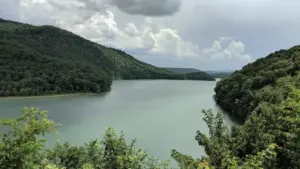
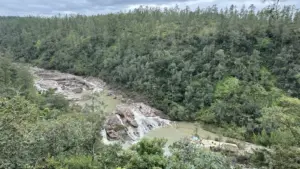
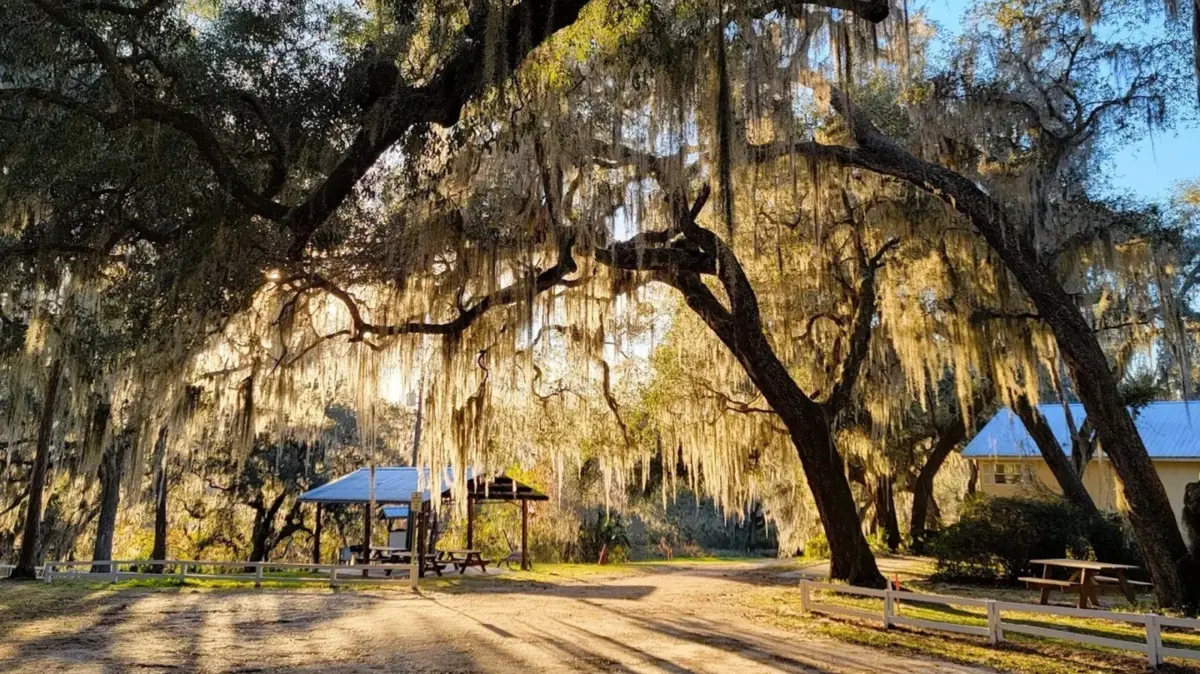
Managed collaboratively by the Alachua Conservation Trust (ACT) and various regional partners, the preserve protects a vital ecological corridor structured around the upper Little Orange Creek watershed. Here, ancient longleaf pines, weathered cypress domes, and towering live oaks draped in heavy curtains of Spanish moss reign supreme. The landscape is an intricate mosaic of gently moving blackwater creeks, sprawling freshwater marshes, and rich, coffee-colored swamps that serve as a sanctuary for a diverse roster of native wildlife, including roaming black bears, nesting bald eagles, and American alligators.
Despite opening its gates to the public in 2017, Little Orange Creek remains largely shielded from the tourist mainstream. Positioned roughly 15 miles east of Gainesville, the park provides an ideal, crowd-free sanctuary for travelers seeking solitude, ecological education, and unfiltered immersion in nature. As conservation pressures mount across the Sunbelt, understanding the operational mechanics, ecological significance, and community impact of preserves like Little Orange Creek has never been more critical. This comprehensive report examines the trajectory of the park, its deep-rooted environmental framework, visitor metrics, official conservation directives, and its evolving role in North Central Florida’s ecological future.

Detailed Chronology: From Watershed Threat to Protected Sanctuary
The story of the Little Orange Creek Preserve and Nature Park is not merely one of aesthetic preservation; it is a calculated narrative of strategic land acquisition, community advocacy, and ecological restoration. To understand the modern significance of the 2,900-acre park, one must trace its journey from a vulnerable watershed to a state-of-the-art conservation model.
The Pre-Acquisition Era and Watershed Vulnerability
For generations, the land surrounding the upper Little Orange Creek basin remained privately held, primarily utilized for timber harvesting, localized agriculture, and rural homesteading. While these traditional land uses left much of the canopy intact, the surrounding region faced increasing speculative pressure from real estate developers and industrial forestry interests. Hydrologically, the area serves as an essential ecological sponge, capturing, filtering, and slowly releasing stormwater into the broader Orange Creek basin, which eventually feeds into the Ocklawaha River system.
By the early 2000s, environmental scientists and regional planners recognized that unchecked development around Hawthorne could irreversibly fragment the habitat, disrupt regional wildlife migration corridors, and degrade water quality. The imperative to protect the upper watershed catalyzed a coalition of environmental organizations, local stakeholders, and philanthropic entities.
The 2017 Public Debut and Infrastructure Development
The turning point arrived when the Alachua Conservation Trust—alongside public funding partners, conservation grants, and private donations—secured the core acreage that would form the preserve. In 2017, the gates of the Little Orange Creek Preserve and Nature Park officially swung open to the public, marking a major milestone for Alachua County’s green infrastructure.
Unlike state parks engineered for high-volume tourism, Little Orange Creek was designed with a light-touch infrastructure model. Initial development focused on establishing sustainable access points without compromising the integrity of the underlying wetlands. Crews carved out nearly three miles of low-impact walking paths, constructed elevated boardwalks over fragile marsh zones, and built parking facilities near the park’s primary entrance on Hawthorne’s outskirts.
Expansion and Modern Enhancements
Over the subsequent years, the preserve did not rest on its initial footprint. Through continuous parcel acquisitions and conservation easements negotiated by the ACT, the protected area expanded to its current expansive scale of approximately 2,900 acres.
Crucially, the park’s infrastructure evolved to support public engagement and scientific literacy. The establishment of the on-site nature center transformed the preserve from a passive walking ground into an active educational hub. Furthermore, the integration of family-friendly amenities—such as playground equipment, outdoor exercise stations, and shaded picnic pavilions—bridged the gap between wild conservation and community recreation. Today, the chronology of Little Orange Creek stands as a testament to proactive environmental management, proving that strategic partnerships can successfully safeguard ecologically sensitive terrain before it succumbs to urban sprawl.
Supporting Context & Metrics: Navigating the 2,900-Acre Ecosystem
To fully appreciate the scope of Little Orange Creek, one must examine the physical metrics, geographic positioning, and biodiversity data that define this protected landscape.
Geographic Coordinates and Accessibility
Geographically, the preserve is anchored in Hawthorne, Florida—a tight-knit municipality housing approximately 1,600 residents. The park sits roughly 15 miles east of Gainesville, placing it within comfortable driving distance of major educational and medical institutions.
- Proximity to Transportation Hubs: Travelers arriving by air can utilize the Gainesville Regional Airport (GNV), located a short drive away. Alternatively, the Ocala International Airport (OCF) is situated less than an hour’s drive to the southwest, offering an expanded matrix of domestic flight options.
- Operating Parameters: Little Orange Creek is open daily from sunrise to sunset. Crucially, admission to the park is entirely free of charge, removing socioeconomic barriers to nature access and distinguishing it from heavily commercialized ecotourism destinations.
- Proximity Contrast: The park acts as an ideal psychological and physical escape hatch for visitors navigating the sensory overload of Orlando’s mega-theme parks or the bustling, highly developed stretches of Jacksonville’s beaches.
Trail Systems and Spatial Metrics
The park features an intimate yet deeply immersive trail network designed to minimize human footprint while maximizing scenic exposure:
+-----------------------------------------------------------------+
|              LITTLE ORANGE CREEK TRAIL METRICS                  |
+---------------------------+-------------------------------------+
| Total Trail Mileage       | ~3 Miles of Immersive Pathways      |
| Primary Path              | Kathy Cantwell Trail (~2 Miles)     |
| Terrain Composition       | Wetland forest, marshland, prairie  |
| Key Infrastructure        | Elevated boardwalks, viewing decks  |
+---------------------------+-------------------------------------+
The crown jewel of the trail system is the Kathy Cantwell Trail, a roughly two-mile pathway that meanders in close proximity to Little Orange Creek. The trail cuts through dense hardwood swamps, transitional ecotones, and open prairie overlooks. Because a significant portion of the trail hugs wetland margins, environmental conditions can fluctuate seasonally. Visitors frequently encounter muddy or waterlogged sections during periods of heavy summer rainfall, necessitating sturdy footwear and proper preparation.
Biodiversity and Wildlife Metrics
Ecological surveys conducted within the preserve highlight a remarkably robust inventory of flora and fauna. The mosaic of longleaf pine uplands, cypress domes, and bottomland hardwoods supports a high concentration of keystone species:
- Mammalian Presence: The preserve serves as a secure home range for Florida black bears (Ursus americanus floridanus), white-tailed deer, gray foxes, coyotes, bobcats, and feral hogs.
- Herpetofauna and Aquatic Life: Freshwater marshes and slow-moving blackwater creeks host dense populations of American alligators (Alligator mississippiensis), snapping turtles, alligator gar, and numerous species of snakes and frogs. The sandy uplands are prime habitat for the federally threatened gopher tortoise (Gopherus polyphemus), a keystone species whose burrows shelter over 350 other wildlife species.
- Avian Biodiversity: Birdwatchers regularly log sightings of wading birds—including great blue herons, white ibises, and wood storks—alongside apex raptors such as nesting bald eagles, ospreys, and various species of hawks and owls.
Official Statements and Conservation Directives
The long-term viability of the Little Orange Creek Preserve rests upon the rigorous governance framework established by its managing stakeholders. Leaders from the Alachua Conservation Trust and affiliated environmental agencies have consistently emphasized that the park is not merely a recreational amenity, but a vital link in regional climate resilience and habitat connectivity.
The Conservation Mandate: Protecting the Watershed
In institutional briefings, representatives from the Alachua Conservation Trust frequently highlight the hydrological imperative of the site. "Little Orange Creek is a classic example of a headwater protection area," notes a senior ACT conservation director. "When we protect the 2,900 acres surrounding this creek system, we aren’t just saving trees and bears—we are safeguarding the natural filtration system that feeds our regional aquifers and buffers downstream communities against flooding."
The management philosophy hinges on active ecological restoration, particularly within the upland pine sectors. Historically suppressed fire regimes are meticulously managed through controlled, prescribed burns. These controlled fires mimic natural lightning-strike cycles, clearing out dense underbrush, returning essential nutrients to the sandy soil, and promoting the regeneration of fire-dependent longleaf pine ecosystems and wiregrass understories.
Community Integration and Educational Outreach
Beyond passive land preservation, official directives emphasize public stewardship through education. The nature center on site operates as a focal point for community engagement, offering structured interpretive programs designed to instill conservation values in younger generations.
"Our goal has always been to make conservation tangible," states an ACT community outreach coordinator. "When children and families come out to Little Orange Creek, walk the boardwalks, and spot an alligator or a gopher tortoise in its natural element, the abstract concept of environmental protection becomes personal. They transition from visitors to advocates."
To foster this transition, ACT regularly hosts guided hikes, volunteer workdays, and educational workshops. These events encourage active physical health while simultaneously training citizen scientists to monitor local water quality, track invasive plant species, and report wildlife observations.
Future Outlook: Balancing Public Access with Ecological Integrity
As North Central Florida continues to experience steady population growth and suburban expansion, the role of protected lands like the Little Orange Creek Preserve and Nature Park will inevitably shift from quiet sanctuaries to crucial ecological strongholds. Looking toward the horizon, park managers, conservationists, and regional planners face a complex balancing act.
Managing Visitation Pressures
While Little Orange Creek currently enjoys a relatively low profile compared to high-traffic state parks like Ichetucknee Springs or Payne’s Prairie, digital mapping platforms and word-of-mouth travel recommendations are steadily increasing its visibility. The challenge for the Alachua Conservation Trust moving forward will be scaling visitor infrastructure without inviting ecological degradation.
Future planning models suggest an emphasis on sustainable carrying capacities. Rather than expanding parking lots or paving trails—which would disrupt delicate hydrological flows and fragment wildlife corridors—management will likely focus on educational messaging, "Leave No Trace" campaigns, and targeted trail hardening in high-wear zones. Protecting the sensory solitude that defines the park is considered just as important as protecting its physical acreage.
Climate Resilience and Wildlife Corridors
On an ecological scale, Little Orange Creek is increasingly viewed as a vital stepping stone within the broader Florida Wildlife Corridor—an ambitious statewide initiative aimed at connecting and protecting contiguous green spaces from the Everglades to the Panhandle. As climate change alters migration patterns and intensifies weather extremes, undeveloped lowlands and absorbent watersheds like Little Orange Creek will serve as critical refugia for displaced wildlife.
Furthermore, ongoing research partnerships with academic institutions—such as the University of Florida in nearby Gainesville—will continue to leverage the preserve as an outdoor laboratory. Monitoring data gathered from Little Orange Creek will help inform regional climate adaptation strategies, invasive species management protocols, and watershed protection policies for decades to come.
Conclusion: A Timeless Escape
In an era dominated by rapid digital acceleration and sprawling commercial infrastructure, the Little Orange Creek Preserve and Nature Park stands as a tranquil, defiant reminder of Florida’s deep ecological roots. By successfully merging rigorous land stewardship, community-driven education, and low-impact public access, the park proves that conservation and recreation can harmoniously coexist. For the traveler willing to venture fifteen miles east of Gainesville, Little Orange Creek offers far more than just a break from the highway—it offers an authentic, timeless encounter with the wild heart of the American South.