







Executive Overview
The global transition toward sustainable maritime transportation has officially entered its most ambitious chapter yet. For years, the Achilles’ heel of electric boating has not been the propulsion technology itself, nor the availability of venture capital, but rather the monumental logistical challenge of establishing a widespread, reliable, and user-friendly charging infrastructure. While electric vehicles (EVs) have spent the last two decades systematically mapping out highway corridors and urban centers with rapid chargers, the marine sector has lagged behind—primarily constrained by the sheer complexity of aligning energy supply, grid access, local engineering, complex maritime regulations, and day-to-day port operations.
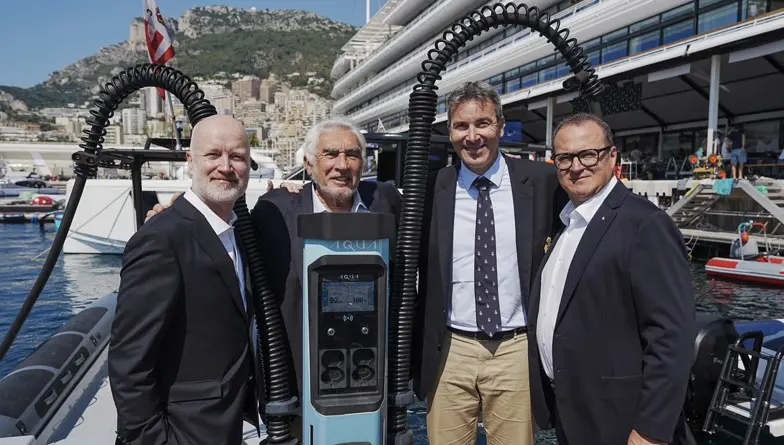
That systemic bottleneck is now fracturing. In a landmark strategic transaction announced at the prestigious Yacht Club de Monaco during the Monaco Energy Boat Challenge, NatPower Marine—a division of the global clean energy heavyweight NatPower Group—has announced a major agreement to acquire Aqua superPower, the pioneering international marine charging network.
By marrying NatPower’s colossal renewable energy pipeline and financial muscle (comprising a 24-gigawatt green energy portfolio spanning three continents and a landmark multi-billion-dollar battery storage partnership with Tesla) with Aqua superPower’s deeply established on-the-water footprint across Europe and North America, the electric boating industry has cleared its most formidable hurdle. This strategic merger promises to fast-track the deployment of high-speed marine charging hubs, banish consumer "range anxiety," and scale the recreational and commercial electric maritime ecosystem to unprecedented heights.
Detailed Chronology: From Early Pioneers to Global Infrastructure
To understand the magnitude of the NatPower Marine and Aqua superPower partnership, one must trace the rapid evolution of marine electrification over the past decade.
The Inception of Marine Fast-Charging (2019)
The foundational milestone of this journey was planted in 2019, when Aqua superPower installed its very first high-speed AC/DC marine charger at the Yacht Club de Monaco. At a time when electric boats were largely viewed as boutique novelties or experimental prototypes, this installation served as the proof-of-concept for a connected, marine-grade charging network.
From that single dock in Monaco, Aqua superPower methodically expanded its reach. Over the subsequent five years, the company established dense, reliable charging corridors along the glamorous coasts of the French and Italian Rivieras. Recognizing that recreational and commercial mariners require localized reliability, the network extended further north to the south coast of the United Kingdom, across Swedish waterways, and deep into the strategic freshwater ecosystem of the Great Lakes in Michigan, USA. By standardizing marine plugs, implementing robust weather-resistant hardware, and developing a seamless user-payment app, Aqua superPower proved that electric boats could be refueled just as conveniently as their fossil-fueled predecessors.
The Genesis of NatPower Marine
While Aqua superPower was laying down physical chargers on docks globally, NatPower was quietly constructing an industrial-scale renewable energy juggernaut. Founded in 2019 by seasoned entrepreneurs in the global green sector, NatPower leveraged a leadership team boasting over 25 years of specialized infrastructure expertise. Within a remarkably short timeframe, the company established operations across seven critical countries—including Italy, the United Kingdom, Kazakhstan, the United States, and Canada.
Realizing that the maritime sector was critically underserved by the ongoing global energy transition, NatPower launched its dedicated maritime division: NatPower Marine. The division set out to build the world’s first global onshore power supply network specifically tailored for clean shipping and recreational boating. Moving far beyond simple hardware sales, NatPower Marine engineered a fully integrated infrastructure model encompassing high-capacity grid connections, on-site renewable energy generation, advanced battery energy storage systems (BESS), and intelligent, cloud-managed smart charging.
The Convergence at the Monaco Energy Boat Challenge
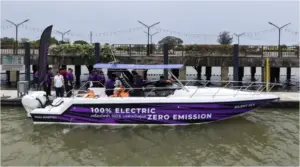
The convergence of these two entities culminated on the E-dock of the Yacht Club de Monaco. The timing and location were symbolically and practically perfect. Surrounded by more than 400 international university students and engineers participating in the Monaco Energy Boat Challenge—each working tirelessly to accelerate the marine electric transition—executives from both companies finalized the transaction that would bridge boutique marine innovation with multi-billion-dollar infrastructure deployment.
Supporting Context & Metrics: Overcoming the Complexities of Maritime Infrastructure
Building charging infrastructure on water is exponentially more complex than building it on land. While EV drivers pull up to a concrete parking stall, marine chargers must contend with corrosive saltwater environments, tidal shifts, fluctuating electrical loads, and a labyrinth of maritime zoning laws, port authorities, and environmental regulations.
The primary sticking point in developing marine infrastructure has never been a lack of technological capability; electric drivetrains built by pioneers like Vita, Evoy, and Taiga (the premier electric personal watercraft builder historically associated with ATV Power) have proven their high-performance capabilities on open water for years. Rather, the challenge lies in alignment.
Successfully electrifying a port or marina requires the seamless synchronization of:
- Energy Supply & Grid Access: Procuring high-voltage power lines capable of supporting multiple high-speed DC fast chargers simultaneously.
- Engineering & Marine Construction: Installing heavy-duty electrical marine units that withstand storm surges, salt spray, and extreme weather events.
- Permitting & Regulatory Compliance: Navigating environmental impact studies, coastal commission approvals, and local municipal zoning laws.
- Day-to-Day Operations: Ensuring uptime, user support, maintenance, and seamless billing integrations.
The Power of Scale: NatPower’s 24-Gigawatt Pipeline and Tesla Partnership
This is where NatPower’s massive institutional backing completely shifts the paradigm. NatPower Group operates a staggering 24-gigawatt pipeline of green energy serving over 200 projects across three continents.
Furthermore, NatPower recently cemented its position as an infrastructure titan by entering into a multi-year supply and execution agreement with Tesla, covering more than 25 gigawatt-hours (GWh) of Battery Energy Storage Systems (BESS) across European markets. This historic agreement marks the first time BESS technology has been deployed at such a monumental scale through a coordinated system linking production, financing, and cross-border execution directly.
By integrating Aqua superPower into this ecosystem, NatPower Marine gains an immediate, operational bridgehead into more than 80 ports and marinas across Europe and North America. Instead of spending years building a customer-facing brand and network from scratch, NatPower now possesses an established, elite platform ready to deploy capital and hardware at an industrial scale.

Official Statements: Industry Leaders on the Strategic Synergy
The acquisition has sent ripples of excitement throughout the green technology and maritime communities. Leaders from both sides of the agreement emphasize that this partnership marks the true "industrialization" of electric boating.
Fabrizio Zago, CEO of NatPower, underscored the strategic weight of the transaction:
"This transaction marks a decisive step forward for us: we are no longer just developing infrastructure, but building a platform capable of operating on an international scale. The addition of Aqua superPower to our ecosystem provides us with an immediate operational presence in key markets and strengthens our ability to deliver projects effectively and at scale on a global level."
Zago’s vision highlights a crucial transition: the shift from isolated, opportunistic green energy projects to cohesive, multinational energy platforms that can rival traditional fossil fuel distribution networks.
Stewart Wilkinson, CEO of ATV Power (the parent company of Aqua superPower), expressed enthusiasm for the accelerated growth trajectory:
"Joining NatPower Marine enables us to scale our platform faster and extend our reach, building on the network we have already developed."
It is important to note the corporate structure: while Aqua superPower joins forces with NatPower Marine, its parent entity, ATV Power, continues to foster the broader ecosystem of marine decarbonization. ATV Power’s associated companies—including Taiga (the world’s foremost electric personal watercraft manufacturer), alongside Vita and Evoy (both industry leaders in high-power electric outboard and inboard powertrains)—will continue to push the boundaries of electric marine vessel performance, safe in the knowledge that a robust global charging backbone is now actively being constructed beneath them.
Future Outlook: Parallels to the Automotive Revolution
To fully appreciate the historical significance of this moment, one must look back at the infancy of the automotive industry.
When automobiles first began replacing horse-drawn carriages at the turn of the 20th century, there were no gas stations lining the roads. Early motorists were forced to carry portable cans of gasoline with them, mapping out grueling journeys based on where fuel could be sporadically procured. It took decades of coordinated industrial effort, capital investment, and regulatory standardization to build the global fossil fuel delivery network we take for granted today.
A remarkably similar narrative played out during the early days of the electric vehicle revolution. Automakers realized early on that consumers would not purchase EVs without ubiquitous, reliable charging infrastructure. The explosive growth of consumer EV adoption was inextricably linked to the simultaneous rollout of high-speed charging networks like Tesla’s Supercharger network and various third-party grid operators.
Now, electric boating is experiencing its own automotive-style inflection point.
For decades, recreational boaters and commercial marine operators have faced a chicken-and-egg dilemma: they hesitated to purchase electric vessels due to a lack of charging infrastructure, while energy companies hesitated to build charging infrastructure due to a small operational fleet of electric boats.
By combining Aqua superPower’s battle-tested marine charging technology, software, and localized port relationships with NatPower’s multi-gigawatt renewable energy resources, BESS storage capabilities, and institutional financing, that psychological and physical barrier has been decisively dismantled.
What Lies Ahead for Clean Maritime Transport
Over the coming years, mariners navigating the waters of Europe, North America, and beyond can expect to see an aggressive expansion of high-speed AC/DC marine charging hubs. These installations will not only service recreational day-cruisers and electric motorboats but will also scale upward to support commercial maritime hubs, electric water taxis, and large commercial port operations.
As range anxiety becomes a relic of the past, the marine industry is poised for an exponential adoption curve. The strategic alignment of NatPower Marine and Aqua superPower ensures that the future of boating is not only clean, quiet, and high-performing—it is fully powered, interconnected, and ready for the global stage.