





Executive Overview
When the conversation turns to microplastic pollution, most minds immediately drift to the ubiquitous symbols of our throwaway culture: brightly colored bottle caps, fragmented grocery bags, and plastic food containers washing up on remote shores. Others picture the microscopic, spaghetti-like synthetic fibers shed from our fleece jackets and polyester clothing during every cycle of the washing machine.
Yet, there is a far more pervasive, insidious form of plastic pollution hiding in plain sight—one that is generated by millions of vehicles every single second of the day. This hidden hazard is the tire wear particle (TWP).
Every time an automobile accelerates, navigates a turn, or brings itself to a halt, relentless friction between rubber and pavement wears down tires. This mechanical stress produces trillions of microscopic fragments of synthetic and natural rubber. Driving a car, or even riding a municipal bus, is functionally akin to dragging an eraser across the surface of the planet, leaving behind a trail of toxic crumbs.

According to leading researchers, these particles now represent one of the single largest sources of microplastics entering our terrestrial and aquatic ecosystems. Because tire wear particles are laden with complex chemical additives—including preservatives like 6PPD, which transforms into the lethal derivative 6PPD-quinone upon environmental exposure—they pose an acute, systemic threat to wildlife. Coho salmon, freshwater invertebrates, and marine life are increasingly vulnerable to these invisible toxins.
As the global vehicle fleet expands, traditional regulatory frameworks and exhaust-focused environmental policies are proving inadequate. Completely overhauling the global transportation grid or redesigning tire chemistry overnight is logistically impossible. However, conservation scientists and municipal planners are increasingly turning to a promising, near-term defense: green infrastructure. By engineering natural systems—such as bioswales, roadside buffer strips, and permeable pavements—cities can intercept, filter, and treat stormwater runoff before these toxic particles ever reach vulnerable waterways.
Detailed Chronology of Discovery and Action
The Blind Spot of Microplastic Research
For decades, marine scientists tracked plastic debris primarily through visual surveys of beaches and trawl nets in open oceans. As analytical techniques evolved, researchers began isolating microplastics down to the micrometer scale. However, accounting for tire wear particles presented a unique analytical hurdle.
Because TWPs are composed of vulcanized rubber compounded with various fillers, plasticizers, and metallic oxides, they do not look or behave like standard thermoplastic polymers (such as polyethylene or PET). Consequently, early microplastic inventories dramatically undercounted or entirely missed tire-derived debris. It was only through the refinement of pyrolysis-gas chromatography-mass spectrometry (Py-GC/MS) and specialized chemical fingerprinting over the past decade that scientists could finally quantify the massive volumes of rubber dust accumulating in urban environments.

The 2020 Watershed: Uncovering the 6PPD Crisis
The urgency surrounding tire particles escalated dramatically in late 2020, when a landmark study published in Science identified a chemical mystery that had baffled fisheries biologists for decades: "urban runoff mortality syndrome." For years, scientists observed adult coho salmon dying en masse in Pacific Northwest streams shortly after heavy autumn rains washed urban stormwater into their habitats.
The researchers discovered that the culprit was not a heavy metal or standard industrial pollutant, but 6PPD-quinone, a transformation product formed when the tire preservative 6PPD reacts with ozone in the atmosphere. This revelation shifted the paradigm of tire wear pollution from a generalized physical nuisance (microplastic accumulation) to an immediate ecotoxicological crisis.
The Current Frontier: Field Testing in Portland
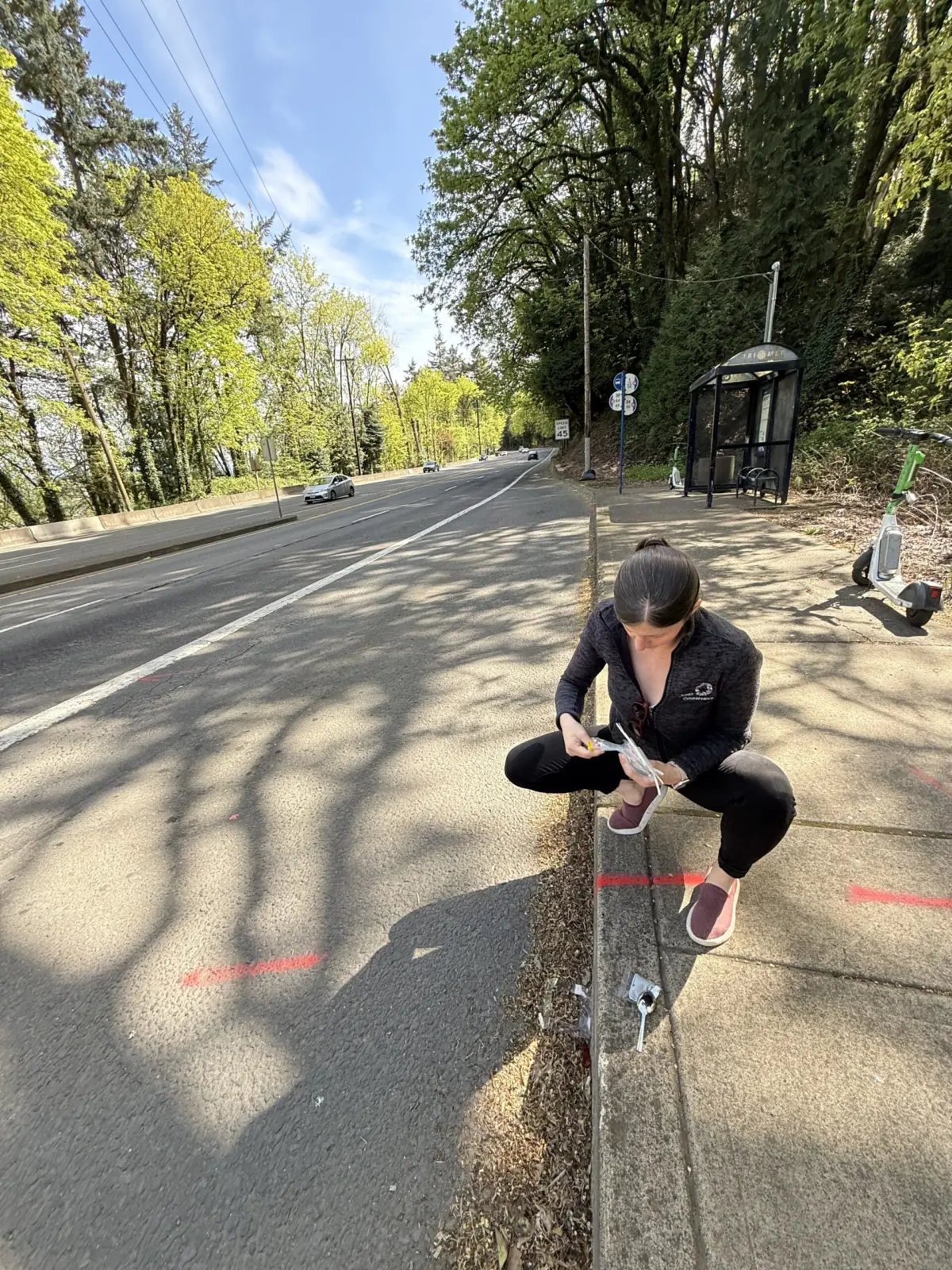
Recognizing the limitations of waiting for systemic automotive redesigns, researchers from the Ocean Conservancy, in partnership with the University of Toronto and funded by the Tire Industry Project, launched a pioneering municipal-level study.
Deploying field teams to urban roadways in cities like Portland, Oregon, scientists began systematically sampling roadside soils and sediment accumulations. By meticulously analyzing how different road-adjacent environments capture, trap, or release tire particles, these researchers are laying the groundwork for scalable, cost-effective urban mitigation strategies.
Supporting Context and Metrics: The Scale of the Problem
To understand the magnitude of the tire wear particle crisis, one must examine the staggering mathematics of global transportation.
- The Two-Trillion-Particle Mile: Independent automotive and environmental tests indicate that a single vehicle’s tires can emit upward of two trillion microscopic particles per mile driven.
- Per Capita Output: Statistical estimates reveal that the average driver in a developed nation generates nearly two pounds of tire wear particles per year. Multiply this by the billions of vehicles currently traversing global roadways, and the annual tonnage of rubber dust released into the environment reaches millions of metric tons.
- The Atmospheric and Hydrological Cycle: Once shed from a tire, these particles embark on a dual journey. The smallest, lightest fragments become airborne, contributing significantly to urban particulate matter (PM2.5 and PM10) air pollution and drifting far from roadways. The heavier particles settle onto asphalt and concrete, where they accumulate until a precipitation event washes them into storm drainage networks, unhindered by conventional wastewater treatment plants.
Chemical Composition and Toxicity
Modern tires are far from simple natural rubber. They are complex industrial composites containing:
- Natural and synthetic rubbers (such as styrene-butadiene and butadiene rubber).
- Carbon black and silica used as reinforcing fillers.
- Metallic activators like zinc and cadmium.
- Organic chemical additives designed to prevent degradation from heat, ozone, and UV radiation—most notably the aforementioned 6PPD.
When these chemical cocktails break down and enter aquatic ecosystems, they bioaccumulate and leach toxins that disrupt endocrine systems, impair swimming and reproductive behaviors in fish, and poison benthic organisms at the base of the food web.
Official Statements and Expert Perspectives
The fight against tire wear pollution requires cross-disciplinary collaboration between marine conservationists, chemical engineers, and urban planners. Leading voices in the field have emphasized both the gravity of the threat and the viability of green infrastructure solutions.
"Driving a car or even riding in a bus is a bit like dragging an eraser across the planet, except the crumbs are microplastics. Toxic microplastics."
— Dr. Britta Baechler, Director of Ocean Plastics Research, Ocean Conservancy
Dr. Baechler’s research underscores the invisible footprint of modern mobility. While society has grown increasingly conscious of single-use packaging, the structural reliance on rubber-on-asphalt transportation remains largely unexamined by the general public.
"Tire wear particle pollution can feel like an overwhelming problem. After all, it’s tied to transportation, which most of us rely on every day. But that’s exactly why research like this matters: It gives us a real, near-term path forward that doesn’t require waiting for the entire global transportation system to change first."
— Dr. Anja Brandon, Director of Plastics Policy, Ocean Conservancy
Dr. Brandon highlights the pragmatic necessity of implementing immediate municipal defenses. While policy frameworks are shifting to encourage greener manufacturing and alternative materials, the immediate protection of urban watersheds cannot wait for a generational turnover of the global vehicle fleet.
Future Outlook: Engineering Resilience Through Green Infrastructure
As urban areas continue to expand and pave over natural water absorption zones, managing stormwater runoff has become one of the most critical challenges of the 21st century. Traditional "gray infrastructure"—systems of concrete pipes and subterranean channels designed to flush water away from cities as quickly as possible—effectively acts as a direct conveyor belt transporting tire wear microplastics straight into rivers, estuaries, and oceans.
Green infrastructure flips this paradigm on its head. By integrating engineered natural systems into urban planning, cities can intercept pollutants at the source.
Key Components of Green Infrastructure Defense:
- Bioswales and Rain Gardens: Vegetated, depressed channels designed to detain and treat stormwater runoff. As runoff flows through bioswales, the combination of root systems, soil microorganisms, and diverse filtration media traps microplastic particles, allowing them to settle out before water reaches natural hydrological systems.
- Permeable Pavements: Replacing traditional impermeable asphalt with porous concrete, porous asphalt, or interlocking permeable pavers allows rainwater—and the suspended tire particles within it—to infiltrate sub-base reservoirs rather than pooling on the surface and washing directly into storm drains.
- Roadside Vegetative Buffers: Strategic plantings of deep-rooted native grasses, shrubs, and trees along highways can capture airborne tire dust and trap surface runoff before it gains the momentum necessary to enter municipal drainage networks.
The Path Forward
The ongoing research partnership between the Ocean Conservancy, the University of Toronto, and industry stakeholders represents a critical shift from theoretical anxiety to empirical action. By calculating the exact cost-benefit ratios of scaling green infrastructure at the municipal level, these scientific teams are equipping city governments with the data needed to justify infrastructural investments.
Mitigating the impact of tire wear particles will ultimately require a multi-pronged approach: reforming tire chemistry to eliminate acute toxins like 6PPD, improving vehicle efficiency, encouraging active transit, and aggressively deploying green infrastructure in urban centers.
The threat beneath our wheels is invisible, but the solutions are taking root. Through rigorous science, proactive policy, and localized engineering, humanity can forge a path toward cleaner roadways, healthier wildlife populations, and an ocean free from the hidden burden of tire microplastics.