The United States possesses a staggering, largely unexploited reservoir of renewable power hidden just offshore. Coastlines spanning the contiguous states, Alaska, Hawaii, and Puerto Rico hold a theoretical harvest of approximately 1,170 terawatt-hours of zero-emission electricity per year in wave energy alone. Yet, the pursuit of this resource has historically faced monumental engineering hurdles, high capital expenses, and shifting political winds.
Surprisingly, despite a federal policy landscape under the Trump administration aggressively tilting away from wind and solar power—particularly offshore wind infrastructure—marine energy has managed to escape the political chopping block. By classifying marine and hydrokinetic energy as a branch of traditional hydropower, the administration’s "American Energy Dominance" agenda has greenlit vital funding, international collaborations, and major testing infrastructure.
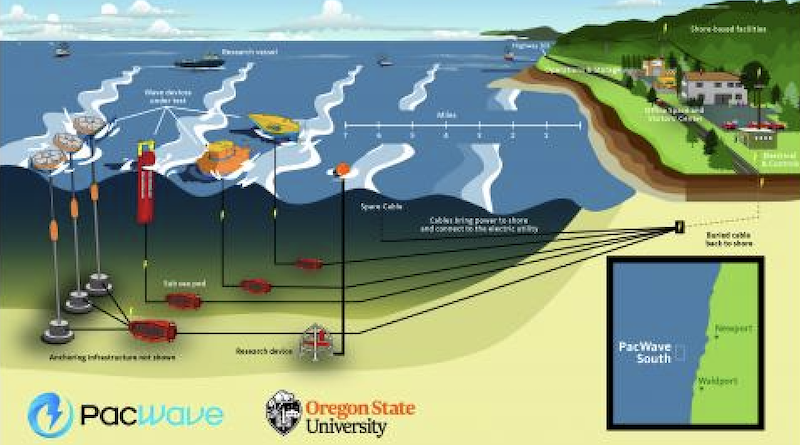
The most prominent example of this survival and subsequent triumph is the official opening of PacWave South, a massive, pre-permitted, grid-connected wave energy test facility off the coast of Oregon. Simultaneously, groundbreaking open-access data initiatives like the SURF-WEC project in Hawaii are lowering barriers to entry for engineers worldwide. Together, these milestones signal a new chapter for American marine energy, transforming a sleepy giant of clean tech into a serious contender for reliable, 24/7 baseload power generation.
Detailed Chronology: From Concept to Open-Water Reality
The path to commercializing ocean wave energy has been arduous, marked by decades of laboratory tests, bureaucratic delays, and prototype failures. However, a deliberate timeline of strategic federal, military, and academic investments has finally brought the industry to a commercial threshold.
Early 2000s: The US Navy and Marine Corps step up as early pioneers of marine energy, establishing and supporting wave energy testing infrastructure at Kaneohe Bay in O‘ahu, Hawaii. This site undergoes periodic upgrades over the next two decades, proving the viability of marine generation for military applications.
Mid-2010s to 2021: Planning accelerates for a utility-scale, open-water test facility. Oregon State University partners with the US Department of Energy (DOE) to establish PacWave South, located seven miles off the Oregon coast. In 2021, a critical regulatory milestone is achieved when the Department of the Interior’s Bureau of Ocean Energy Management (BOEM) issues a formal lease agreement, coupled with pre-permitted status designed to bypass years of costly environmental and bureaucratic delays for developers.
2023: Industry stakeholders focus heavily on standardization and cost reduction. Research initiatives begin assessing generic, modular mooring solutions that allow disparate wave energy converter designs to plug into a shared anchor and power-transmission system, aiming to slash offshore deployment costs.
2025 (February – July): Amid sweeping federal policy changes under the Trump administration’s "American Energy Dominance" plan, marine energy’s fate initially appears uncertain. However, the administration adopts marine energy under the broad umbrella of hydropower. In July 2025, the DOE formalizes this support by expanding a longstanding energy collaboration with Norway to explicitly include marine energy technologies.
Late 2025: Operational milestones mount. The Bonneville Power Administration signs a formal agreement to accept power generated from future wave devices at PacWave South. Meanwhile, the National Laboratory of the Rockers (NLR)—formerly NREl—and the University of Hawaii launch the SURF-WEC project, spending months gathering high-resolution real-world data from a small-scale, adaptable wave energy converter.
September 2026: The DOE’s Office of Critical Minerals and Energy Innovation (OCMEI) officially announces that PacWave South is open for business, welcoming its first cohort of wave energy developers to begin inaugural in-water testing.
Supporting Context & Metrics: Unlocking 24/7 Baseload Power
To understand why policymakers and engineers are willing to navigate the punishing marine environment, one must look closely at the physics and economics of ocean energy. Unlike wind and solar resources—which are inherently intermittent and demand massive battery storage banks or peaking plants to manage the duck curve—waves, tides, and ocean currents operate on continuous, predictable cycles. They offer a potential source of clean, 24/7 baseload power.
The Metrics of Marine Energy
1,170 Terawatt-Hours: The estimated annual wave energy potential along US coastlines. To put this in perspective, total US electricity consumption hovers around 4,000 terawatt-hours per year; wave energy theoretically accounts for nearly 30% of the nation’s total demand.
20 Berths: The capacity of the PacWave South facility, which can accommodate up to 20 distinct wave energy converters spread across four operational test berths.
Pre-Permitted Advantage: Regulatory permitting for offshore energy projects routinely takes 5 to 10 years and millions of dollars. PacWave South’s pre-permitted status shifts this burden entirely, removing the single greatest financial bottleneck for early-stage marine tech startups.
MODAQ 2.0: The advanced operational and monitoring platform utilized by initiatives like SURF-WEC, providing live, open-source data feeds to researchers worldwide to accelerate industry-wide learning curves.
Overcoming the Marine Environment
Harvesting energy from the ocean requires machinery capable of surviving extreme mechanical stress, saltwater corrosion, biofouling, and violent storm surges. These harsh realities have historically frightened traditional venture capitalists away from marine tech.
To mitigate these financial risks, network organizations like TEAMER (Testing Expertise and Access for Marine Energy Research) continue to fund R&D across a sprawling web of inland testing tanks, wave flumes, and coastal facilities. By proving devices in controlled environments before subjecting them to the open ocean, developers can iron out mechanical flaws early in the design cycle.
The formal opening of PacWave South and the operational success of open-source projects like SURF-WEC have drawn enthusiastic commentary from federal energy officials and research institutions alike.
Nichole Fitzgerald, head of the Department of Energy’s Hydropower and Hydrokinetic Office, emphasized the long-term economic and technical significance of the new Oregon facility:
"The PacWave South facility will help reduce testing barriers for wave energy developers and spur innovation to America’s benefit for years to come."
Echoing this sentiment, the DOE’s Office of Critical Minerals and Energy Innovation (OCMEI) highlighted the immediate relief provided by the site’s pre-approved regulatory framework:
"Thanks to its pre-permitted status, PacWave South allows wave energy developers to test devices without regulatory delays that can add to testing budgets and timelines. Facility operators have already begun to work with marine energy developers in preparation for the inaugural tests."
Meanwhile, researchers at the National Laboratory of the Rockers (NLR) underscored the critical importance of open-access data in bridging the industry’s historical knowledge gaps. Explaining the design philosophy behind their television-set-sized SURF-WEC converter, NLR noted:
"To help fill that void, NLR researchers and University of Hawaii at Manoa researchers combined their expertise in wave modeling, controls, and ocean deployment to do something different: deploy a low-barrier, small-scale wave energy converter and provide open access to its design, data, and lessons learned."
Describing the device’s unique adaptive capabilities, NLR added:
"What makes SURF-WEC unique is its ability to adapt. Researchers can remotely adjust how the system responds to waves, testing both passive and active modes to better understand how to capture energy more efficiently."
Future Outlook: The Road Ahead for Ocean Power
While the launch of PacWave South and the data harvested from projects like SURF-WEC represent monumental leaps forward, industry analysts caution that commercial wave energy is still in its infancy compared to its solar and wind counterparts. The manufacturing supply chains, standardized hull designs, and deep-water installation vessels required for a mature marine energy sector are still being formulated.
Nevertheless, the trajectory mirrors the early days of modern wind and solar power in the early 2000s, when high capital costs and technological skepticism threatened to stall progress indefinitely. By welcoming its first wave energy developers, providing plug-and-play grid connections via the Bonneville Power Administration, and opening up live data feeds for global academic collaboration, the United States has laid a robust foundation.
If wave energy stakeholders can successfully leverage these testing grounds to drive down operation and maintenance costs, the sleeping giant of American ocean energy may finally awaken—securing a vital, round-the-clock pillar for the nation’s clean energy transition.