As the historic waters of Venice prepare to host the 7th edition of the Venice Boat Show (Salone Nautico Venezia), the global maritime community finds itself standing at a profound crossroads of heritage and high-tech transformation. Opening on Wednesday, May 27th, this year’s exhibition at the legendary Arsenale complex does more than merely showcase luxury vessels; it cements Venice’s status as the unofficial global capital for electric propulsion.
In a city whose entire architectural identity and historical wealth were built upon the relentless movement of water, the transition to zero-emission marine mobility is not just an environmental choice—it is an existential necessity. The five-day event transforms the ancient shipyards—where a 2,000-man workforce once manufactured naval marvels daily during the height of the Venetian maritime empire—into a high-tech incubator for sustainable marine engineering.
From cutting-edge dockside fast-charging networks supplied by Aqua superPower to ground-breaking solid-state energy storage systems and high-voltage electric dayboats, the 2026 Venice Boat Show provides an exhaustive blueprint for the decarbonization of global waterways. This comprehensive guide explores the headline-grabbing exhibitors, structural innovations, and technological milestones defining the future of emission-free navigation.
The 2026 edition of Salone Nautica Venezia runs from Wednesday, May 27th, through Sunday, May 31st, featuring an immersive layout across 55,000 square meters of water basins and historic dry docks, hosting roughly 270 exhibitors and over 300 craft. While the exhibition doors open mid-week to trade professionals, international media, and marine enthusiasts, the event’s heartbeat accelerates sharply as it transitions into its dedicated electric programming.
The Green Parade and On-Water Demonstrations
Friday, May 29th: The schedule pivots sharply toward environmental consciousness with the official Green Parade. This signature event features a fleet of electric-powered watercraft, sailboats, and commercial shuttles quietly cruising the historic canals of La Serenissima. Stripped of the deafening roar of internal combustion engines and thick diesel exhaust, the parade offers residents and tourists a rare, acoustic glimpse into Venice’s sustainable future.
May 27th – May 31st: Throughout the five-day exhibition, the P2 Pontoon serves as the epicenter for electric innovation. High-speed marine chargers supplied by Aqua superPower line the docks, ensuring that participating battery-electric vessels maintain rapid turnaround times for sea trials and demonstrations.
Sunday, May 31st: The exhibition culminates in a high-profile awards ceremony, celebrating the pinnacle of engineering achievements across categories such as electric sailboats, high-performance powerboats, commercial passenger vessels, and auxiliary green technologies.
Supporting Context & Technological Metrics
The commercial and technological landscape of electric boating has shifted radically over the past twenty-four months. At Venice 2026, these advancements are tangible, moving away from experimental prototypes toward scalable, market-ready ecosystems.
The Rise of E-Lektra Marine
Just weeks prior to the show, in April 2026, two of the world’s largest sailboat conglomerates—Groupe Beneteau and Fountaine Pajot Group—announced the formation of E-Lektra Marine, a historic 50/50 joint venture designed to industrialize and standardize electric and hybrid propulsion for the global sailboat market.
Covering vessels ranging from 9 to 24 meters (29 to 80 feet), E-Lektra integrates motors, proprietary battery packs, intelligent energy management systems, and solar arrays. With seven major brands representing 60% of the global sailboat market signed on—including Beneteau, Dufour, Excess, Fountaine Pajot, Jeanneau, and Lagoon—the technology moves electric cruising from the fringes into mainstream production.
The Achilles’ heel of marine electrification has traditionally been the lack of robust, marinized high-voltage charging infrastructure. Companies like Aqua superPower have systematically dismantled this barrier. Utilizing their cloud-based Neptune management platform, Aqua superPower’s dockside fast chargers provide reliable, 24/7 intelligent charging tailored specifically for the harsh marine environment. Marinas, ports, and commercial fleets can now integrate heavy-duty charging corridors capable of turning around high-capacity battery systems in minutes rather than hours.
Official Statements & Industry Perspectives
The transition toward sustainable marine propulsion has fundamentally altered how legacy shipyards and disruptive tech startups collaborate.
Jan-Erik Viitala, Founding Partner of Axopar, encapsulates the industry’s shift toward high-performance electric mobility:
"While others talk about electric boating, we focus on E-Performance, because the joy of being on the water should never be compromised; it is the essence of an unforgettable boating experience."
Reflecting on the commercial imperative of zero-emission leisure travel, Jérôme de Metz, Chairman and CEO of Groupe Beneteau, noted during the initial rollout of the company’s electric initiatives:
"There are new expectations and user habits, new ways of travelling and latest technologies: a new world of pleasure boating and marine leisure is coming into view on the horizon, and all of us throughout Groupe Beneteau are positioning ourselves to be the leading players in this new world."
Featured Exhibitors & Technological Breakdown
Electric Sailboats
Bavaria Yachts (C42e): Building on its legacy of combining value with high performance, Bavaria’s E-Line—developed in partnership with Denmark’s EPTechnologies—brings robust electric propulsion to the C38, C42, and C46 models. Utilizing a 25kW electric motor paired with an 18.2 kWh expandable battery pack, the C42e delivers a pure electric range exceeding 50 nautical miles, managed by the intelligent EPTechnologies Multibox.
Sunreef Yachts (Sunreef 70 Eco): A titan in sustainable luxury catamarans, Sunreef brings its Sail 70 to Venice. The vessel features their proprietary Solar Skin 3.0 technology, where photovoltaic cells are seamlessly embedded directly into the composite hull materials. Each solar cell incorporates an independent RFID chip, allowing the system to dynamically adjust power output in real time to counteract shading cast by sails and rigging.
Nautor Swan (Swan 48 & Swan 51): Representing the pinnacle of sailing pedigree, Nautor Swan showcases its dual-energy Oceanvolt propulsion systems. Featuring advanced hydro-generation capabilities, these yachts harvest energy while under sail to continuously replenish onboard battery reserves without burning fossil fuels.
Electric Powerboats & Commercial Vessels
Frauscher X Porsche (790 Spectre): Following the massive success of the 850 Fantom Air, Frauscher and Porsche return with the 790 Spectre. Utilizing the high-voltage drive architecture derived from Porsche’s Macan Electric SUV, this 26-foot runabout boasts a continuous output of 170 kW (230 hp) and a blistering peak of 400 kW (550 hp), achieving top speeds of 95 km/h (51 knots) alongside a practical 100 km displacement range.
Axopar (AX/E 25): Partnering with Evoy, Axopar’s AX/E line redefines adventure boating. Powered by the Evoy Storm +300 HP system delivering up to 450 kW peak power, the AX/E 25 pushes top speeds to 50 knots, proving that zero-emission dayboating requires zero compromises on adrenaline or capability.
MobyFly (MBFY-S Premier): Winner of multiple international awards, MobyFly presents its 12-meter, 12-passenger electric hydrofoil shuttle. Drawing aesthetic inspiration from Japanese bullet trains, the vessel utilizes advanced hydrofoils to lift the hull entirely out of the water, slashing energy consumption by 70% compared to diesel ferries while operating at speeds exceeding 60 km/h with zero wake generation.
Propulsion Systems, Drives, and Energy Storage
Sealence (DeepSpeed & Solid-State Batteries): Italian pioneer Sealence continues to push boundaries with its propellerless hydrojet DeepSpeed Powertrain, designed for yachts and ferries ranging from 30 to 60 feet. More impressively, Sealence highlights its breakthrough solid-state battery architecture, boasting an astonishing energy density of 245 Watt-hours per kilogram inclusive of structural pack housing—bridging the gap between individual cell efficiency and heavy-duty maritime endurance.
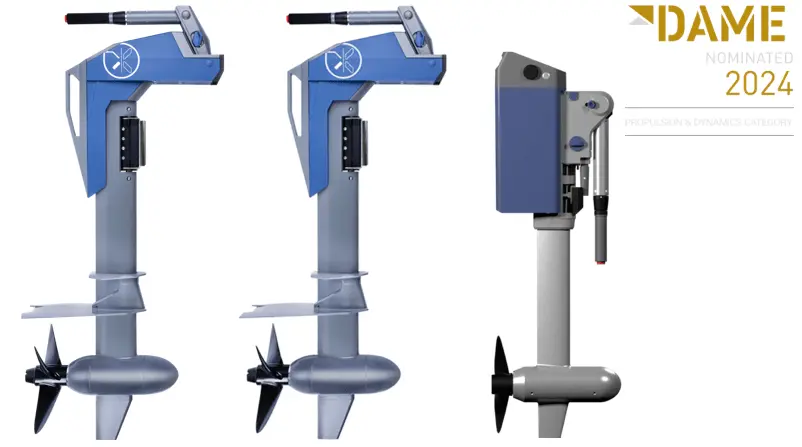
Momentum: Founded by a team of aerospace and naval engineers, Momentum displays its lean, highly reliable lineup of electric outboards (ranging from the 2.25kW U2 to the 10kW M-10), built specifically to withstand the harshest marine environments while providing silent, reliable torque for tenders and small sailing craft.
Future Outlook
As the 7th edition of the Venice Boat Show draws to a close on May 31st, the overarching message emanating from the Arsenale is definitive: electric boating is no longer an idealistic niche for environmental purists. It is a rapidly maturing, highly lucrative, and technologically sophisticated industrial sector.
The convergence of automotive-grade powertrains (such as Porsche’s collaboration with Frauscher), mass-production joint ventures (like E-Lektra Marine), and revolutionary energy density milestones (such as Sealence’s solid-state packs) indicates that the next decade will see a wholesale restructuring of global maritime fleets.
In Venice—a city historically defined by the gentle, rhythmic lapping of water against stone rather than the concussive thrum of two-stroke diesel engines—the future has arrived. La Serenissima is reclaiming its serene auditory landscape, powered by the very technology that will safeguard coastal and inland waters for generations to come.