





Executive Overview
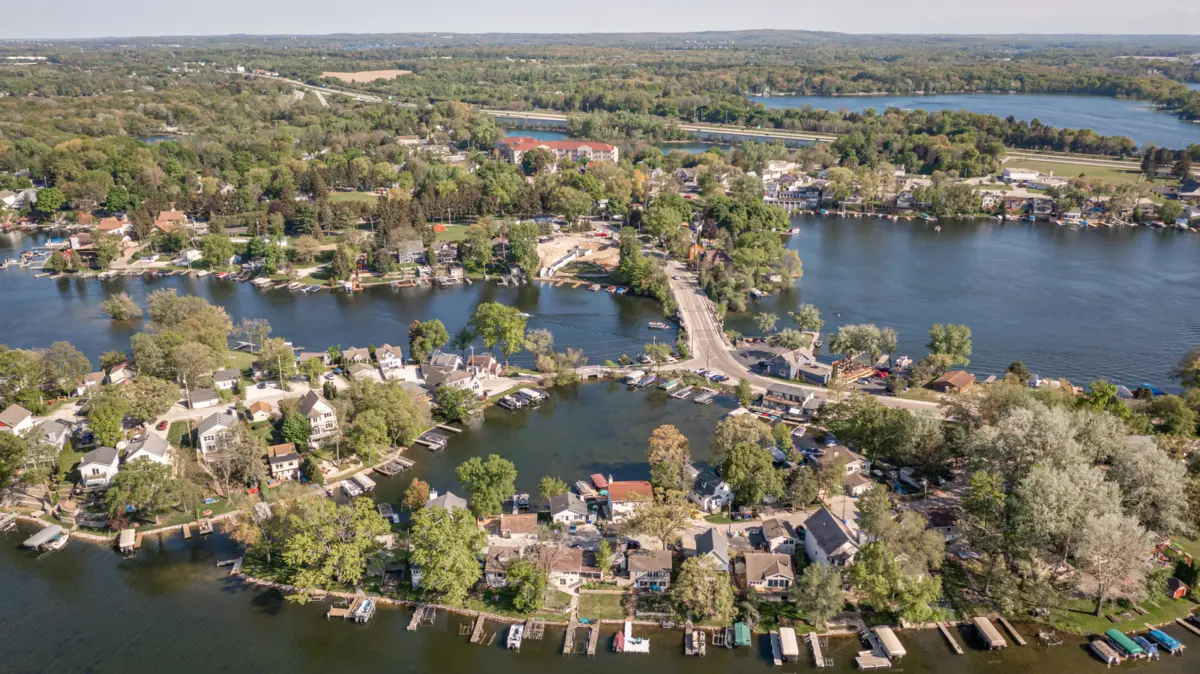
Nestled quietly in the undulating countryside of southeastern Wisconsin, a mere 30 minutes west of Milwaukee and an hour east of Madison, lies a glistening aquatic sanctuary known simply as Lake Country. Dotted by dozens of glacial lakes boasting shimmering shorelines lined with historic cottages, modern estates, and bustling boat docks, this region serves as a much-needed sanctuary for urbanites seeking respite from the relentless pace of metropolitan life. At the epicenter of this picturesque expanse sits Okauchee Lake, a sprawling 1,200-acre marvel of nature and recreation that seamlessly blends high-energy summer water sports, world-class multi-season fishing, and a rich, vibrant culinary scene accessible straight from the water.
While Wisconsin is home to countless aquatic destinations, Okauchee Lake distinguishes itself through a unique duality. It functions simultaneously as a high-octane hub for boating enthusiasts and a deeply charming, family-friendly retreat where generations return year after year. From the festive, community-driven camaraderie of the annual Party Island Tie-Up to the tranquil seclusion found within its many hidden bays, Okauchee Lake offers an immersive Midwestern escape.
This comprehensive report explores the multifaceted identity of Okauchee Lake. We examine its deep-seated recreational roots, analyze its ecological and geographical metrics, highlight its unique boat-up dining culture, and project its future trajectory as a premier eco-tourism and lifestyle destination in America’s Heartland.
Detailed Chronology: The Evolution of Okauchee Lake
To truly understand Okauchee Lake, one must trace its development from a remote, glacier-carved wilderness into one of Wisconsin’s most sought-after recreational havens.
The Glacial Era and Indigenous Roots
Long before the arrival of European settlers, the land encompassing modern-day Waukesha County was shaped by the retreat of the Green Bay lobe of the Laurentide Ice Sheet some 12,000 years ago. The melting ice left behind a rolling topography of drumlins, kettles, and moraines, filling massive depressions with pristine freshwater. Indigenous peoples, including the Potawatomi and Menominee tribes, inhabited the rich woodlands surrounding the lake, utilizing its abundant fisheries and dense forests for sustenance. The name "Okauchee" itself echoes this deep indigenous heritage, derived from native terminology often associated with local geographical markers and water resources.
The Resort Era and Late 19th-Century Expansion
As the industrial centers of Milwaukee and Chicago grew exponentially during the mid-to-late 19th century, affluent urban dwellers sought relief from the oppressive summer heat and soot of the cities. The expansion of the Milwaukee and St. Paul Railway opened up Wisconsin’s Lake Country to tourism. By the turn of the 20th century, Okauchee Lake had transitioned from an isolated wilderness into a fashionable resort destination. Grand hotels, boarding houses, and private summer estates began to line the shores. Wealthy industrialists arrived by train, transferring to horse-drawn carriages to reach the water’s edge, where steam-powered launches awaited to carry them to their retreats.
The Modern Recreational Renaissance
Throughout the mid-20th century, the advent of the automobile democratized access to the lake. The grand resort hotels eventually gave way to private permanent residences and modern seasonal cabins. As boat manufacturing evolved—transitioning from heavy wooden craft to nimble fiberglass hulls, powerful outboard motors, and eventually the ubiquitous multi-level pontoon boats—Okauchee Lake transformed into a dynamic playground for water skiing, tubing, and sport fishing. Today, the lake represents a delicate balance of historical preservation and modern recreational development, managed carefully by local municipalities, the Department of Natural Resources (DNR), and dedicated lake district stewardship associations.

Supporting Context & Metrics: Geography, Ecology, and Infrastructure
To appreciate the scale and ecological health of Okauchee Lake, a detailed examination of its physical dimensions, hydrological features, and infrastructure is essential.
Morphometry and Hydrography
Okauchee Lake is far from a simple, uniform basin. Its complex topography is defined by large open-water expanses interwoven with sprawling arms, secluded bays, and distinct underwater structures.
- Surface Area: Approximately 1,200 acres.
- Maximum Depth: Reaches an impressive 90 feet near the center of the lake, providing deep, cool-water refuges for cold-water and game fish species.
- Shoreline Length: Highly irregular and heavily developed, featuring miles of private docks, community beaches, and commercial marinas.
- Bottom Composition: A diverse mix of sand, gravel, muck, and scattered rock shoals that create optimal spawning and feeding grounds for local aquatic life.
Fisheries and Aquatic Biodiversity
Because of its varied depths and structural complexity, Okauchee Lake is celebrated as a premier multi-species fishery. Anglers frequent its waters 365 days a year, transitioning from high-summer trolling to dedicated ice fishing when Wisconsin’s harsh winters freeze the surface solid. Key target species include:
- Musky (Muskellunge): Often referred to as the "fish of ten thousand casts," trophy-sized musky prowl the deeper weed edges and open-water basins.
- Northern Pike & Walleye: Highly sought-after game fish thriving in the lake’s abundant forage base.
- Largemouth and Smallmouth Bass: Found heavily concentrated around docks, submerged timber, and rocky drop-offs.
- Panfish: Yellow perch, bluegill, and crappie provide steady action, making the lake ideal for youth anglers and ice-fishing enthusiasts.
Access and Navigational Infrastructure
Managing public access to a heavily utilized 1,200-acre lake requires careful urban and environmental planning.
- Public Boat Launches: The Okauchee Public Landing, situated on the southwest corner of the lake, serves as the primary free public launch site. Boaters departing from this ramp navigate under the historic Lake Drive bridge before entering the main body of water.
- Vertical Clearance Considerations: For operators of large, double-decker pontoon boats or craft with tall towers, navigating beneath the Lake Drive bridge can present a clearance challenge depending on water levels. Consequently, many large-craft owners utilize private alternative facilities such as the Golden Mast Marina. While requiring a parking and launching fee, the marina bypasses bridge clearance constraints entirely, providing direct, uninhibited access to open water.
Official Statements and Local Perspectives
The vitality of Okauchee Lake is sustained by a delicate partnership between local government officials, conservation groups, business owners, and the resilient community of residents and visitors who treat the watershed as a shared treasure.
Balancing Recreation and Environmental Stewardship
Local authorities and lake management districts continually emphasize the importance of responsible recreation. In official statements regarding lake carrying capacity, representatives from regional planning commissions note that managing high-density summer usage—particularly during peak holiday weekends like the Fourth of July—requires active monitoring of water traffic, wake regulations, and shoreline erosion control.
"Okauchee Lake is a vital economic and recreational engine for Waukesha County," notes regional infrastructure planners. "However, the long-term viability of the lake depends entirely on a shared commitment between recreational users and lakeside property owners. Preserving water quality, managing invasive species, and respecting navigational safety protocols ensure that this ecosystem remains pristine for future generations."
The Cultural Significance of Community Events
The lake’s calendar is anchored by high-profile traditions that foster deep community bonds. Chief among these is the legendary Party Island Tie-Up, held annually on the final Saturday of July. Hundreds of watercraft converge in a designated bay, lashing their boats together to form massive floating rafts of community, music, and celebration.
Despite its high-energy moniker, local organizers and business owners stress the family-friendly ethos underpinning the event.
"People hear ‘Party Island’ and assume absolute chaos," explains a long-time local business owner and marina operator. "In reality, it is an incredible display of Midwestern camaraderie. You will see multi-generational families tubing alongside groups of college friends. By sunset, everyone is sharing meals, enjoying live music from floating stages, and heading home safely. It represents the absolute pinnacle of Wisconsin lake culture."
Complementing the summer tie-ups are the celebrated Fourth of July fireworks displays, which illuminate the night sky and reflect off the glass-like surface of the water, drawing spectators from miles around.
The Culinary Landscape: Dining by Boat
One of the defining cultural characteristics of Okauchee Lake is its thriving maritime dining scene. Eschewing the traditional requirement of arriving by automobile, many of the region’s finest establishments feature dedicated, reserved boat slips, allowing patrons to dock their watercraft, step off the pier, and transition effortlessly from a bathing suit cover-up into a premier lakeside dining experience.
Smoke on the Water
For those craving exceptional barbecue paired with waterfront views, Smoke on the Water stands as a local culinary anchor. Offering a menu that transcends traditional smokehouse fare, the restaurant serves up expertly smoked meats alongside fresh cilantro rice bowls, artisanal gourmet macaroni and cheese, and locally sourced fish dishes. Its convenient boat slips make it a favorite waypoint for afternoon boaters looking to refuel without breaking their rhythm on the water.
The Hideaway Bar & Grill
For groups with diverse palates or picky eaters, The Hideaway Bar & Grill provides an extensive, highly versatile menu. Situated to accommodate both land- and water-based patrons, The Hideaway features everything from handcrafted burgers, artisanal pizzas, and warm paninis to fresh salads and tacos. Its relaxed, unpretentious atmosphere embodies the welcoming spirit of Lake Country dining.
The Barge at Island Park
Perhaps the most unique culinary and social phenomenon on the lake is The Barge, a floating tiki bar anchored permanently to a small island directly across from the Golden Mast.
- Exclusive Access: The Barge has no road access; it can be reached exclusively by boat.
- The "Tin Can" Shuttle: For visitors who have already docked their boats for the evening or arrived by car, a complimentary shuttle boat affectionately nicknamed The Tin Can ferries patrons back and forth from the Golden Mast marina.
- Ambiance: While culinary offerings on the floating barge are intentionally streamlined—consisting primarily of artisan sub sandwiches and curated charcuterie bites—the beverage menu is robust, and the social atmosphere is unmatched. Complete with communal picnic tables, lawn games, and live acoustic entertainment, The Barge offers an authentic island-style experience in the heart of the Wisconsin Midwest.
Future Outlook: Sustainability, Eco-Tourism, and the Next Era
As Okauchee Lake looks toward the future, its stakeholders face the classic challenge confronting America’s premier inland waterways: balancing unprecedented economic and recreational demand with the imperative of rigorous environmental conservation.
Infrastructure Modernization and Water Quality Management
Moving forward, local lake districts and environmental agencies are heavily investing in proactive watershed management. Key initiatives include:
- Runoff Mitigation: Implementing stricter shoreline zoning laws to reduce agricultural and suburban chemical runoff into the lake basin.
- Invasive Species Control: Deploying aggressive monitoring programs to prevent the introduction and spread of aquatic invasive species such as Eurasian watermilfoil and zebra mussels.
- Dredging and Navigational Maintenance: Ensuring that key channels, bays, and public access points remain safely navigable as sedimentation shifts over time.
The Rise of Multi-Season Eco-Tourism
While summer will perpetually remain the peak season for boating, tubing, and tiki-bar socializing, the future economy of Okauchee Lake and broader Lake Country is increasingly leaning toward sustainable multi-season tourism.
Regional tourism boards are heavily promoting shoulder-season activities. Visitors are encouraged to explore the nearby Glacial Drumlin State Trail—located just a 20-minute drive away in Wales, Wisconsin—which spans 52 scenic miles connecting ten historic small towns via a paved and crushed-stone path ideal for cycling and hiking. Furthermore, the region’s burgeoning winter tourism sector, anchored by world-class ice fishing, snowmobiling, and cross-country skiing, ensures that Okauchee Lake remains an economically vibrant destination twelve months a year.
Conclusion
Okauchee Lake is far more than a collection of 1,200 acres of water; it is a living cultural landscape that encapsulates the very best of the American Midwest. By honoring its rich historical roots, maintaining rigorous ecological standards, and fostering an inclusive, welcoming community spirit, Okauchee Lake ensures that its shores will remain a cherished escape for families, anglers, boaters, and food enthusiasts for generations to come. Whether you are navigating under the Lake Drive bridge for a morning of sport fishing, tying your pontoon up to enjoy barbecue at Smoke on the Water, or catching the sunset from the deck of The Barge, Okauchee Lake stands ready to offer an unforgettable chapter of lake life.