










Executive Overview
Six months into a devastating regional conflict, the geopolitical standoff between the United States, its allies, and the Islamic Republic of Iran has reached a critical juncture. On Friday, Tehran vehemently condemned a fresh wave of economic sanctions imposed by the Trump administration, labeling the measures "state terrorism" and a "crime against humanity." The diplomatic and economic escalation comes as Washington deploys what officials have termed an "economic D-Day"—a coordinated campaign designed to completely sever Iran’s remaining lifelines to the global financial system.
Concurrently, Iran is grappling with severe domestic instability. The country’s economy, battered by months of kinetic warfare and systemic isolation, saw its annual inflation rate soar to a staggering 66% last month. In a rare written address, Iran’s newly ascended Supreme Leader, Ayatollah Mojtaba Khamenei—who has not been seen in public since the February 28 attack that claimed the life of his father—issued a strict decree banning government officials from taking any actions or making statements that could fracture "social cohesion." The directive underscores deep-seated anxieties within the theological regime that further financial deprivation could ignite uncontrollable civil unrest.
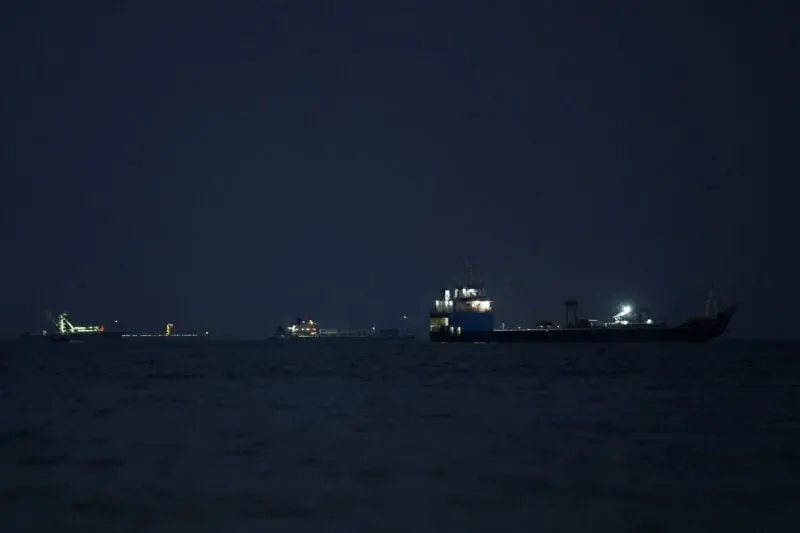
On the maritime front, the Strait of Hormuz remains the conflict’s primary and most volatile flashpoint. Once responsible for the transit of 20% of the world’s petroleum supply, the shipping corridor has seen traffic dwindle to a fraction of its pre-war volume. While international mediators, led by Qatar, scramble to broker a diplomatic solution to reopen the waterway, Washington continues to tighten the vise, expanding its secondary sanctions apparatus to target foreign financial institutions—most notably threatening Egypt’s Banque Misr operations in the United Arab Emirates.
Detailed Chronology
The current crisis is the direct result of a rapid escalatory spiral that began half a year ago, characterized by kinetic strikes, maritime sabotage, and unprecedented economic warfare.
[Feb 28] War Outbreak / Assassination of Supreme Leader
       │
[Mar-May] IRGC Mines Strait of Hormuz; Global Shipping Plummets
       │
[June] Short-lived Ceasefire MoU (Brokered by Qatar & Pakistan)
       │
[July-Aug] Ceasefire Collapses; U.S. Launches "Economic D-Day"
       │
[Aug 28] U.S. Targets Banque Misr UAE; Mojtaba Khamenei Decrees "Social Cohesion"
The Catalyst: The February 28 Attack
The conflict erupted on February 28 with a highly coordinated military strike launched by U.S. and Israeli forces. The attack resulted in the death of Iran’s long-standing Supreme Leader, Ayatollah Ali Khamenei, and left his son and successor, Mojtaba Khamenei, severely injured. In the immediate aftermath of the strike, Iran declared the Strait of Hormuz a restricted military zone, threatening to attack any maritime vessel attempting to transit the waterway without explicit authorization from Tehran.
The Maritime Blockade and Minesweeping Operations
Throughout the spring, the Islamic Revolutionary Guard Corps (IRGC) deployed sea mines across the shipping lanes of the Strait of Hormuz. This aggressive defensive posture effectively halted commercial transit, driving maritime insurance rates to prohibitive highs and causing a temporary shock to global energy markets.
In response, the U.S. military deployed advanced naval assets to clear the mines. While U.S. commanders have since declared the international shipping lanes cleared of ordnance, the threat of Iranian coastal missile batteries and fast-attack craft has kept commercial traffic at historic lows.
The June Ceasefire and Its Rapid Collapse
In June, intense diplomatic mediation by Qatar and Pakistan yielded a temporary breakthrough. The parties signed a memorandum of understanding (MoU) establishing a fragile ceasefire. However, the agreement quickly unraveled. The primary point of contention was the status of the Strait of Hormuz: Washington demanded unconditional, open international transit, while Tehran insisted on maintaining regulatory oversight and leveraging control of the strait to force an end to the broader Western blockade on its ports.
The Rollout of "Economic D-Day"
With negotiations stalled and the ceasefire defunct, the Trump administration transitioned from kinetic containment to total economic warfare. This culminated in the Friday announcement of the "Economic D-Day" sanctions package, aimed at closing the remaining loopholes used by Tehran to access foreign currency and conduct international trade.
Supporting Context & Metrics
The economic and operational data surrounding the conflict highlights the immense toll the war has taken on both the Iranian domestic front and global maritime commerce.
Iran’s Domestic Economic Collapse
The cumulative impact of the war and Western sanctions has pushed the Iranian economy to the brink of hyperinflation.
- Inflation: The annual inflation rate reached 66% last month, drastically reducing the purchasing power of ordinary citizens and causing widespread shortages of basic goods, medicine, and refined fuel.
- Unemployment: Domestic industries, cut off from raw materials and export markets, have experienced mass layoffs, driving unemployment to critical levels.
- Market Disruption: Price volatility in local markets has forced the government to attempt price-fixing schemes, which have largely backfired, resulting in black market expansion and supply hoarding.
+-------------------------------------------------------------+
|               IRANIAN ECONOMIC INDICATORS                   |
+-----------------------------+-------------------------------+
| Metric                      | Current Status                |
+-----------------------------+-------------------------------+
| Annual Inflation Rate       | 66% (As of Last Month)        |
| Strait of Hormuz Traffic    | 5% - 15% of Normal Volumes    |
| Primary Economic Grievances | Price Volatility, Unemployment|
+-----------------------------+-------------------------------+
The Strait of Hormuz Shipping Slump
Despite assurances from the U.S. military that the shipping lanes are safe, commercial shipowners remain highly risk-averse.
- Volume Reduction: Ship-tracking services estimate that current transit volumes through the Strait of Hormuz are operating at a mere 5% to 15% of pre-war averages.
- Daily Fluctuations: On Thursday, only 7 commodity vessels transited the strait, a sharp decline from the 17 transits recorded on Wednesday. This falls significantly below the current 10-day rolling average of 15 transits.
- Market Adaptation: Paradoxically, global oil prices fell on Friday and were headed for a weekly loss. Energy analysts attribute this to structural adaptations by global producers, who have increasingly rerouted supplies through alternative pipelines and adapted logistics networks to bypass the Gulf region entirely.
Official Statements
Tehran’s Denunciation
The Iranian government has reacted with fierce rhetoric to the latest U.S. economic measures. The Iranian Foreign Ministry released a formal statement on Friday, asserting that U.S. secondary sanctions violate the core tenets of international law:

"All nations are legally obligated to ignore and resist these unilateral and unlawful U.S. sanctions. Compliance with Washington’s economic dictates constitutes active complicity in an illegal campaign of collective punishment against independent states. These measures are nothing short of a crime against humanity, deliberately targeting the health, welfare, and livelihoods of millions of innocent civilians."
Iranian Foreign Minister Abbas Araqchi took to the social media platform X to signal that while Tehran remains open to dialogue, it will not negotiate under duress:
"Putting diplomacy back on track isn’t impossible. It hinges on U.S. understanding of one simple fact: pressure doesn’t work. The path forward requires a shift away from economic warfare and a return to respectful, constructive negotiations."
Mojtaba Khamenei’s Written Decree
Operating from an undisclosed location due to security concerns following the February 28 attack, Supreme Leader Ayatollah Mojtaba Khamenei issued a written directive to state officials. The message focused heavily on internal security and the preservation of the regime:
"I strictly forbid all state officials and political factions from engaging in any actions or rhetoric that could undermine our social cohesion. At this critical hour, authorities must refrain from making discouraging statements that weaken the national resolve and public motivation. The government must focus all its energy on resolving the pressing livelihood challenges of our people, specifically inflation, unemployment, and the stabilization of our domestic markets."
                    ┌────────────────────────┐
                    │  MOJTABA KHAMENEI      │
                    │  Supreme Leader Decree │
                    └───────────┬────────────┘
                                │
         ┌──────────────────────┴──────────────────────┐
         ▼                                             ▼
┌────────────────────────────────┐           ┌────────────────────────────────┐
│   BAN ON DIVISIVE RHETORIC     │           │   ECONOMIC MANDATE FOR GOVT    │
│  "Prevent actions that harm    │           │  "Address inflation, prices,   │
│   social cohesion or resolve." │           │   and market management."      │
└────────────────────────────────┘           └────────────────────────────────┘
Washington’s Financial Vise
In Washington, details emerged regarding the specific targets of the new U.S. sanctions. A senior U.S. official, speaking to Reuters on the condition of anonymity, revealed that the Trump administration is finalizing measures against the United Arab Emirates branches of Egypt’s state-owned Banque Misr.
The proposed rule would cut off Banque Misr UAE’s access to the U.S. financial system, effectively blocking its ability to clear transactions in U.S. dollars. The action is intended to punish the bank for allegedly facilitating transactions on behalf of Iranian entities.
Furthermore, the U.S. Treasury Department updated its sanctions registry to include a Hong Kong-based trading entity and an individual accused of acting as a procurement agent for Iran’s state-owned Bank Melli.
Future Outlook
The conflict has entered a grueling war of attrition where economic endurance may ultimately prove more decisive than military hardware.
The Diplomatic Impasse
Qatar’s Prime Minister, Sheikh Mohammed bin Abdulrahman Al Thani, continues to lead mediation efforts, holding high-level discussions in Tehran. Doha’s proposal centers on restoring the pre-war status quo of open, unhindered shipping through the Strait of Hormuz as a confidence-building measure to pave the way for a broader ceasefire.
However, the prospects for a breakthrough remain dim. Mohsen Rezaei, the Secretary of Iran’s Supreme National Security Council, confirmed that Tehran is drafting its own list of non-negotiable conditions for the reopening of the strait. These conditions are expected to include:
- A complete and verified lift of the Western maritime blockade on Iranian ports.
- The wholesale removal of all primary and secondary U.S. sanctions.
- Substantial financial compensation for the economic damages incurred during the war.
Domestic Vulnerabilities
For Iran, the ultimate test will be internal. The regime’s survival hinges on its ability to manage the domestic fallout of a 66% inflation rate. While Ayatollah Mojtaba Khamenei’s decree aims to project unity and suppress dissent, prolonged economic strangulation historically acts as a catalyst for widespread popular unrest. If the government cannot stabilize the prices of basic goods in the coming weeks, the threat of domestic uprisings may force Tehran to choose between domestic collapse or making major concessions at the negotiating table.
Conversely, Washington’s "Economic D-Day" strategy relies on the assumption that secondary sanctions will successfully isolate Iran from its regional partners. However, as global energy markets adapt and alternative supply routes solidify, the geopolitical leverage of the Strait of Hormuz may gradually diminish, altering the strategic calculus for both sides in this protracted conflict.