







Executive Overview
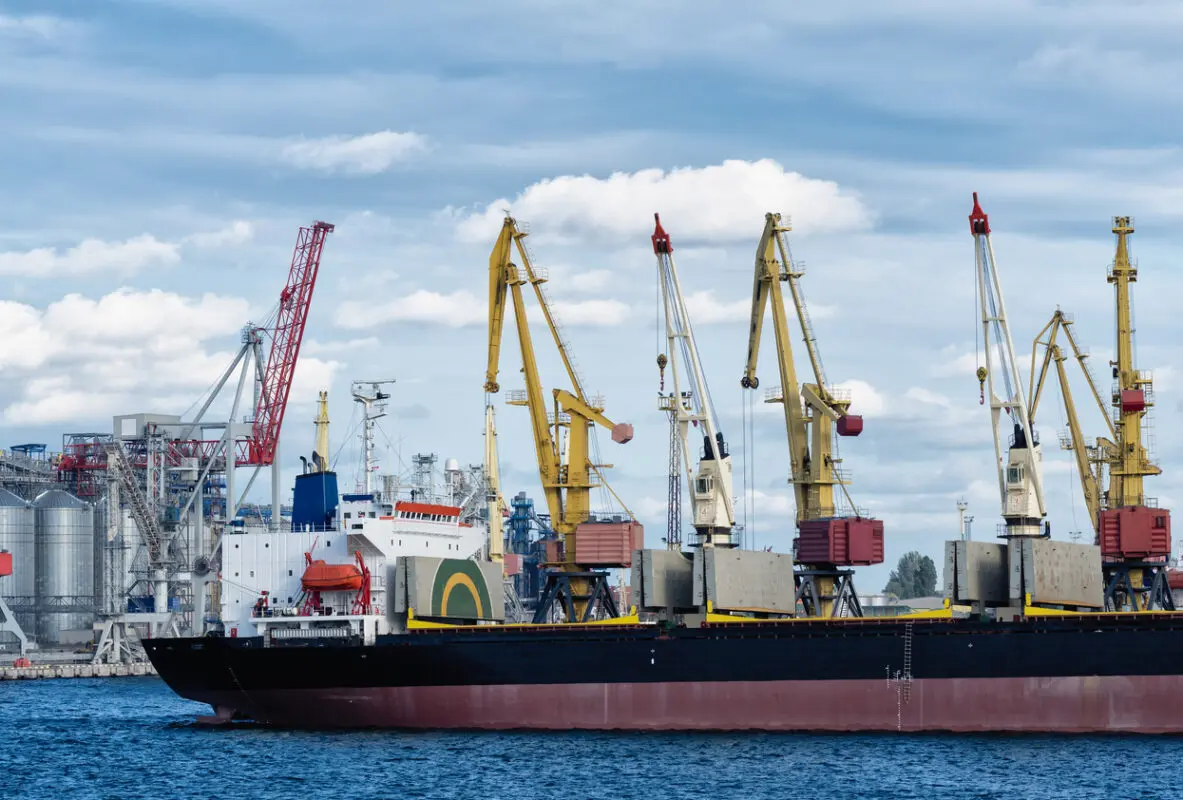
The Port of Klaipėda—Lithuania’s vital maritime gateway and one of the most dynamic logistics hubs in the Baltic region—has officially broken ground on the largest infrastructure and development undertaking in its history. This landmark engineering initiative, anchored in the port’s southern sector, marks the transition of the facility from long-term strategic planning to active physical transformation. With early-stage site preparation now underway, the port is poised to absorb nearly €600 million ($698 million) from its core investment programme spanning 2026 to 2029. When factoring in the anticipated capital contributions from future private and public sector investors, the total economic footprint of the development is projected to exceed €1 billion ($1.1 billion), positioning it as one of the single largest industrial and infrastructural investments currently underway in the Republic of Lithuania.
At its core, this historic expansion is designed to dramatically increase cargo-handling capacities, enhance operational efficiencies, and redefine the port’s physical footprint through land reclamation and the construction of state-of-the-art marine infrastructure. Yet, the scope of the project extends far beyond commercial metrics. By integrating advanced environmental engineering measures—such as specialized breakwaters designed to restrict the influx of saline water into the fragile Curonian Lagoon—the Port of Klaipėda is demonstrating a commitment to ecological preservation alongside economic growth. Furthermore, in an era marked by heightened geopolitical volatility and shifting security paradigms across Eastern Europe, the upgraded port infrastructure is specifically engineered to bolster military mobility. This dual-use capability renders the project a strategic asset not merely for Lithuania, but for the broader NATO and regional defense architecture.
Detailed Chronology of the Project
The realization of the southern port expansion did not happen overnight; it represents the culmination of years of rigorous feasibility studies, environmental impact assessments, engineering design phases, and complex public procurement procedures.
Phase 1: Conceptualization and Environmental Approvals (2020–2023)
Long before the first heavy machinery arrived at the southern perimeter of the port, the Klaipėda State Seaport Authority spent years laying the groundwork. Initial master-planning sessions identified the southern sector as the primary frontier for future growth, given the spatial constraints of the central and northern port areas. During this foundational phase, environmental engineers conducted exhaustive modeling of hydrodynamic currents, wind patterns, and sediment transport within the Klaipėda Strait and the adjacent Curonian Lagoon. These studies were critical to ensuring that the massive physical alterations would not inadvertently disrupt the delicate ecological balance of the UNESCO-recognized lagoon ecosystem.
Phase 2: Procurement and Tender Award (Early 2024–Mid 2024)
The turning point in the project’s execution timeline arrived earlier this year with the launch of high-stakes public procurement tenders for the initial construction works. The centerpiece of this tendering process was the contract for the construction of the southern breakwaters—a vital engineering shield required to protect the newly developing port area from open-sea wave action and hydrodynamic stress. Following a competitive evaluation of technical capabilities, financial standing, and engineering expertise, Lithuanian construction and infrastructure specialist Tilsta emerged as the winning bidder.
Phase 3: Contract Signing and Site Mobilization (Late 2024)
In the months following the tender award, representatives from the Klaipėda Port Authority and Tilsta finalized the contractual framework. The formal agreement carries a price tag of €24.5 million ($28.5 million) excluding Value Added Tax (VAT). With ink dried on the contract, site mobilization commenced immediately. Early autumn marks the official commencement of physical construction on the southern breakwaters, signifying the threshold of the execution phase. This initial milestone will establish the secure maritime boundary necessary for the subsequent phases of dredging, land reclamation, and terminal super-structure development.
Phase 4: Long-Term Buildout (2026–2029 and Beyond)
Following the completion of the breakwater infrastructure, the master plan dictates a continuous pipeline of civil engineering works, quay construction, and multimodal transport connections. The bulk of the financial allocation—nearly €600 million—is slated to be deployed between 2026 and 2029. As these specialized terminals and logistics parks take shape, concurrent negotiations and partnership agreements with private terminal operators, shipping liners, and industrial tenants will unlock the additional capital needed to push total project valuation past the €1 billion threshold.
Supporting Context & Strategic Metrics
To fully understand the magnitude of the Klaipėda expansion, one must examine the macroeconomic and regional logistics landscape in which the port operates. In recent quarters, the Port of Klaipėda has consistently outpaced its Baltic Sea competitors in cargo-handling growth, cementing its status as an economic engine for the Lithuanian state.
Outpacing Regional Rivals
While several ports along the eastern Baltic coastline have faced headwinds stemming from shifting geopolitical alignments, international sanctions regimes, and fluctuating global supply chains, Klaipėda has demonstrated remarkable resilience and agility. By diversifying its cargo base, expanding containerized shipping services, and investing heavily in digitization and port-automation technologies, the port has recorded robust cargo throughput numbers. This outperformance relative to neighboring facilities in Latvia and Estonia has generated an urgent commercial demand for enhanced capacity. Without the newly initiated southern expansion, the port risked running into severe capacity bottlenecks that could have capped its upward trajectory.
Financial Architecture and Capital Allocation
The financing of a project exceeding €1 billion requires a sophisticated, multi-layered capital structure. The Klaipėda State Seaport Authority is leveraging a combination of self-generated revenues, European Union (EU) transport and infrastructure grants, commercial bank syndications, and private-public partnerships (PPPs).
| Project Phase / Component | Estimated Financial Outlay | Funding Source / Mechanism |
|---|---|---|
| Southern Breakwaters Construction | €24.5 million ($28.5 million, ex. VAT) | Port Authority Capital / Tendered to Tilsta |
| Core Port Infrastructure (2026–2029) | ~€600 million ($698 million) | Port Authority Investment Programme & EU Grants |
| Private Superstructures & Terminals | Over €400 million ($402+ million) | Future Private Investors & PPP Concessions |
| Total Estimated Economic Value | >€1 billion ($1.1+ billion) | Blended Public-Private Financing |
This robust financial model ensures that the burden of development is shared across multiple stakeholders, mitigating fiscal risk for the Lithuanian government while offering lucrative long-term concession opportunities for global terminal operators and logistics conglomerates.
Environmental Engineering: Protecting the Curonian Lagoon
One of the most fascinating technical dimensions of the southern expansion is its dual-purpose engineering approach. Large-scale port developments frequently encounter fierce resistance from environmental organizations due to their potential to disrupt local ecosystems. However, the Klaipėda Port Authority has integrated environmental remediation directly into the engineering blueprints.
The Curonian Lagoon is a vast, shallow lagoon separated from the Baltic Sea by the Curonian Spit. It is an environmentally sensitive body of water characterized by a unique mix of fresh and brackish aquatic life. Historically, deep-water port operations and navigational channel deepening have occasionally exacerbated the intrusion of high-salinity Baltic Sea water into the lagoon, threatening endemic fish species and altering the local habitat balance.
The newly designed southern breakwaters are strategically positioned to act not only as physical wave barriers for ships, but also as hydrodynamic regulators. By carefully managing the flow dynamics at the southern approaches, the structures will help limit and control the influx of salt water into the northern reaches of the Curonian Lagoon. This dual benefit—expanding industrial capacity while simultaneously safeguarding an irreplaceable natural ecosystem—sets a new benchmark for sustainable port engineering in Northern Europe.
Geopolitical and Military Mobility Dimensions
In the contemporary security environment, the strategic value of critical infrastructure extends far beyond commercial ledgers. Lithuania, situated on NATO’s eastern flank, occupies a uniquely exposed and vital geographical position. The Port of Klaipėda is the nation’s primary maritime lifeline, making it an indispensable asset for national defense and regional security.
The ongoing expansion project has been intentionally designed to support military mobility needs. In times of crisis or routine deterrence operations, the rapid movement of allied military personnel, heavy armored vehicles, logistical supplies, and reinforcement equipment across the Baltic region is paramount. Upgraded berths, deeper navigational drafts, heavier-duty load-bearing quays, and expanded marshalling yards within the southern port area will grant NATO forces unprecedented flexibility.
By upgrading Klaipėda to handle larger military transport vessels and expediting the transfer of cargo from ship to rail or road, the project directly reinforces the collective defense posture of the Alliance. Consequently, the €1 billion investment is viewed by defense analysts and policymakers alike as a critical contribution to regional stability and deterrence.
Official Statements
The symbolic and practical weight of the groundbreaking was underscored by key leadership figures within the port administration, reflecting a unified vision for Lithuania’s maritime future.
Algis Latakas, CEO of the Klaipėda State Seaport Authority, articulated the significance of the moment during the official announcement:
"We are now very close to the start of the southern port expansion. After a long period of planning and preparation, work on site is beginning. Once the site is ready, construction of the southern breakwaters will start this autumn, marking the first stage of the largest expansion project in the history of the Port of Klaipėda."
Latakas emphasized that the physical mobilization on site represents tangible proof of Lithuania’s long-term strategic ambitions:
"This project shows that we are steadily moving forward with our plans to build a stronger port for Lithuania. It will make the country more attractive to investors, strengthen our competitiveness in international markets and support military mobility needs that are important not only for Lithuania, but for the wider region."
Industry observers note that Latakas’s emphasis on international competitiveness is well-founded. As global supply chains continue to reconfigure in response to geopolitical realignments, cargo owners are increasingly seeking secure, efficient, and technologically advanced gateways. By future-proofing its physical infrastructure, Klaipėda is positioning itself as an unassailable hub for transshipment and industrial processing in the Baltic-Nordic corridor.
Future Outlook: The Horizon of a Transformed Baltic Hub
As Tilsta mobilizes its engineering teams for the autumn breakwater construction, the Port of Klaipėda stands on the precipice of a transformative era. The years leading up to 2029 will witness a flurry of heavy civil engineering activity, transforming what is currently an undeveloped southern expanse into a modern, high-capacity maritime node.
Anticipated Economic Multipliers
The ripple effects of a €1 billion investment of this scale will be felt throughout the Lithuanian economy. Beyond the immediate job creation during the construction phase—involving civil engineers, dredging specialists, marine contractors, and heavy logistics providers—the completed expansion will generate thousands of permanent, high-value jobs in terminal operations, shipping agencies, customs brokerage, and intermodal transport.
Furthermore, the creation of new industrial land plots within the southern port area will enable the establishment of manufacturing, assembly, and value-added logistics facilities directly adjacent to deep-water berths. This "port-centric logistics" model allows businesses to minimize inland transport costs, making Lithuania an exceptionally attractive destination for foreign direct investment (FDI) in advanced manufacturing and green energy technologies, such as offshore wind turbine staging and maintenance.
Integration with Rail and European Corridors
To maximize the utility of the expanded southern port, concurrent investments are being synchronized with national and European transport networks. The integration of Klaipėda into the European standard-gauge rail network (Rail Baltica) remains a complementary priority. While Rail Baltica primarily connects the Baltic States with Poland and Western Europe along a north-south axis, the seamless transfer of freight between these high-speed rail corridors and maritime vessels at Klaipėda will create an unstoppable multimodal logistics engine.
Conclusion
The initiation of the southern port expansion at Klaipėda is far more than a routine civil works project; it is a bold statement of national intent. By harmonizing unprecedented commercial scale with sophisticated environmental stewardship and vital military mobility enhancements, the Port of Klaipėda is future-proofing its operations against the uncertainties of the 21st century. As the breakwaters rise from the Baltic waters this autumn, they will anchor not just a new port precinct, but Lithuania’s enduring economic and strategic prominence on the European stage.