




Executive Overview
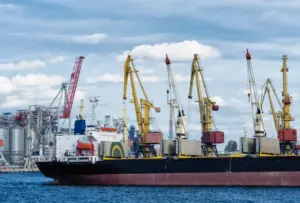
In an era defined by intensifying climate volatility, rising sea levels, and increasingly ferocious coastal storms, the long-term viability of America’s seaside communities hangs in the balance. For Maryland’s premier coastal resort, Ocean City, the margin between economic prosperity and catastrophic erosion is measured in cubic yards of sand. Addressing this existential vulnerability head-on, Maryland U.S. Senators Chris Van Hollen and Angela Alsobrooks have successfully secured a critical $20 million federal funding allocation dedicated entirely to the Ocean City beach replenishment and coastal protection initiative.
Announced during a high-profile site visit by Senator Van Hollen directly to the Ocean City beachfront, the federal capital injection will serve as the financial backbone for a massive upcoming dredging and shoreline restoration project. Administered and executed by the United States Army Corps of Engineers (USACE) in close coordination with local and state stakeholders, the endeavor aims to physically widen the resort town’s sprawling sandy beaches. Beyond preserving a world-class tourism destination, this federally backed engineering feat serves a far more urgent purpose: establishing a robust, resilient physical buffer capable of absorbing the kinetic energy of storm surges, mitigating devastating tidal flooding, and safeguarding critical public and private infrastructure.
This comprehensive report examines the multi-million-dollar funding package, the mechanics of modern beach replenishment, the economic and ecological stakes for the mid-Atlantic coastline, and the historical context of federal support that has kept Ocean City’s shores intact for decades.
Detailed Chronology: The Road to the $20 Million Federal Allocation
The path to securing a major federal infrastructure appropriation of this magnitude is neither swift nor simple. It represents the culmination of strategic legislative maneuvering, robust congressional advocacy, and persistent coordination between local municipal leaders, state agencies, and federal regulators.
The Legislative Push in Congress
The appropriations process for coastal protection and navigation infrastructure requires early coordination within the federal budget cycle. Recognizing that Ocean City’s previous replenishment cycle was rapidly approaching its design lifespan—and mindful of the accelerating degradation caused by regional nor’easters—Senators Van Hollen and Alsobrooks made federal resilience funding a top legislative priority.
Working through congressional committees and utilizing their influence within federal budgeting channels, the lawmakers targeted discretionary and programmatic funding avenues within the USACE civil works portfolio. Their objective was clear: secure dedicated appropriations sufficient to cover the escalating costs of offshore dredging, sand pumping, and beach profiling without placing an undue fiscal burden on municipal taxpayers or the state budget.
The Senatorial Site Visit and Public Announcement
The formal unveiling of the $20 million allocation transitioned from the halls of Capitol Hill to the windswept sands of Worcester County when Senator Van Hollen walked the Ocean City beachfront. Flanked by local officials and coastal engineers, Van Hollen used the backdrop of the Atlantic to underscore the urgency of the initiative.
During the visit, the Senator highlighted the physical realities of shoreline recession, pointing out areas where previous dunes and beach berms had been systematically nibbled away by seasonal wave action. The announcement served not only as a public relations milestone for the congressional delegation but also as a definitive signal to residents, hoteliers, and business owners that federal backing for their long-term security remains steadfast.
Transitioning from Appropriation to Execution
With the funding successfully secured, the timeline shifts rapidly toward project mobilization. The USACE, acting as the primary engineering authority, is tasked with finalizing the operational parameters, securing environmental clearances, and soliciting competitive bids from specialized dredging contractors.
While heavy machinery will not materialize on the beach overnight, the funding secured by Van Hollen and Alsobrooks ensures that the logistical pipeline—from identifying offshore borrow areas to scheduling pipeline deployments—is fully financed and ready to proceed according to the Corps’ regional master schedule.
Supporting Context & Metrics: The Science and Economics of Ocean City’s Defense
To understand why a $20 million investment is required for a stretch of sandy coastline, one must examine the unique geography of Ocean City, the mechanics of modern beach nourishment, and the staggering economic stakes involved.
The Geography of Vulnerability
Ocean City occupies a narrow barrier island situated between the Atlantic Ocean to the east and the Sinepuxent and Assawoman Bays to the west. This dynamic geomorphological setting makes the municipality exceptionally vulnerable to high-energy storm events. Nor’easters—stagnant, powerful low-pressure systems that batter the mid-Atlantic coast during autumn, winter, and spring—persistently push colossal volumes of water onshore, generating sustained wave action that strips sand from the upper beach and deposits it into offshore bars.
Without human intervention, this natural erosive cycle would steadily narrow the protective beach profile, eventually exposing boardwalks, hotels, high-rise condominiums, and municipal utilities to direct wave attack.
The Mechanics of Beach Replenishment
Beach replenishment is not merely dumping sand onto a shore; it is a sophisticated coastal engineering science. The process typically involves the following phases:
- Borrow Area Identification: Marine geologists and engineers survey offshore locations to locate sand deposits that closely match the mineralogy, grain size, and color of Ocean City’s native beach.
- Hydraulic Dredging: Trailing suction hopper dredges or cutterhead dredges extract sand from the approved offshore borrow sites, mixing it with seawater to create a slurry.
- Pumping and Transport: The sand slurry is pumped through heavy-duty floating and terrestrial steel pipelines stretching thousands of feet across the ocean floor and up onto the beach.
- Grading and Shaping: Heavy earth-moving equipment—including bulldozers and front-end loaders—spreads the newly deposited sand across the template defined by USACE engineers, reconstructing the high-tide berm and engineered dunes.
The Economic Engine at Risk
The justification for spending millions of federal dollars on sand extends far beyond aesthetics; it is an economic imperative. Ocean City is a powerhouse within Maryland’s tourism and hospitality economy. During peak summer months, the barrier island’s population swells from its year-round base of roughly 7,000 residents to hundreds of thousands of visitors per day.
- Tourism Revenue: The resort generates billions of dollars in annual economic activity, supporting thousands of seasonal and year-round jobs in hotels, restaurants, retail shops, and entertainment venues.
- Tax Base: A thriving tourism sector yields substantial local and state tax revenues, funding public services, schools, and infrastructure throughout Worcester County and contributing significantly to the state treasury.
- Property Value Protection: Real estate assessments along the Ocean City oceanfront run into the tens of billions of dollars. A compromised shoreline threatens not only private structures but also municipal infrastructure, including stormwater management systems, evacuation routes, and electrical grids.
Official Statements: Voices from the Leadership
The announcement of the $20 million federal investment drew praise from across Maryland’s political and civic leadership, reflecting a unified front in the ongoing battle against coastal erosion.
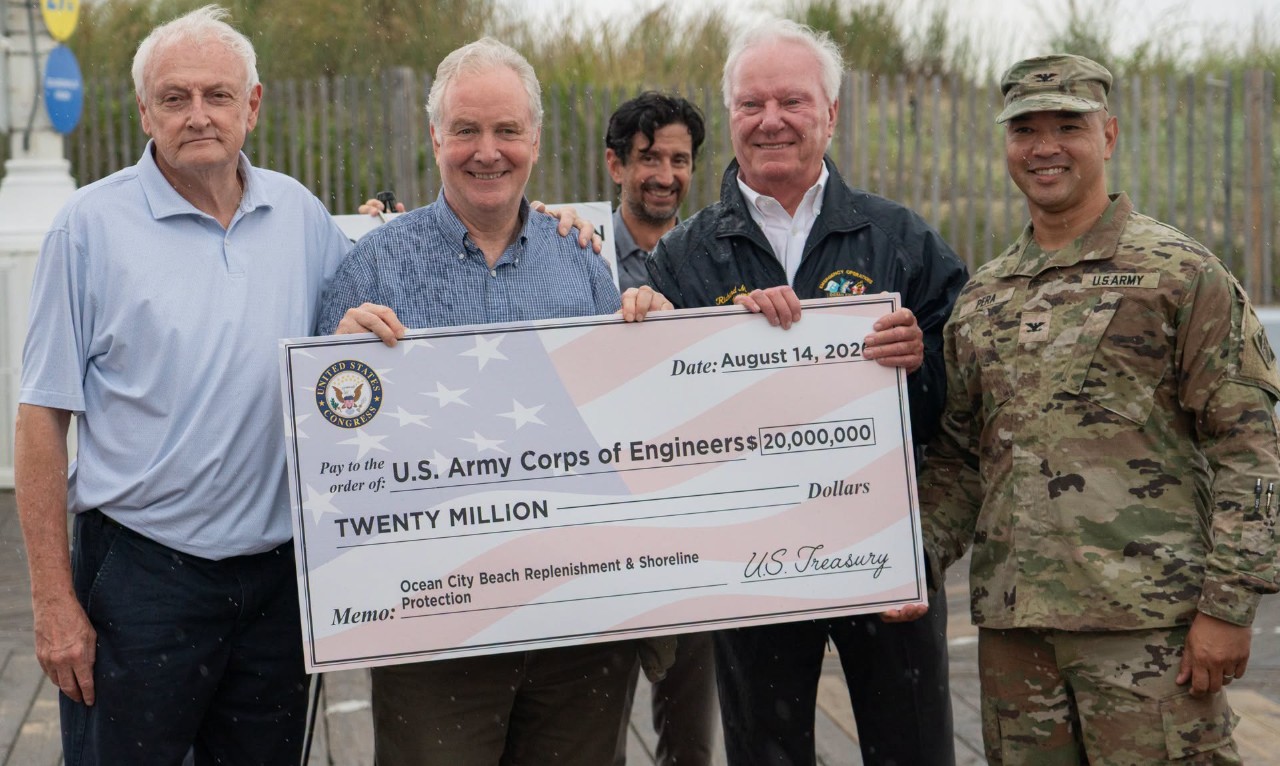
U.S. Senator Chris Van Hollen emphasized the dual necessity of economic protection and climate resilience:
"Ocean City’s beach is a destination for Marylanders and out-of-state visitors alike, making it an important economic driver for the region. It’s critical that we not only protect the beach from erosion, but that we also restore the shoreline to protect local communities from flooding and extreme weather. Businesses and livelihoods that depend on Ocean City’s beach must continue to thrive, and that’s why we worked to secure $20 million in federal funding for Ocean City’s beach replenishment."
U.S. Senator Angela Alsobrooks echoed these sentiments, stressing the importance of community safety and proactive defense:
"We need to do all we can to protect Maryland communities, homes, and businesses from storms and erosion. That’s why I am proud to partner with Senator Van Hollen in investing $20 million of federal funding to replenish Ocean City’s shoreline and beaches. Replenishing this shoreline will create a critical buffer to better protect the homes and businesses of Ocean City."
Local municipal leaders and USACE district commanders have likewise welcomed the allocation, noting that sustained federal-local partnerships are the single most effective tool available to combat the long-term trends of sea-level rise and shoreline recession.
Historical Precedent: A Legacy of Federal Support
The newly secured $20 million funding package does not exist in a vacuum; it represents the continuation of a long-standing, multi-decadal federal commitment to Ocean City’s structural integrity.
For many years, federal, state, and local entities have recognized that piecemeal, emergency responses to coastal storms are inefficient and financially unsustainable. Instead, a systematic, cyclical approach to beach nourishment has been institutionalized through authorizations managed by the U.S. Army Corps of Engineers.
A notable milestone in this ongoing history occurred during the budgeting process for Fiscal Year 2021. At that time, Senator Van Hollen—working alongside then-Senator Ben Cardin—successfully championed a federal allocation of $11.1 million through the USACE Work Plan to execute a major scheduled replenishment of the Ocean City shoreline.
That project, much like the upcoming initiative, successfully restored millions of cubic yards of sand to the beach profile, mitigating the damage inflicted by several severe winter storms. However, because coastal erosion is a continuous, relentless natural process governed by wind, waves, and tides, nourishment projects are not "one-and-done" events. They require periodic re-funding and execution every few years to maintain their engineered design dimensions. The new $20 million appropriation represents the next vital chapter in this ongoing maintenance cycle, adjusted for inflation, rising operational costs, and the expanding scale of engineering required to combat accelerating environmental pressures.
Future Outlook: Building Long-Term Resilience for the Mid-Atlantic Coast
Looking ahead, the successful deployment of this $20 million federal investment will significantly fortify Ocean City’s defenses against the immediate threats of the coming storm seasons. Yet, forward-thinking coastal engineers, municipal planners, and federal lawmakers are already looking past the immediate horizon to address the broader structural challenges of tomorrow.
Adapting to Accelerated Sea-Level Rise
As global temperatures continue to rise and polar ice melts, sea levels along the mid-Atlantic coast are increasing at a rate that outpaces the global average. This compounding baseline elevation means that future storm surges will reach higher inland elevations than they did in decades past.
Consequently, future beach replenishment designs must adapt. Engineers are increasingly examining ways to construct wider, higher dune systems paired with advanced beach-profiling techniques that can absorb greater wave energy and accommodate accelerated sea-level rise over the coming decades.
Comprehensive Coastal Management
Beyond dumping sand on the subaerial beach, future resilience frameworks for Ocean City and the surrounding coastal zone will likely require a diversified toolkit. This includes:
- Inlet and Navigation Maintenance: Ensuring that nearby inlets remain navigable while managing the natural sand transport (littoral drift) that bypasses these channels.
- Interior Drainage Improvements: Upgrading stormwater pumping stations and outflow pipes to prevent rainwater from being trapped behind high engineered dunes during high-tide storm events.
- Natural and Hybrid Infrastructure: Exploring the integration of living shorelines, oyster reef restoration, and wetland buffering where applicable along the back-bay environments to protect the island from western flooding.
The Ongoing Role of Federal Oversight
The partnership between Maryland’s congressional delegation and the U.S. Army Corps of Engineers will remain paramount. As long as Ocean City remains a vibrant economic engine, a cultural touchstone for millions of families, and a critical component of Maryland’s infrastructure, the need for recurring federal investment in coastal protection will persist.
The securing of this $20 million allocation demonstrates that federal lawmakers remain attuned to the realities of climate adaptation and infrastructure maintenance. For the residents, business owners, and visitors of Ocean City, this investment ensures that the golden sands of Maryland’s coast will remain wide, resilient, and ready to welcome generations to come.